Perast
Historic Montenegrin town with Venetian-era fortifications and maritime heritage.
Last updated
Where it is
Coordinates: 42°29′13″N 18°41′56″E (42.4870, 18.6990) · Open in OpenStreetMap
Coordinates and connected clubs: the infobox of Wikipedia: Perast (CC BY-SA 4.0). Map: drawn by Codexery from OpenStreetMap tiles.
Perast is a town in the Coastal region of Montenegro, situated a few kilometres northwest of Kotor. It is noted for its proximity to the islets of St. George and Our Lady of the Rocks, and its history includes Illyrian, Roman, Venetian, and Austro-Hungarian influences.
Lore & Background
Perast was founded by the Illyrians and named after the Pirusti tribe. The first historical mention dates to 1336, when it was a small fishing village with a shipyard. Its development was slow due to the nearby strategically important island of St George, which belonged to Kotor.
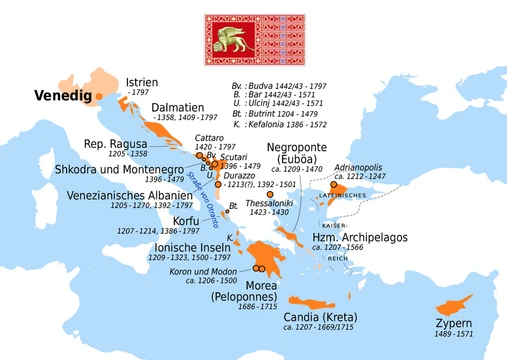
Prosperity came during the Venetian period, especially after 1482 when the Turkish part of the coast was taken. The inhabitants built the fortress of the Holy Cross and a dozen defensive towers. After successfully holding a siege by the Turks in 1654 under Mehmed-beg Rizvanagić, Perast gained the right to guard the Venetian flag of St. Mark.
Reader's Guide
Perast's significance lies in its role as a Venetian border stronghold and maritime center. During the 18th century, 20 Baroque palaces, 17 Catholic churches, and two Orthodox churches were built. It housed one of the best maritime schools, where Russian sailors were sent for training by Peter I under captain Marko Martinovic. After Napoleon defeated Venice in 1797, Perast remained loyal for several months before lowering the flag of St. Mark, marking the start of its decline.
The town later passed to Austrians, Italians, French, and Austro-Hungarians until 1918, when it became part of the Kingdom of Serbs, Croats and Slovenians. It was part of Yugoslavia from 1944 and has been in independent Montenegro since 2006. Today, Perast is known for its well-preserved architecture and the artificial island of Our Lady of the Rocks, built upon a rock after Venetian sailors found a picture of the Virgin Mary there in 1452.
Did You Know?
- In 1698, Pyotr Andreyevich Tolstoy wrote that Perast had a Croatian community and no Orthodox churches in the city.
More in Stato da Màr
Sources
Compiled from Wikipedia and the sources listed below. Text from Wikipedia is available under CC BY-SA 4.0; this entry is adapted from it.
- Wikipedia: Perast (CC BY-SA 4.0).
Spotted an error? Know more?
Reader corrections go straight into our review queue. Suggest an edit · How this site is sourced