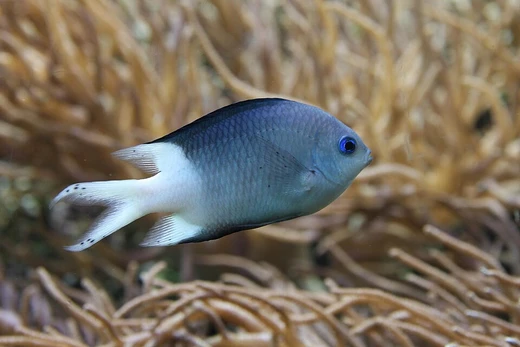
Spiny chromis (Acanthochromis polyacanthus)
Source-cited species reference: taxonomy from WoRMS, biology from FishBase, occurrence map from GBIF, conservation from IUCN Red List, description from Wikipedia.

Diego Delso · CC BY-SA 4.0
The spiny chromis (Acanthochromis polyacanthus) is a species of damselfish from the western Pacific. It is the only member of the genus Acanthochromis.
- Scientific name
- Acanthochromis polyacanthus
- Authority
- (Bleeker, 1855)
- Family
- Pomacentridae
- Order
- Ovalentaria incertae sedis
- Maximum length
- 16 cm
- Depth range
- 1–65 m
- Habitat zone
- reef-associated
- Iucn red list
- Least Concern
- Gbif occurrence records
- 7,724
Taxonomy & the Story Behind the Name
The spiny chromis entered the scientific record in 1855, when Dutch ichthyologist Pieter Bleeker formally described the species under the name Dascyllus polyacanthus, citing Batman in the Moluccas as the type locality. Over time, taxonomists recognized that this fish warranted its own genus, Acanthochromis, making it the sole representative of that lineage. The genus name itself tells a story: "acanthus" is Greek for spine, almost certainly a nod to the seventeen dorsal-fin spines that give the fish its common name, while "Chromis" hints at a perceived evolutionary kinship with that better-known damselfish genus. The specific epithet polyacanthus, meaning "many-spined," reinforces the same spiny character. As the only species within Acanthochromis, the spiny chromis occupies a taxonomic position of singular importance, a living reminder that even within the crowded damselfish family, isolated lineages can persist as one-of-a-kind representatives.
Range Across the Western Pacific
The spiny chromis is a creature of the western Pacific, with a distribution that stretches across a remarkable arc of islands and coastal waters. Its range encompasses western and central Indonesia, the waters around Papua New Guinea, the northern Australian coast, and essentially every island in the Philippines with the sole exception of Luzon. Melanesian waters also support populations of this damselfish. In terms of habitat, the species is firmly tied to coral reef environments, where it navigates the complex three-dimensional structure of living coral. Depth-wise, individuals have been recorded from as shallow as one metre down to sixty-five metres, though the bulk of encounters cluster in the four-to-twenty-metre band. This preference for the mid-depth reef zone suggests the fish thrives where light penetration and structural complexity intersect, offering both foraging opportunities and shelter within the reef matrix.
A Mosaic of Colour and Form
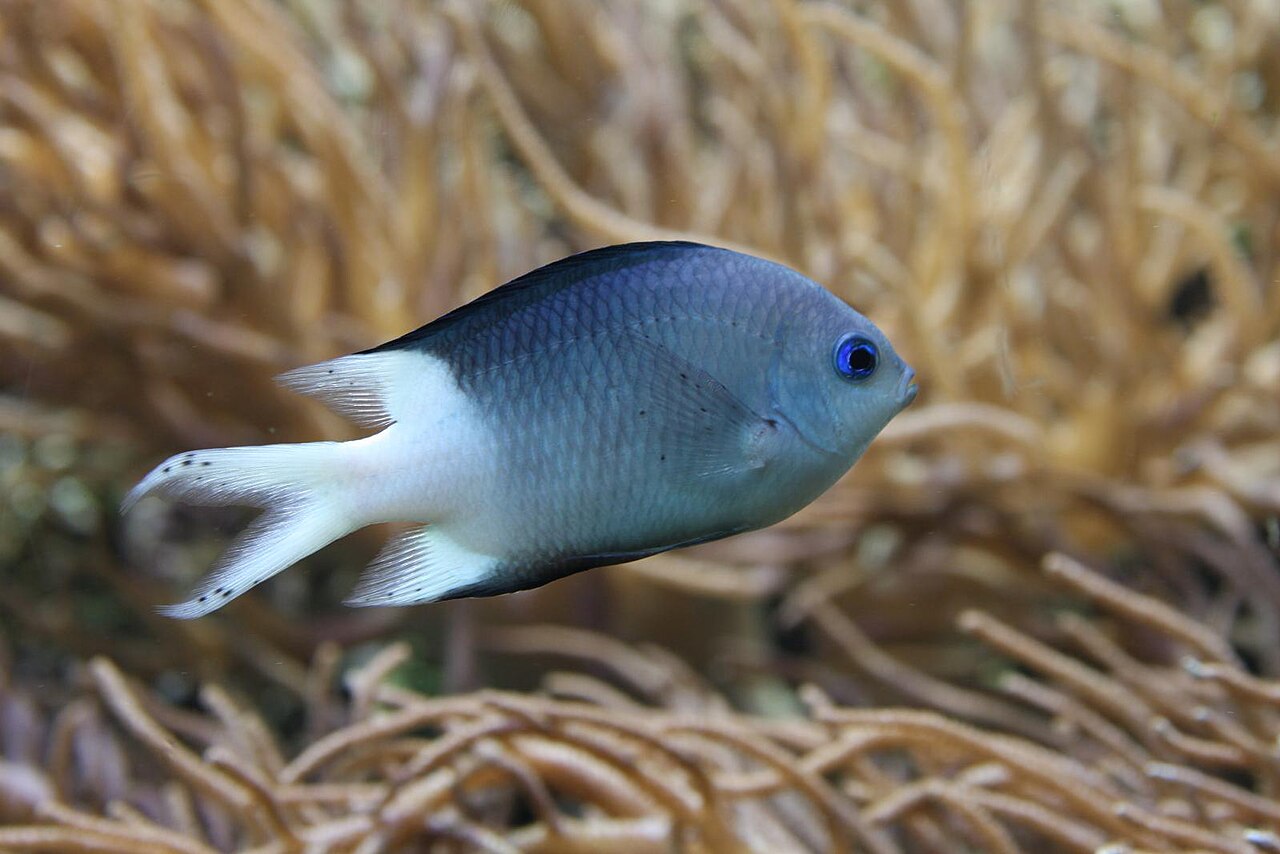
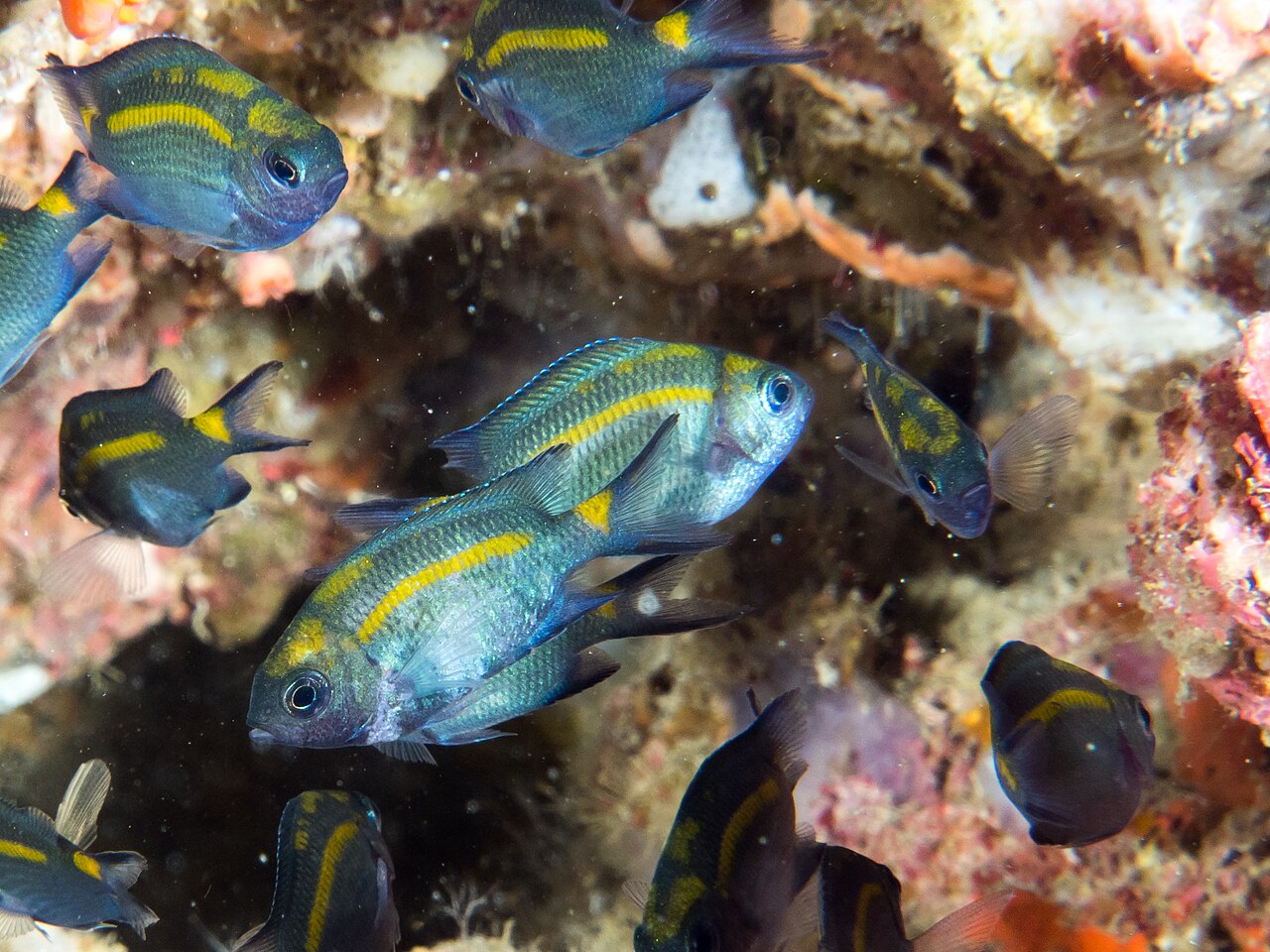
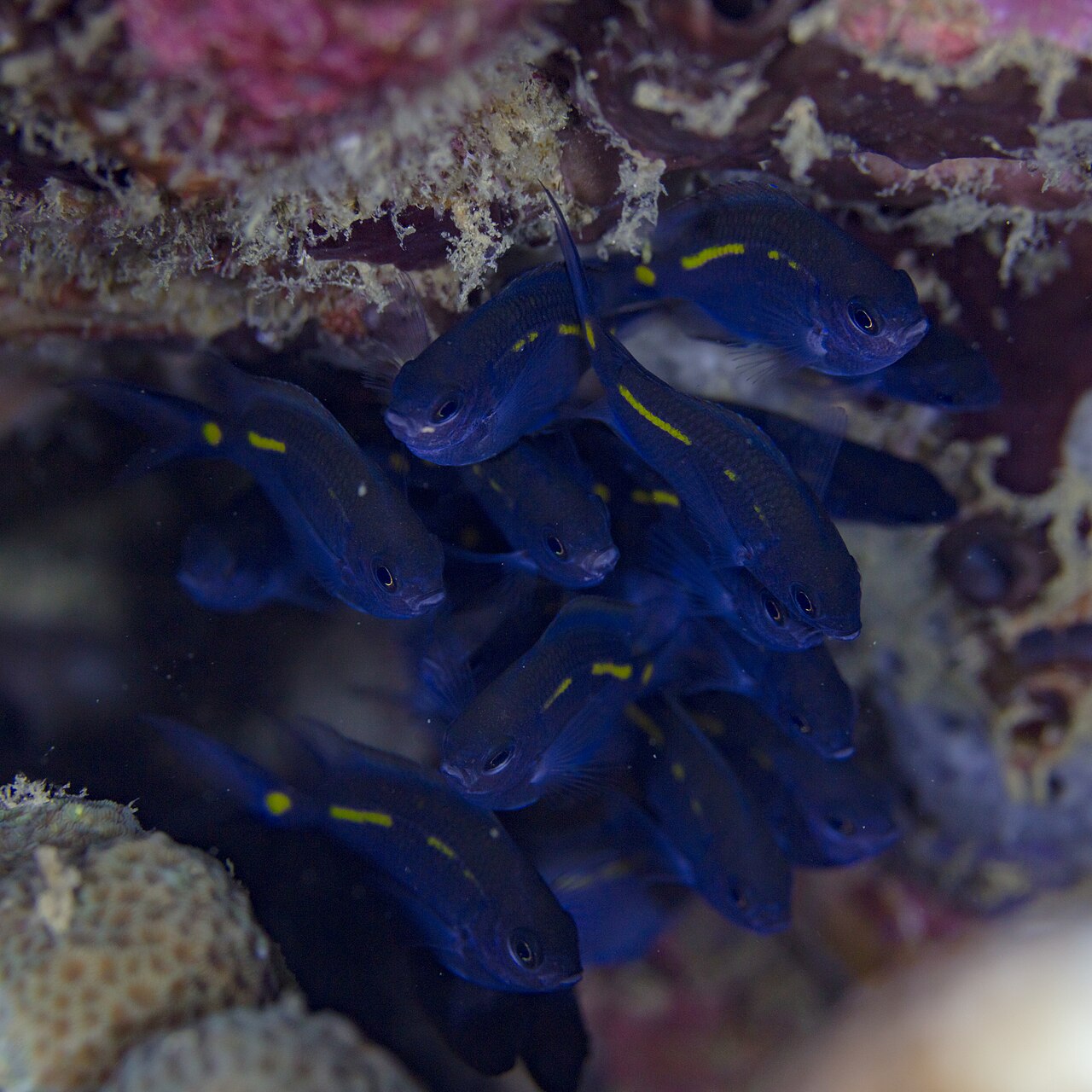
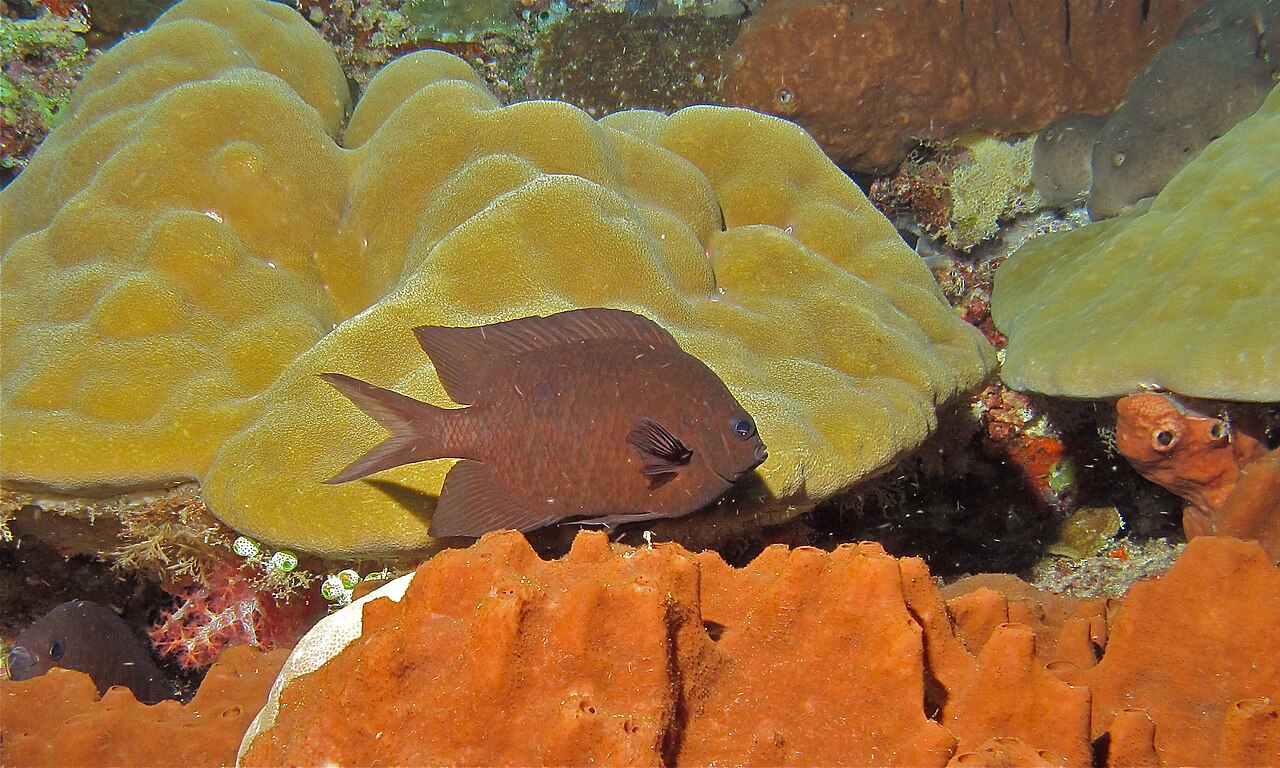
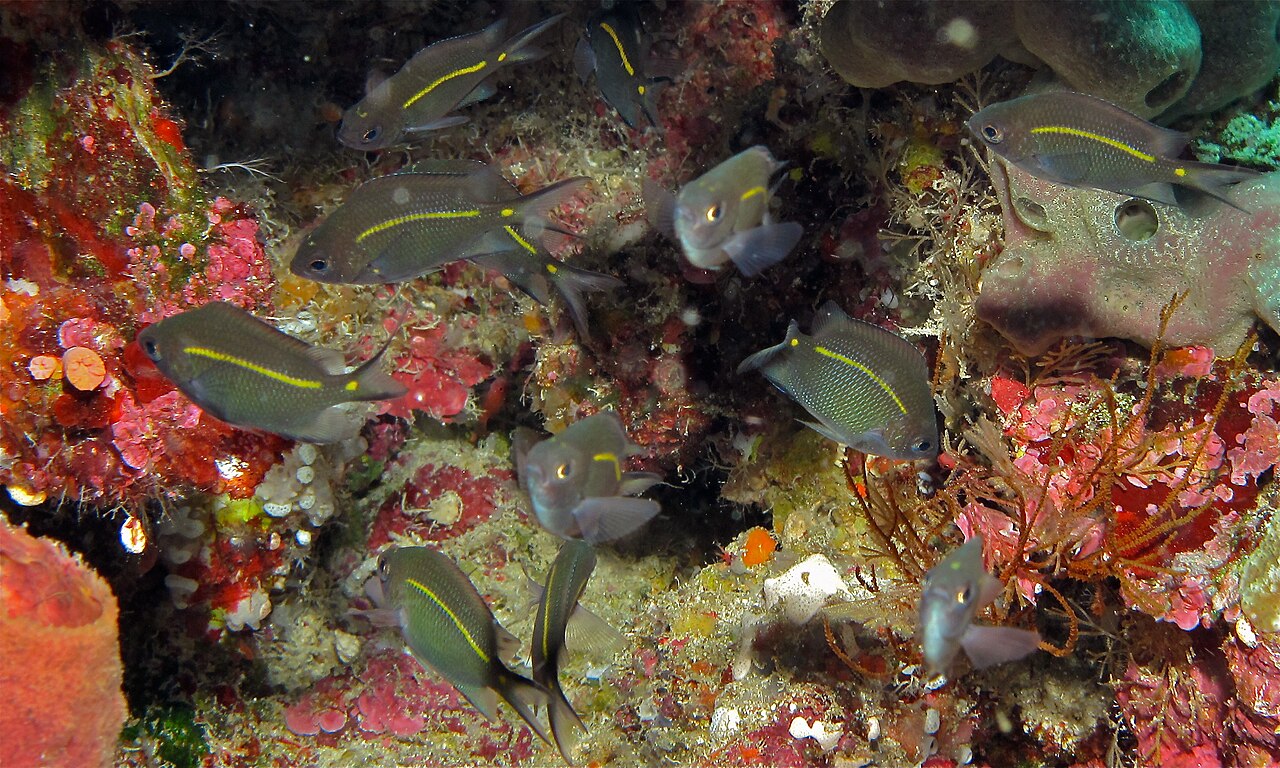
Adult spiny chromis reach a maximum length of fourteen centimetres, a modest size for a reef dweller. Their fin architecture is distinctive: seventeen dorsal spines paired with fourteen to sixteen soft dorsal rays, two anal spines, and fourteen to sixteen anal rays. Perhaps the most striking aspect of this species is its extraordinary geographic colour variation. Populations across its wide range display markedly different hues and patterns, a phenomenon scientists attribute to the fish's sedentary adult behaviour and the complete absence of a free-swimming larval phase. Without a pelagic stage to mix genes between distant reefs, local populations evolve in relative isolation, producing divergent colour morphs. This has led to an open taxonomic question: it remains unresolved whether all these colour forms represent a single species or whether they collectively constitute a species complex of closely related but distinct lineages. Juveniles, regardless of their adult colouration, typically bear a yellow stripe running along their flanks.
Direct Development and Reef-Bound Ecology
One of the most remarkable biological traits of the spiny chromis is its mode of larval development. Unlike the vast majority of coral reef fishes, which release eggs and larvae into the open ocean current for dispersal, this species exhibits direct development. Parents guard their brood from the moment eggs are laid on the reef substrate, through hatching, all the way to the fully formed juvenile stage. There is no pelagic larval phase at all. The consequence is profound: offspring settle on the very reef where they were born, never experiencing the oceanic "highway" that connects distant populations for most reef species. This tight local residency has driven high levels of local adaptation and is the engine behind the geographic colour variations noted elsewhere in the species. Ecologically, the spiny chromis is both planktivorous and algivorous, and it has been observed raiding algae cultivated by farming damselfish. Juveniles add another twist to their diet, consuming mucus secreted from their parent's skin, a behaviour drawn to a parallel with young discus.
Gallery
Related in Spiny chromis
Links follow this subject's own source article.
Elsewhere in Spiny chromis
Spotted an error? Know more?
Reader corrections go straight into our review queue. Suggest an edit · How this site is sourced