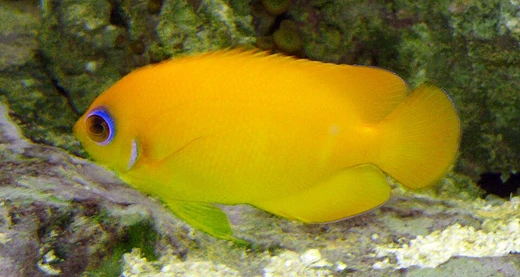
Lemonpeel angelfish (Centropyge flavissima)
Source-cited species reference: taxonomy from WoRMS, biology from FishBase, occurrence map from GBIF, conservation from IUCN Red List, description from Wikipedia.

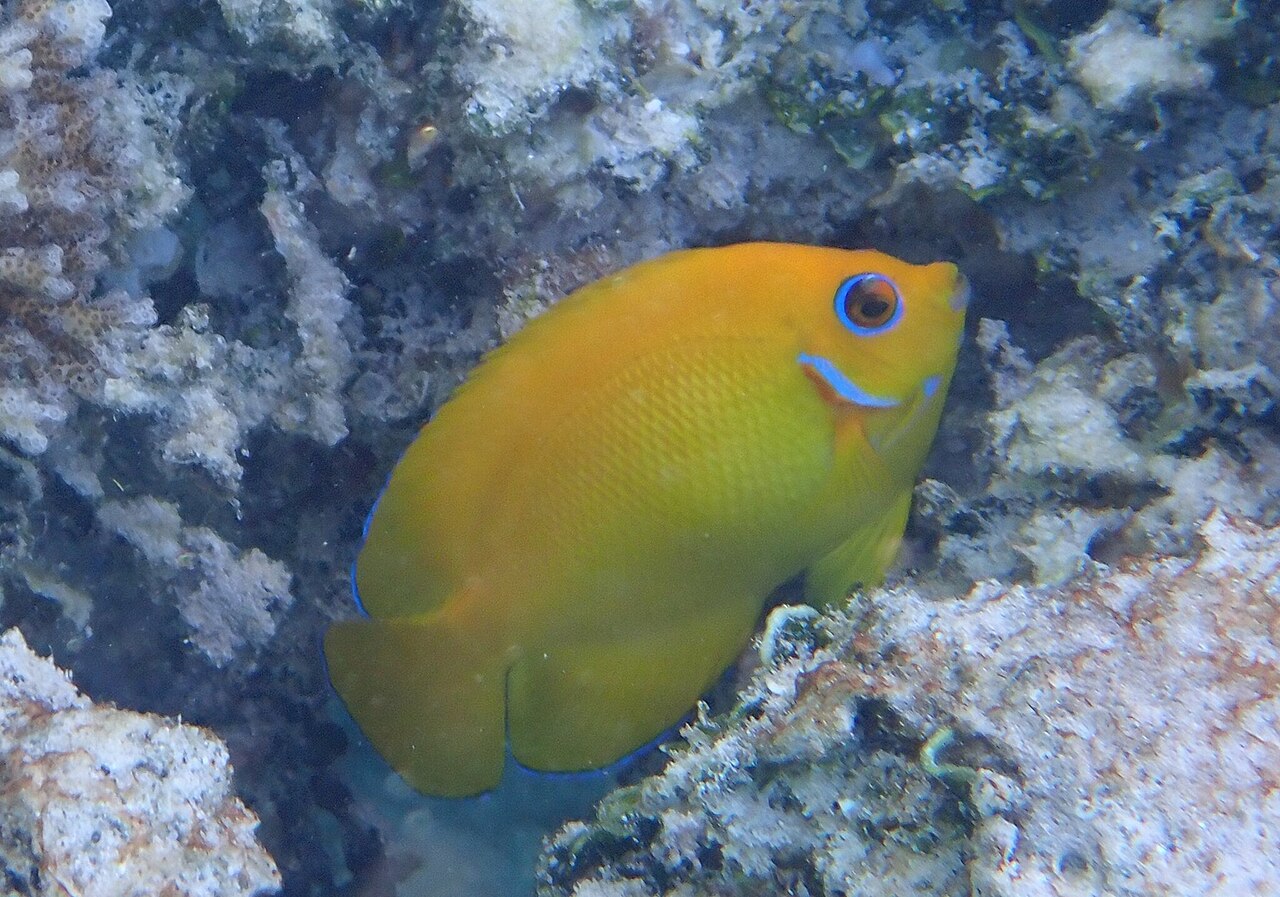
Kevin Lino NOAA/NMFS/PIFSC/ESD · Public domain
The lemonpeel angelfish (Centropyge flavissima), also known as the yellow angelfish, is a species of marine ray-finned fish belonging to the family Pomacanthidae. It is found in the Indo-Pacific region.
- Scientific name
- Centropyge flavissima
- Authority
- (Cuvier, 1831)
- Family
- Pomacanthidae
- Order
- Acanthuriformes
- Maximum length
- 14 cm
- Depth range
- 0–50 m
- Habitat zone
- reef-associated
- Iucn red list
- Least Concern
- Gbif occurrence records
- 15,498
Classification (WoRMS)
Full classification as recorded by WoRMS: Kingdom: Animalia · Phylum: Chordata · Class: Teleostei · Order: Acanthuriformes · Family: Pomacanthidae · Genus: Centropyge.
Accepted name: Centropyge flavissima · Authority: (Cuvier, 1831) · Taxonomic status: accepted · AphiaID: 278836.
Synonyms and superseded combinations recorded for this taxon: Centropyge flavissimus (Cuvier, 1831); Holacanthus flavissimus Cuvier, 1831.
Source: World Register of Marine Species (WoRMS) — https://www.marinespecies.org/aphia.php?p=taxdetails&id=278836 (CC BY 4.0). Accessed 2026-09-23.
Biology and life history (FishBase)
Measured values published by FishBase for Centropyge flavissima. Only fields the database actually holds for this species are shown; these are database values, not aquarium guidance.
Maximum length: 14 cm · Depth range: 0–50 m · Habitat zone: reef-associated · Body shape: short and / or deep · Vulnerability index: 10 of 100 · Fishery importance: subsistence fisheries · Aquarium trade: commercial.
FishBase notes: Adults occur in coral rich areas of shallow lagoon and exposed seaward reefs from the lower surge zone (Ref. 9710) to 50 m (Ref. 30874). Benthopelagic (Ref. 58302). Juveniles secretive (Ref. 9710). Feed mainly on algae. Live as long as 11 years in captivity (Ref. 37816). Frequently exported through the aquarium trade (Ref. 48391). Minimum depth reported taken from Ref. 128797.
Source: FishBase species summary (SpecCode 5457) — https://www.fishbase.se/summary/Centropyge-flavissima.html (CC BY-NC 3.0 — non-commercial use only). Accessed 2026-09-23.
Distribution and occurrence records (GBIF)
15,498 georeferenced occurrence records for Centropyge flavissima are published through GBIF from 31 countries or marine areas. The map above plots 177 distinct locations from a sample of 3,000 records, omitting 7 inland records that carry an institution's coordinates rather than a collection site; it shows where the species has been observed and reported, not a modelled range.
Most records by country or area: American Samoa (4,585); United States Minor Outlying Islands (4,217); Northern Mariana Islands (2,651); French Polynesia (1,680); Guam (491).
The full country table, WoRMS marine regions and the sampling notes are on this species' Distribution page.
Source: GBIF Occurrence Search (taxonKey 2396499) — https://www.gbif.org/occurrence/search?taxon_key=2396499&has_coordinate=true (records CC0 / CC BY); WoRMS distribution records (MarineRegions) — https://www.marinespecies.org/aphia.php?p=taxdetails&id=278836 (CC BY 4.0); Natural Earth 110m basemap — https://www.naturalearthdata.com/ (public domain). Accessed 2026-09-23.
Conservation status (IUCN Red List)
The IUCN Red List assesses Centropyge flavissima (Cuvier, 1831) as Least Concern (code LC). No trend, population estimate or threat analysis is given here, because none is available from this source without the Red List API; follow the source link for the full assessment, including its date.
Source: IUCN Red List of Threatened Species (taxon 165878) — https://www.iucnredlist.org/species/165878/0; GBIF IUCN Red List category endpoint (taxonKey 2396499) — https://api.gbif.org/v1/species/2396499/iucnRedListCategory. Accessed 2026-09-23.
Description and natural history (Wikipedia)
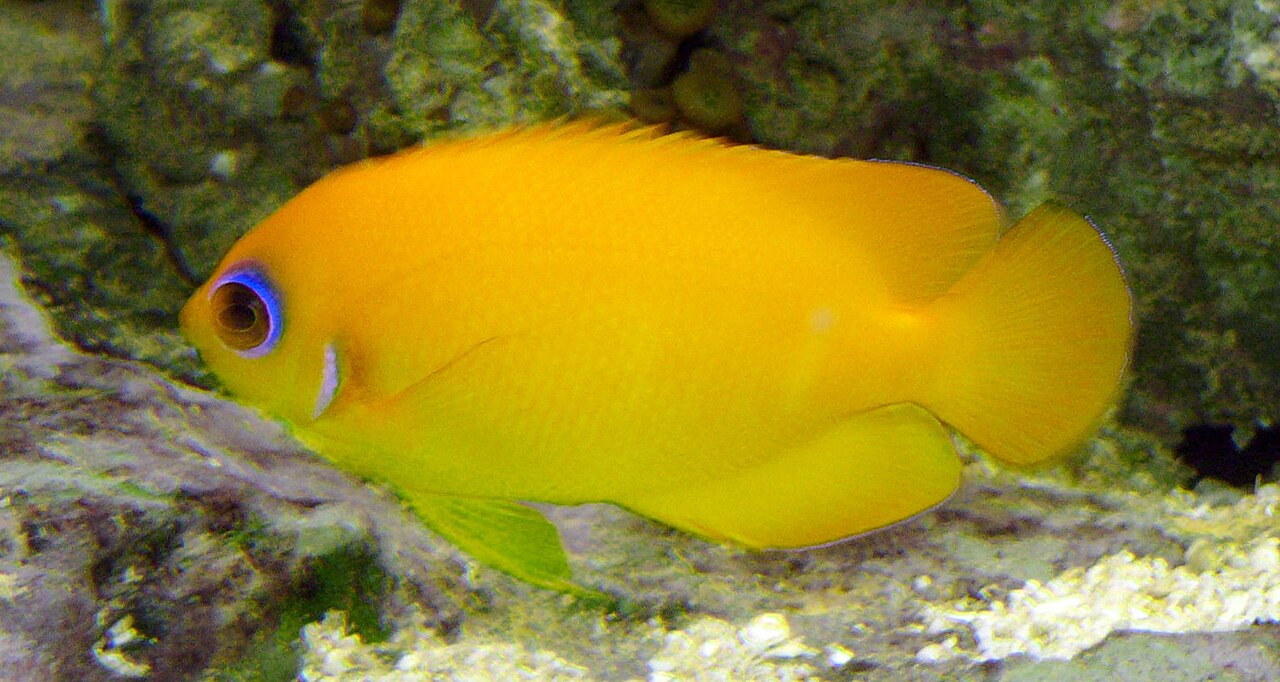
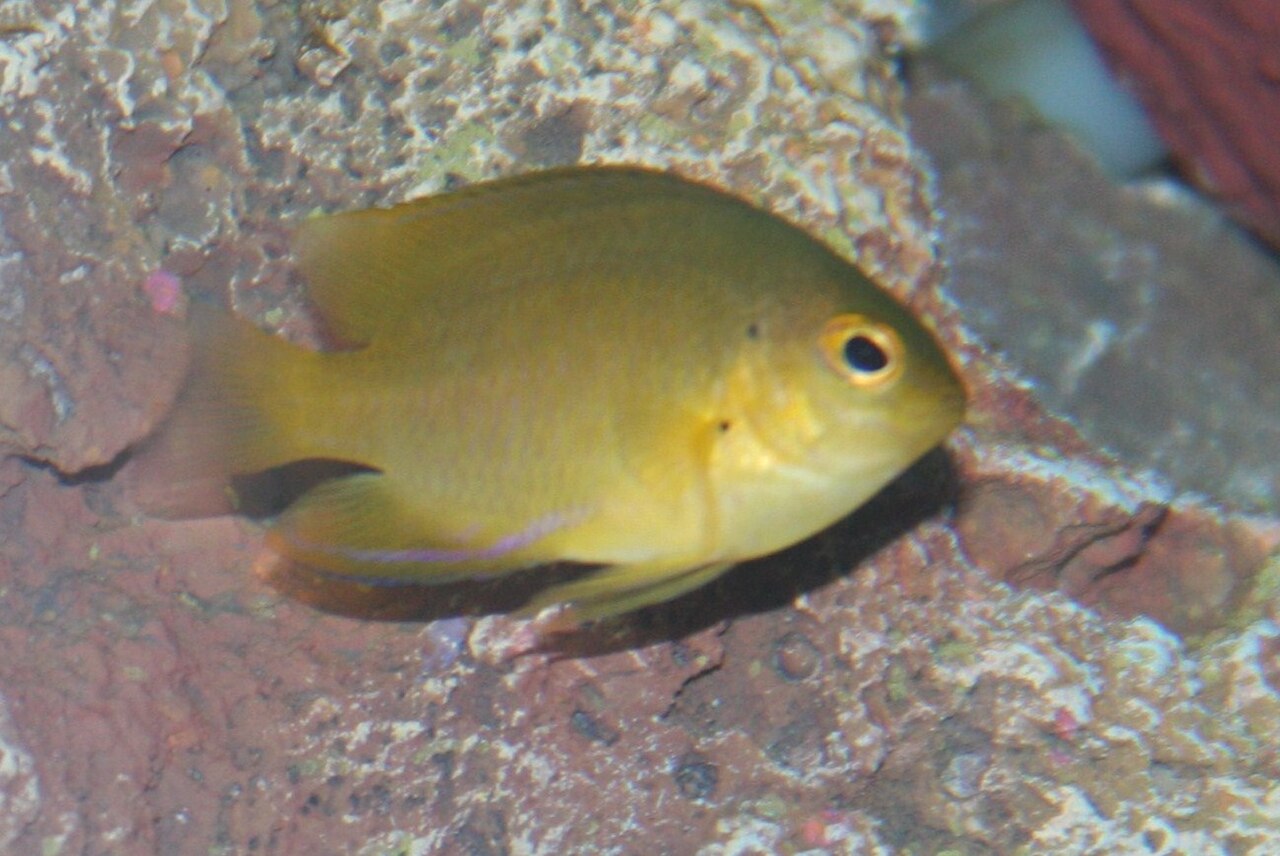
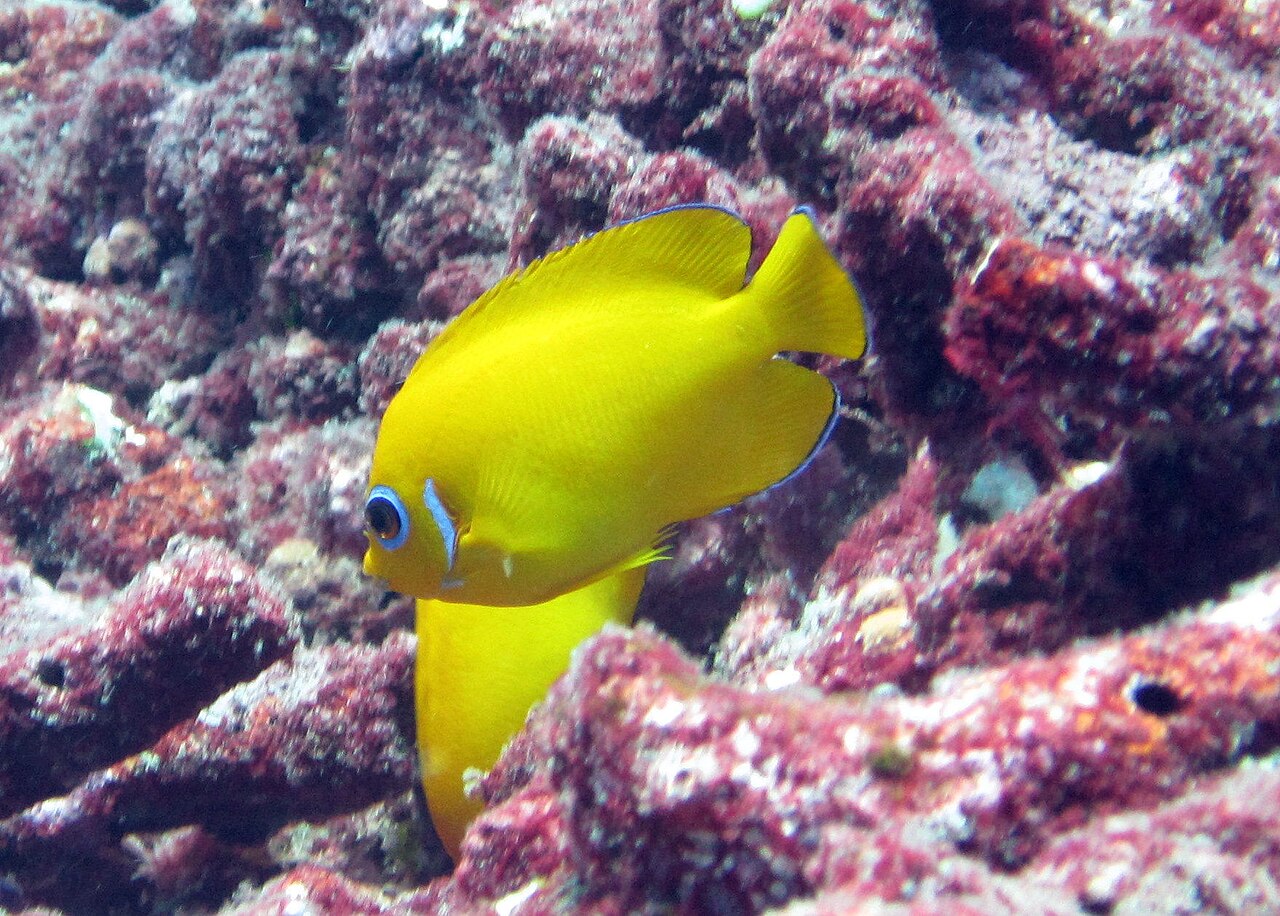
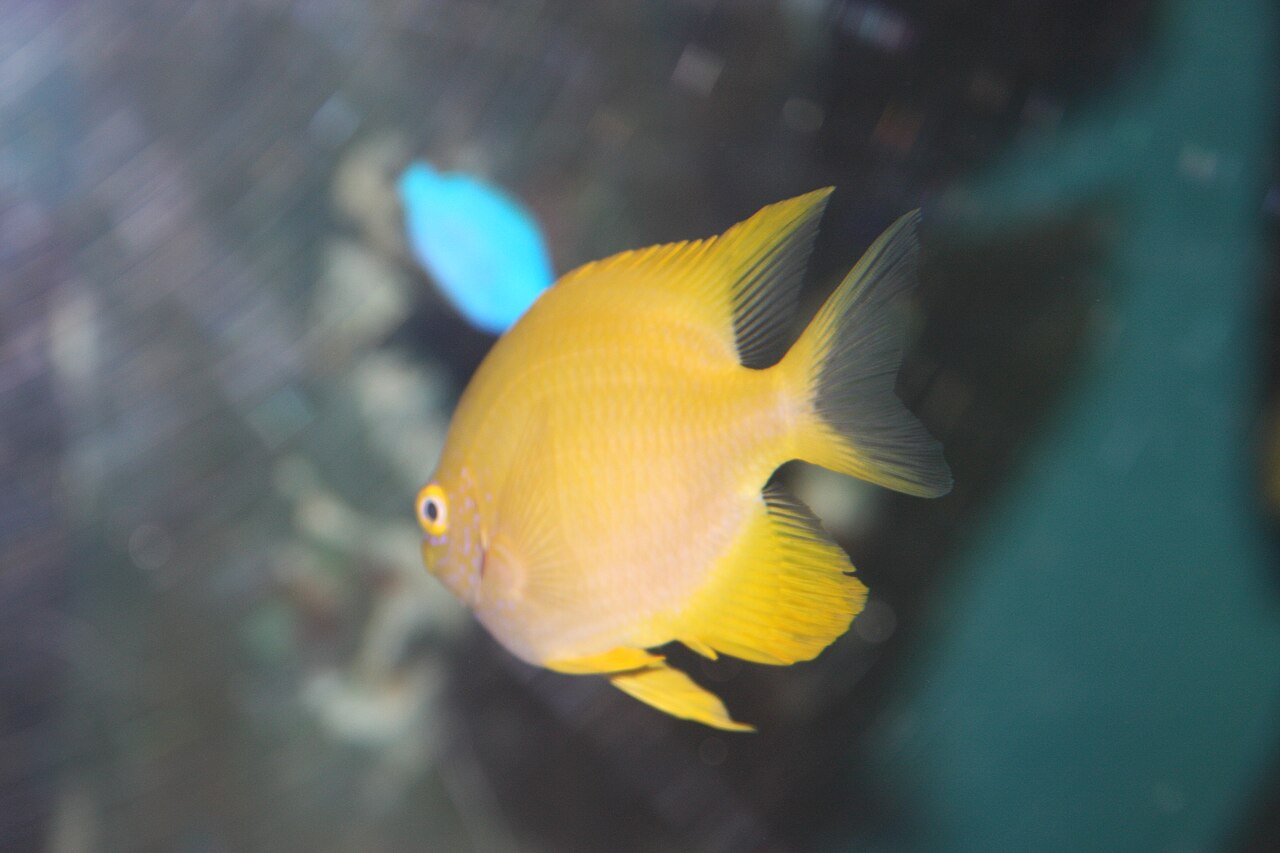
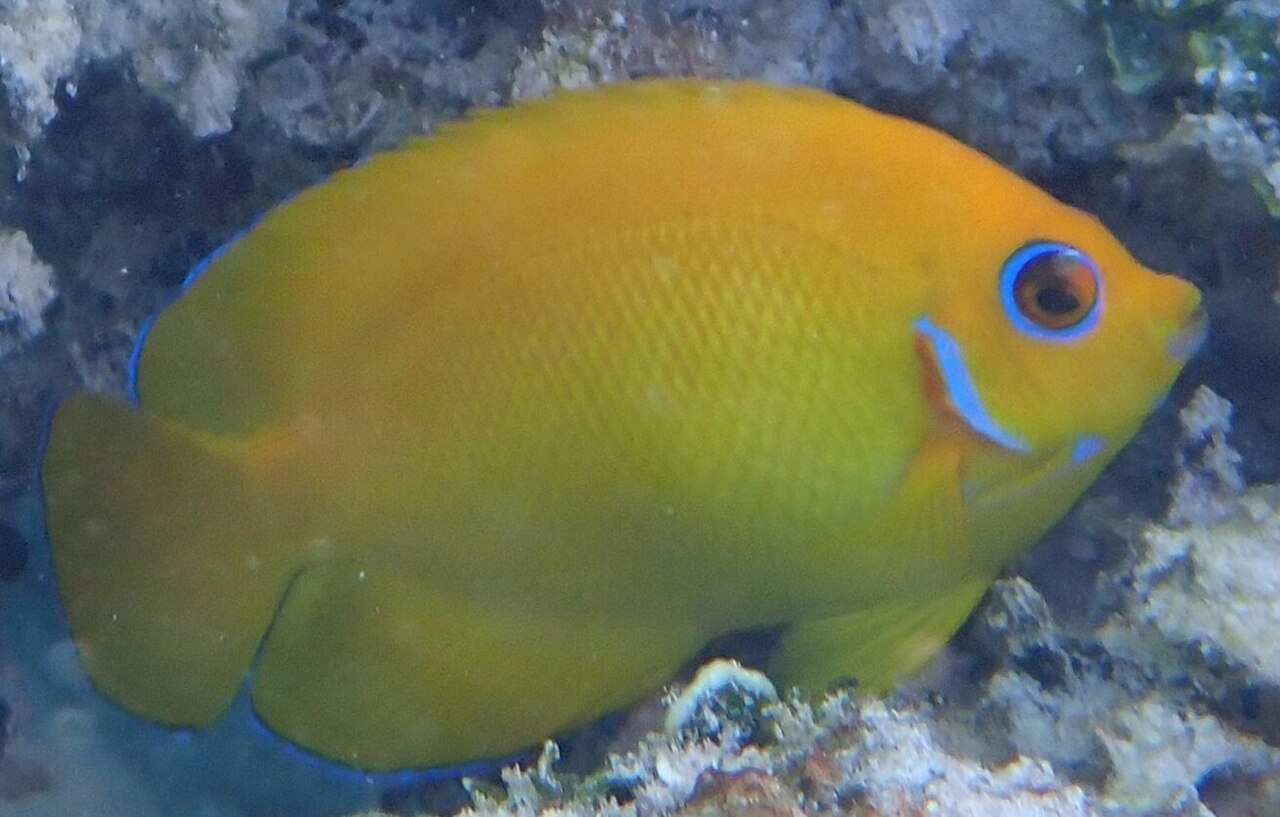
The lemonpeel angelfish is bright yellow in colour with a bluish or whitish ring surrounding the eye. There is a black blotch on the rear margin of the gill cover. The spine on the preoperculum is blue, and the dorsal, anal and caudal fins have blue margins. Juveniles have an ocellus on the flank that is black with blue edges. The dorsal fin contains 14 spines and 15-16 soft rays, while the anal fin has 3 spines and 16 soft rays. This species attains a maximum total length of 14 cm.
The lemonpeel angelfish is found in the Indo-Pacific; the core of its distribution is in the Central Pacific from the Ryukyu Islands and Ogasawara Islands of Southern Japan in the north, east to the Tuamotu Islands and south to Australia. It also occurs around some Indian Ocean islands. In Australia, it occurs from the northern Great Barrier Reef south to Moreton Bay in Queensland and the Solitary Islands in New South Wales. In addition, it is found off Lord Howe Island in the Tasman Sea and the Australian Indian Ocean territories of Christmas Island and Cocos (Keeling) Islands. Sightings in parts of the western Pacific Ocean likely represent vagrants rather than established populations. It is absent from Hawaii and Johnston Atoll.
The lemonpeel angelfish is found in shallow water, typically shallower than 20 m, in coral-rich areas in lagoons and seaward reefs. Juveniles are more secretive than the adults. They are normally encountered in small groups, a harem of a single male and several females. This species is a protogynous hermaphrodite; and if there is no male in the group, the dominant female may change to a male, a change that can be reversed. It feeds mainly on filamentous algae.
The lemonpeel angelfish was first formally described as Holocanthus flavissimus in 1831 by the French anatomist Georges Cuvier (1769-1832) with the type locality given as Uléa in the Caroline Islands. The specific name flavissima means "very yellow" referring to its colour. Within the genus Centropyge, this species is considered, by some authorities, to be in the subgenus Centropyge.
The lemonpeel angelfish is common in the aquarium trade.
Source: Wikipedia: Lemonpeel angelfish — https://en.wikipedia.org/wiki/Lemonpeel_angelfish (CC BY-SA 4.0). Accessed 2026-09-23.
Gallery
Related in Lemonpeel angelfish
Links follow this subject's own source article.
Elsewhere in Lemonpeel angelfish
Spotted an error? Know more?
Reader corrections go straight into our review queue. Suggest an edit · How this site is sourced