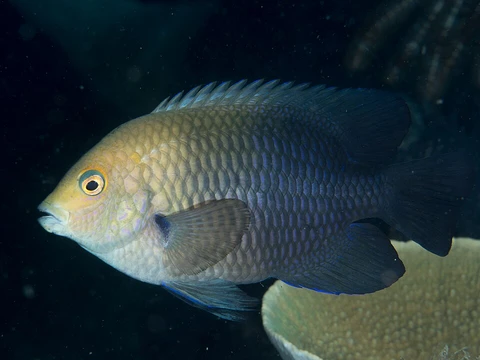
Lagoon damselfish (Hemiglyphidodon plagiometopon)
Source-cited species reference: taxonomy from WoRMS, biology from FishBase, occurrence map from GBIF, conservation from IUCN Red List, description from Wikipedia.

Rickard Zerpe · CC BY 2.0
The lagoon damselfish (Hemiglyphidodon plagiometopon), also known as the sweetlip damsel, is a species of ray-finned fish, a damselfish from the family Pomacentridae. It is a larger species of damselfish which is found in the Indo-Pacific where it occurs around branching corals in sheltered areas of reefs.
- Scientific name
- Hemiglyphidodon plagiometopon
- Authority
- (Bleeker, 1852)
- Family
- Pomacentridae
- Order
- Ovalentaria incertae sedis
- Maximum length
- 18 cm
- Depth range
- 1–20 m
- Habitat zone
- reef-associated
- Iucn red list
- Least Concern
- Gbif occurrence records
- 1,008
Physical Form and Colour Across Life Stages
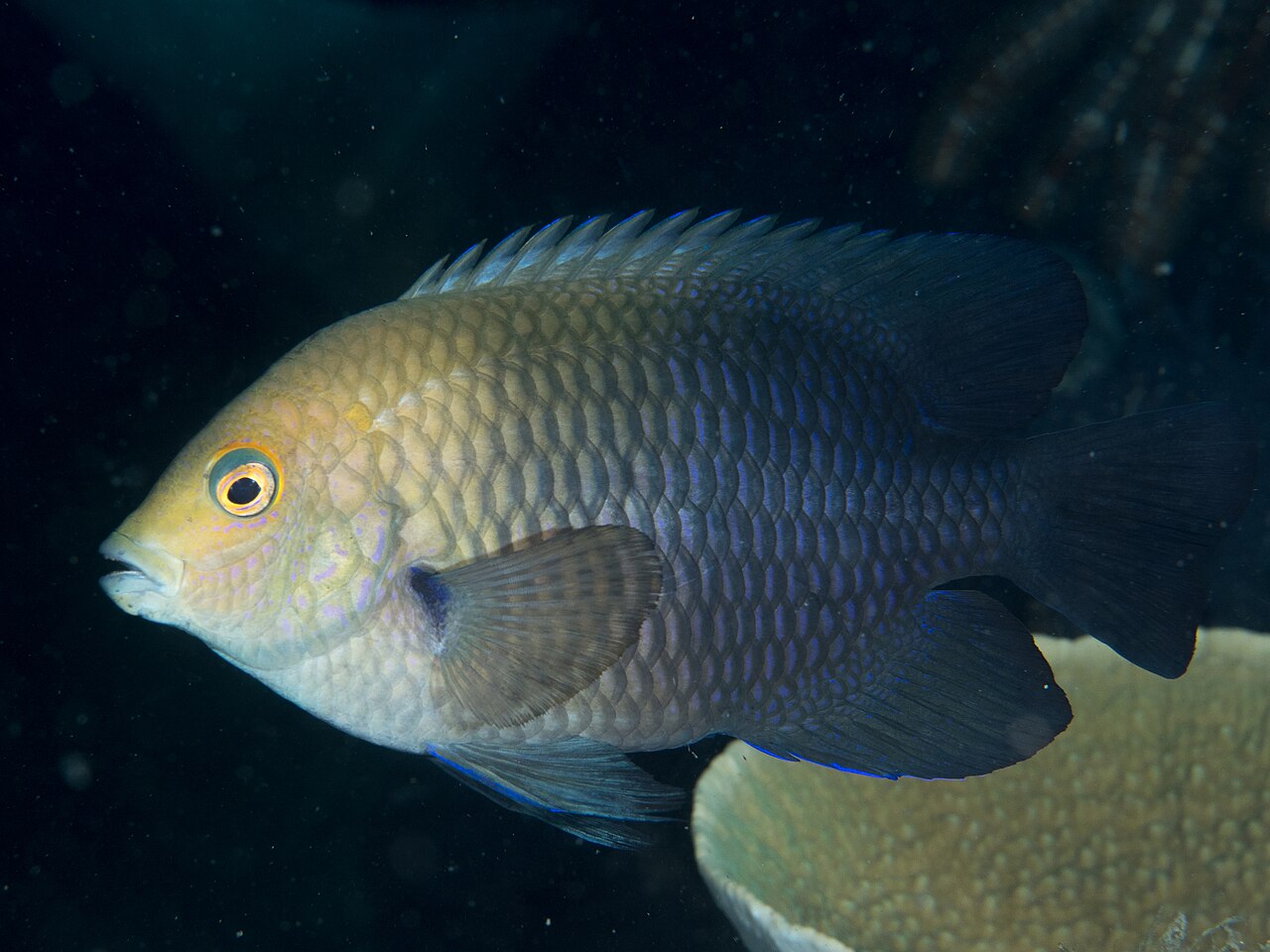
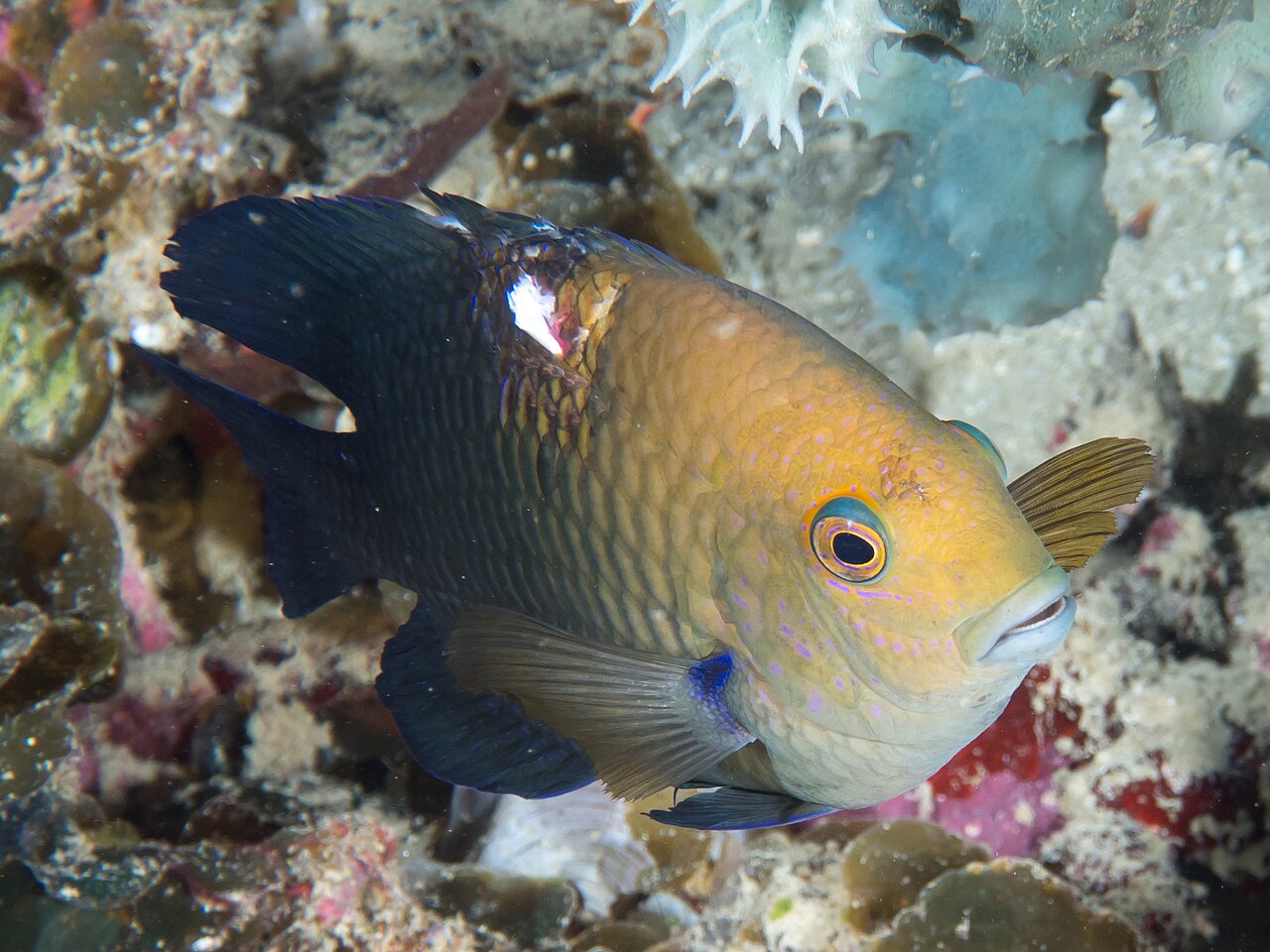
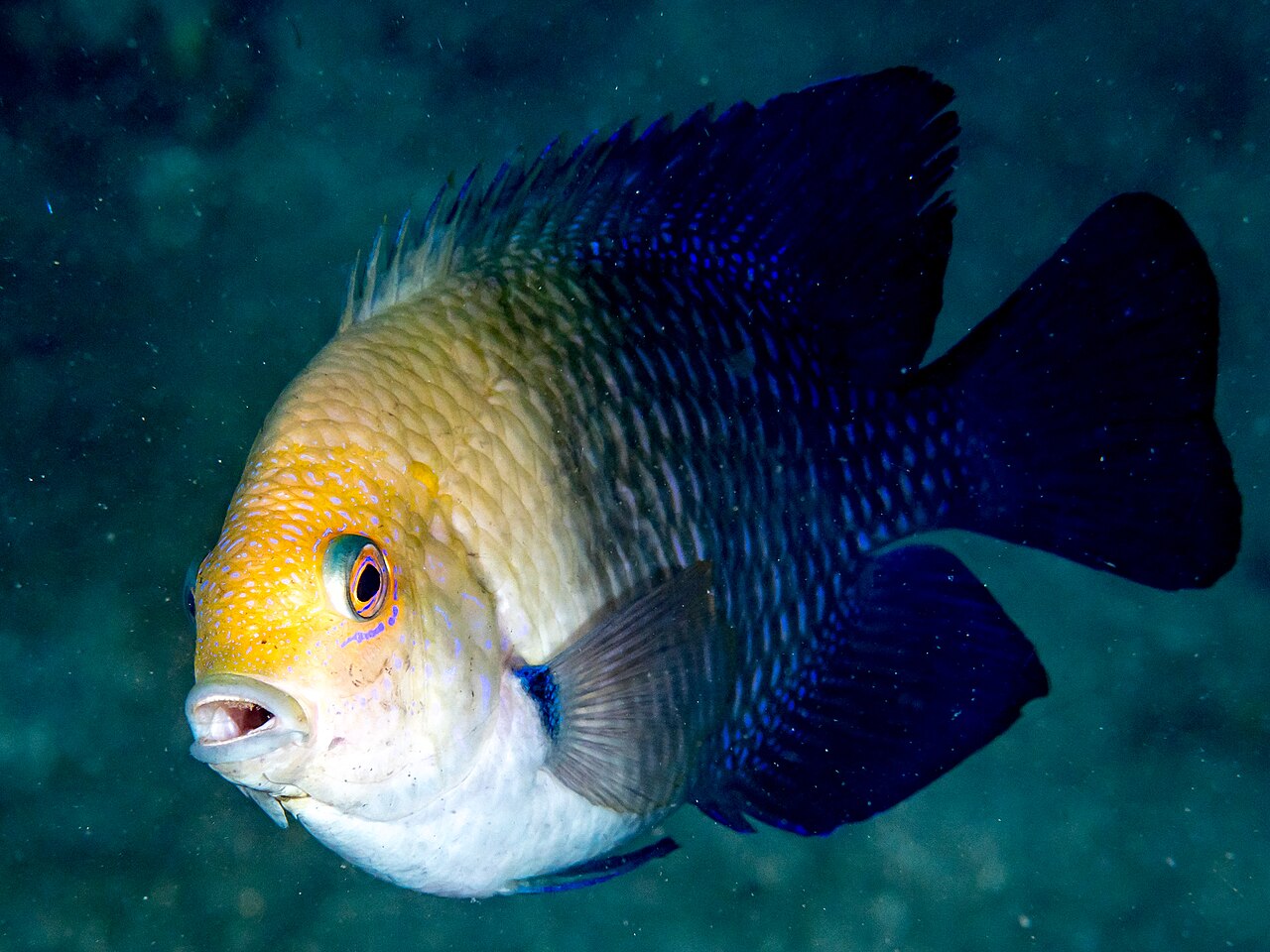
The lagoon damselfish, sometimes called the sweetlip damsel, stands out among its relatives as one of the larger members of the Pomacentridae family, reaching a maximum body length of eighteen centimetres. Adults present as a predominantly brown fish whose head often takes on a pale russet hue, with the overall coloration deepening progressively toward the tail. Pinkish markings accent the operculum, adding a subtle contrast to the earthy palette. In some individuals, the sole clearly distinguishing feature is a thin yellow ring around the eye. Juveniles, by contrast, display a far more vivid and complex pattern: the head and anterior body shift between dark blue and brownish tones, while the rear and ventral surfaces glow yellow. A striking iridescent blue eyespot adorns the dorsal fin, and additional blue bands and spots cluster around the head region. This dramatic transformation from a multicoloured juvenile to a uniformly brown adult makes the species a notable example of ontogenetic colour change within the damselfish group.
Geographic Range and Preferred Habitat
The lagoon damselfish occupies a broad swath of the Indo-Pacific, stretching from the eastern Indian Ocean across Thailand, Indonesia, and the Philippines, through the Timor Sea, and into the western Pacific. Its range extends southward to Australian waters, northward to Chinese coastal regions, and eastward as far as the Solomon Islands. Within this extensive distribution, the species shows a clear preference for sheltered reef environments and lagoons rather than exposed outer reef slopes. It thrives in areas where water turbidity is elevated and the seafloor is composed of silty substrate, typically positioning itself at the base of branching coral formations. Depth records place the fish between one and twenty metres, a range that encompasses both shallow lagoon pools and moderately deep reef flats. This affinity for calmer, sediment-rich microhabitats distinguishes it from many congenerics that favour clearer, more open reef zones, and it underscores the species' ecological niche within the structurally complex but often turbid inshore waters of the tropical Pacific and Indian Oceans.
Dietary Specialisation and the Gill Raker Adaptation
What sets the lagoon damselfish apart from most of its damselfish relatives is its feeding strategy. Rather than grazing primarily on algae like many members of the Pomacentridae, this species is a detritivore, relying on fine organic particles suspended in or settled on the reef for its nutrition. This dietary specialisation is underpinned by a remarkable anatomical adaptation: the lagoon damselfish possesses up to three times the number of gill rakers found in other damselfish species. These additional bony projections along the gill arches function as a finer filtering apparatus, enabling the fish to extract tiny detrital particles from the water column and silty substrates it inhabits. While detritus forms the bulk of its diet, the fish will opportunistically consume small quantities of algae and invertebrates encountered during foraging. The species is also notably territorial, with individuals actively defending a specific patch of algal-covered reef. This combination of a specialised filter-feeding morphology, a broad but particulate-based diet, and site-specific territoriality paints a picture of a fish finely tuned to the nutrient-rich, sediment-laden environments it favours.
Courtship, Nesting, and Conservation Prospects
Reproduction in the lagoon damselfish follows a paired, nest-guarding strategy. Breeding pairs first clear a section of substrate to prepare a nesting site. The courtship sequence that follows is dynamic: the pair engages in a mating dance characterised by rapid swimming and pronounced fin movements. During this display, males frequently darken in colour and may develop conspicuous white blotches across their bodies. Egg deposition occurs at dawn, and the resulting demersal eggs adhere firmly to the prepared substrate. The male then assumes sole responsibility for guarding and aerating the clutch until the young are ready to disperse. Despite this intricate reproductive investment, the species is currently assessed as Least Concern on the IUCN Red List of Threatened Species. However, evaluators note that habitat degradation and direct human exploitation represent potential future pressures. Given the fish's dependence on sheltered, silty reef environments and its relatively limited depth range, any further deterioration of lagoon and inshore reef quality could erode the population stability that currently underpins its favourable conservation status.
Gallery
Related in Lagoon damselfish
Links follow this subject's own source article.
Elsewhere in Lagoon damselfish
Spotted an error? Know more?
Reader corrections go straight into our review queue. Suggest an edit · How this site is sourced