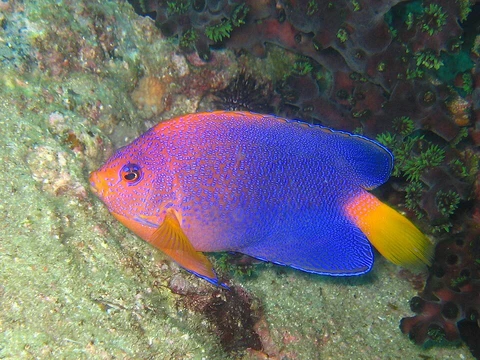
Japanese angelfish (Centropyge interrupta)
Source-cited species reference: taxonomy from WoRMS, biology from FishBase, occurrence map from GBIF, conservation from IUCN Red List, description from Wikipedia.

Takashi Hososhima · CC BY-SA 2.0
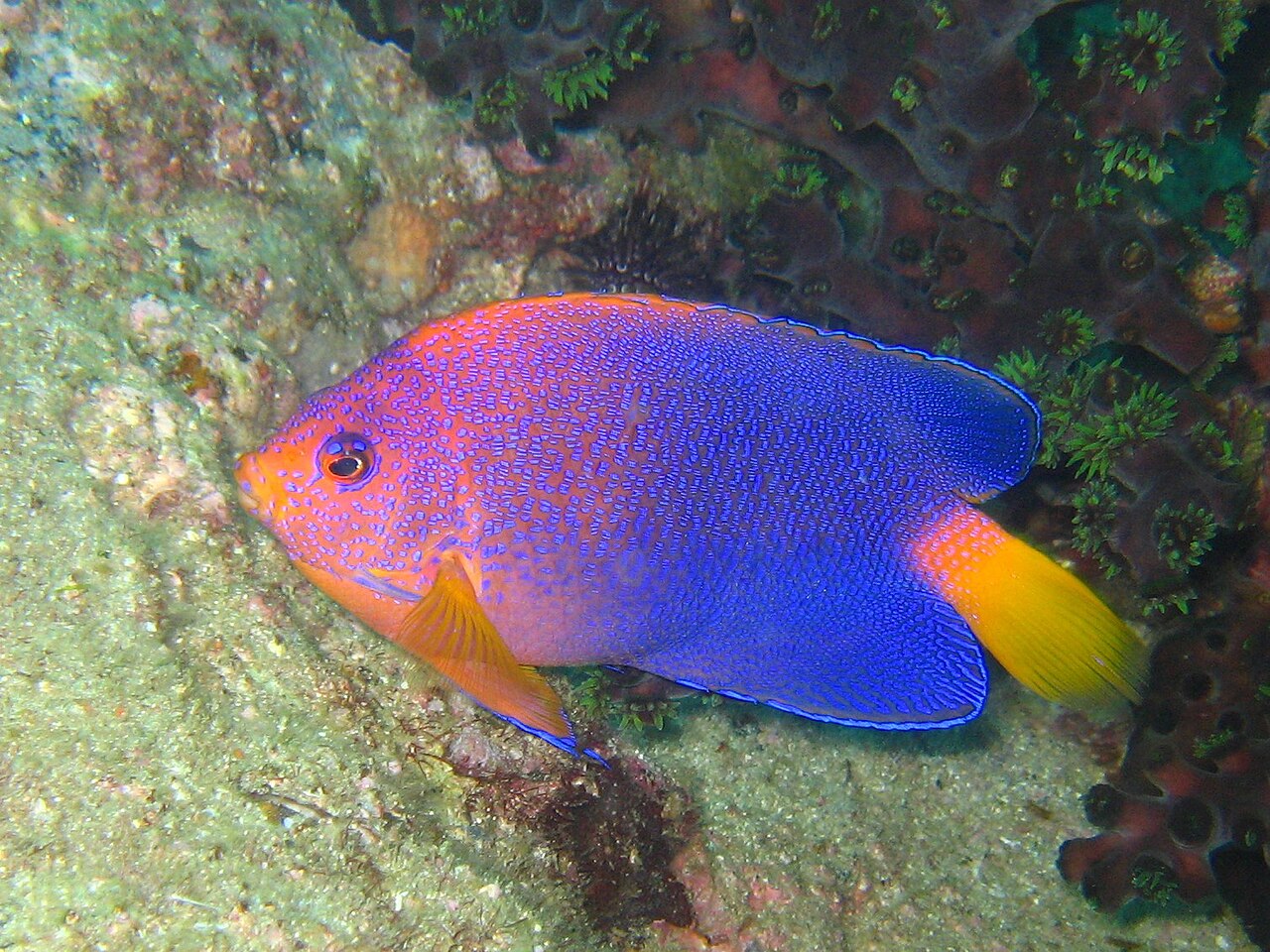
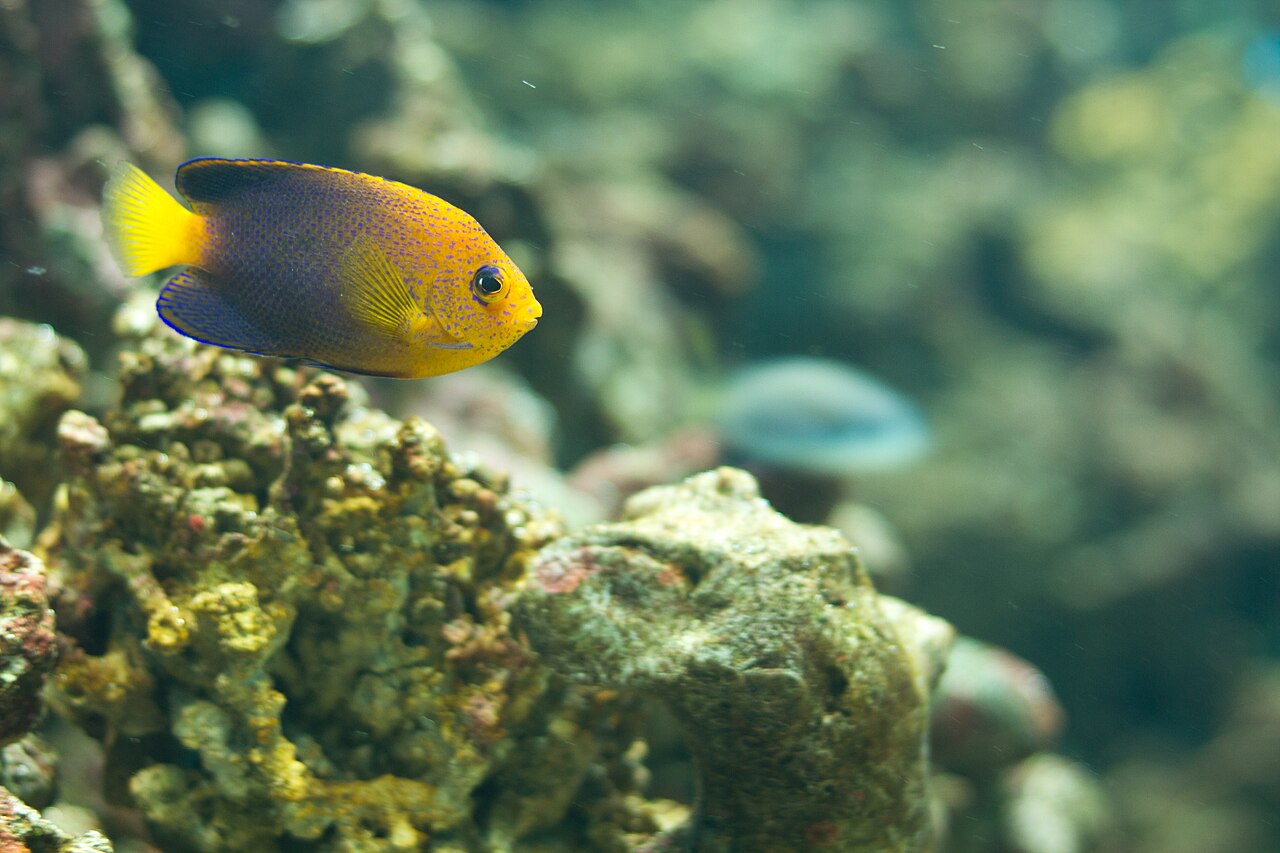
The Japanese angelfish (Centropyge interrupta) or Japanese pygmy angelfish, is a species of marine ray-finned fish, a marine angelfish belonging to the family Pomacanthidae. It is found in the western Pacific Ocean.
- Scientific name
- Centropyge interrupta
- Authority
- (Tanaka, 1918)
- Family
- Pomacanthidae
- Order
- Acanthuriformes
- Maximum length
- 15 cm
- Depth range
- 12–60 m
- Habitat zone
- reef-associated
- Iucn red list
- Least Concern
- Gbif occurrence records
- 42
Taxonomic Puzzle of a Paraphyletic Genus
The genus Centropyge presents a persistent headache for taxonomists working to untangle its lineage. Rather than forming a clean, monophyletic group, it is actually paraphyletic, with the genera Genicanthus and the polyphyletic Apolemichthys nested inside it. The genus is currently divided into three subgenera. Xiphypops encompasses the C. acanthops complex, which includes C. acanthops, C. argi, C. aurantonota, and C. resplendens. Paracentropyge groups together C. boylei, C. multifasciata, and C. venusta. Both of these subgenera are monophyletic and have received support from researchers for elevation to full genus rank. The remaining species sit in the nominate subgenus Centropyge, which is not monophyletic. Complicating matters further, different studies have proposed different species complexes within the genus, depending on how each author defines the term 'species complex,' making the taxonomy a genuinely moving target.
Protogynous Hermaphroditism and Sex Reversal
One of the most remarkable facets of Centropyge biology is its protogynous hermaphroditism. Every individual begins its adult life as a female, and the dominant member of a social group can transform into a male within a matter of days. Should that male later lose its social standing, a reversal back to female is possible, though the process demands considerably more time than the initial transition. What sets this genus apart is that, uniquely among protogynous fish, males of at least one species — C. ferrugata — are documented as capable of reversing the sex change and reverting to a female. Externally, telling the sexes apart is difficult; females tend to be slightly shorter and display more rounded fins. This entire reproductive system is tightly coupled to the harem social structure, where a single dominant male oversees a group of females, ensuring that a replacement male can emerge rapidly if the current one is lost.
Small Fish, Wide Oceans, and Harem Life
Centropyge members are small ray-finned marine angelfish in the family Pomacanthidae, with no species surpassing 15 cm in total length. Despite their modest size, their range is vast, spanning reef habitats across the Atlantic, Indian, and Pacific Oceans. In the wild, these fish organize themselves into harem groups: one dominant male presides over a cohort of females, a structure that directly underpins their sex-change biology. Their foraging is opportunistic and benthic, with most species grazing on algae, sponges, and small benthic invertebrates found on reef surfaces. The genus currently encompasses 35 recognized species distributed across three subgenera and several still-debated species complexes, reflecting both the diversity of these dwarf angels and the ongoing work needed to resolve their exact relationships.
Dwarf Angels in the Reef Aquarium
Keeping Centropyge in captivity rewards patience and preparation. These dwarf angels thrive best in mature reef tanks that offer stable, high-quality water and abundant well-cured live rock, which supplements their natural diet of algae, sponges, and small benthic invertebrates. Nutrition is a critical consideration for the aquarist: when underfed, Centropyge angels may begin nipping at corals and sessile invertebrates, turning a peaceful reef into a source of conflict. Behaviorally, these fish are often quite shy upon introduction, retreating into corals, caves, and crevices. Given time, appropriate tank mates, and a properly sized environment, however, they establish their territory and grow noticeably more outgoing and active, revealing the bold, colorful personalities that make them a prized addition to a well-maintained reef system.
Gallery
Spotted an error? Know more?
Reader corrections go straight into our review queue. Suggest an edit · How this site is sourced