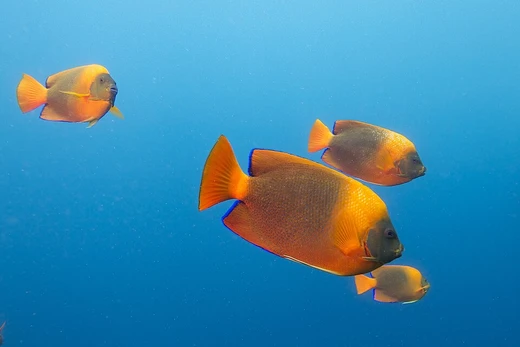
Clarion angelfish (Holacanthus clarionensis)
Source-cited species reference: taxonomy from WoRMS, biology from FishBase, occurrence map from GBIF, conservation from IUCN Red List, description from Wikipedia.

Elias Levy · CC BY 2.0
The Clarion angelfish (Holacanthus clarionensis) is a species of marine ray-finned fish, a marine angelfish belonging to the family Pomacanthidae. It is found in the eastern Pacific Ocean, almost exclusively near islands off the Pacific coast of Mexico.
- Scientific name
- Holacanthus clarionensis
- Authority
- Gilbert, 1890
- Family
- Pomacanthidae
- Order
- Acanthuriformes
- Maximum length
- 20 cm
- Habitat zone
- reef-associated
- Iucn red list
- Vulnerable
- Gbif occurrence records
- 395
Classification (WoRMS)
Full classification as recorded by WoRMS: Kingdom: Animalia · Phylum: Chordata · Class: Teleostei · Order: Acanthuriformes · Family: Pomacanthidae · Genus: Holacanthus.
Accepted name: Holacanthus clarionensis · Authority: Gilbert, 1890 · Taxonomic status: accepted · AphiaID: 276013.
Source: World Register of Marine Species (WoRMS) — https://www.marinespecies.org/aphia.php?p=taxdetails&id=276013 (CC BY 4.0). Accessed 2026-09-23.
Biology and life history (FishBase)
Measured values published by FishBase for Holacanthus clarionensis. Only fields the database actually holds for this species are shown; these are database values, not aquarium guidance.
Maximum length: 20 cm · Habitat zone: reef-associated · Body shape: short and / or deep · Vulnerability index: 10 of 100 · Fishery importance: commercial · Aquarium trade: commercial.
Source: FishBase species summary (SpecCode 11172) — https://www.fishbase.se/summary/Holacanthus-clarionensis.html (CC BY-NC 3.0 — non-commercial use only). Accessed 2026-09-23.
Distribution and occurrence records (GBIF)
395 georeferenced occurrence records for Holacanthus clarionensis are published through GBIF from 4 countries or marine areas. The map above plots 23 distinct locations from a sample of 395 records, omitting 5 inland records that carry an institution's coordinates rather than a collection site; it shows where the species has been observed and reported, not a modelled range.
Most records by country or area: Mexico (390); France (2); Costa Rica (1); Sweden (1).
Source: GBIF Occurrence Search (taxonKey 5211463) — https://www.gbif.org/occurrence/search?taxon_key=5211463&has_coordinate=true (records CC0 / CC BY); WoRMS distribution records (MarineRegions) — https://www.marinespecies.org/aphia.php?p=taxdetails&id=276013 (CC BY 4.0); Natural Earth 110m basemap — https://www.naturalearthdata.com/ (public domain). Accessed 2026-09-23.
Conservation status (IUCN Red List)
The IUCN Red List assesses Holacanthus clarionensis Gilbert, 1890 as Vulnerable (code VU). No trend, population estimate or threat analysis is given here, because none is available from this source without the Red List API; follow the source link for the full assessment, including its date.
Source: IUCN Red List of Threatened Species (taxon 165861) — https://www.iucnredlist.org/species/165861/0; GBIF IUCN Red List category endpoint (taxonKey 5211463) — https://api.gbif.org/v1/species/5211463/iucnRedListCategory. Accessed 2026-09-23.
Description and natural history (Wikipedia)
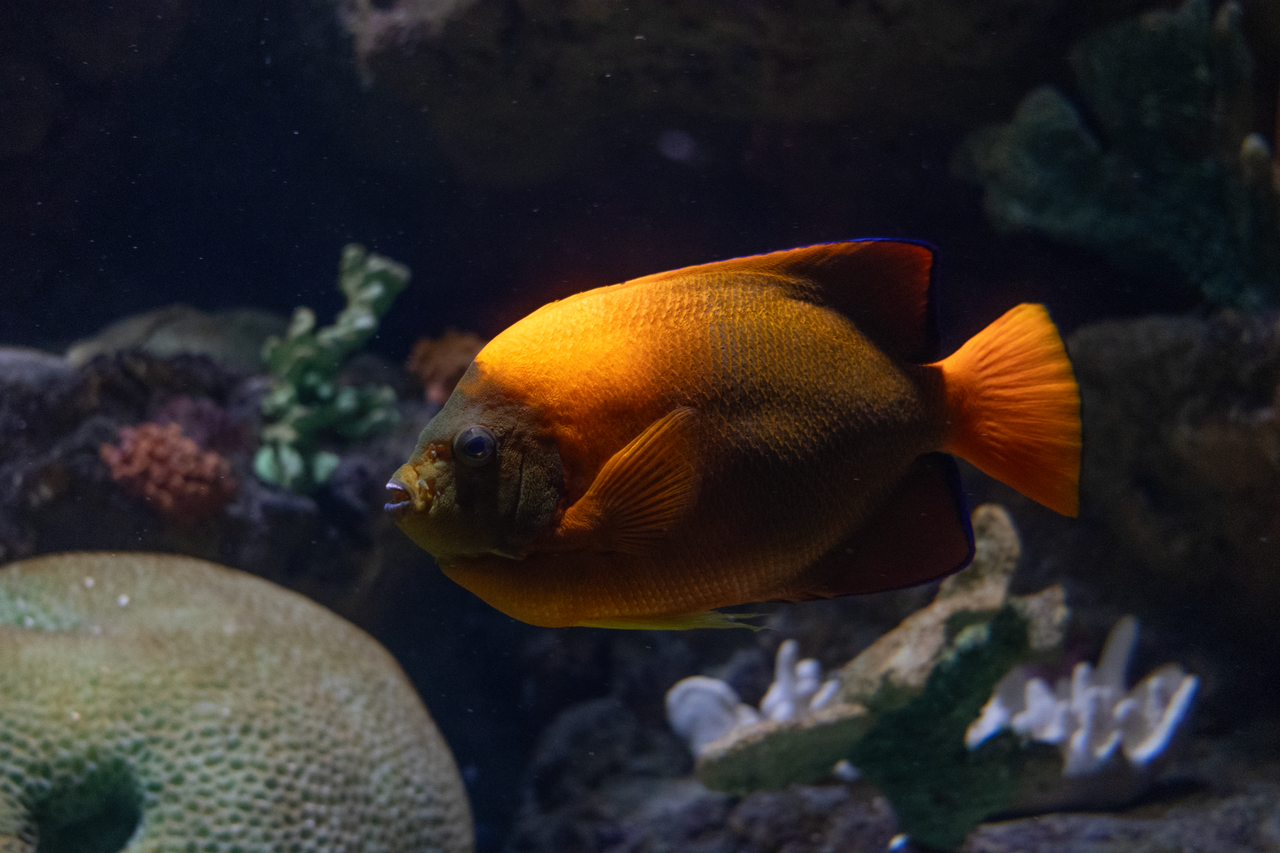
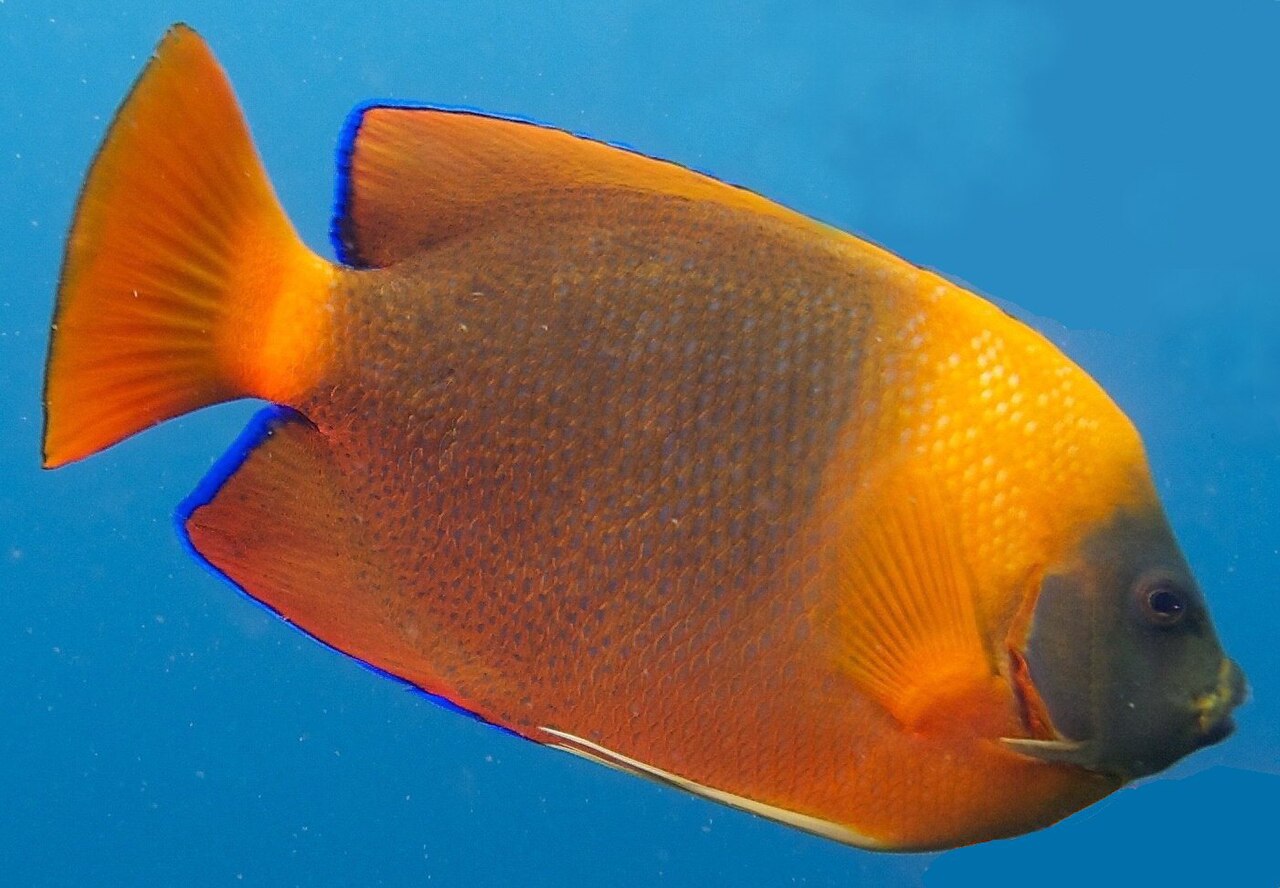
The Clarion angelfish has a laterally compressed, quadrilateral body. It has a small mouth which is equipped with bristle like teeth. This species attains a maximum total length of 20 cm.
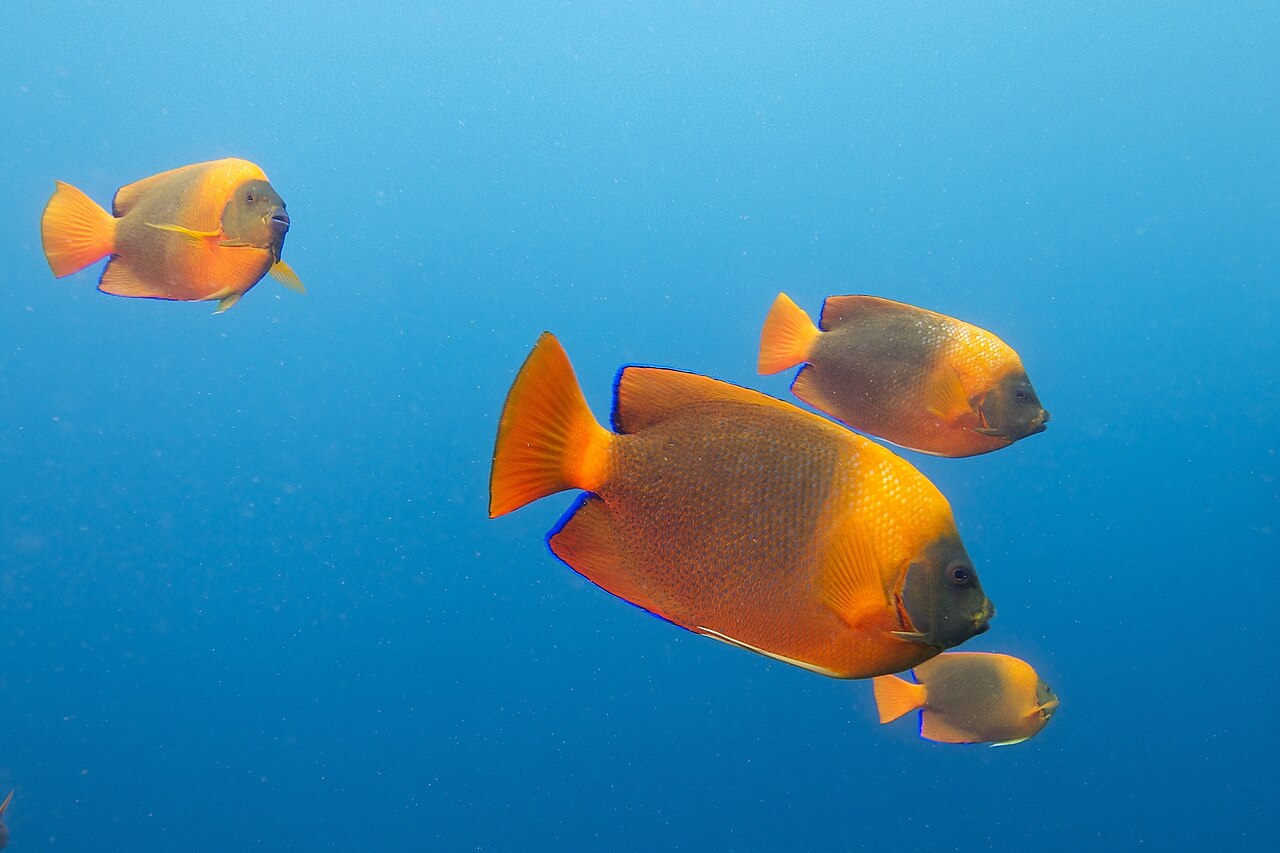
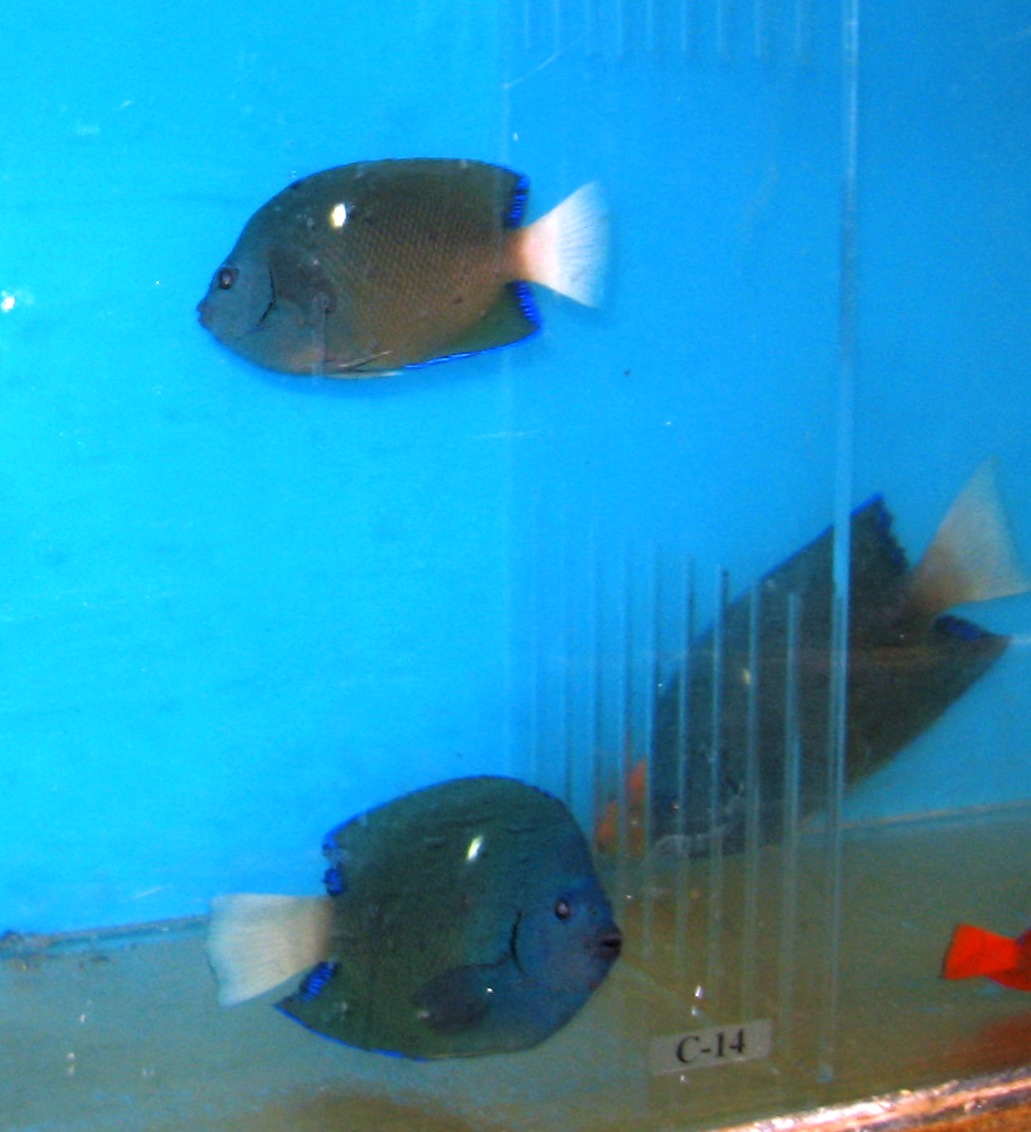
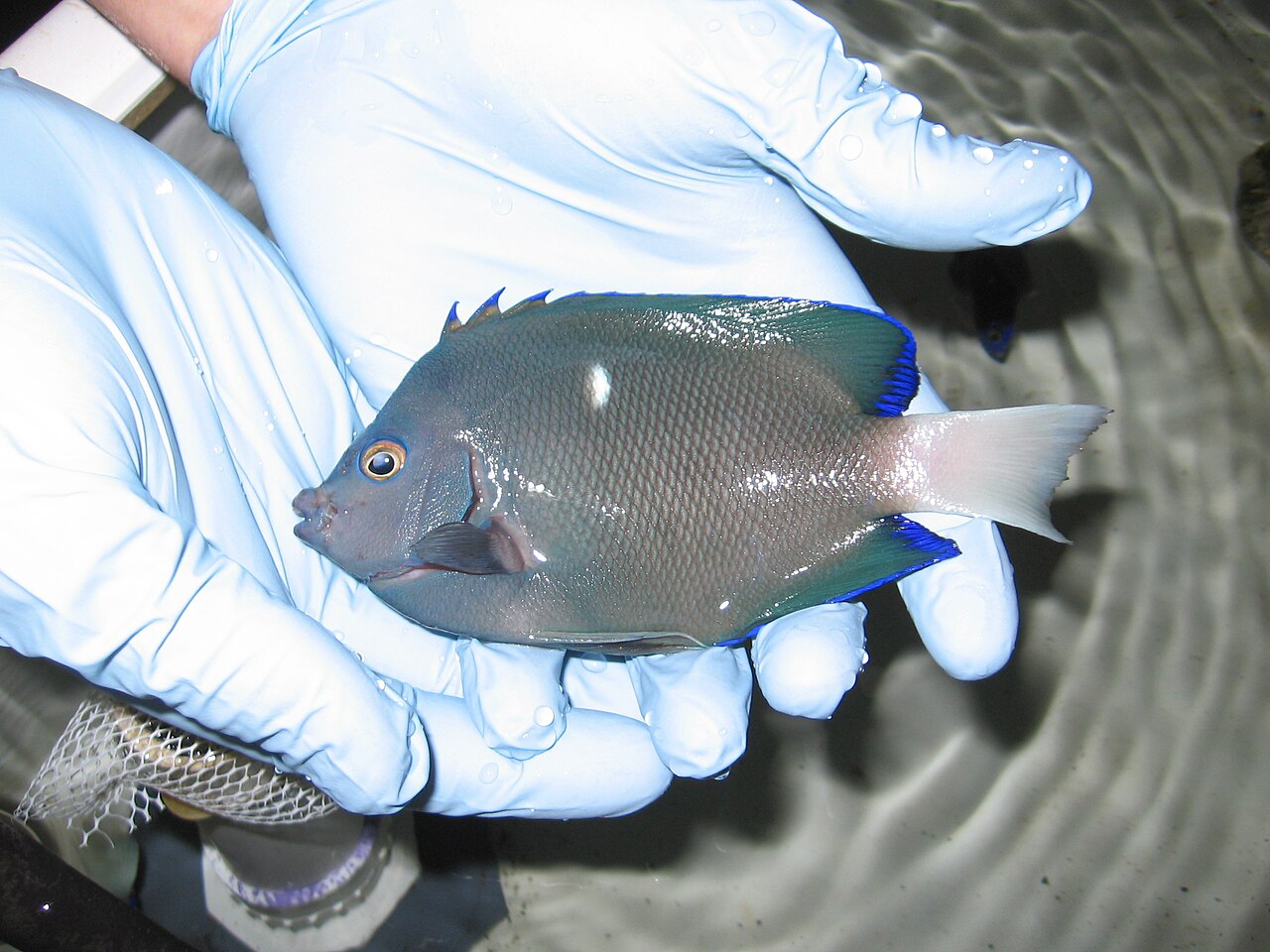
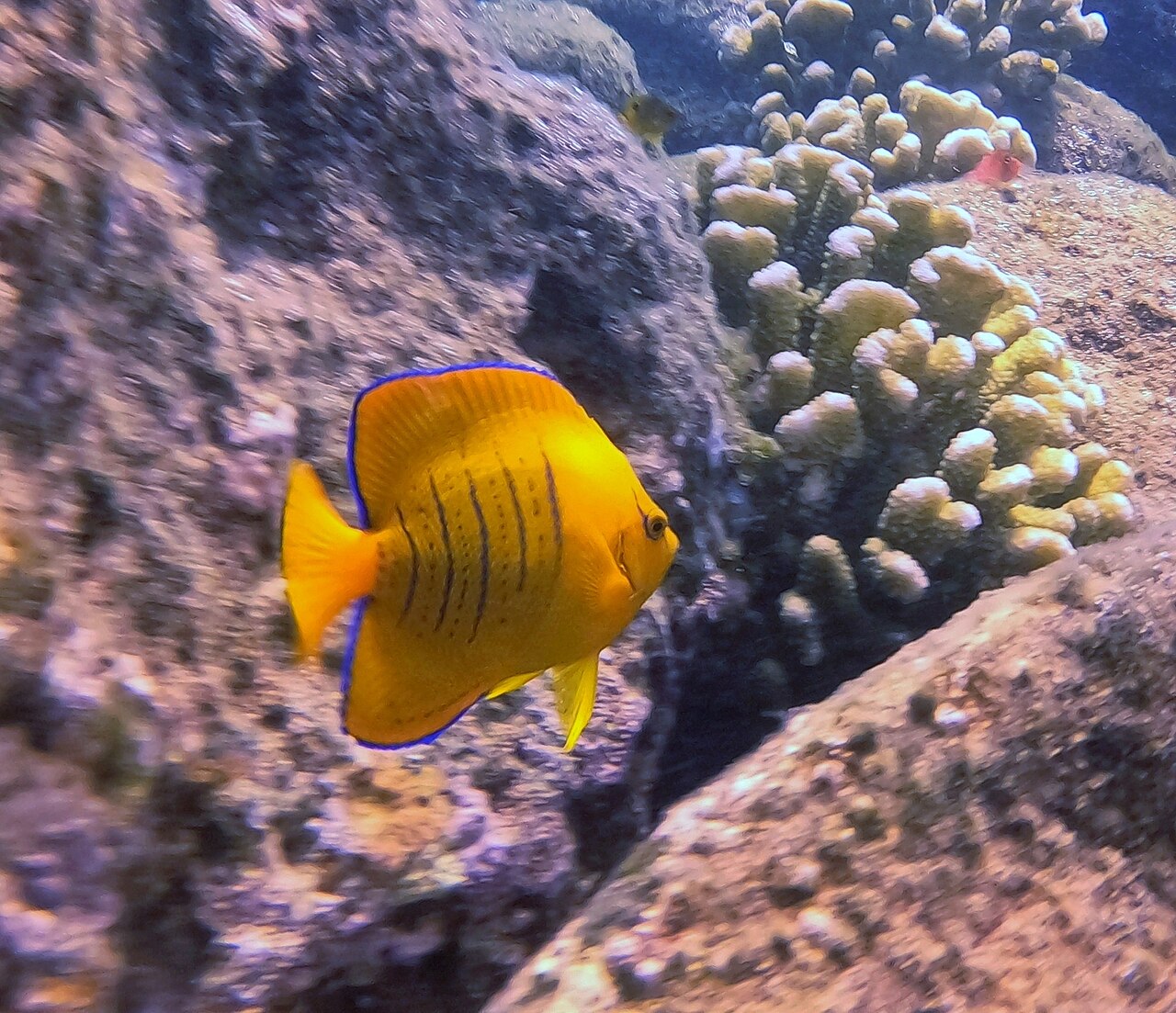
The juveniles have an overall colour of yellowish-orange on the body and fins; the body is marked with a number of blue vertical bars which fade and, eventually, disappear as the fish matures. The juveniles may also have blue lips and blue margins on the dorsal and anal fins. The adults have a brownish face, with the adjacent part of the body behind reddish orange and the posterior body being browner. The dorsal and anal fins are bright orange while the caudal fin is vermilion. The dorsal fin contains 14 spines and 17-19 soft rays while the anal fin has 3 spines and 19-19 soft rays.
The Clarion angelfish has a very limited range in the Eastern Pacific Ocean, being largely restricted to the Revillagigedo Islands of Mexico. Vagrants have occasionally been reported from the southern tip of Baja California and the southeastern part of the Gulf of California, as well as Clipperton Island, a French territory.
The Clarion angelfish is found in rocky reefs at depths of up to 30 m. They are typically encountered as either solitary individuals or in shoals. It is a little studied species.
The Clarion angelfish was first formally described in 1890 by the American ichthyologist Charles Henry Gilbert (1859-1928), with the type locality given as Clarion, Socorro and San Benedicto Islands in the Revillagigedo Islands, western Mexico. The specific name refers to Clarion Island.
The Clarion angelfish was formerly collected for the aquarium trade, but since the Revillagigedo Islands were declared a protected area collection has been illegal. It has, however, been bred in captivity and captive bred specimens have entered the trade.
Source: Wikipedia: Clarion angelfish — https://en.wikipedia.org/wiki/Clarion_angelfish (CC BY-SA 4.0). Accessed 2026-09-23.
Gallery
Spotted an error? Know more?
Reader corrections go straight into our review queue. Suggest an edit · How this site is sourced