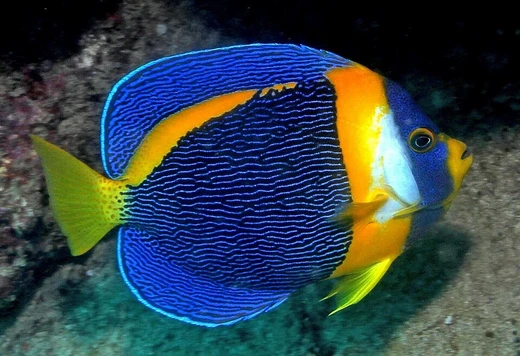
Scribbled angelfish (Chaetodontoplus duboulayi)
Source-cited species reference: taxonomy from WoRMS, biology from FishBase, occurrence map from GBIF, conservation from IUCN Red List, description from Wikipedia.

Marek Ślusarczyk ( Tupungato ) Photo portfolio · CC BY 3.0
Chaetodontoplus duboulayi, the scribbled angelfish, is a species of marine ray-finned fish, a marine angelfish belonging to the family Pomacanthidae. This species is from the southwestern Pacific Ocean.
- Scientific name
- Chaetodontoplus duboulayi
- Authority
- (Günther, 1867)
- Family
- Pomacanthidae
- Order
- Acanthuriformes
- Maximum length
- 28 cm
- Depth range
- 5–20 m
- Habitat zone
- reef-associated
- Iucn red list
- Least Concern
- Gbif occurrence records
- 2,610
Appearance and Sexual Dimorphism
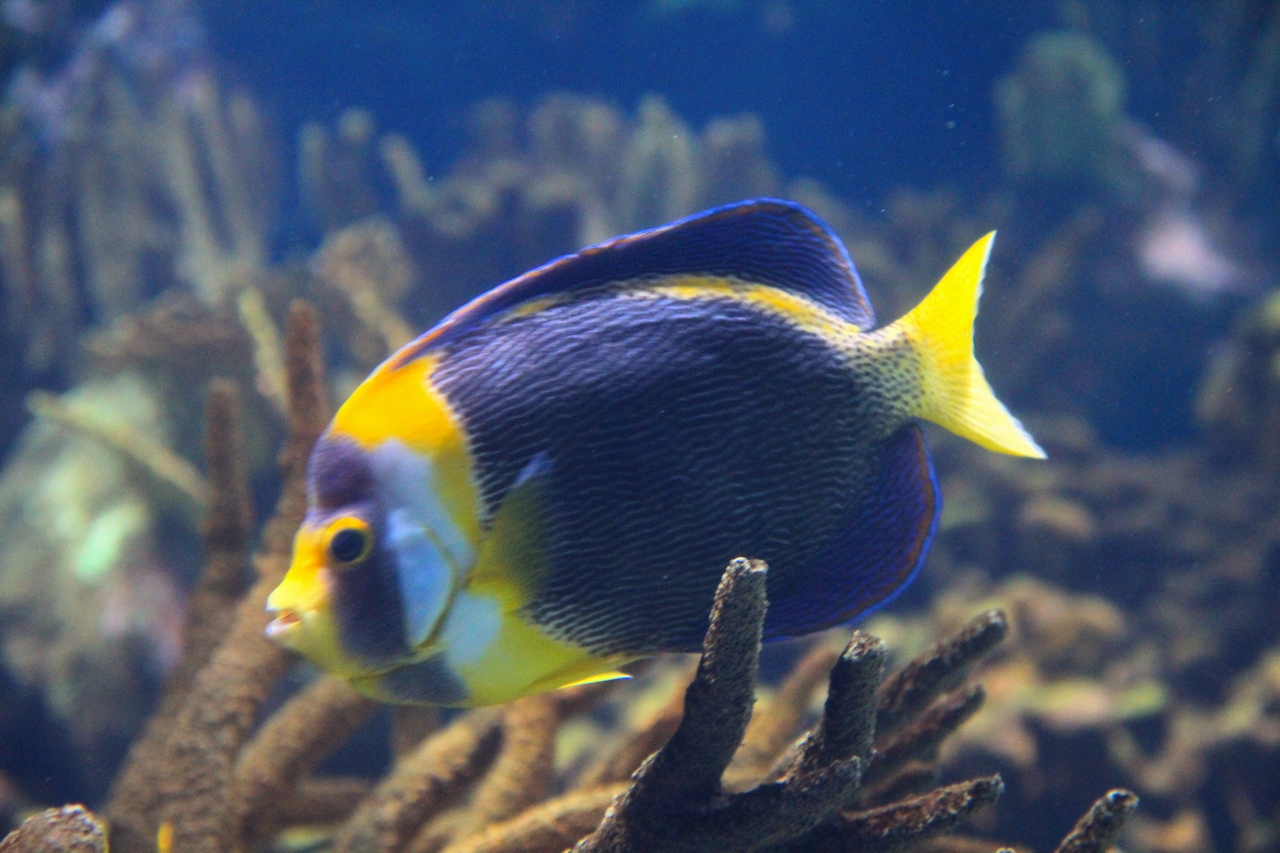
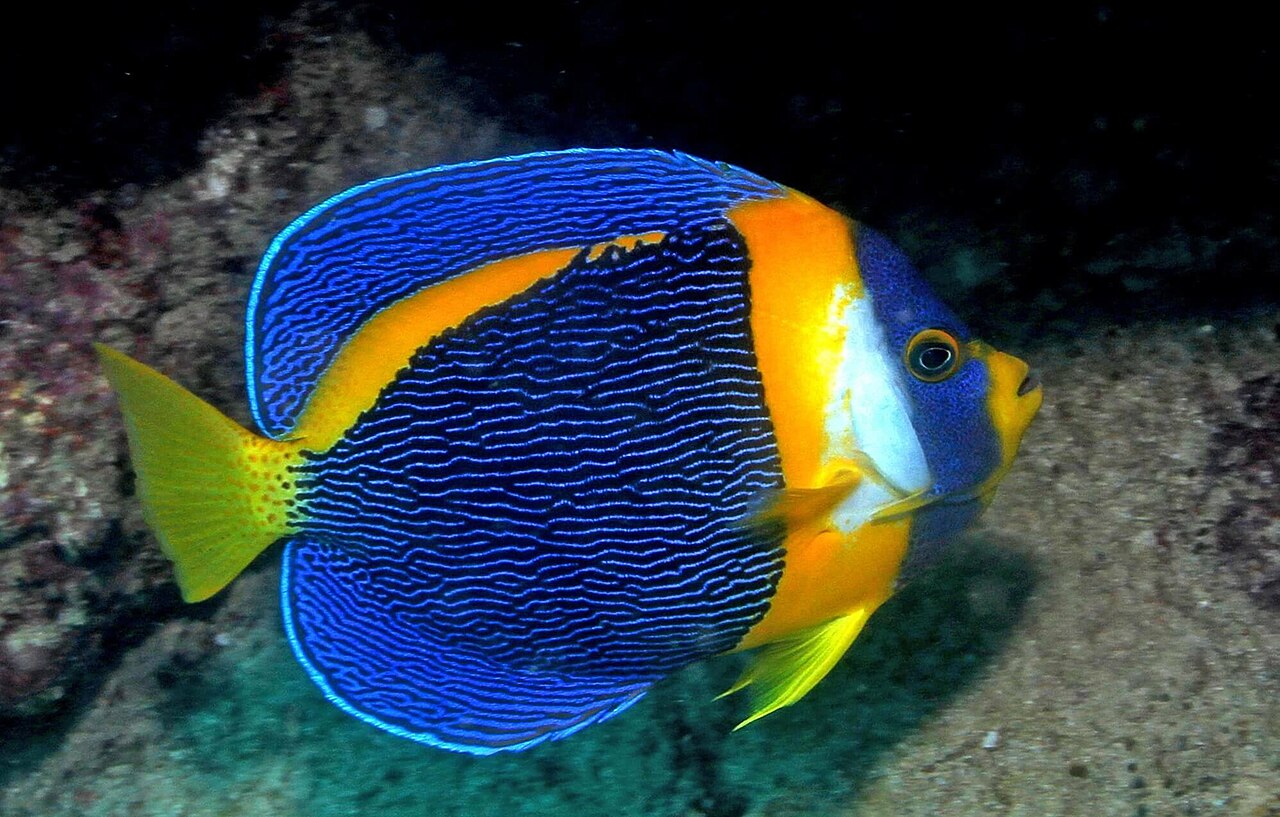
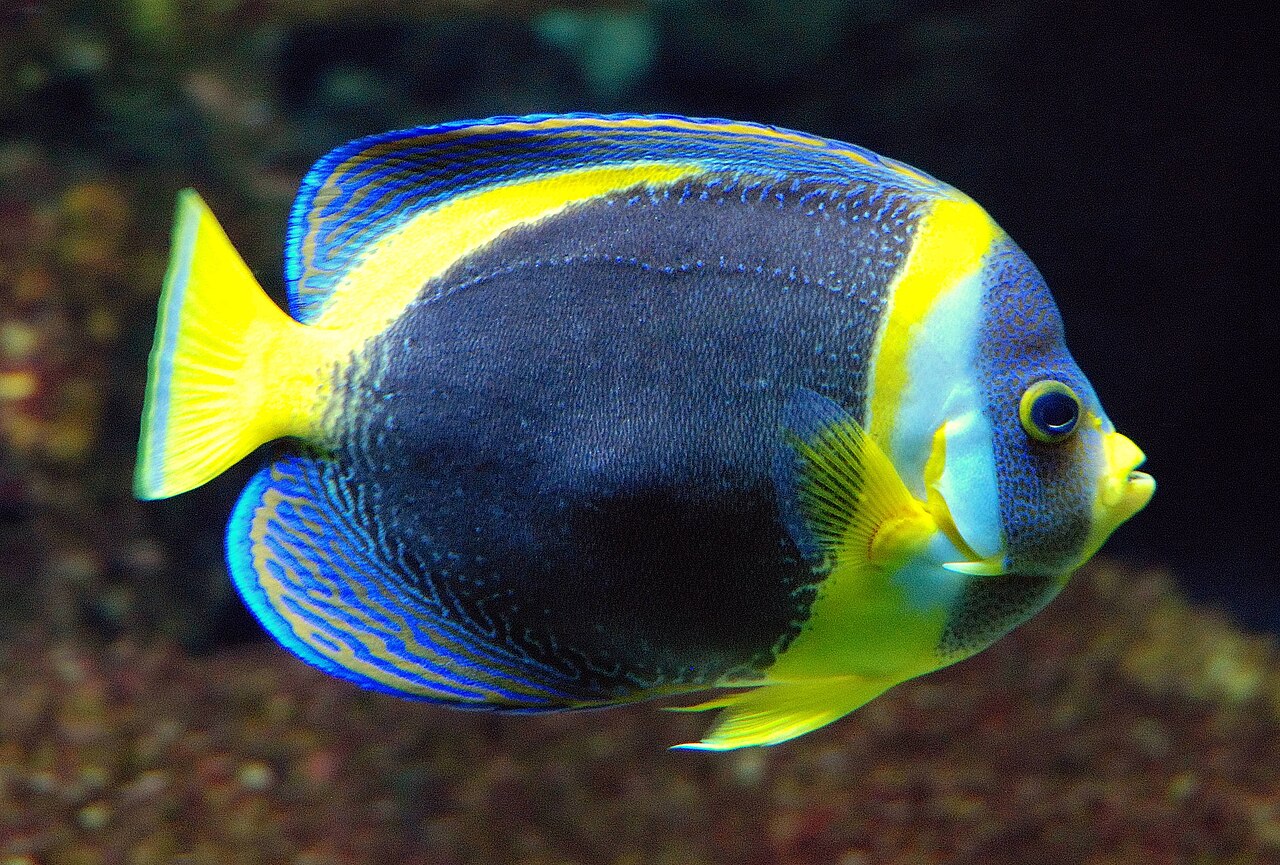
The scribbled angelfish presents a striking visual profile dominated by a largely blue body traversed by darker, wavy markings that lend the species its evocative common name. The snout, pectoral fins, pelvic fins, and caudal fin all glow in a contrasting yellow, while a distinct yellow stripe runs along the base of the dorsal fin. A broad vertical yellow bar sits just behind the eye, and the operculum stands out in clean white. The dorsal fin is constructed from eleven spines and twenty-two soft rays, and the anal fin carries three spines alongside twenty-one soft rays. Adults reach a maximum total length of twenty-eight centimetres, or roughly eleven inches. One of the most captivating aspects of this species is its sexual dimorphism: males display sinuous blue lines running along their flanks, whereas females are instead marked with either yellow or blue spots, making it possible to distinguish the sexes at a glance while observing them in the field.
Range and Preferred Habitat
The scribbled angelfish is a creature of the southwestern Pacific, with its core range hugging the northern coastline of Australia. From Shark Bay in Western Australia, its distribution stretches eastward all the way to Moreton Bay in Queensland, and it ranges southward as far as Lord Howe Island in the Tasman Sea. Beyond Australian waters, populations have been documented in the Aru Islands of Indonesia and along the southern coast of New Guinea, with additional reports placing the species as far afield as Taiwan. In terms of depth, this angelfish inhabits a relatively narrow band between five and twenty metres below the surface. It favours coastal and inshore reef environments where the substrate is a mosaic of rubble, soft bottoms, and open rocky areas featuring outcroppings of rock, coral, sponge, and seaweeds. Socially, the species is typically encountered in small groups rather than as solitary individuals. Its diet centres on benthic invertebrates, with sponges and tunicates forming the bulk of its foraging.
Reproductive Biology and Sex Change
Like all members of the angelfish family, the scribbled angelfish is a protogynous hermaphrodite, meaning every individual begins life as a female. Over time, the dominant individuals within a group undergo a sex change to become males, a process that adds a fascinating social dimension to the species' small-group lifestyle. In 1993, a study published in the Japanese Journal of Ichthyology turned its attention specifically to the spawning behaviour of this species. The researchers measured the eggs once they had been laid and found them to be remarkably small, ranging from approximately 0.9 to 0.92 millimetres in size. Despite their tiny dimensions, a single spawning event can produce a substantial clutch, with the number of eggs varying between five thousand and thirty-three thousand. This wide range in fecundity suggests that reproductive output can fluctuate considerably from one spawning episode to the next, potentially reflecting differences in the size, age, or condition of the spawning female.
Taxonomic Legacy and Aquarium Trade
The scribbled angelfish was first formally described in 1867 under the name Holocanthus duboulayi by Albert Günther, a German-born British ichthyologist and herpetologist who lived from 1830 to 1914. Günther designated the type locality as the northwestern coast of Australia. The specific epithet honours the collector of the type specimen, identified as M. Duboulay, who is most likely Francis Houssemayne du Boulay (1837–1914), a natural historian and entomologist best known for his work on Australian insects and beetles. In the modern aquarium trade, the scribbled angelfish holds a position of high prestige. For much of its trade history, specimens were only occasionally available through export channels. More recently, however, availability has improved, and the species has even been successfully bred in captivity. Despite these advances, individuals still command high prices, reflecting the continued demand from serious aquarists for this visually distinctive marine angelfish.
Gallery
Frequently Asked Questions
Who is Scribbled angelfish (Chaetodontoplus duboulayi)?
The scribbled angelfish is a small marine angelfish native to the southwestern Pacific Ocean. It sits within the family Pomacanthidae and the order Acanthuriformes, and was first formally described by Günther in 1867.
What are Scribbled angelfish (Chaetodontoplus duboulayi)'s powers/role?
As a ray-finned reef dweller, it forages among coral structures and contributes to the local food web. It reaches a maximum total length of roughly 28 cm, placing it in the smaller end of the angelfish size spectrum.
Why is Scribbled angelfish (Chaetodontoplus duboulayi) important?
It adds to the remarkable diversity of the Pomacanthidae family and serves as a marker for the health of southwestern Pacific reef habitats. Because its range is geographically restricted, tracking its populations helps scientists monitor changes in that part of the ocean.
When was Scribbled angelfish (Chaetodontoplus duboulayi) first described?
The species was named and described by the British ichthyologist Albert Günther in 1867. It has since been placed in the genus Chaetodontoplus, separating it taxonomically from other similar-looking angelfish.
Related in Scribbled angelfish
Links follow this subject's own source article.
Elsewhere in Scribbled angelfish
Spotted an error? Know more?
Reader corrections go straight into our review queue. Suggest an edit · How this site is sourced