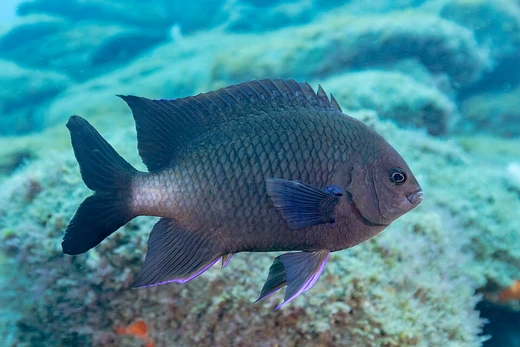
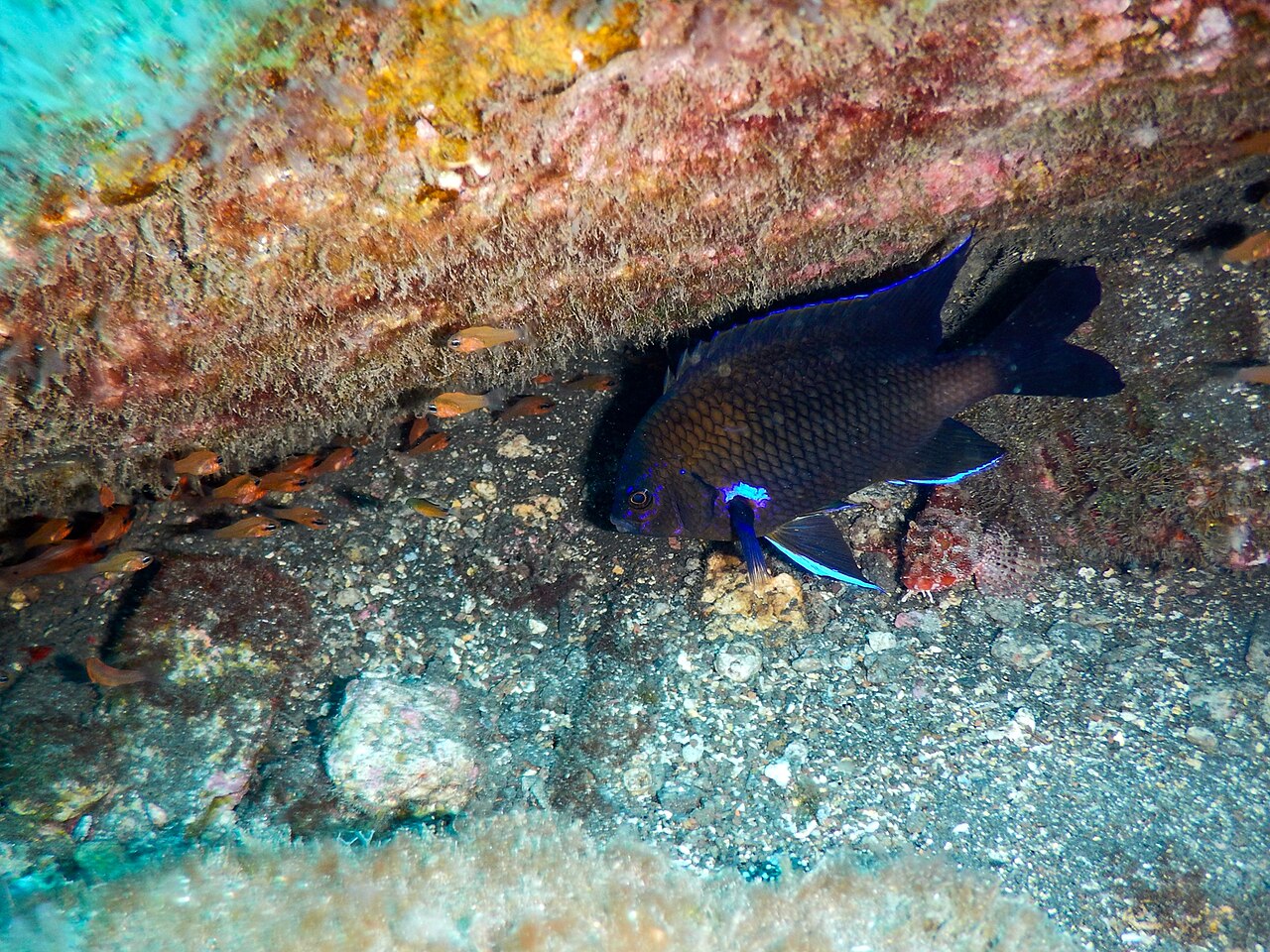
Canary damsel (Similiparma lurida)
Source-cited species reference: taxonomy from WoRMS, biology from FishBase, occurrence map from GBIF, description from Wikipedia.

(c) Charlotte Kirchner, some rights reserved (CC BY) · CC BY 4.0
The Canary damsel (Similiparma lurida), or Cape Verde gregory (which is also a common name of Stegastes imbricatus) is a species of marine fish of the family Pomacentridae. It lives primary in shallow, subtropical waters of the eastern Atlantic Ocean.
- Scientific name
- Similiparma lurida
- Authority
- (Cuvier, 1830)
- Family
- Pomacentridae
- Order
- Ovalentaria incertae sedis
- Maximum length
- 15 cm
- Depth range
- 0–25 m
- Habitat zone
- reef-associated
- Gbif occurrence records
- 1,219
Taxonomic Identity
The Canary damsel carries the scientific designation Similiparma lurida, a binomial name that places it squarely within the family Pomacentridae. The word "damsel" in its common name reflects that family membership, while the genus Similiparma sets it apart from other damsel-lineage fishes, and the specific epithet "lurida" provides the final taxonomic distinction. As a fish, it occupies a defined position in marine biological classification, sharing the fundamental characteristics of the Pomacentridae group even as its genus and species names mark a particular evolutionary branch. The common name "Canary damsel" thus bridges a biological identity with a geographic association, linking the taxonomic to the topographic in a single descriptive label. The full scientific name, Similiparma lurida, remains the precise tool by which ichthyologists distinguish this species from its relatives within the broader Pomacentridae family.
Geographic Range and Habitat
The Canary damsel is documented as a resident of the eastern Atlantic Ocean, a vast marine region that stretches along the western coastlines of Africa and Europe. This places it in saltwater environments far from the Pacific or Indian Oceans, anchoring its known distribution to one specific oceanic basin. The "Canary" in its name traces back to the Spanish island of Gran Canaria in the North Atlantic and the surrounding Canary Islands, suggesting a historical connection between the fish's discovery or naming and that archipelago. While the broader eastern Atlantic provides its documented range, the specific association with the Canary Islands region gives the species its distinctive common name. This geographic placement in the eastern Atlantic distinguishes it clearly from other "Canary" fish species that inhabit entirely different oceanic regions, underscoring how a single name can carry both a local origin and a wider distributional context.
The Canary Name and Its Origins
The term "Canary" originally referred to the Spanish island of Gran Canaria in the North Atlantic Ocean and the surrounding Canary Islands. This geographic origin is the root of the name applied to the damsel, as well as to birds such as the Atlantic canary (Serinus canaria) and the domestic canary, and to a host of other organisms and concepts across language and culture. For Similiparma lurida specifically, the "Canary" prefix anchors it to that North Atlantic island group, even though its documented range extends across the broader eastern Atlantic. The name thus carries a dual meaning: a taxonomic descriptor and a geographic homage to the archipelago that gave the term its life. The Canary Islands, a Spanish territory in the North Atlantic, provided the naming inspiration that would extend across ichthyology, ornithology, and everyday language, making the word a remarkably portable label for diverse subjects separated by biology, geography, and human culture.
Among Other Canary Fishes
The Canary damsel is one of several fish species that share the "Canary" common name, each belonging to entirely different families and oceanic regions. The Canary moray (Gymnothorax bacalladoi) is an eel of the family Muraenidae, while the Canary rockfish (Sebastes pinniger) belongs to the family Sebastidae and is found in the northeast Pacific Ocean. By contrast, the Canary damsel is a member of Pomacentridae in the eastern Atlantic. These three species illustrate how the "Canary" label, rooted in the North Atlantic island group, has been applied across diverse marine taxa separated by both taxonomy and geography. The damsel's place among these namesakes highlights the breadth of the term's usage in ichthyology, where a single geographic reference can attach to organisms as different as a damsel, a moray eel, and a rockfish, each defined by its own family, genus, and oceanic home.
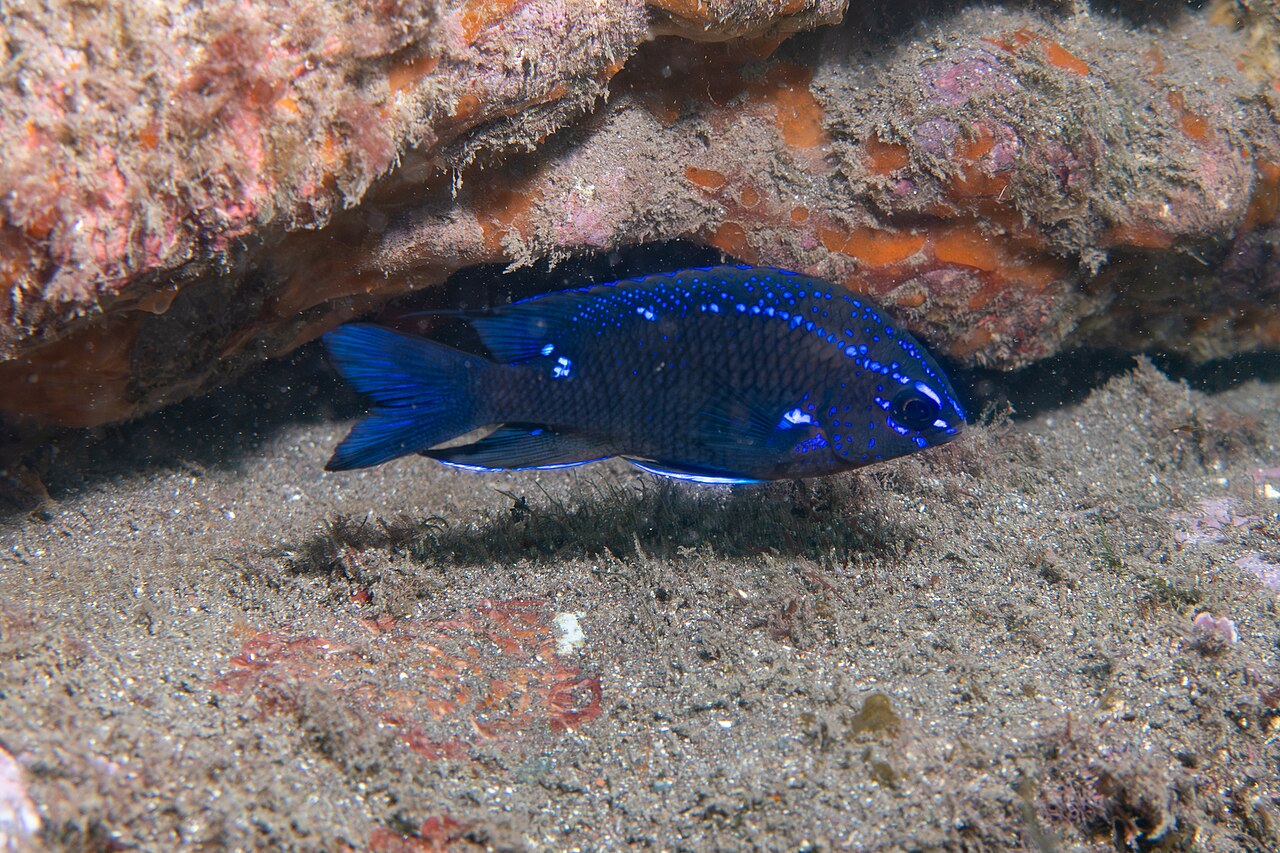
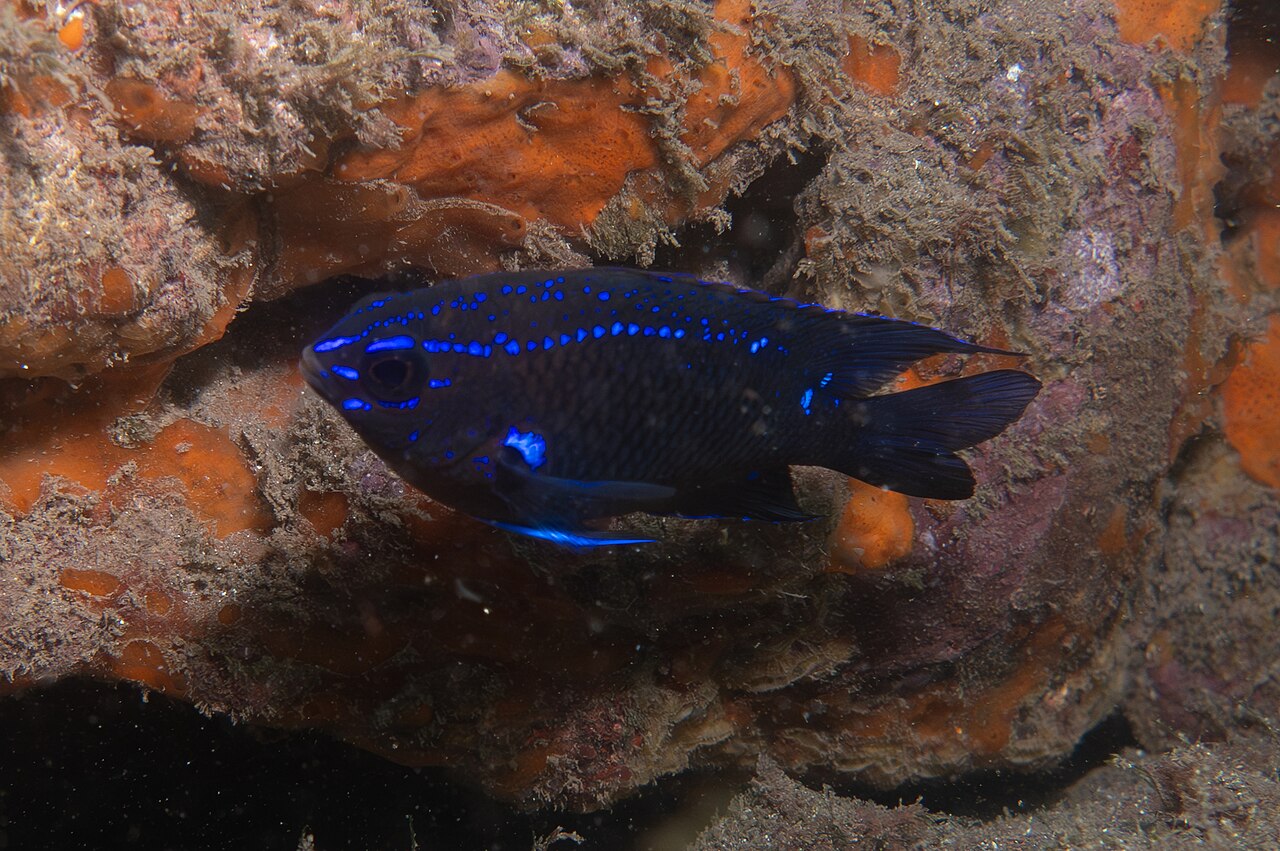
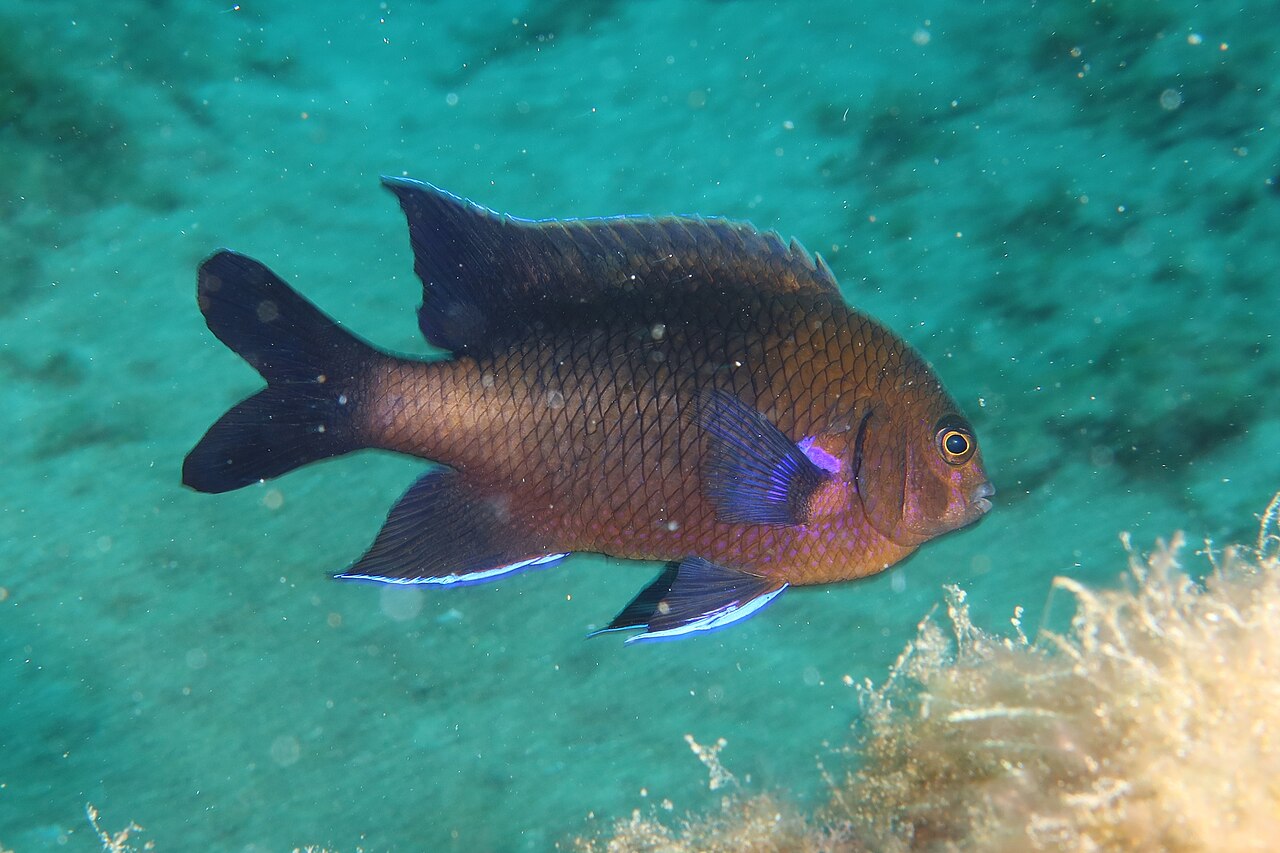
Gallery
Frequently Asked Questions
What is the Canary damsel (Similiparma lurida)?
It is a small, subtropical marine damselfish in the family Pomacentridae, originally described by Cuvier in 1830. The species is native to the eastern Atlantic Ocean and is sometimes also called the Cape Verde gregory, though that common name overlaps with Stegastes imbricatus.
Where does the Canary damsel live and at what depth?
Similiparma lurida occupies shallow, subtropical waters along the eastern Atlantic coast, typically ranging from the surface down to about 25 meters. It is most strongly associated with the Cape Verde region.
How big does a Canary damsel (Similiparma lurida) grow?
Adults top out at roughly 15 centimeters in total length, placing it in the smaller end of the damselfish size spectrum.
What is the full taxonomic classification of Similiparma lurida?
It belongs to the family Pomacentridae within the order Ovalentaria incertae sedis, with its authority cited as (Cuvier, 1830). The genus Similiparma sets it apart from the more widely known damselfish genera like Chromis and Pomacentrus.
Why is the Canary damsel notable to marine biologists and aquarists?
Its restricted range in the eastern Atlantic's subtropical zone makes it a geographically limited and relatively uncommon species to study or keep. The shared common name 'Cape Verde gregory' with Stegastes imbricatus also creates frequent taxonomic confusion in the hobby and literature.
Related in Canary damsel
Links follow this subject's own source article.
Elsewhere in Canary damsel
Spotted an error? Know more?
Reader corrections go straight into our review queue. Suggest an edit · How this site is sourced