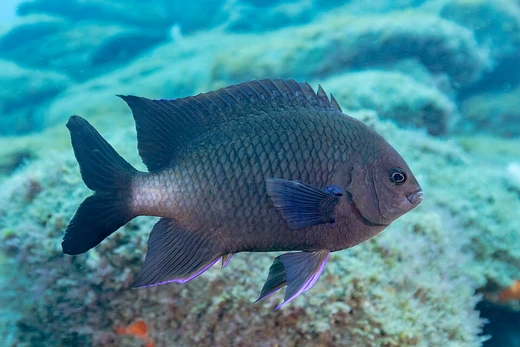
Where Canary damsel has been recorded
GBIF occurrence records for Similiparma lurida, mapped and tabulated by country.

1,219 georeferenced occurrence records with coordinates are published for Similiparma lurida through GBIF, from 4 countries or marine areas. This page maps those records and lists where they come from. Occurrence records reflect where people have looked as well as where the species lives, so well-surveyed coastlines are over-represented.
- Georeferenced records
- 1,219
- Countries / areas
- 4
- Mapped locations
- 40
- Records sampled for the map
- 1,219
- Inland records omitted
- 2
- Gbif taxonkey
- 8873604
The Flapper Who Shaped an Icon
Minnie Mouse was conceived by Walt Disney and Ub Iwerks as the romantic counterpart to Mickey, with early concept sketches already pairing a female mouse beside him. Her initial design drew heavily on the flapper aesthetic of the late 1920s: a short dress that frequently exposed her patched knickers, and, as revealed in the 1929 short The Karnival Kid, black stockings that echoed the fashion of that era. Her most memorable garment, however, was a pair of oversized high-heeled pumps that were comically too large for her feet. In several early cartoons her heels would slip out, and in The Gallopin' Gaucho she lost the shoes entirely. The rhythmic clip-clop of those enormous pumps often synced with the background music, making them a signature auditory element. While later audiences associate Minnie almost exclusively with red or pink, her earliest colored appearances featured combinations of blue, black, and green, showing how much her visual identity would evolve over the decades.
From Flirtatious Entertainer to Steady Partner
In her earliest cartoons, Minnie was a playful, musical, and flirtatious figure, often cast as a dancer or musician whose affection Mickey was attempting to win. Much of the comedy in those shorts hinged on how successfully or unsuccessfully Mickey could charm her, and she was frequently placed in peril as a damsel in distress, subject to slapstick and rubber-hose animation gags. Over the course of the 1930s, however, the dynamic between the two mice shifted from a courtship into a stable, established partnership. A major visual overhaul came in 1940, when her hat was swapped for a large bow, matching bows were added to her shoes, and her eyes received greater detail. Throughout the 1940s and 1950s, both her appearance and her personality grew noticeably more conservative, and her wardrobe settled into the red-and-pink palette that would become her trademark. This gradual transformation turned a carefree 1920s flapper into the dependable, well-dressed sweetheart audiences would come to expect.
Debut Appearances and the Damsel-in-Distress Formula
Minnie's very first on-screen moment came during a test screening of Plane Crazy, where she accepted Mickey's invitation to ride in his aircraft but refused his request for a mid-flight kiss. When Mickey forced the issue, she simply parachuted out of the plane—a fitting introduction to a character initially resistant to her boyfriend's demanding advances. The Gallopin' Gaucho, released December 30, 1928, placed her as a tango performer at the Cantina Argentina, where both Mickey and the villain Black Pete flirted with her before Pete attempted an abduction. Steamboat Willie, produced third but released first on November 18, 1928, cast her as the lone passenger on Pete's steamboat while Mickey and Pete played music to "Turkey in the Straw." The damsel-in-distress pattern repeated in Wild Waves, where a wave carried her into the sea and Mickey rowed her back to shore, and again in The Cactus Kid (May 10, 1930), a Mexican-set remake in which Peg-Leg Pedro kidnapped the tavern dancer.
Family Ties and a Star on the Walk of Fame
Beyond her role as Mickey's sweetheart, Minnie occupies a richly drawn family tree. The 1930 comic strip "Mr. Slicker and the Egg Robbers" introduced her farmer parents, Marcus Mouse and an unnamed mother, along with her grandparents Marvel and Matilda Mouse and her uncle Milton. Her most well-known relatives include uncle Mortimer Mouse—whose name was nearly given to Mickey himself—and her twin nieces Millie and Melody, though Melody often appears alone. In the broader cast, Minnie is consistently portrayed as Daisy Duck's best friend and a companion of Clarabelle Cow. Her cultural standing reached a milestone on January 22, 2018, when, in celebration of her ninetieth anniversary, she received a star on the Hollywood Walk of Fame. She became the sixth Disney character to earn that distinction, joining Mickey Mouse, Donald Duck, Winnie the Pooh, Tinker Bell, and Snow White in a pantheon of animated legends.
Frequently Asked Questions
How many recorded locations exist for the Canary damsel?
GBIF currently holds 1,219 coordinate-tagged occurrence records for Similiparma lurida, plotted across 40 distinct mapped locations. These sightings span 4 countries or marine areas in total.
Which countries or marine areas have documented Canary damsel records?
The species has been confirmed in 4 countries or marine regions according to the published GBIF dataset. The distribution page breaks down the records country by country and lists the source institutions behind each observation.
Why do certain coastlines show far more Canary damsel records than others?
Occurrence data mirrors both the fish's true range and the places where collectors and researchers have actually looked. Heavily surveyed shorelines naturally accumulate more entries, so they look over-represented compared to less-studied areas.
Are all Canary damsel records from marine environments?
Almost all of them are, though two inland records were flagged and set aside from the distribution map. The remaining entries represent legitimate coastal or open-water observations of the species.
Where can I pull the raw Canary damsel distribution data myself?
The full coordinate set is indexed under GBIF taxonKey 8873604, so you can download all 1,219 records directly from the GBIF portal. The fan encyclopedia's distribution page also provides a ready-made country-by-country table and an interactive map for quick reference.
Related in Canary damsel
Links follow this subject's own source article.
Elsewhere in Canary damsel
Spotted an error? Know more?
Reader corrections go straight into our review queue. Suggest an edit · How this site is sourced