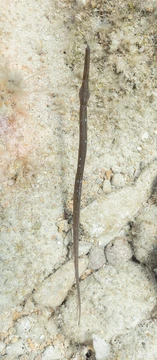
Broadnosed pipefish (Syngnathus typhle)
Source-cited species reference: taxonomy from WoRMS, biology from FishBase, occurrence map from GBIF, conservation from IUCN Red List, description from Wikipedia.

Diego Delso · CC BY-SA 4.0
The broadnosed pipefish or deepnosed pipefish (Syngnathus typhle) is a fish of the family Syngnathidae (seahorses and pipefishes). It is native to the Eastern Atlantic ocean from Vardø in Norway, the Baltic Sea (north to the Gulf of Finland) and the British Isles in the north all the way to Morocco at south. It is also found in the Mediterranean Sea, Black Sea and Sea of Azov. It is common in the coastal shallow waters, usually on reefs with seagrasses. This species is notable for its "broad" snout, which is as deep as its body.
- Scientific name
- Syngnathus typhle
- Authority
- Linnaeus, 1758
- Family
- Syngnathidae
- Order
- Syngnathiformes
- Maximum length
- 35 cm
- Depth range
- 1–20 m
- Habitat zone
- demersal
- Iucn red list
- Least Concern
- Gbif occurrence records
- 5,318
Classification (WoRMS)
Full classification as recorded by WoRMS: Kingdom: Animalia · Phylum: Chordata · Class: Teleostei · Order: Syngnathiformes · Family: Syngnathidae · Genus: Syngnathus.
Accepted name: Syngnathus typhle · Authority: Linnaeus, 1758 · Taxonomic status: accepted · AphiaID: 127393.
Synonyms and superseded combinations recorded for this taxon: Siphonostoma rondeletii (Delaroche, 1809); Siphonostoma typhle (Linnaeus, 1758); Siphostoma typhle (Linnaeus, 1758); Syngnathus argentatus Pallas, 1814; Syngnathus pelagicus Risso, 1810; Syngnathus ponticus Pallas, 1814; Syngnathus pyrois Risso, 1827; Syngnathus rondeletii Delaroche, 1809; Syngnathus rotundatus Michahelles, 1829; Syngnathus thyphle Linnaeus, 1758; Syngnathus typhle argentatus Pallas, 1814; Syngnathus typhle rondeleti Delaroche, 1809; Syngnathus typhle rotundatus Michahelles, 1829; Syngnathus typhle typhle Linnaeus, 1758; Syngnathus viridis Risso, 1810; Syphonostoma typhle (Linnaeus, 1758); Tiphle hexagonus Rafinesque, 1810.
Source: World Register of Marine Species (WoRMS) — https://www.marinespecies.org/aphia.php?p=taxdetails&id=127393 (CC BY 4.0). Accessed 2026-09-23.
Biology and life history (FishBase)
Measured values published by FishBase for Syngnathus typhle. Only fields the database actually holds for this species are shown; these are database values, not aquarium guidance.
Maximum length: 35 cm · Depth range: 1–20 m · Habitat zone: demersal · Body shape: eel-like · Vulnerability index: 25.2 of 100 · Fishery importance: of no interest · Aquarium trade: public aquariums.
FishBase notes: Usually found along the coasts and estuaries at a temperature range of 8° to 24°C (Ref. 4944). Often associated with Zostera or other vegetation (Ref. 6733). Ovoviviparous (Ref. 205). The male carries the eggs in a brood pouch which is found under the tail (Ref. 205). Spawns in summer (Ref. 35388).
Source: FishBase species summary (SpecCode 1360) — https://www.fishbase.se/summary/Syngnathus-typhle.html (CC BY-NC 3.0 — non-commercial use only). Accessed 2026-09-23.
Distribution and occurrence records (GBIF)
5,318 georeferenced occurrence records for Syngnathus typhle are published through GBIF from 37 countries or marine areas. The map above plots 183 distinct locations from a sample of 3,000 records, omitting 176 inland records that carry an institution's coordinates rather than a collection site; it shows where the species has been observed and reported, not a modelled range.
Most records by country or area: Norway (1,169); Sweden (961); Poland (603); Spain (573); France (405).
The full country table, WoRMS marine regions and the sampling notes are on this species' Distribution page.
Source: GBIF Occurrence Search (taxonKey 2332908) — https://www.gbif.org/occurrence/search?taxon_key=2332908&has_coordinate=true (records CC0 / CC BY); WoRMS distribution records (MarineRegions) — https://www.marinespecies.org/aphia.php?p=taxdetails&id=127393 (CC BY 4.0); Natural Earth 110m basemap — https://www.naturalearthdata.com/ (public domain). Accessed 2026-09-23.
Conservation status (IUCN Red List)
The IUCN Red List assesses Syngnathus typhle Linnaeus, 1758 as Least Concern (code LC). No trend, population estimate or threat analysis is given here, because none is available from this source without the Red List API; follow the source link for the full assessment, including its date.
Source: IUCN Red List of Threatened Species (taxon 198767) — https://www.iucnredlist.org/species/198767/0; GBIF IUCN Red List category endpoint (taxonKey 2332908) — https://api.gbif.org/v1/species/2332908/iucnRedListCategory. Accessed 2026-09-23.
Description and natural history (Wikipedia)
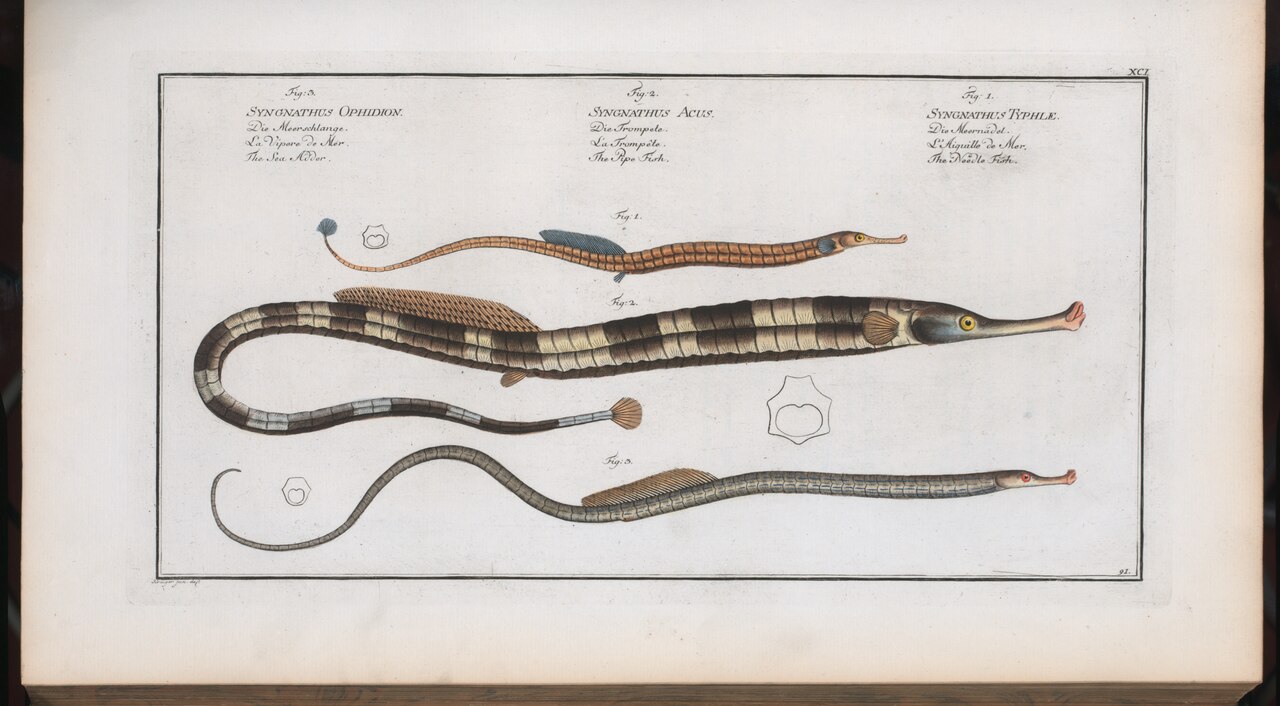
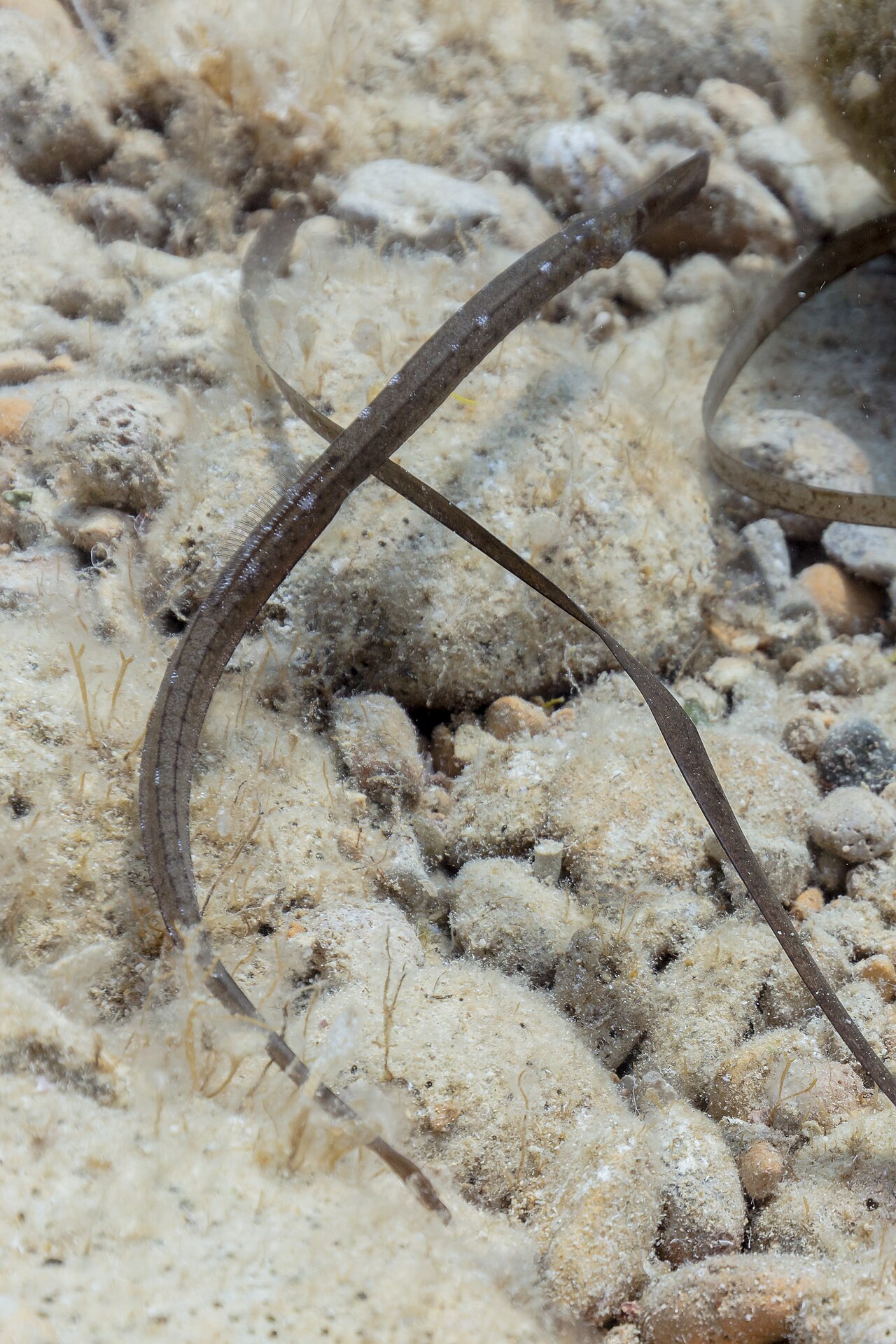
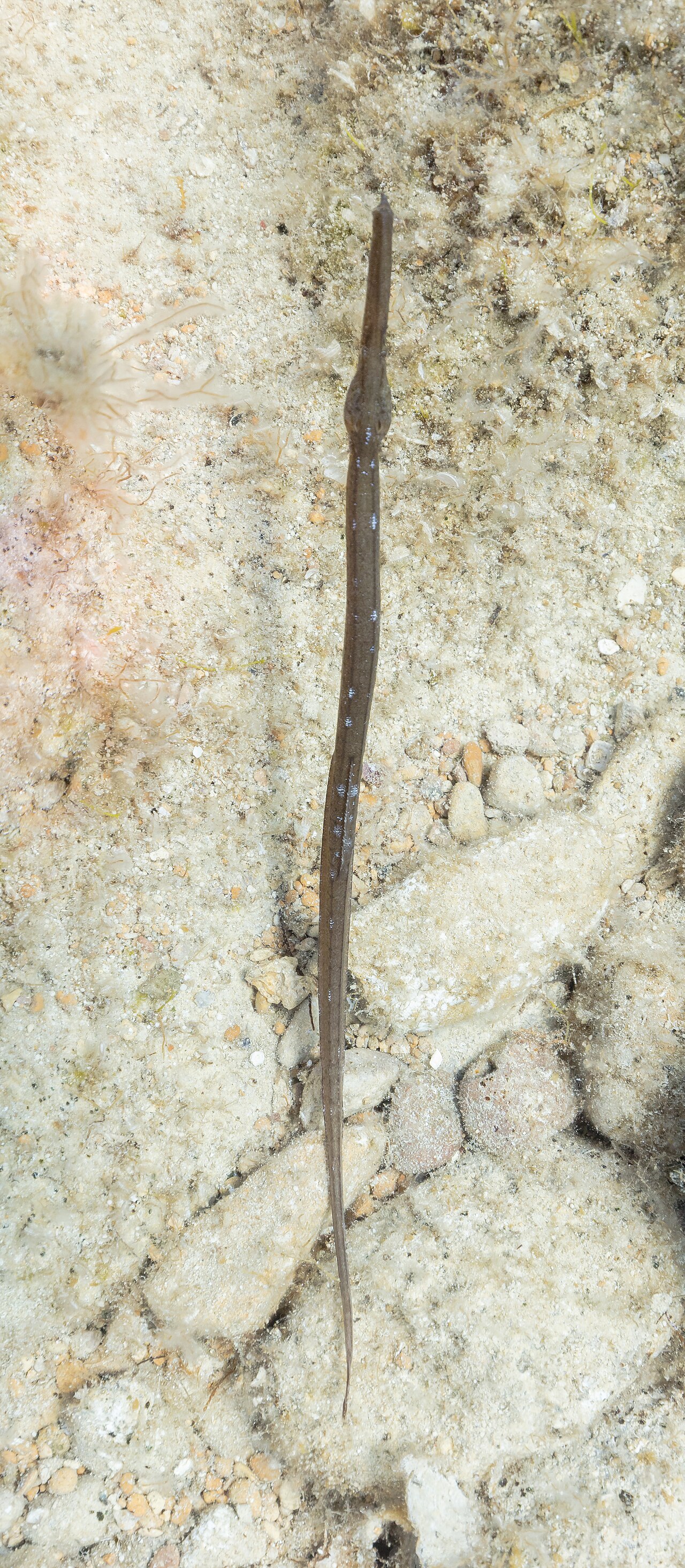
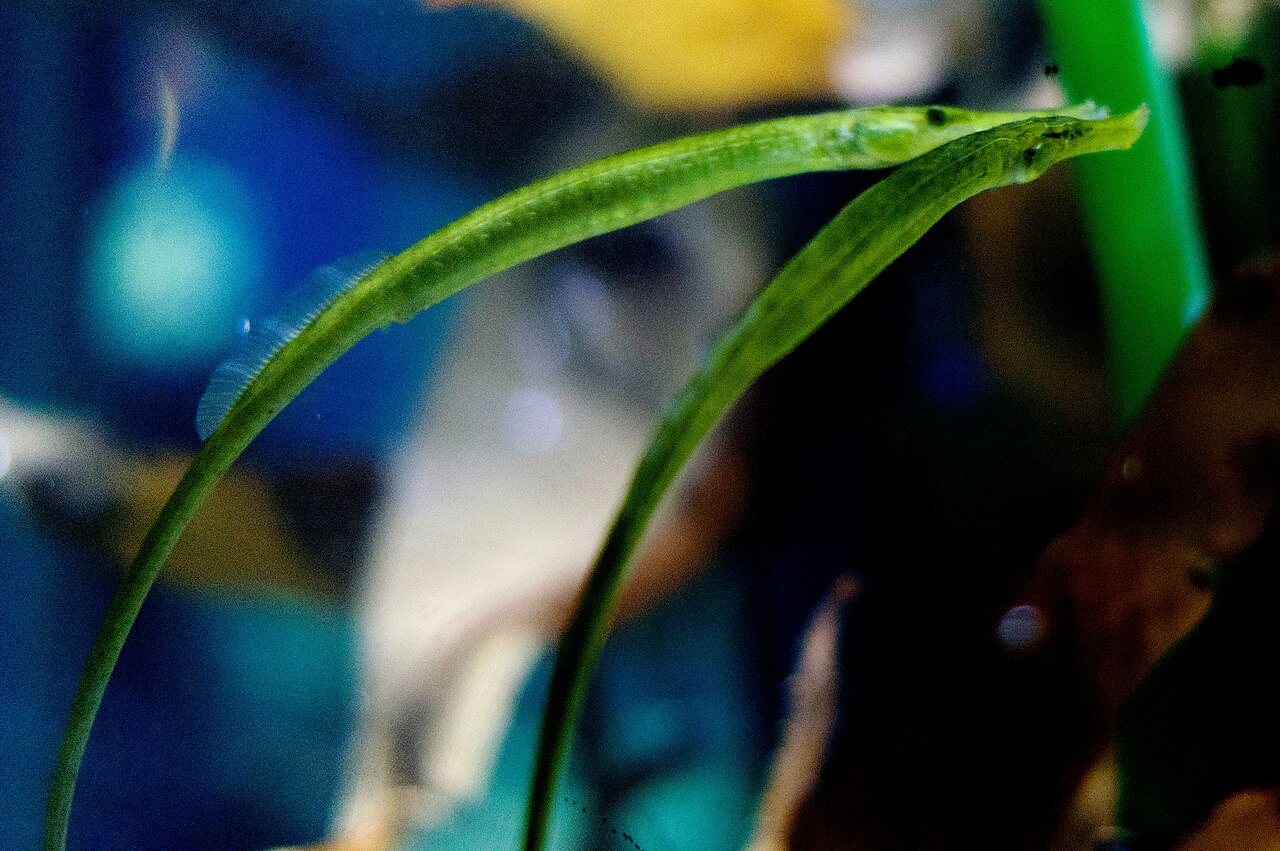
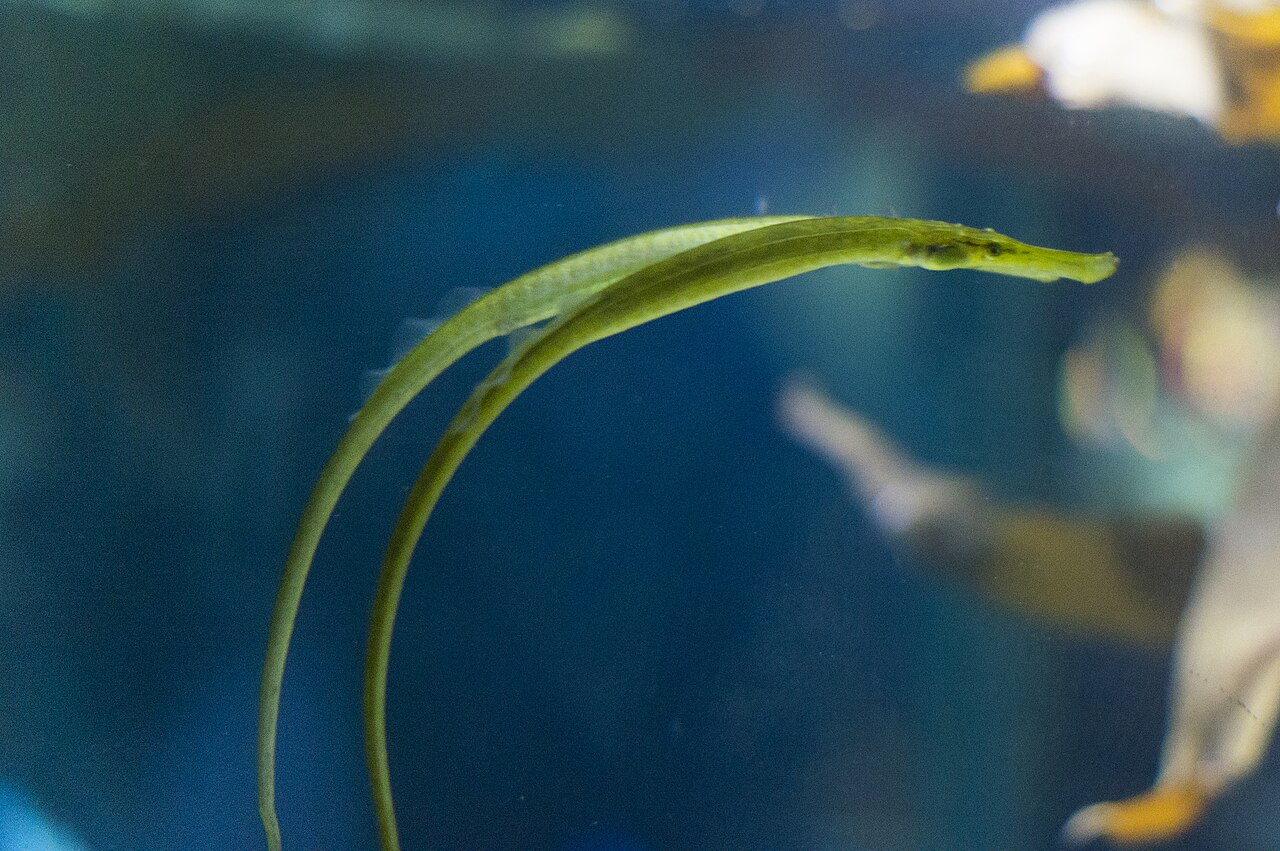
The broadnosed pipefish is a slender, elongated fish with a hexagonal cross-section which distinguishes it from its even more threadlike relation the straightnose pipefish (Nerophis ophidion), which has a circular cross-section. The body surface is covered by small bony plates. The head resembles that of a seahorse with a long, laterally flattened snout and obliquely sloping mouth. Unlike the straightnose pipefish, it has a fan-shaped caudal fin. The general colour is greenish, often with various darker mottling, and the belly is yellow. The average size is about 15 to 20 cm with a maximum of 25 cm.
The broadnosed pipefish is native to the Eastern Atlantic, the Mediterranean Sea, the Black Sea and the Sea of Azov. Its range extends from Vardø, Norway to Morocco. It is found at depths to about 20 m.
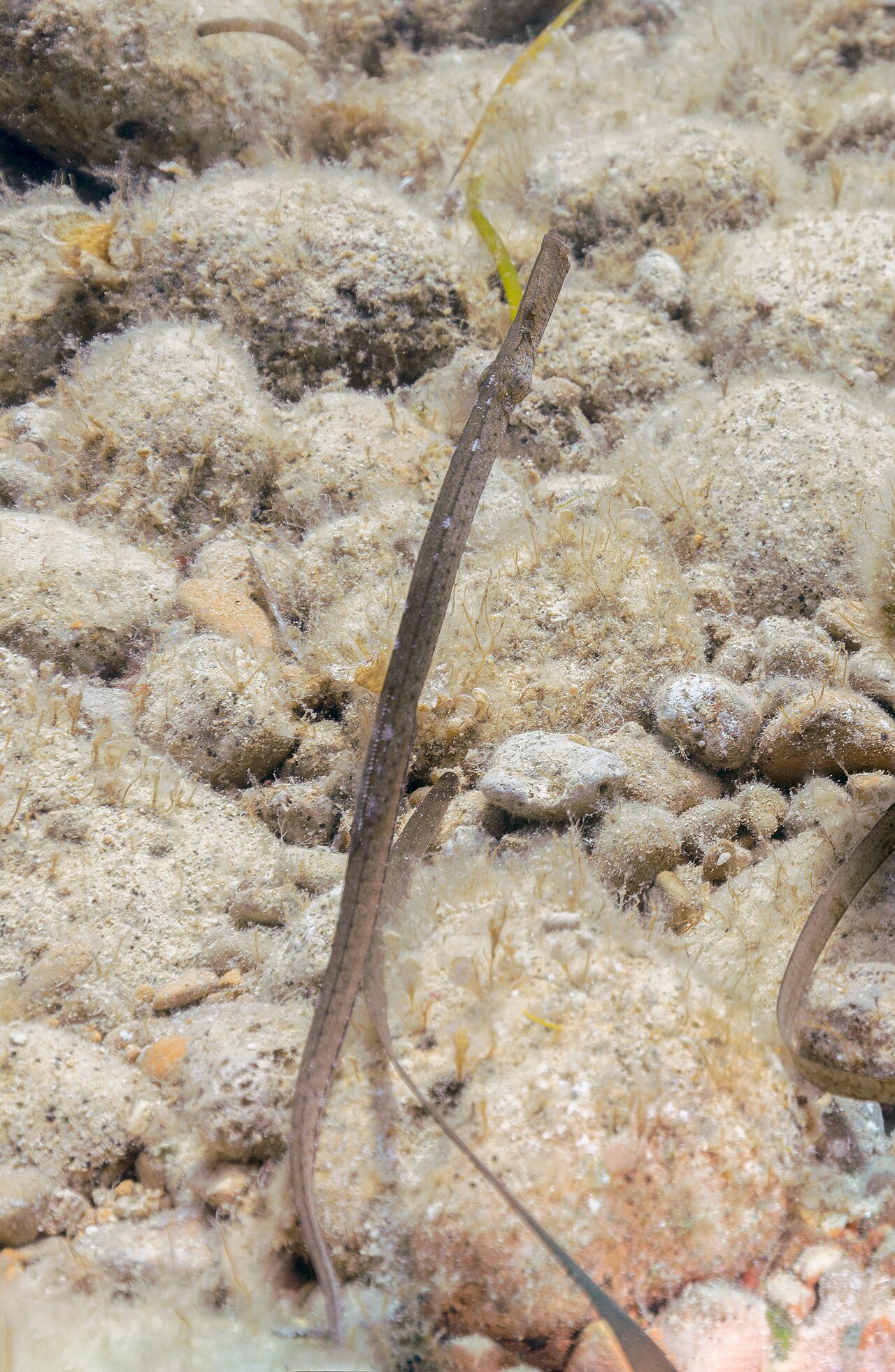
The broadnosed pipefish tends to rest in a vertical position among the fronds of seaweed and feeds on plankton such as copepods which it sucks in through its mouth.
This species of pipefish has a sex-role reversed mating system in which females compete for access to males. This fish breeds in the summer. The male has a brood pouch into which several females deposit clutches of about twenty eggs and where the eggs are fertilised. The fry hatch after about four weeks and are expelled into the open water. Even after this the male continues to provide some parental care as the fry can retreat into the brood pouch in case of danger.
Males and females both actively court one another for mating, but courting is more frequent in females. Courtship and copulation follow a stereotyped pattern, beginning when one fish identifies a prospective mate nearby and performs the ritualized dance. If the other is receptive, the two align and continue the dance together until the female delivers her eggs into the male's brood pouch via an ovipositor. The male then shakes the eggs into his brood pouch, releases his sperm into the pouch and assumes an S-shaped posture to fertilize the eggs.
These pipefish have a polygynandrous mating system, with both males and females mating with multiple partners during a breeding season.
Like other species of pipefish, the broadnosed pipefish is sex-role reversed: males brood the eggs and because of their increased investment in offspring are the choosier sex, whereas females compete more intensely than males for access to mates. Females can produce eggs faster than males can brood them, and are limited by the size of the male's brood pouch, which cannot carry all the eggs of a female similar to himself in size. Male brood time is approximately four to six weeks, during which time the male provides oxygen and nutrients to the developing embryos until they hatch. One to six females contribute to each brood clutch, which is the highest rate of multiple maternity in all of the pipefish species.
Although males are choosier than females, both sexes exhibit a preference for large mates due to a positive correlation between size and fecundity. Large females produce more and larger eggs and transfer more eggs per mating, while large males have increased brood clutch size and embryo weight. Males also exhibit an avoidance of females carrying high parasite loads, which is negatively correlated with fecundity.
The pipefish are not always able to mate with their preferred mates. For example, when predators are present, males are less choosy and mate indiscriminately with small and large females. However, both sexes can compensate for mating with non-preferred mates. For example, females deposit more proteinaceous eggs when mating with a lower quality male. This increases offspring viability since the smaller males are less able to nurture the embryos himself. Males, on the other hand, can selectively absorb the eggs of lower-quality females after copulation. By doing so, the male gains nutrients by ingesting the nutritious egg, which he can then allocate to caring for the embryos he sires with preferred, higher quality females in the future.
Source: Wikipedia: Broadnosed pipefish — https://en.wikipedia.org/wiki/Broadnosed_pipefish (CC BY-SA 4.0). Accessed 2026-09-23.
Gallery
Frequently Asked Questions
Who is Broadnosed pipefish (Syngnathus typhle)?
The broadnosed pipefish is a slender member of the seahorse-and-pipefish family Syngnathidae, first formally described by Linnaeus in 1758. It belongs to the order Syngnathiformes and shares its evolutionary lineage with seahorses, though it lacks the coiled tail that makes those relatives so instantly recognizable.
What is Broadnosed pipefish (Syngnathus typhle)'s role in its ecosystem?
As a small predator in shallow coastal waters, it preys on tiny crustaceans and invertebrates hiding among seagrass beds and reef structures. Its foraging activity helps keep microfauna populations in check within the 1-to-20-meter depth band where it typically lives.
Where can you find Broadnosed pipefish (Syngnathus typhle)?
This species ranges across the Eastern Atlantic from Vardø in Norway and the Baltic Sea (north to the Gulf of Finland) all the way down to Moroccan coastlines, and it also inhabits the Mediterranean, Black Sea, and Sea of Azov. You will most often encounter it in shallow, vegetated coastal habitats rather than open water.
How big does Broadnosed pipefish (Syngnathus typhle) get, and what makes its face distinctive?
It can reach a maximum total length of roughly 35 centimeters, which is fairly substantial for a pipefish. Its namesake feature is a snout nearly as deep as its body, giving it a noticeably wider, blunter nose compared to other Syngnathus species.
Why is Broadnosed pipefish (Syngnathus typhle) important to marine enthusiasts?
It serves as a widely distributed, accessible representative of the Syngnathidae family for anyone exploring Atlantic and Mediterranean coastal biodiversity. Its broad snout and strong association with seagrass and reef habitats make it a useful indicator of the health of shallow coastal ecosystems.
Related in Broadnosed pipefish
Links follow this subject's own source article.
Elsewhere in Broadnosed pipefish
Spotted an error? Know more?
Reader corrections go straight into our review queue. Suggest an edit · How this site is sourced