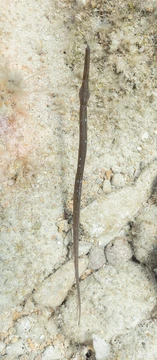
Where Broadnosed pipefish has been recorded
GBIF occurrence records for Syngnathus typhle, mapped and tabulated by country.

5,318 georeferenced occurrence records with coordinates are published for Syngnathus typhle through GBIF, from 37 countries or marine areas. This page maps those records and lists where they come from. Occurrence records reflect where people have looked as well as where the species lives, so well-surveyed coastlines are over-represented.
- Georeferenced records
- 5,318
- Countries / areas
- 37
- Mapped locations
- 183
- Records sampled for the map
- 3,000
- Inland records omitted
- 176
- Gbif taxonkey
- 2332908
Countries and areas with the most records (GBIF)
Norway — 1,169 records; Sweden — 961 records; Poland — 603 records; Spain — 573 records; France — 405 records; Denmark — 288 records; Mauritania — 274 records; Finland — 271 records; Ukraine — 162 records; Germany — 126 records; Türkiye — 98 records; Greece — 69 records; Italy — 67 records; United Kingdom of Great Britain and Northern Ireland — 57 records; Croatia — 30 records.
Source: GBIF Occurrence Search (taxonKey 2332908) — https://www.gbif.org/occurrence/search?taxon_key=2332908&has_coordinate=true (records CC0 / CC BY). Accessed 2026-09-23.
Marine regions with a WoRMS distribution record
European waters (ERMS scope); Belgian Exclusive Economic Zone; Scheldt estuary; Nieuwpoort; Oostende; De Panne; Westerschelde; British Isles; IJsselmeer; Middelkerke; Raversijde; Wenduine Bank; Greek Exclusive Economic Zone; Black Sea; Irish Exclusive economic Zone; Polish Exclusive Economic Zone; Israeli part of the Mediterranean Sea - Eastern Basin; Swedish Exclusive Economic Zone.
Source: WoRMS distribution records (MarineRegions) — https://www.marinespecies.org/aphia.php?p=taxdetails&id=127393 (CC BY 4.0). Accessed 2026-09-23.
How to read this map
The map plots a sample of 3,000 of the 5,318 records, deduplicated to a half-degree grid, so dense areas do not merge into one blob. The sample covers 32 of the 37 countries or areas with records; the areas absent from the sample hold 14 records in total (Belgium, Israel, Åland Islands, Monaco, Slovenia).
176 records plotting inland were omitted: for a marine species those are almost always the holding institution's coordinates rather than a collection site.
Records show where the species has been observed and reported, not a modelled range.
Source: GBIF Occurrence Search (taxonKey 2332908) — https://www.gbif.org/occurrence/search?taxon_key=2332908&has_coordinate=true (records CC0 / CC BY); WoRMS distribution records (MarineRegions) — https://www.marinespecies.org/aphia.php?p=taxdetails&id=127393 (CC BY 4.0); Natural Earth 110m basemap — https://www.naturalearthdata.com/ (public domain). Accessed 2026-09-23.
Frequently Asked Questions
How many georeferenced records exist for Broadnosed pipefish?
GBIF currently hosts 5,318 coordinate-tagged occurrence records for Syngnathus typhle, drawn from 37 different countries or marine areas.
How many distinct locations are shown on the Broadnosed pipefish distribution map?
The map displays 183 mapped locations, though it samples only 3,000 of the full 5,318 available records to keep the visualization readable.
Why do some coastlines appear to have far more Broadnosed pipefish sightings than others?
Record density largely reflects survey effort rather than true population size, so heavily studied shorelines naturally accumulate more data points than less-explored regions.
Are there any Broadnosed pipefish records that don't appear on the map?
Yes—176 inland records were deliberately left out of the mapped view because they fall outside the species' expected marine or estuarine habitat.
Where can I find the raw Broadnosed pipefish occurrence data?
All 5,318 georeferenced records are publicly accessible through GBIF under taxon key 2332908, where you can filter, download, or explore them by country.
Related in Broadnosed pipefish
Links follow this subject's own source article.
Elsewhere in Broadnosed pipefish
Spotted an error? Know more?
Reader corrections go straight into our review queue. Suggest an edit · How this site is sourced