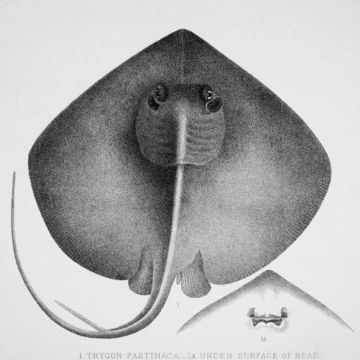
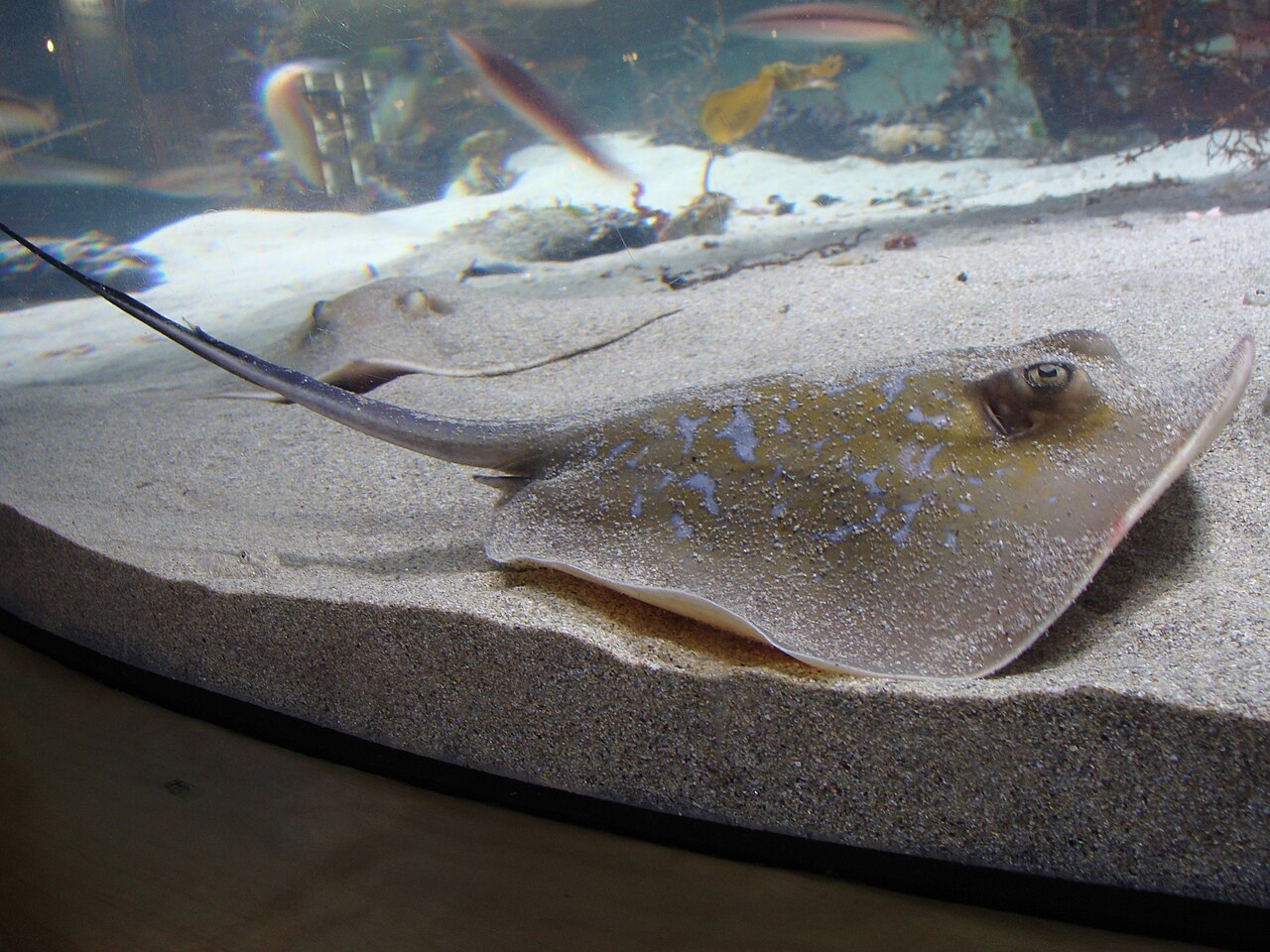
Blue stingray (Dasyatis chrysonota)
Source-cited species reference: taxonomy from WoRMS, biology from FishBase, occurrence map from GBIF, conservation from IUCN Red List, description from Wikipedia.

crudmucosa · CC BY 2.0
The blue stingray (Dasyatis chrysonota) is a species of whiptail stingray of the family Dasyatidae often found in the coastal waters of southern Africa.
- Scientific name
- Dasyatis chrysonota
- Authority
- (Smith, 1828)
- Family
- Dasyatidae
- Order
- Myliobatiformes
- Maximum length
- 75 cm
- Depth range
- 1–110 m
- Habitat zone
- demersal
- Iucn red list
- Near Threatened
- Gbif occurrence records
- 112
Species Recognition and Taxonomic History
The blue stingray, Dasyatis chrysonota, occupies a fascinating position in the history of ray taxonomy. For a considerable period, this southern African species was lumped together with the common stingray (Dasyatis pastinaca) as merely a regional variant. The two species share a great deal of general body architecture, which likely contributed to the prolonged confusion. However, the blue stingray displays distinctive blue markings that the common stingray entirely lacks, and further examination revealed meaningful differences in both morphological structure and meristic characters—countable features such as tooth rows and fin elements. In 1993, ichthyologists Paul Cowley and Leonard Compagno formally and definitively elevated the blue stingray to full species status, ending decades of taxonomic ambiguity. This recognition was part of a broader effort to untangle the Dasyatis genus, where early descriptions by Carl Linnaeus and others had often conflated multiple species under a single name, and where a lectotype designation for the common stingray itself remains an outstanding task for taxonomic stability.
Phylogenetic Position within Dasyatis
The blue stingray's placement within the Dasyatis genus sits at the center of ongoing phylogenetic debate. In 2001, Lisa Rosenberger published a morphological phylogenetic analysis covering fourteen Dasyatis species, which positioned the common stingray—the closest relative long confused with the blue stingray—as the most basal member of the genus, alongside the bluespotted stingray and the pelagic stingray. Since that analysis, taxonomic boundaries have shifted considerably: the pelagic stingray has generally been reassigned to its own genus, Pteroplatytrygon, and the bluespotted stingray has recently been moved to Neotrygon. These reclassifications underscore how fluid genus-level boundaries remain in this group. The blue stingray, recognized as a distinct species in 1993, retains its position within Dasyatis, but its precise branching relationship to other members—particularly the closely related Tortonese's stingray of the Mediterranean, whose distinction from the common stingray is itself poorly understood—awaits further investigation. The genus as a whole continues to be reshaped as new morphological and molecular data accumulate.
The Closest Relative and Its Biology
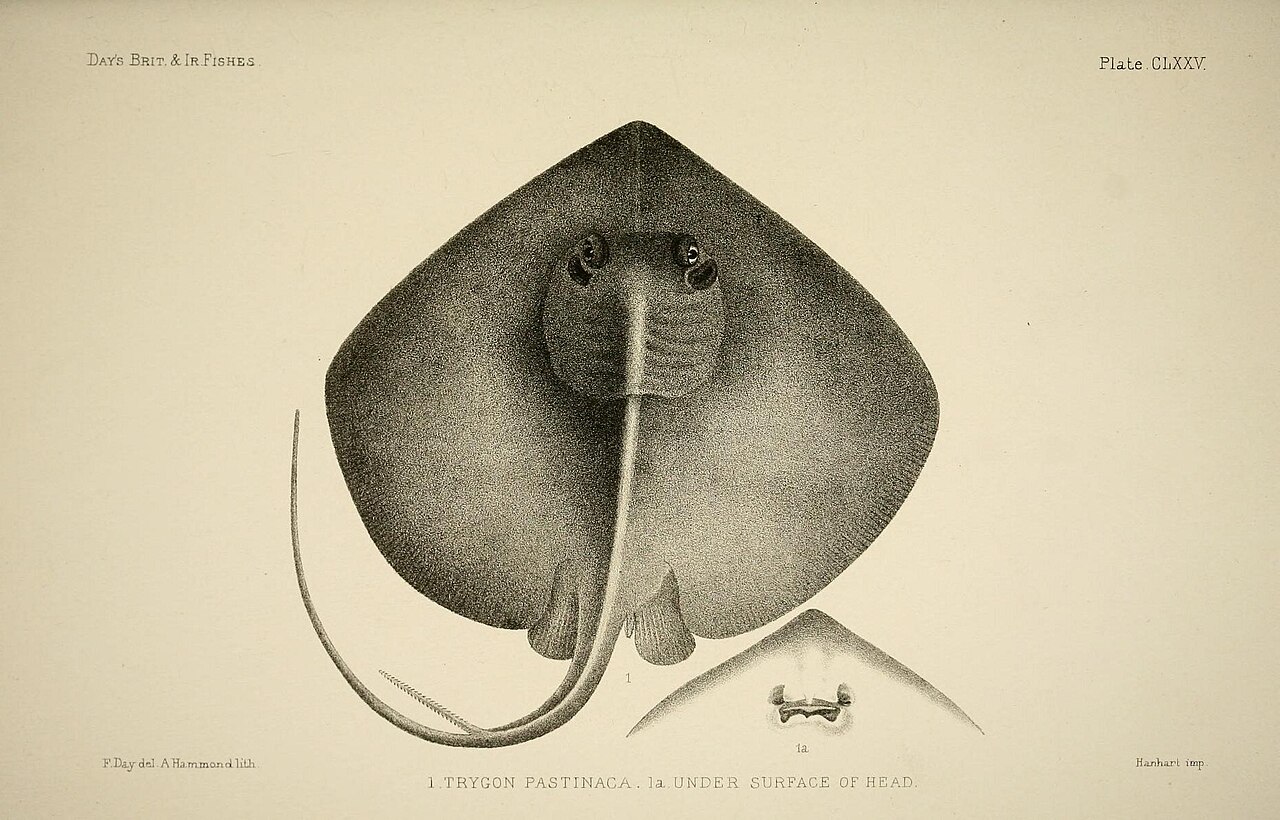
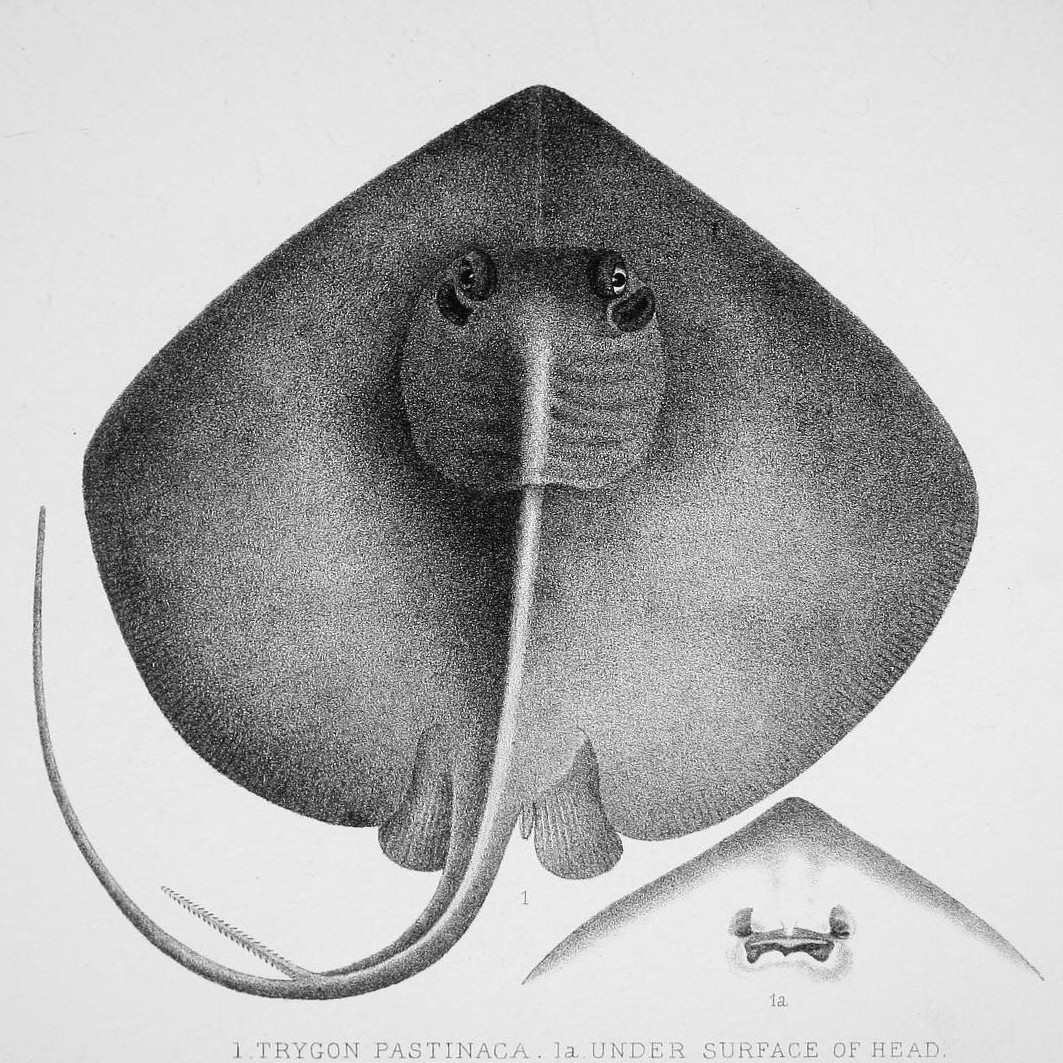
Understanding the blue stingray's distinctiveness is inseparable from understanding the common stingray, its long-time taxonomic twin. The common stingray inhabits sandy and muddy coastal bottoms in the northeastern Atlantic, Mediterranean, and Black Seas, typically in waters shallower than sixty meters, where it buries itself in sediment during the day. Its diamond-shaped pectoral disc is slightly wider than long, and its whip-like tail carries a serrated venomous spine up to thirty-five centimeters long. The species feeds primarily on bottom-dwelling crustaceans, supplemented by molluscs, polychaete worms, and small bony fishes. Reproduction is aplacental viviparous: embryos are sustained first by yolk and later by histotroph, or uterine milk, with females producing four to nine young twice yearly after a four-month gestation. The common stingray's plain gray, brown, or olive-green coloration—without the blue markings that define its southern African counterpart—was a key feature that eventually helped separate the two species in the taxonomic record.
Conservation Context and Ecological Pressures
The broader ecological pressures facing Dasyatis stingrays provide important context for the blue stingray's conservation outlook. The common stingray, its closest well-studied relative, is not a target of commercial fisheries yet is captured in large numbers as bycatch, with individuals subsequently used for food, fishmeal, and liver oil. Its population appears to be declining across its entire range, prompting the IUCN to assess it as Vulnerable. Seasonal abundance patterns—such as the summer peak and winter trough documented off the Azores—suggest that range and depth shifts may complicate population monitoring. The blue stingray, sharing the same genus and similar benthic lifestyle, likely faces comparable threats from coastal development, trawling, and bycatch in southern African waters. Yet because it was only formally recognized as a separate species in 1993, dedicated population surveys and conservation assessments specific to D. chrysonota remain limited. The taxonomic clarification that separated it from the common stingray is thus not merely an academic exercise; it is a prerequisite for meaningful, species-specific conservation action.
Gallery

Spotted an error? Know more?
Reader corrections go straight into our review queue. Suggest an edit · How this site is sourced