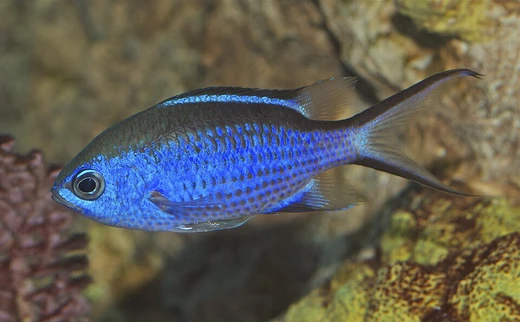
Blue chromis (Azurina cyanea)
Source-cited species reference: taxonomy from WoRMS, biology from FishBase, occurrence map from GBIF, description from Wikipedia.

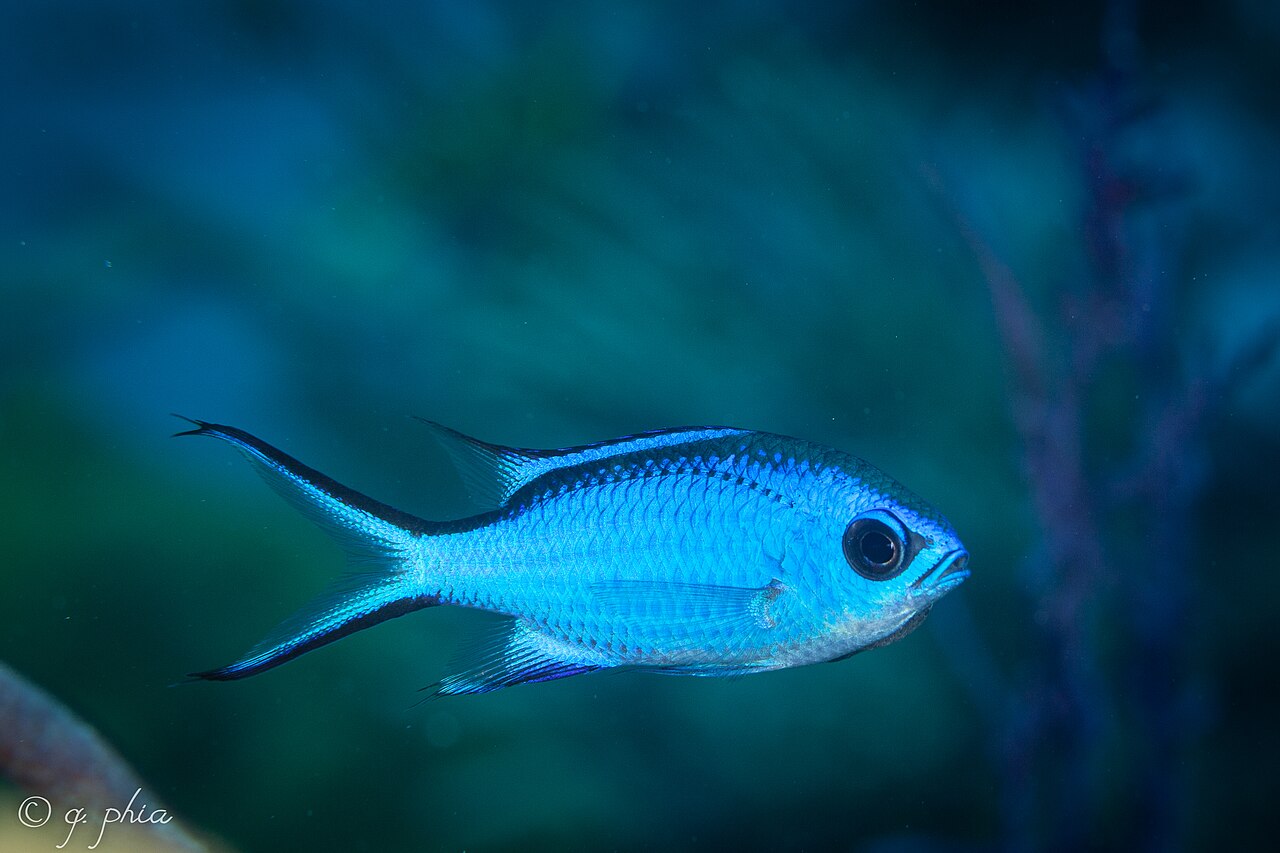
q phia · CC BY 2.0
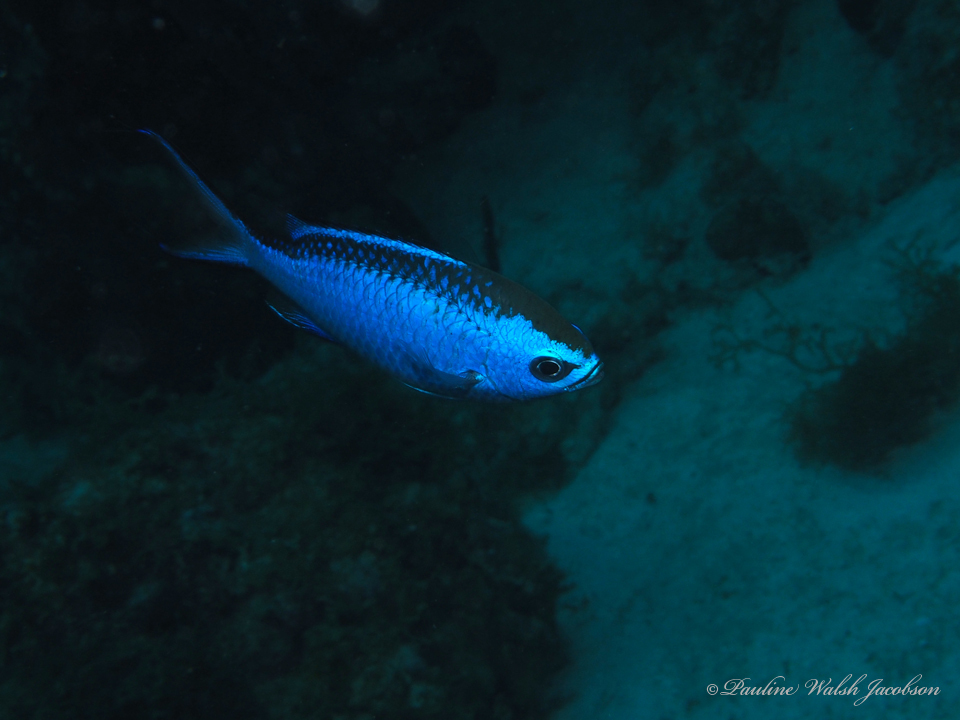
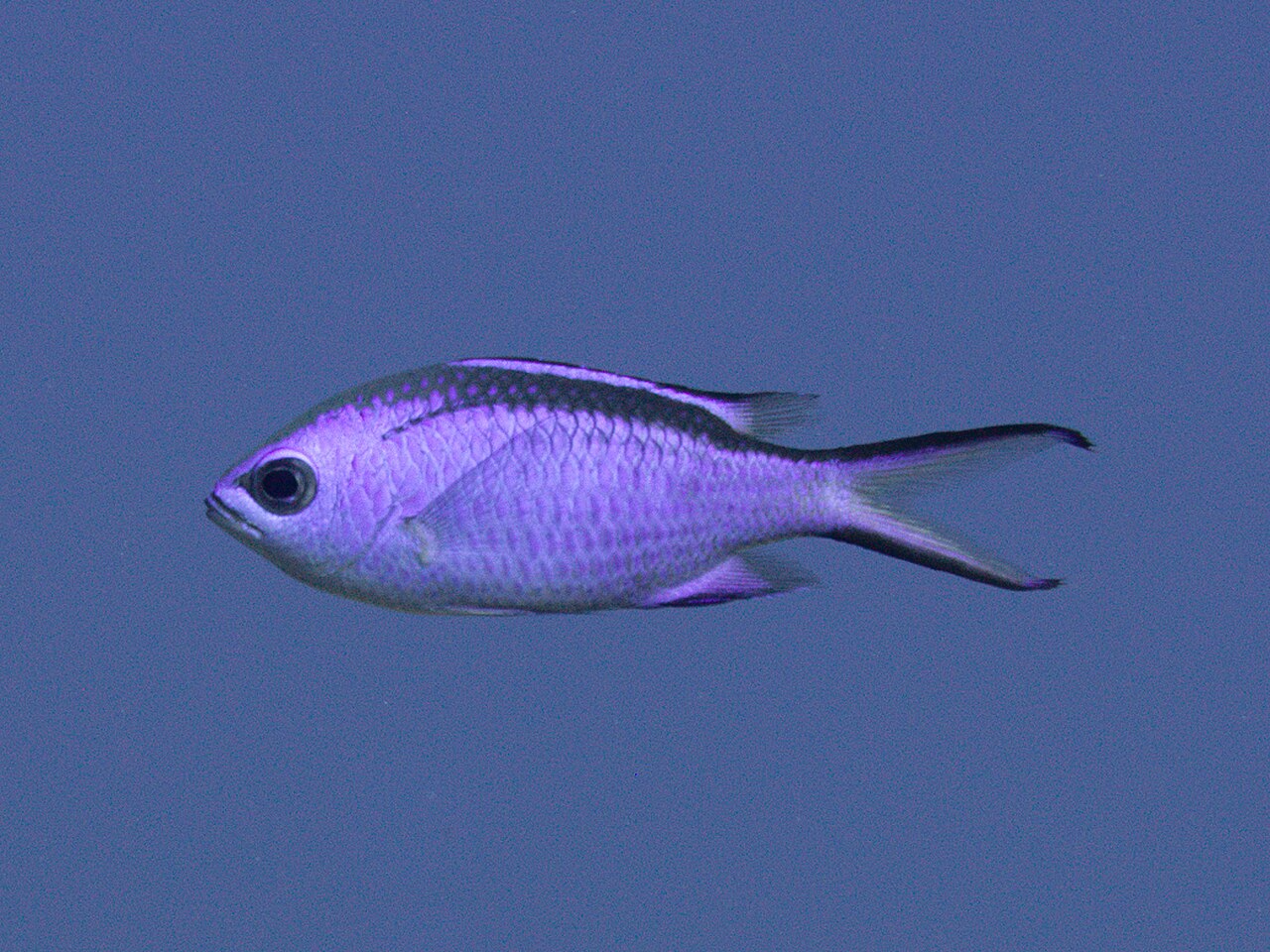
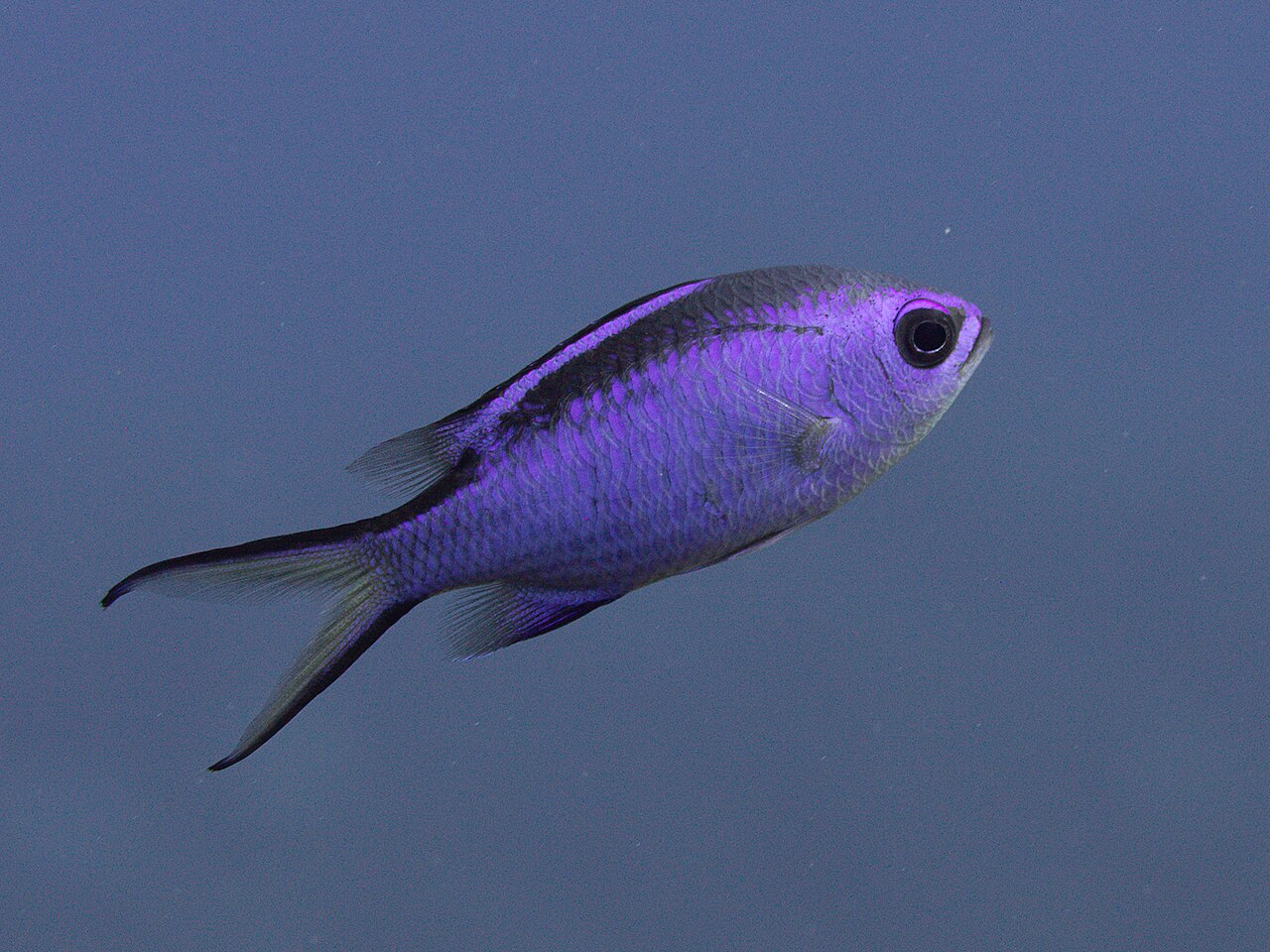
Azurina cyanea (blue chromis) is a damselfish in the subfamily Pomacentrinae, found in Bermuda, southern Florida and the Caribbean Sea.
- Scientific name
- Azurina cyanea
- Authority
- (Poey, 1860)
- Family
- Pomacentridae
- Order
- Ovalentaria incertae sedis
- Maximum length
- 15 cm
- Depth range
- 3–60 m
- Habitat zone
- reef-associated
- Gbif occurrence records
- 1,614
Range and Habitat
The blue chromis occupies a relatively compact geographic footprint, ranging across Bermuda, the southern reaches of Florida, and the broader Caribbean Sea. Despite this limited distribution, the species demonstrates a remarkable vertical flexibility within its reef environment. While it is most frequently encountered in the shallow band between three and five meters, individuals have been documented at depths of twenty-five meters, and one record even places it at sixty meters below the surface. This suggests a capacity to exploit a wider depth range than its typical shallow-water preference might imply. Ecologically, the blue chromis occupies a dual niche on coral reefs. It anchors itself to the reef surface as a structural refuge, yet regularly ventures into the open water column hovering above the reef structure. This upward foray is driven by its feeding strategy, as it targets plankton drifting through the water rather than grazing on the reef itself. This combination of reef association and pelagic feeding gives the species a distinctive ecological profile among damselfish.
Social Structure and Breeding
Unlike many reef fish that form dense, colorful schools, the blue chromis leans toward a quieter social existence. It is typically observed either entirely alone or in modest, small clusters, and it maintains a persistent proximity to reef structures throughout its daily activity. This reticulated social pattern appears to shift with life stage: juvenile individuals press themselves close to the reef bottom, a behavioral adaptation that minimizes their exposure to open-water predators. As the species matures, a more defined territorial structure emerges, particularly among males. Each male carves out a solitary breeding territory, a space he defends and maintains independently. Within this domain, the male courts multiple females in succession, a polygynous arrangement that spreads reproductive effort across several partners. Following fertilization, the male assumes sole responsibility for the clutch, guarding the eggs through their development until the planktonic larvae emerge and disperse into the water column. This paternal investment, combined with the solitary territorial system, distinguishes the blue chromis's reproductive ecology from more communally breeding reef species.
Aquarium Trade and Conservation Standing
The blue chromis has entered the global ornamental fish market, and its collection for home aquariums represents a notable human interaction with the species. However, the precise scale of this trade remains poorly quantified, with no reliable figures available on how many individuals are harvested. What is well established is that damselfish as a group constitute the most heavily collected category in the aquarium industry, accounting for nearly half of all traded fish. Within that broad category, the blue chromis is not singled out as being taken in particularly large volumes, which tempers the immediate conservation concern. The IUCN reflects this assessment by listing the species as "Least Concern." Its range spans approximately twenty-five million square kilometers, and within that area the population is regarded as abundant, with no documented continuous decline in either geographic range or numbers. Nevertheless, conservationists acknowledge that the current data are incomplete. A more thorough investigation is needed to determine whether the gradual deterioration of Caribbean habitat quality is already exerting subtle pressure on the species that has not yet been captured by population surveys.
Emerging Threats and Uncertainties
Beyond the well-known pressure of the aquarium trade, the blue chromis faces a newer and arguably more alarming biological threat: the rapid proliferation of lionfish across the Caribbean and the western Atlantic coastline. This invasive predator has expanded its range aggressively, and the blue chromis is identified among the tropical reef fish most vulnerable to its predation. The lionfish's presence effectively adds a layer of mortality that the species' existing behavioral defenses, such as juveniles hugging the reef bottom, were not evolved to counter. A second, more speculative threat looms in the form of coral loss. Because the blue chromis depends on reef surfaces for shelter and as a foraging platform, the progressive degradation of living coral could erode the structural habitat it relies upon. Yet this connection remains largely untested; no detailed study has yet quantified how coral decline specifically affects blue chromis survival or reproduction. The convergence of these two pressures, an invasive predator and a shrinking habitat, creates a scenario where the species' "Least Concern" status may prove premature, underscoring the urgent need for targeted field research in the Caribbean.
Gallery
Frequently Asked Questions
Who is Blue chromis (Azurina cyanea)?
Blue chromis is a small damselfish in the family Pomacentridae, subfamily Pomacentrinae, first formally described by Poey in 1860. It sits under the order Ovalentaria incertae sedis in modern taxonomic classifications.
What are Blue chromis (Azurina cyanea)'s key physical traits and depth range?
Adults reach a maximum total length of about 15 cm, keeping them on the smaller side among damselfishes. They are recorded living anywhere from roughly 3 meters down to 60 meters depth.
Where does Blue chromis (Azurina cyanea) live?
Its documented range covers Bermuda, the southern Florida coast, and the wider Caribbean Sea. It is a tropical-to-subtropical Atlantic and Caribbean species rather than a Pacific one.
How big does Blue chromis (Azurina cyanea) get?
The species tops out at approximately 15 centimeters in length, which is modest even within the Pomacentridae. This places it among the smaller reef-associated fish you'll encounter in its range.
Why is Blue chromis (Azurina cyanea) notable among damselfishes?
It is one of the few Pomacentridae species confirmed across both the western Atlantic (Bermuda, southern Florida) and the Caribbean basin. Its broad depth tolerance, spanning 3 to 60 meters, also makes it a useful species for studying reef-fish behavior across multiple habitat zones.
Related in Blue chromis
Links follow this subject's own source article.
Elsewhere in Blue chromis
Spotted an error? Know more?
Reader corrections go straight into our review queue. Suggest an edit · How this site is sourced