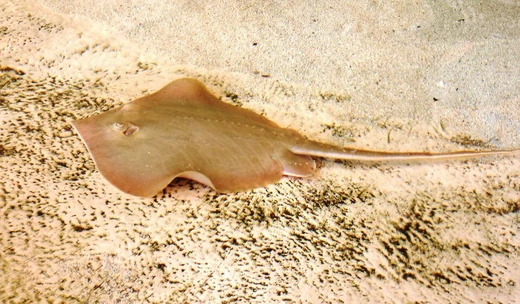
Atlantic stingray (Hypanus sabinus)
Source-cited species reference: taxonomy from WoRMS, biology from FishBase, occurrence map from GBIF, conservation from IUCN Red List, description from Wikipedia.

EgorovaSvetlana · CC BY-SA 4.0
The Atlantic stingray (Hypanus sabinus) is a species of stingray in the family Dasyatidae, common along the Atlantic coast of North America from the Chesapeake Bay to Mexico, including brackish and freshwater habitats. It may be distinguished from other stingrays in the area by its relatively elongated snout. This species is of little commercial importance, other than for sale in the aquarium industry.
- Scientific name
- Hypanus sabinus
- Authority
- (Lesueur, 1824)
- Family
- Dasyatidae
- Order
- Myliobatiformes
- Maximum length
- 61 cm
- Depth range
- 2–25 m
- Habitat zone
- demersal
- Iucn red list
- Least Concern
- Gbif occurrence records
- 59,159
Taxonomic History and Evolutionary Standing
The Atlantic stingray first entered scientific literature in 1824, when French naturalist Charles Alexandre Lesueur published a description under the name Trygon sabina in the Journal of the Academy of Natural Sciences of Philadelphia. His account relied on a damaged male specimen that American naturalist Titian Ramsay Peale had gathered during the Academy's 1817 expedition to Florida. Over the following decades, taxonomists shuffled the species among several now-obsolete genera, including Pastinaca, Dasybatus (and its spelling variants Dasibatis and Dasybatis), and Amphotistius, before all of those names were folded into Dasyatis. The species' deep evolutionary roots within its genus were clarified by a 2001 morphological phylogenetic analysis conducted by Lisa Rosenberger. Her work positioned the Atlantic stingray as one of the more basal lineages in the group, serving as the outgroup to a large clade that encompasses the southern stingray, the roughtail stingray, the longnose stingray, and the pearl stingray. This basal placement suggests the species diverged early in the genus's radiation, preserving ancestral traits that help illuminate the evolutionary trajectory of its relatives along the western Atlantic.
Range, Habitat, and Seasonal Movement
The Atlantic stingray ranges along the western Atlantic from the Chesapeake Bay southward through Florida and the Gulf of Mexico, reaching as far as Campeche in Mexico. Occasional records from Grenada, Suriname, and Brazil are considered doubtful and likely reflect misidentifications of other species. This ray thrives in shallow coastal waters over sandy or silty substrates, as well as in estuaries and lakes, favoring temperatures above 15 °C and tolerating conditions exceeding 30 °C. Perhaps most remarkably, it tolerates a wide spectrum of salinities and regularly enters freshwater systems. Documented sightings include the Mississippi River, Lake Pontchartrain, Winyah Bay, and the St. Johns River in Florida, where the population represents the only permanent freshwater elasmobranch community in all of North America. Because it cannot remain in cooler northern waters year-round, the species undertakes seasonal migrations. In the Chesapeake Bay it appears only during summer and fall, while elsewhere it retreats to deeper water in winter. When inshore, it typically occupies depths of two to six meters, but after moving offshore it can be encountered at depths reaching twenty-five meters.
Body Plan, Defensive Armament, and Coloration
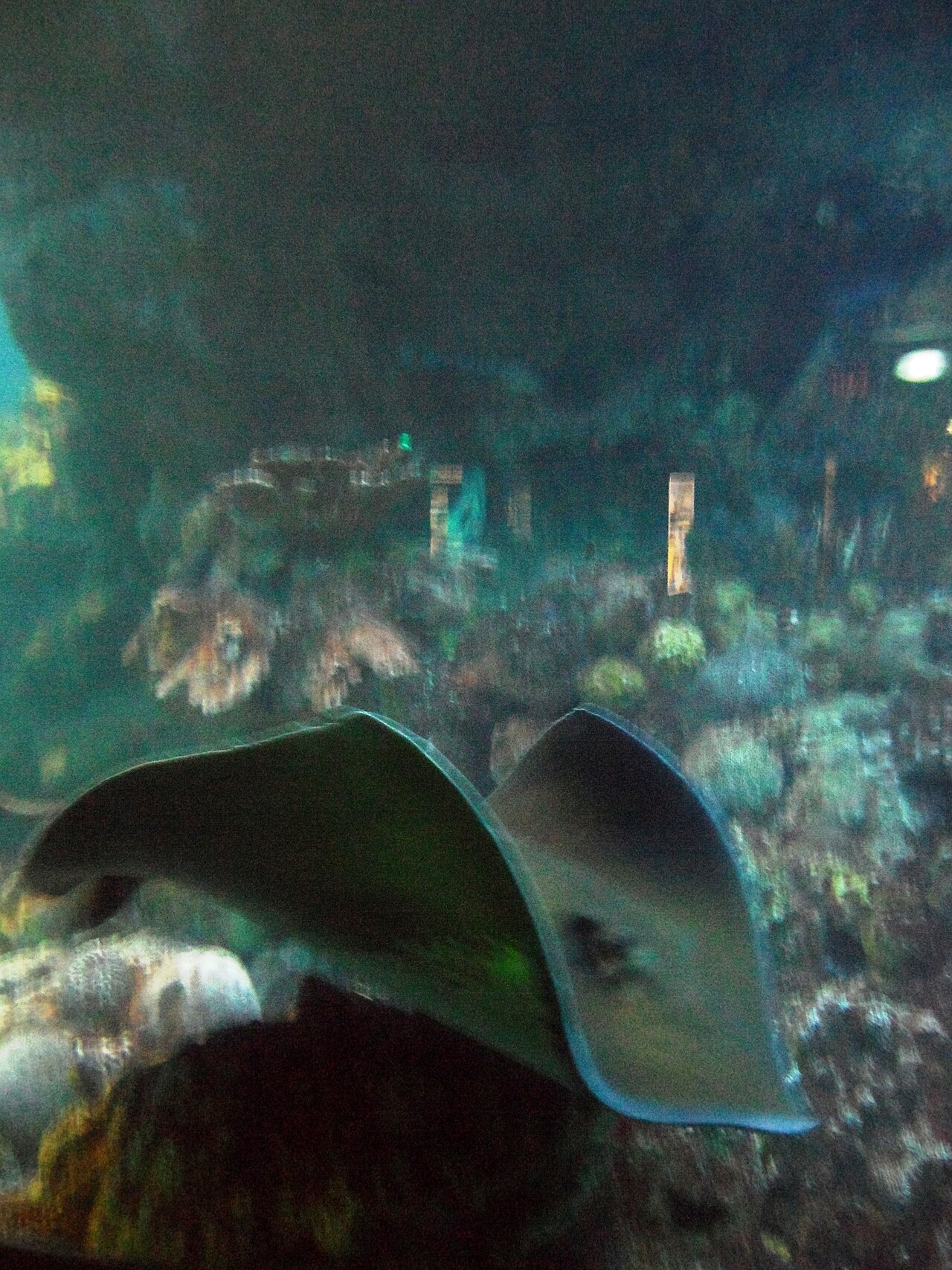
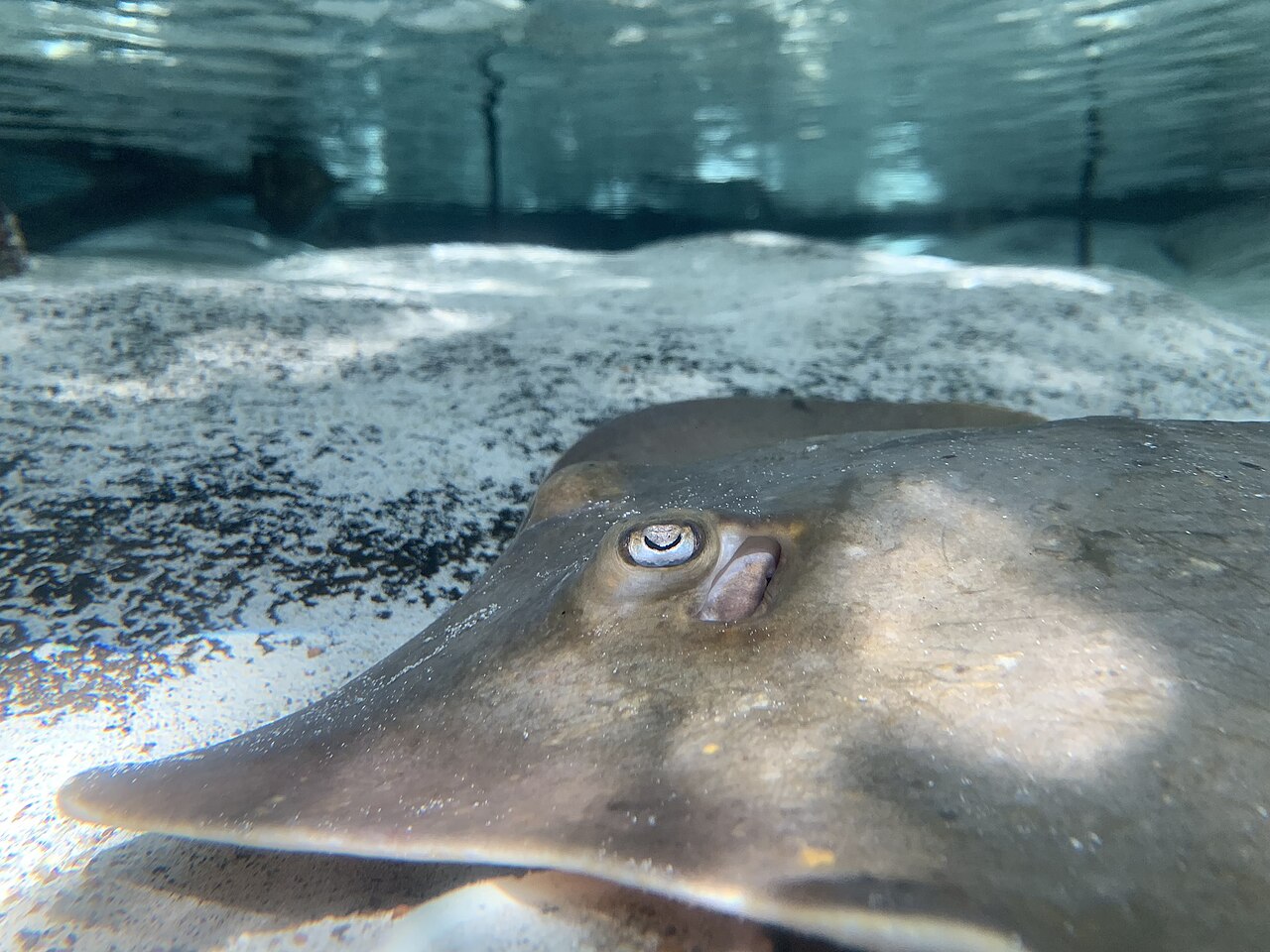
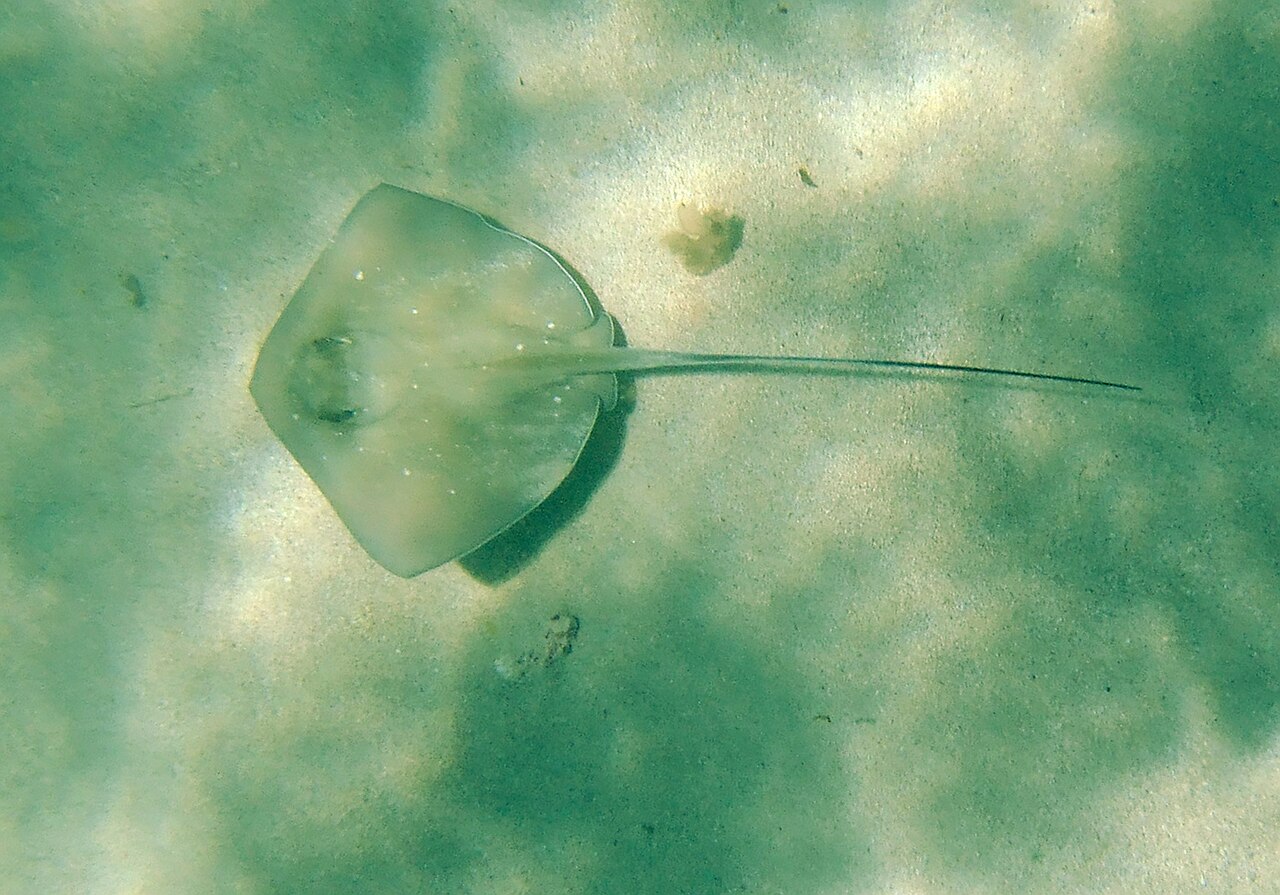
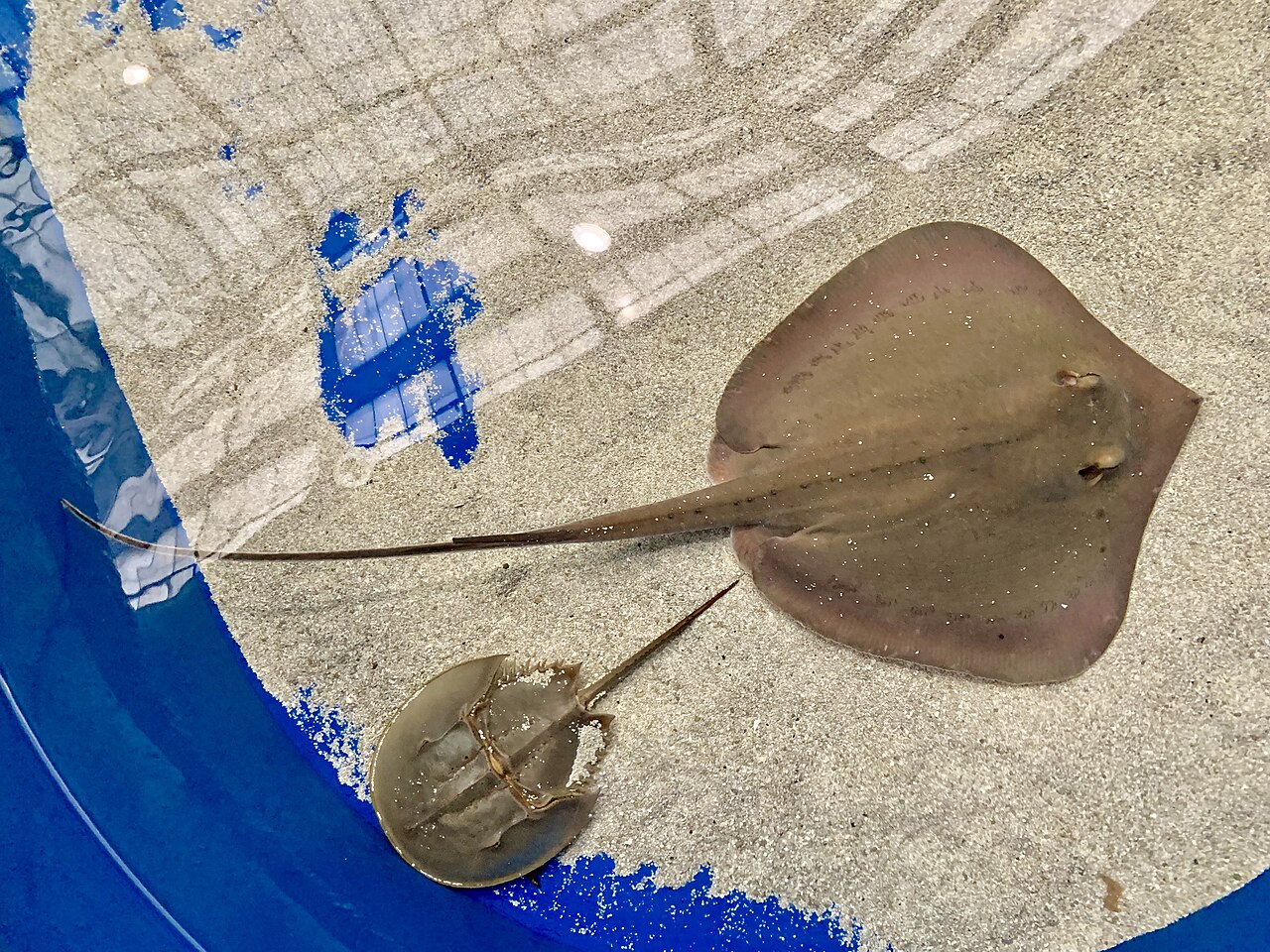
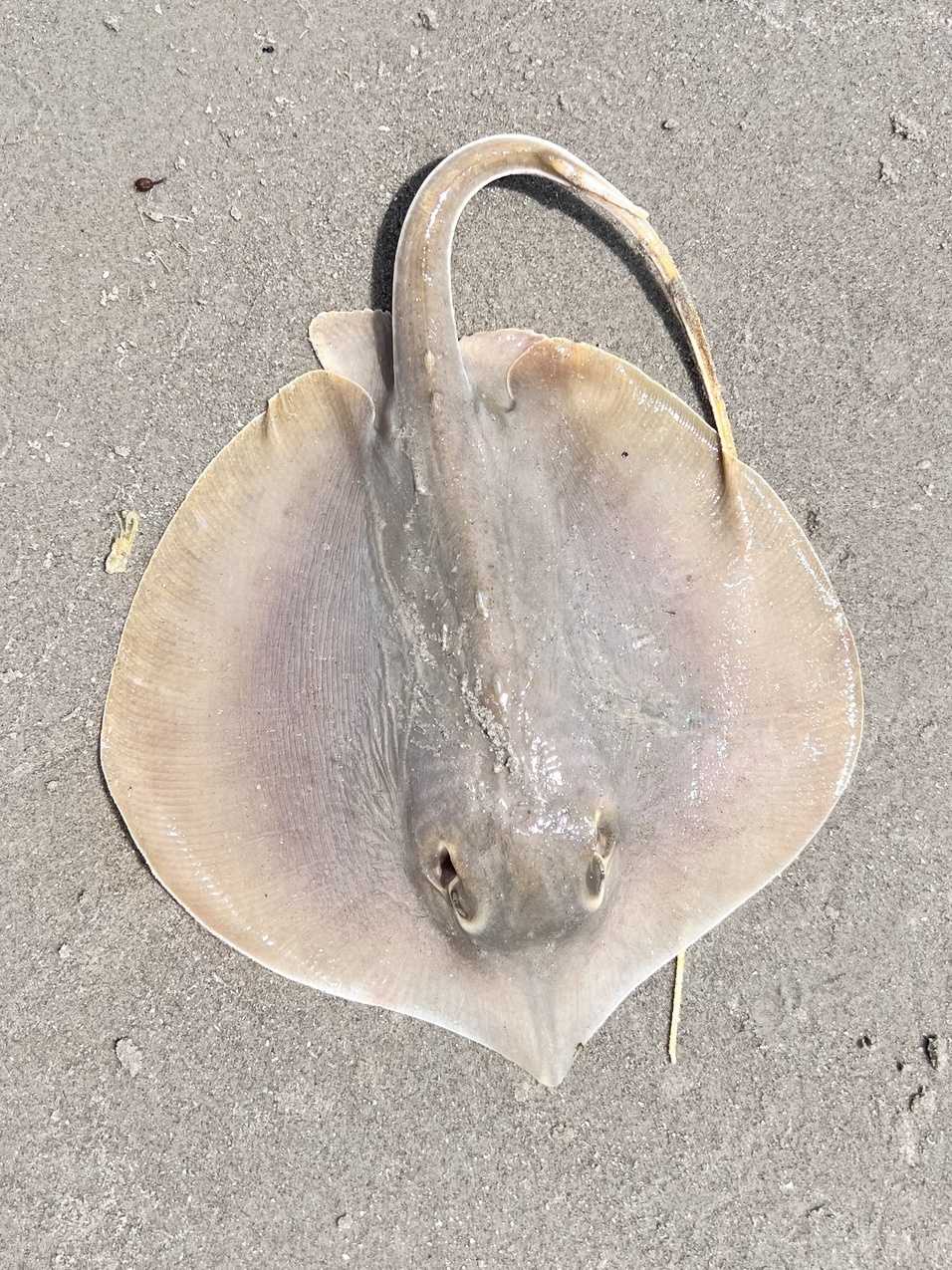
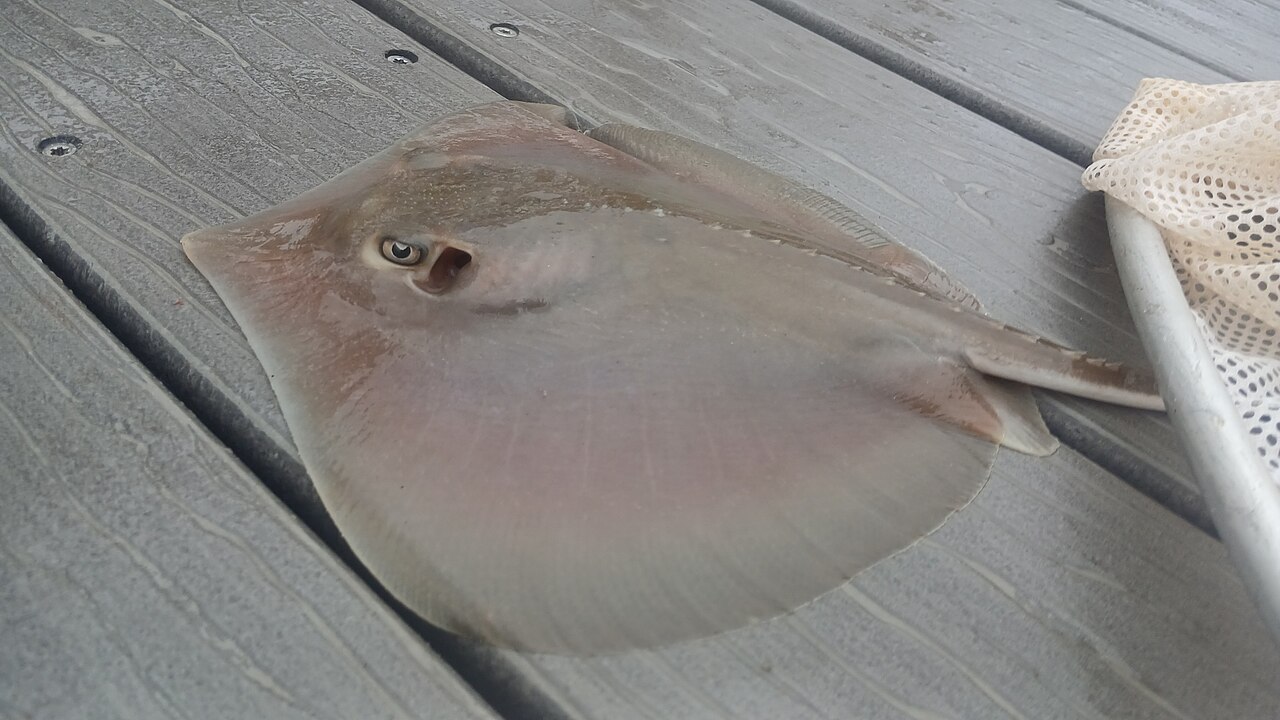
Among stingrays, the Atlantic stingray is one of the smaller species, reaching a maximum length of sixty-one centimeters and a weight near five kilograms. Its pectoral fin disk is spade-shaped, slightly wider than long, with rounded corners and concave front margins. A relatively elongated snout sets it apart from other regional stingrays. Inside the mouth sit three stout papillae on the floor, and the teeth are generally rounded with flat, blunt surfaces. During the breeding season, however, mature males develop long, sharp cusps that curve toward the corners of the mouth, serving as grips for holding females during copulation. The tail is long and whip-like, bearing a serrated spine roughly a quarter of the disk's width, which is replaced each year between June and October. Dorsal and ventral fin folds line the tail. As individuals grow larger, tubercles or thorns appear along the dorsal midline extending to the spine's origin, and some large females develop similar bumps around the eyes and spiracles. Above, the coloration is brown or yellowish-brown, fading lighter toward the disk margin, sometimes with a dark midline stripe; below, the body is white or pale gray. Tail fin folds are yellowish, and in larger specimens the tail may show gray flecking near the base and a fully dark tip.
Feeding, Predation, and Viviparous Reproduction
The Atlantic stingray is a benthic predator, feeding on invertebrates such as bivalves, tube anemones, amphipods, crustaceans, and nereid worms, which it locates using electroreceptive ampullae of Lorenzini. While foraging, it orients itself into the current so sediment is swept from prey. Its diet shifts somewhat by location. In open ocean, major predators include the tiger shark and bull shark; in freshwater, the American alligator is a key threat. A fish louse called Argulus is a known parasite, feeding on skin mucus of freshwater individuals. Despite its regular freshwater presence, the species remains physiologically euryhaline and has not evolved the specialized osmoregulatory machinery seen in true river stingrays, likely because freshwater colonization is under a million years old. Freshwater rays carry only thirty to fifty percent of the urea and osmolyte concentrations found in marine counterparts, yet they must excrete dilute urine at roughly ten times the marine rate. Reproduction is viviparous: after courtship in which the male follows, bites, and grips the female's pectoral fin, embryos are sustained by a yolk sac until about day sixty, then by uterine milk. Litters of one to four young, ten to thirteen centimeters wide, are born from late July to early August after a four-to-four-and-a-half-month gestation.
Gallery
Related in Atlantic stingray
Links follow this subject's own source article.
Elsewhere in Atlantic stingray
Spotted an error? Know more?
Reader corrections go straight into our review queue. Suggest an edit · How this site is sourced