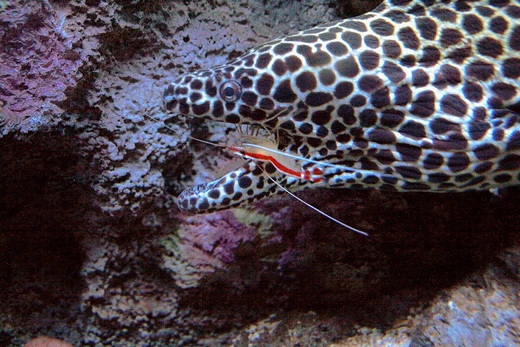
Magnificent shrimp (Ancylomenes magnificus)
Source-cited species reference: taxonomy from WoRMS, biology from SeaLifeBase, occurrence map from GBIF, description from Wikipedia.

Jean-Paul Boerekamps · CC0
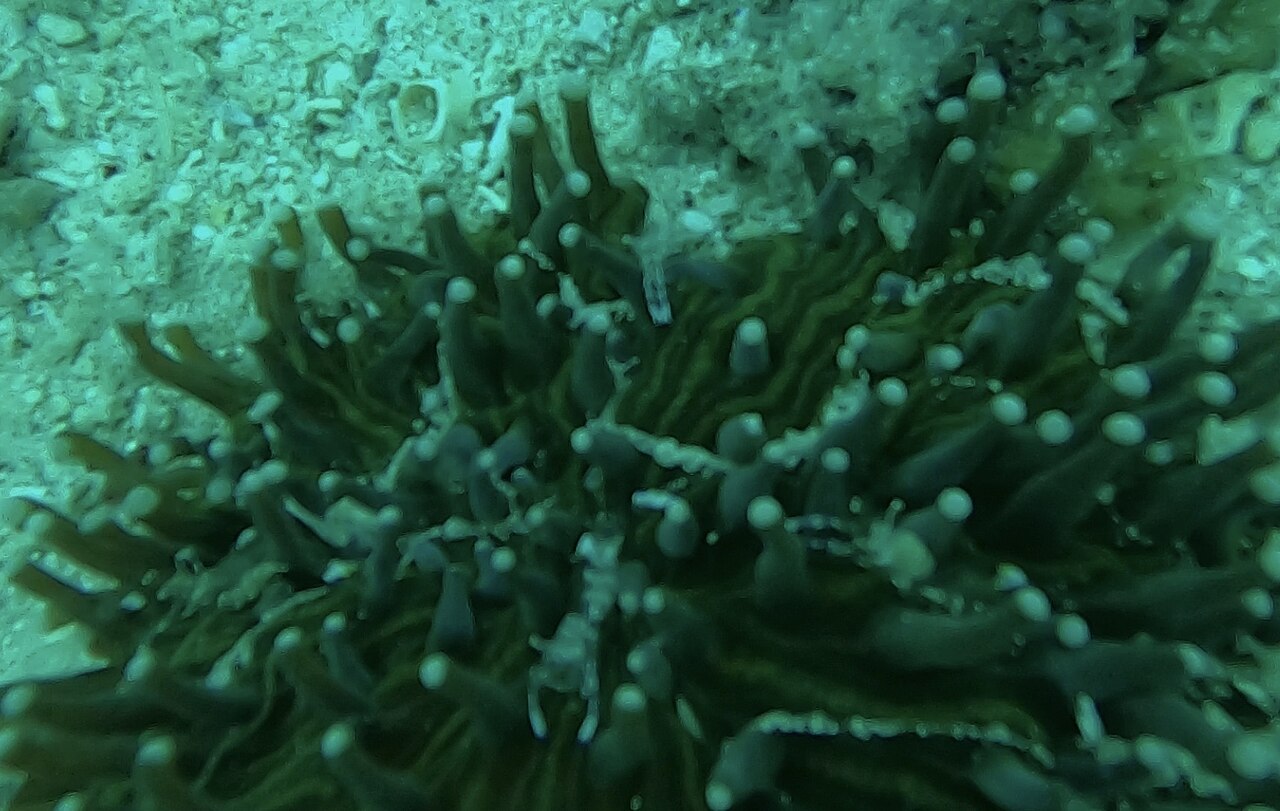
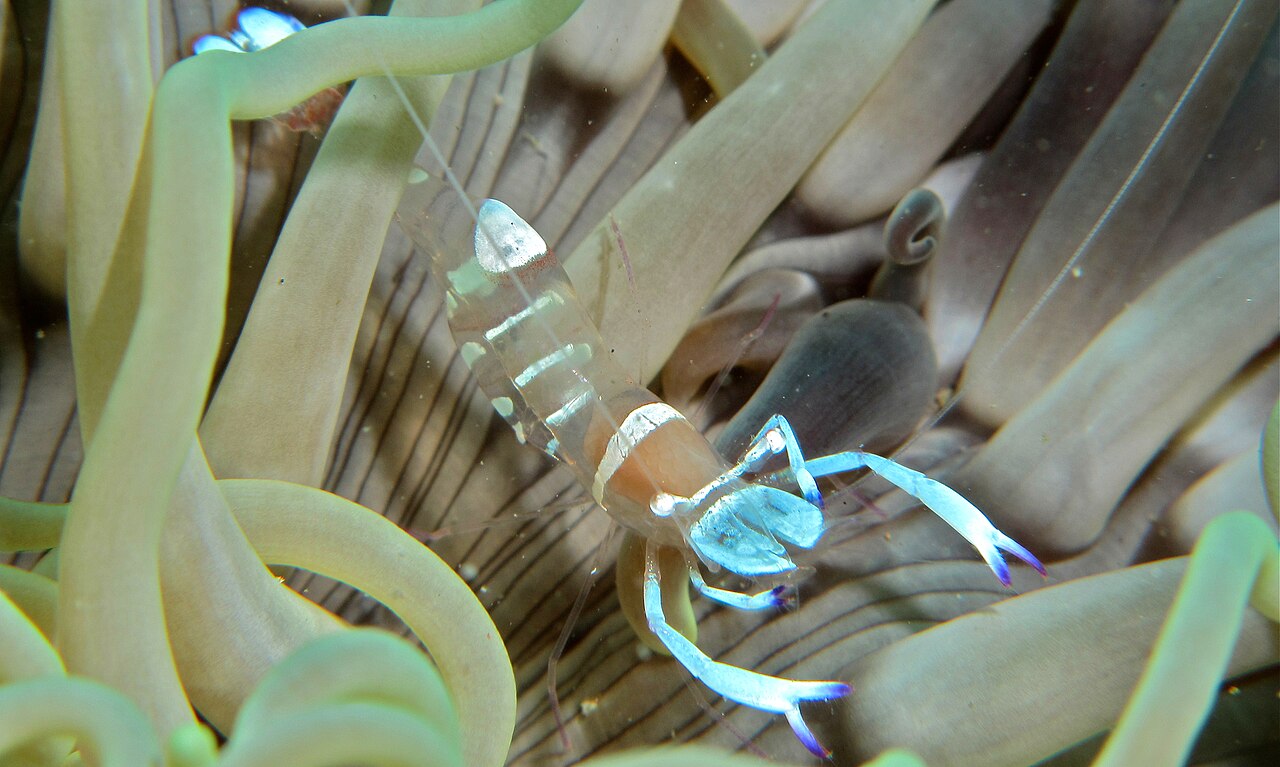
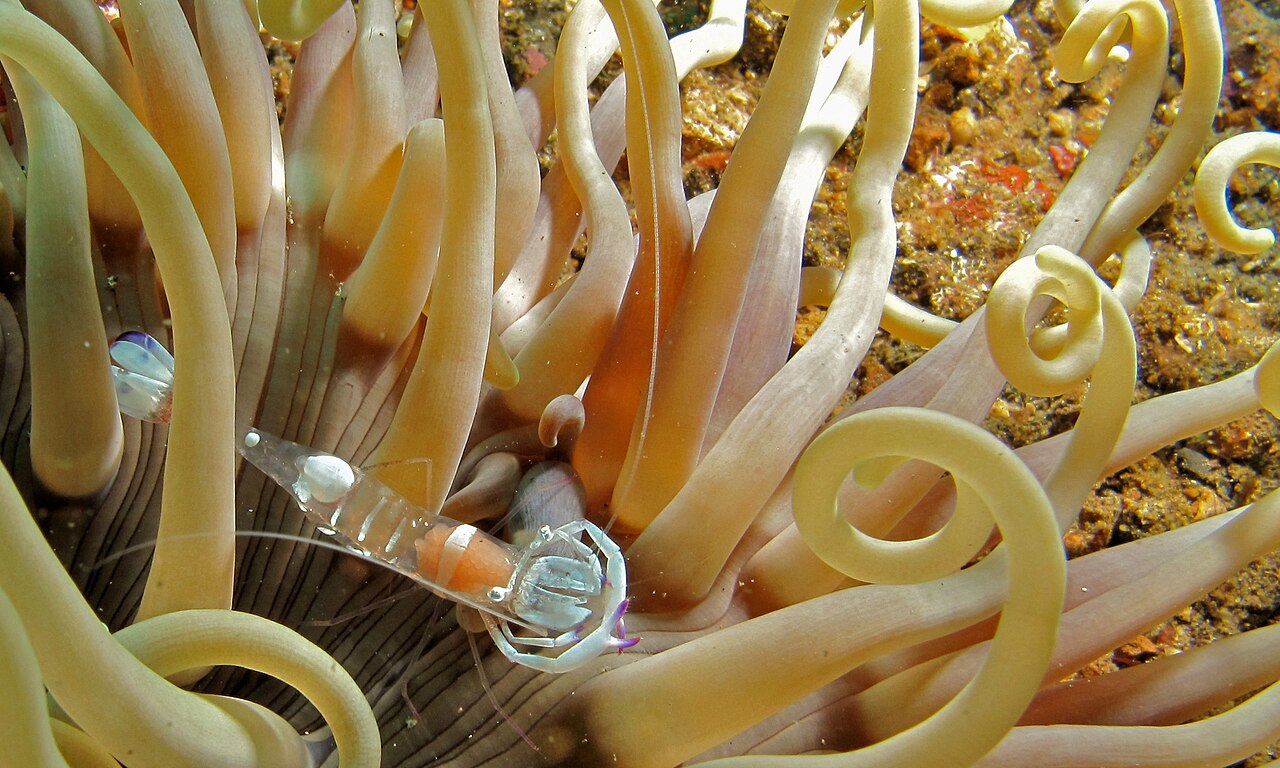
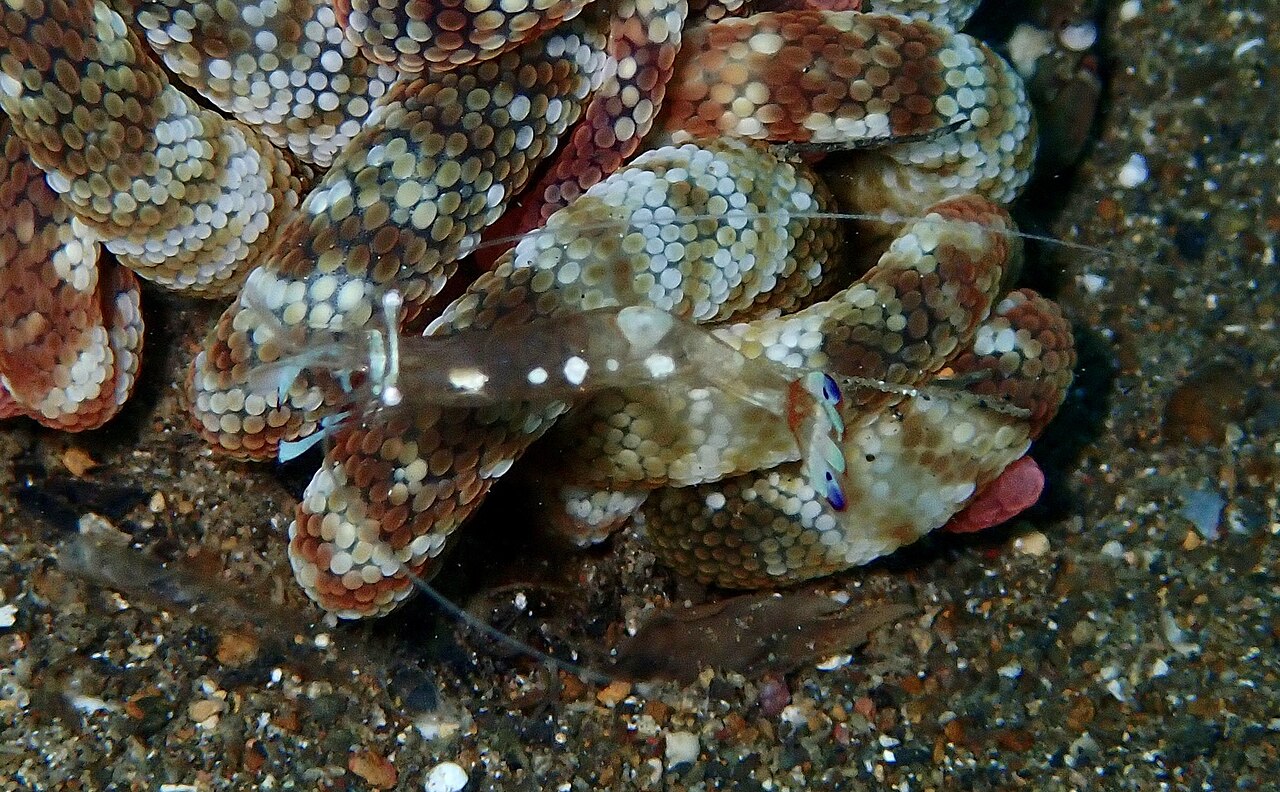
Ancylomenes magnificus, also known as the magnificent anemone shrimp, is a species of cleaner shrimp common to the Western Pacific Ocean at depths of 3 - 29 m. They are commonly found on stony coral, Catalaphyllia and the sea anemone, Dofleinia armata.
- Scientific name
- Ancylomenes magnificus
- Authority
- (Bruce, 1979)
- Family
- Palaemonidae
- Order
- Decapoda
- Depth range
- 26–29 m
- Habitat zone
- reef-associated
- Gbif occurrence records
- 529
Classification (WoRMS)
Full classification as recorded by WoRMS: Kingdom: Animalia · Phylum: Arthropoda · Class: Malacostraca · Order: Decapoda · Family: Palaemonidae · Genus: Ancylomenes.
Accepted name: Ancylomenes magnificus · Authority: (Bruce, 1979) · Taxonomic status: accepted · AphiaID: 514491.
Synonyms and superseded combinations recorded for this taxon: Periclimenes magnificus Bruce, 1979.
Source: World Register of Marine Species (WoRMS) — https://www.marinespecies.org/aphia.php?p=taxdetails&id=514491 (CC BY 4.0). Accessed 2026-09-23.
Biology and life history (SeaLifeBase)
Measured values published by SeaLifeBase for Ancylomenes magnificus. Only fields the database actually holds for this species are shown; these are database values, not aquarium guidance.
Depth range: 26–29 m · Habitat zone: reef-associated.
SeaLifeBase notes: Depth range is based on occurrence in Australia; to be replaced with a better reference.
Source: SeaLifeBase species summary (SpecCode 18336) — https://www.sealifebase.se/summary/Ancylomenes-magnificus.html (CC BY-NC 3.0 — non-commercial use only). Accessed 2026-09-23.
Distribution and occurrence records (GBIF)
529 georeferenced occurrence records for Ancylomenes magnificus are published through GBIF from 15 countries or marine areas. The map above plots 57 distinct locations from a sample of 529 records, omitting 13 inland records that carry an institution's coordinates rather than a collection site; it shows where the species has been observed and reported, not a modelled range.
Most records by country or area: Indonesia (217); Philippines (165); New Caledonia (101); Australia (20); Papua New Guinea (8); Malaysia (4); Singapore (4); Solomon Islands (2); Viet Nam (2); Brunei Darussalam (1); China (1); India (1); Japan (1); Timor-Leste (1); United States of America (1).
Marine regions with a valid WoRMS distribution record: South India and Sri Lanka; Malacca Strait; South Kuroshio; Central Kuroshio Current; East China Sea; Solomon Sea.
Source: GBIF Occurrence Search (taxonKey 6456663) — https://www.gbif.org/occurrence/search?taxon_key=6456663&has_coordinate=true (records CC0 / CC BY); WoRMS distribution records (MarineRegions) — https://www.marinespecies.org/aphia.php?p=taxdetails&id=514491 (CC BY 4.0); Natural Earth 110m basemap — https://www.naturalearthdata.com/ (public domain). Accessed 2026-09-23.
Description and natural history (Wikipedia)
As an arthropod, A. magnificus, is segmented and bilaterally symmetrical. The body of the shrimp contains a hard external skeleton, called an exoskeleton, made of chitin which periodically molts by a process called ecdysis.
A. magnificus, has a compressed body composed of a cephalothorax, containing a head and a thorax attached to an elongated abdomen. It has five pairs of pereiopods, two pair of antennae, a mandible, and three pairs of maxillipeds.
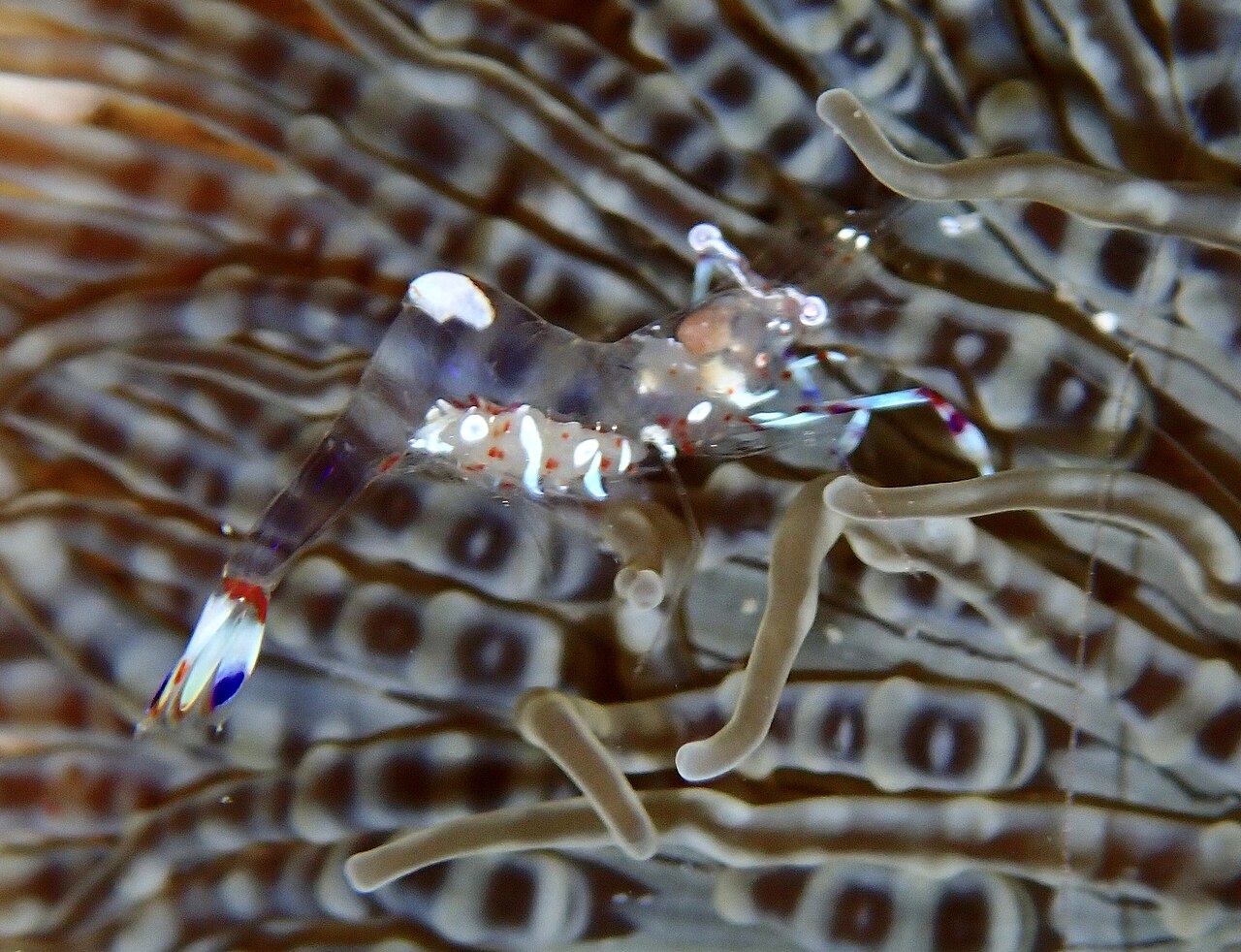
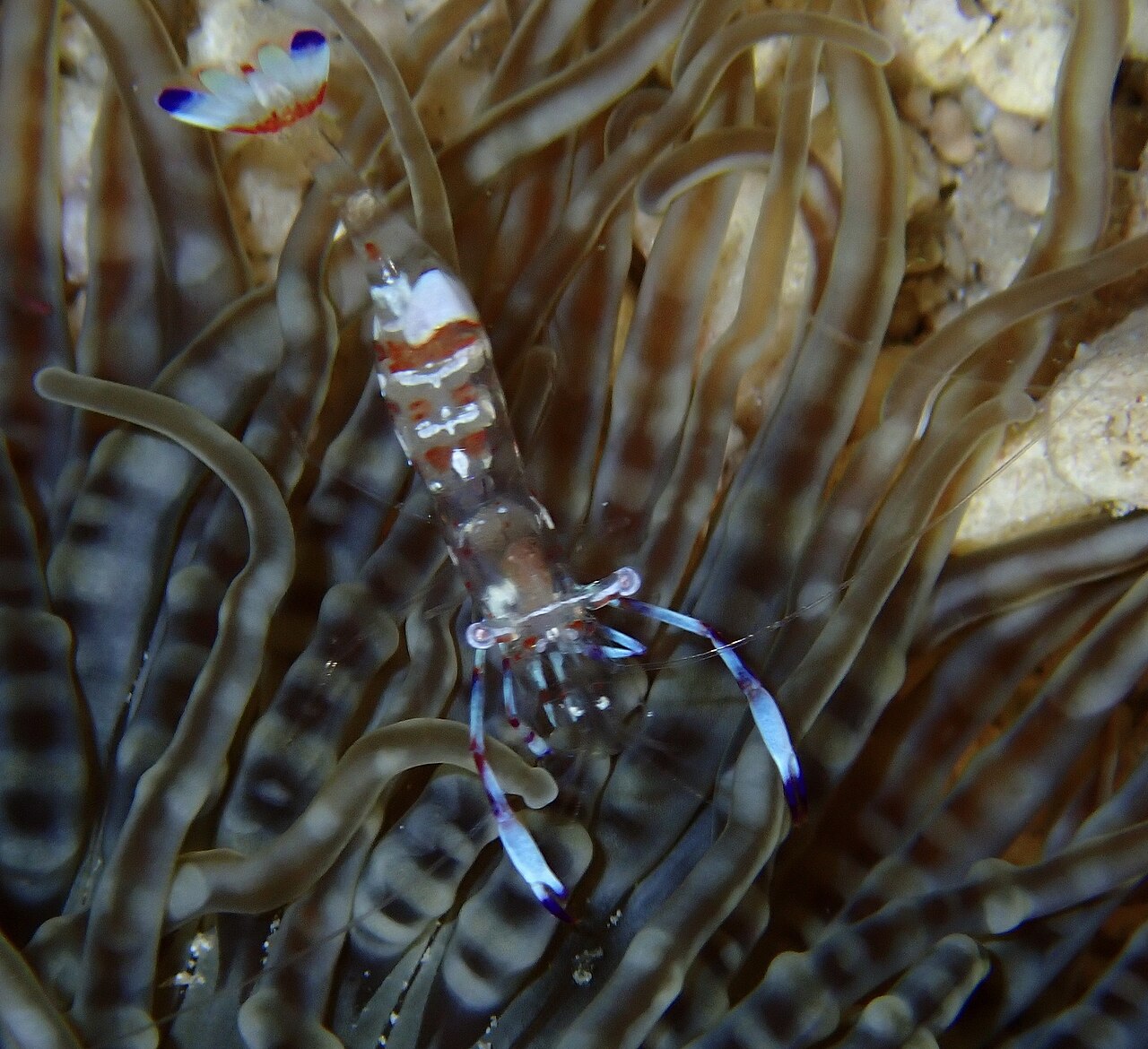
Most of A. magnificus have a transparent body, except on the carapace and segments of the abdomen, which have bands of white specks outlined in red. The tail and the hump on the abdomen are also white.
As other shrimps in the family Palaemonidae, A. magnificus, are gonochoric species. After molting, the female's exoskeleton is soft. During this time, the male is able to transfer a spermatophore to the female's exoskeleton. This allows the female to produce a large amount of eggs, which she carries under her abdomen.
The female carries the eggs until they hatch. The eggs hatch into larvae form and then go through a series of transformations to become adult shrimps. A. magnificus grows up to 2.5 cm (1 in.) in size.
Shrimps are typically scavengers, feeding on detritus at the bottom of the ocean. Other shrimps are filter feeders, which allows them to eat small food particles.
A. magnificus as part of the subphylum Crustacea, possesses a mouth to ingest food, which then passes through to be broken down by chitinous teeth that line the stomach. The stomach is connected to digestive glands, which secrete enzymes that absorb the nutrients of the food. Lastly, the digestion ends in the anus.
As with many shrimps of the Infraorder Caridea, cleaner shrimps have shown a symbiotic relationships with sponges, cnidarians, mollusks, fish, and other species. These relationships, in most cases, can be seen as mutualistic because cleaner shrimps provide their services, such as cleaning services and nitrogen excretion, while the other species provide the cleaner shrimp protection from predators and sometimes a food source. In these types of relationships, both species work together to benefit one another. Some cleaner shrimps, like, A. magnificus, are relatively small and vulnerable to live by themselves, therefore, they need other organisms to live, such as sea anemones or stony corals.
Source: Wikipedia: Ancylomenes magnificus — https://en.wikipedia.org/wiki/Ancylomenes_magnificus (CC BY-SA 4.0). Accessed 2026-09-23.
Gallery
Spotted an error? Know more?
Reader corrections go straight into our review queue. Suggest an edit · How this site is sourced