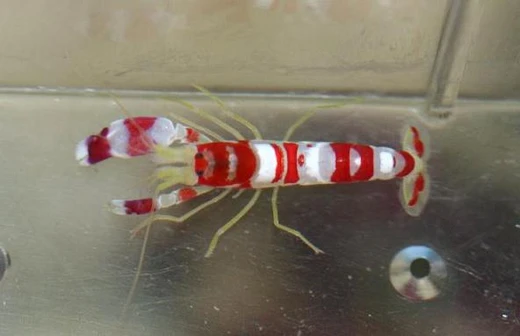
Randall's snapping shrimp (Alpheus randalli)
Source-cited species reference: taxonomy from WoRMS, biology from SeaLifeBase, occurrence map from GBIF, description from Wikipedia.

Alpheus randalli is a species of snapping shrimp in the family Alpheidae. It lives in the Marquesas Islands and parts of the Indian Ocean, including the Seychelles, in association with a goby of the genus Amblyeleotris. The shrimp is transparent or white with prominent red markings.
- Scientific name
- Alpheus randalli
- Authority
- Banner & Banner, 1980
- Family
- Alpheidae
- Order
- Decapoda
- Depth range
- 1–5 m
- Habitat zone
- benthic
- Gbif occurrence records
- 35
Taxonomic Home and a Record-Breaking Genus
Alpheus randalli, commonly known as Randall's snapping shrimp, occupies a place within the family Alpheidae, a lineage of crustaceans distinguished by their remarkable acoustic capabilities. Its broader taxonomic home, the genus Alpheus, stands as one of the most extraordinary assemblages in the entire shrimp world. With a membership exceeding three hundred and thirty described species, Alpheus claims the title of the most species-rich genus among all shrimp. For a single organism like A. randalli, this means it shares its genus name with an enormous and diverse community of relatives, each occupying different marine niches across the globe. The sheer numerical dominance of this genus within Alpheidae underscores how prolific and ecologically successful this lineage has proven to be over evolutionary time. Randall's snapping shrimp is, in a very real sense, one small thread in an extraordinarily dense tapestry of snapping shrimp biodiversity, a fact that makes its individual study all the more significant within the broader context of crustacean taxonomy.
A Genus in Question: The Monophyly Problem
Despite its impressive size, the genus Alpheus carries a significant taxonomic caveat that directly affects how we understand A. randalli's evolutionary relationships. Phylogenetic analyses have repeatedly demonstrated that the genus is unlikely to represent a true natural grouping. In other words, the three hundred and thirty-plus species currently lumped together under the name Alpheus do not all descend from a single common ancestor to the exclusion of all others. Instead, molecular and morphological evidence has recovered lineages belonging to other recognized alpheid genera nested within the Alpheus assemblage. This means the genus, as currently circumscribed, is paraphyletic or even polyphyletic, and the true evolutionary boundaries of the group remain uncertain. For Randall's snapping shrimp specifically, this implies that its closest relatives may not all be found within Alpheus, and that some organisms currently placed in separate genera could in fact be more closely related to A. randalli than to other Alpheus species. Resolving this tangled phylogeny remains an active challenge for crustacean systematists.
The Asymmetrical Claws and the Art of Snapping
One of the most visually striking features shared by A. randalli and its fellow members of the Alpheus genus is the pronounced asymmetry of its claws. Rather than possessing two mirror-image pincers, the snapping shrimp develops one claw that is dramatically enlarged relative to the other. This oversized claw is not merely a tool for grabbing prey or defending territory; its primary function is acoustic. When the shrimp rapidly closes the enlarged claw, it generates a sharp popping noise that has become the defining characteristic of the entire group. This snapping mechanism is a trait common across snapping shrimp broadly, but within Alpheus it is a consistent and recognizable feature that helps distinguish these animals from other decapod crustaceans. For A. randalli, this asymmetrical claw arrangement represents a highly specialized adaptation, one that has shaped both its sensory ecology and its interactions with neighboring marine organisms. The popping sound it produces is not incidental—it is the very reason the genus earns its common name and occupies a unique niche in the soundscape of shallow marine environments.
Symbiotic Partnerships Across the Reef
Beyond its mechanical and acoustic traits, Randall's snapping shrimp is embedded in a web of ecological relationships that extends well beyond the genus Alpheus. Across the broader genus, numerous species maintain symbiotic partnerships with a remarkable variety of marine organisms. Some Alpheus shrimp form close associations with gobiid fishes, the small bottom-dwelling teleosts that share their burrows and habitats. Others establish relationships with sea anemones, echiurans, and sponges, each partnership representing a distinct ecological strategy. While the specific symbiotic partners of A. randalli may differ from those of its congeners, the genus as a whole demonstrates a broad capacity for interspecific cooperation in reef and benthic environments. These relationships suggest that snapping shrimp are not merely solitary predators or scavengers but active participants in complex community dynamics. The diversity of potential partners—ranging from vertebrate fishes to cnidarian anemones to invertebrate sponges—highlights the ecological versatility that has likely contributed to the genus's extraordinary species richness.
Spotted an error? Know more?
Reader corrections go straight into our review queue. Suggest an edit · How this site is sourced