Alpheus fasqueli
Source-cited species reference: taxonomy from WoRMS, biology from SeaLifeBase, description from Wikipedia.

Baptiste François · CC BY 4.0
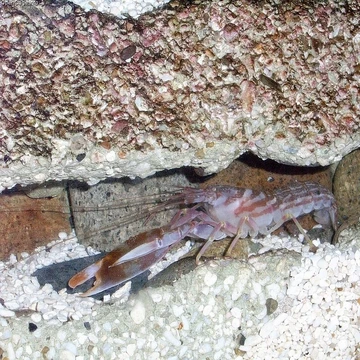
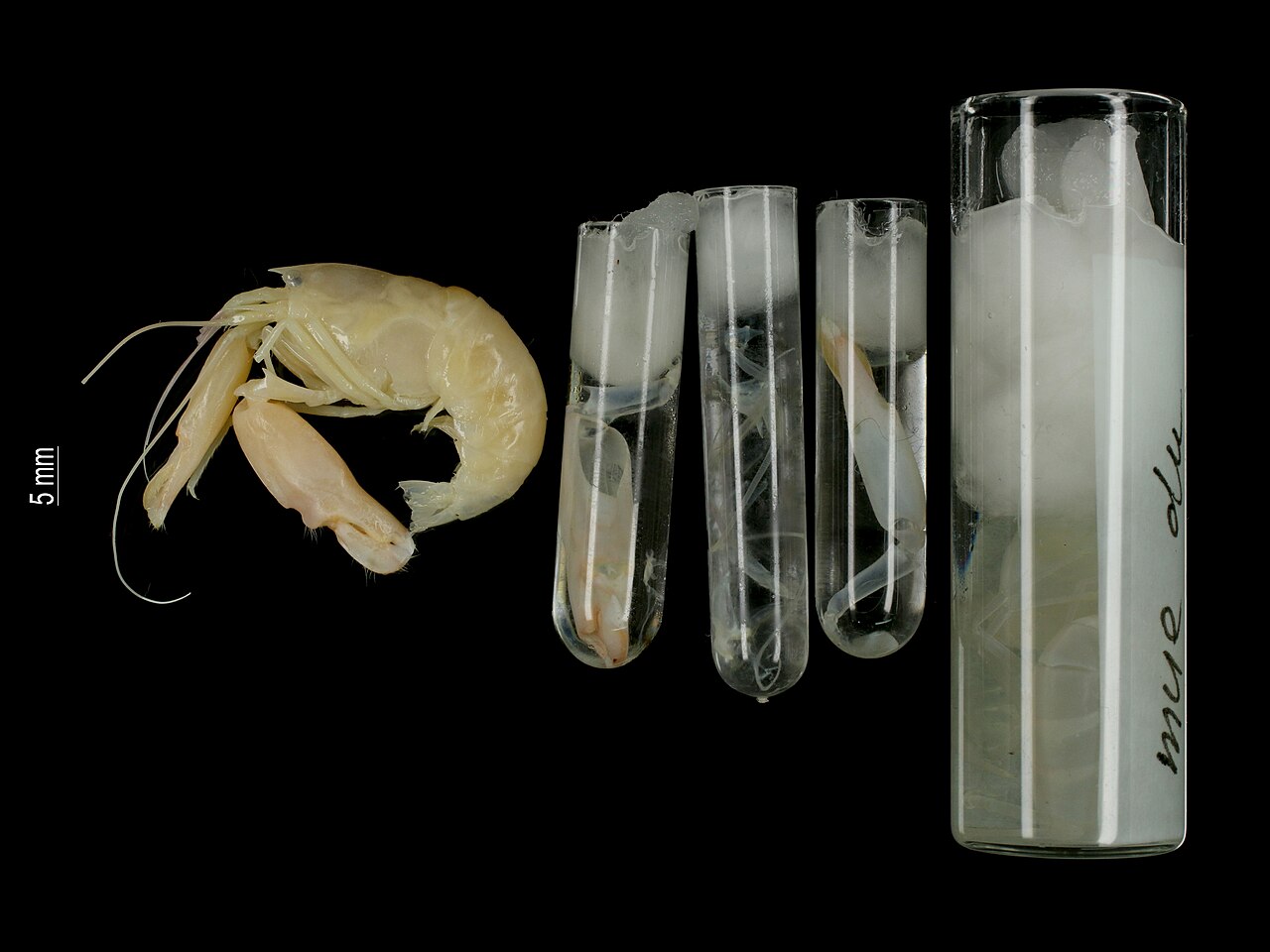
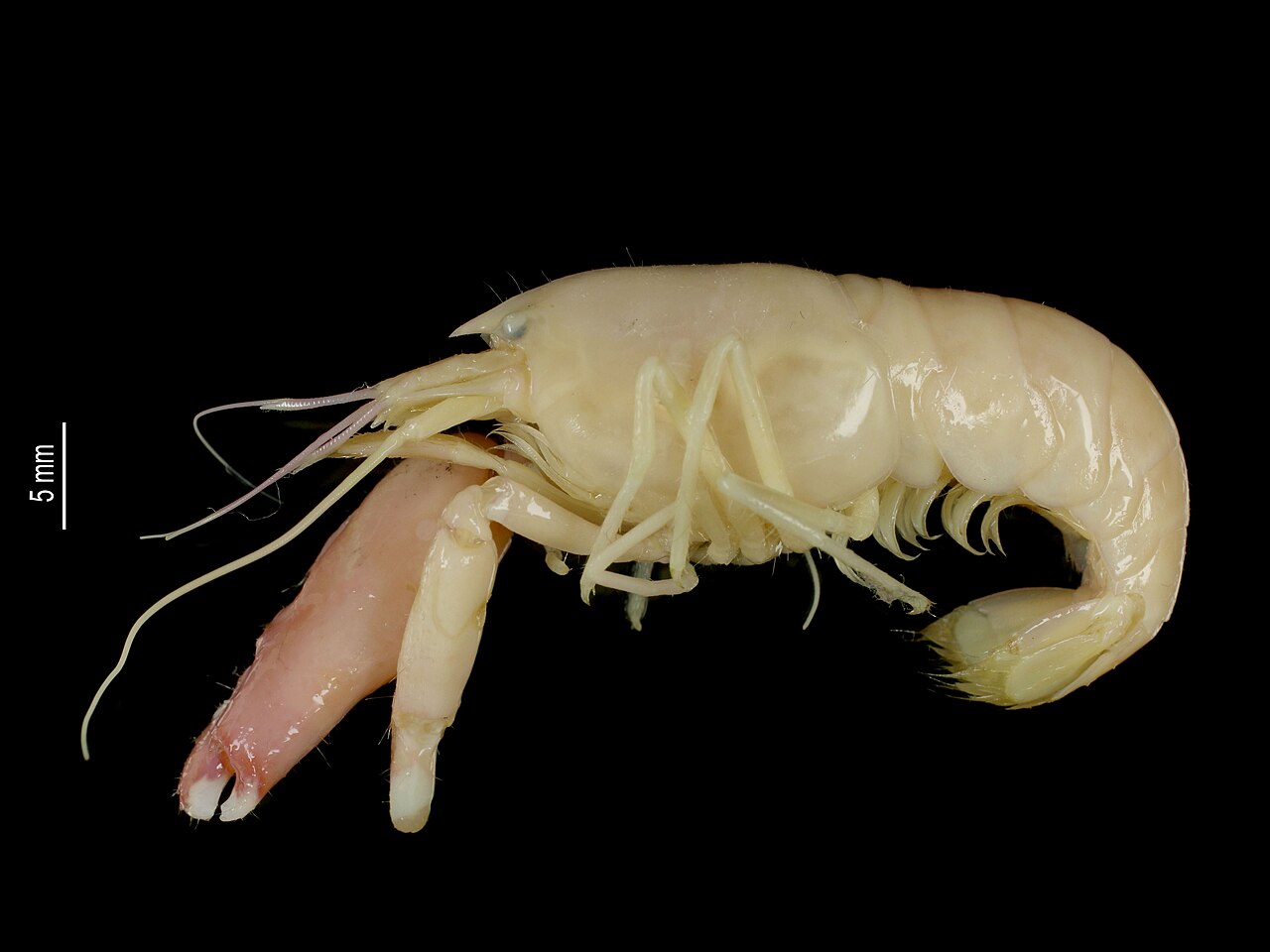
Alpheus fasqueli is a crustacean belonging to the family of snapping shrimp. It was first isolated in Sri Lanka. It counts with a setose carapace, an acute and carinate rostrum, and unarmed orbital hoods. Its basicerite has a strong ventrolateral tooth. The lamella of its scaphocerite is not reduced. Its third maxilliped counts with an epipodial plate bearing thick setae, while its first chelipeds are found with their merus bearing a strong disto-mesial tooth; its third pereiopod has an armed ischium, with a simple and conical dactylus. Its telson is broad, distally tapering, with 2 pairs of dorsal spines. The species is named after Frédéric Fasquel, a photographer who contributed rare shrimp specimens for the Muséum national d'histoire naturelle.
- Scientific name
- Alpheus fasqueli
- Authority
- Anker, 2001
- Family
- Alpheidae
- Order
- Decapoda
- Habitat zone
- benthic
Taxonomic Breadth and Phylogenetic Complexity
The genus Alpheus stands as the most species-rich genus among all shrimp, housing more than 330 described species. Despite this extraordinary diversity, the genus presents a significant taxonomic puzzle. Phylogenetic analyses have revealed that Alpheus is unlikely to represent a natural, monophyletic grouping. Instead, genetic and evolutionary studies have recovered other alpheid genera nested within what is currently classified as Alpheus, suggesting that the genus as it stands is an artificial assemblage rather than a true evolutionary lineage. This means that the 330-plus species, while all sharing the Alpheus name, do not necessarily form a single family tree to the exclusion of all other snapping shrimp. The implication is that the genus is a polyphyletic or paraphyletic collection, and future taxonomic revisions may substantially reorganize which species belong where. For researchers and enthusiasts alike, this makes Alpheus both a marvel of biodiversity and a reminder that our classification systems are still being refined.
The Asymmetrical Snapping Claw
A defining physical trait of Alpheus species is the striking asymmetry of their claws. Unlike many crustaceans whose appendages are roughly mirror images, snapping shrimp in this genus possess one claw that is dramatically enlarged relative to the other. This oversized claw is not merely a structural oddity; it serves a specific acoustic function. When the shrimp snaps the enlarged claw shut, it produces a loud popping noise. This mechanism is shared across the broader snapping shrimp group, but within Alpheus, the variation in claw size and shape across 330-plus species suggests a wide range of acoustic outputs and ecological adaptations. The asymmetry is so pronounced that it becomes the most immediately recognizable feature of any Alpheus specimen, distinguishing them at a glance from many other shrimp families. The popping sound generated is a key part of their behavioral repertoire, used in contexts ranging from communication to defense.
Symbiotic Partnerships Across the Reef
Beyond their famous claws, Alpheus species are notable for the variety of symbiotic relationships they maintain with other marine organisms. Different species within the genus form partnerships with gobiid fishes, creating mutualistic arrangements in which the shrimp and the small fish coexist in close proximity. Other Alpheus species associate with sea anemones, echiurans, and sponges. These relationships span a remarkable range of host organisms, from soft-bodied anemones to colonial sponges, indicating that the genus has adapted to embed itself in diverse ecological niches across reef and sediment environments. The fact that different species within the same genus partner with such different hosts underscores the ecological breadth of Alpheus. These symbioses likely provide the shrimp with shelter or protection, while the host organisms may benefit from the shrimp's activity or the acoustic deterrent provided by the snapping claw. The diversity of partners, from fish to worms to sponges, makes Alpheus a genus of considerable ecological versatility.
Classification Within the Alpheidae Family
Alpheus belongs to the family Alpheidae, the snapping shrimp family, and represents the largest genus within that family. Its placement in Alpheidae ties it to a broader group of crustaceans defined by their specialized snapping appendages and associated acoustic capabilities. Within the wider taxonomy of shrimp, Alpheus occupies a position of numerical dominance, with its 330-plus species outpacing other genera in sheer count. However, the phylogenetic complications noted in its classification, where other alpheid genera appear nested within Alpheus, cast doubt on whether the family boundaries themselves are fully resolved. The genus sits at the intersection of extraordinary species richness and ongoing taxonomic uncertainty, making it a focal point for crustacean systematists. For anyone studying the Alpheidae, Alpheus is both the centerpiece and the most challenging taxon to pin down with confidence, as the very act of defining the genus's boundaries may require redefining the family around it.
Gallery
Spotted an error? Know more?
Reader corrections go straight into our review queue. Suggest an edit · How this site is sourced