Ascent (novel)
A secret history novel of a Soviet pilot turned cosmonaut.

w_lemay · CC0
Ascent is a 2007 secret history novel by British author Jed Mercurio. It traces the life of Yevgeni Yeremin, an orphan from Stalingrad, who begins as a MiG-15 pilot during the Korean War and later becomes a cosmonaut.
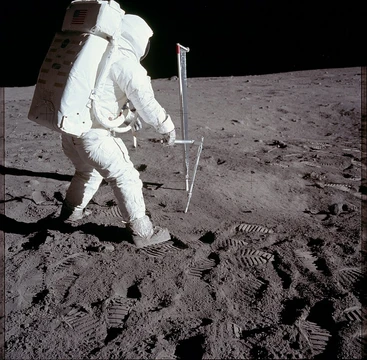
The story starts with Yeremin as an orphan, then follows his service as a fighter pilot in Korea. After crashing a plane marked with USSR insignia, he is rescued by North Korean forces but is deemed to have endangered the secret of Soviet involvement in the war. When hostilities end, he is exiled in disgrace to a polar base. A groundcrew member, known only as "The Widow," befriends him, follows him north, and eventually becomes his wife. Yeremin later trains as a cosmonaut with little chance of a mission. He volunteers for a risky attempt to land on the Moon before Apollo 11, using an untested lunar craft. He knows failure will mean his death is denied by the Soviet government and largely ignored. He successfully lands on the far side of the Moon, but the lander's rocket fails, stranding him. The novel ends as he descends from the doomed craft to walk on the lunar surface while the lights inside the ship fade.
The novel received strong reviews in the UK, including praise from *The Telegraph* and Michel Faber in *The Guardian*, which also placed it on its "1000 Novels Everyone Must Read Before They Die" list. American reviews were divided. *Booklist* called it a "stunning debut." *The San Diego Union-Tribune* described it as a "nerve-shredding, unsettling and, ultimately, a deeply satisfying techno-adventure," though it noted missing human elements. *Kirkus Reviews* was more critical, stating that while the novel covers themes of duty, disgrace, and redemption with some grandeur, the protagonist Yeremin is a "cipher" who never comes alive. *Publishers Weekly* similarly felt the book is padded with training details and fails to make readers care about Yeremin.
The novel was serialized in ten episodes on BBC's *Book at Bedtime* in August 2007. A graphic novel adaptation, abridged by Mercurio and illustrated by Wesley Robins, was published in 2011. Rachel Cooke in *The Observer* praised it as "gripping drama" with "emotional brevity" and "poignant and atmospheric drawings."
Quick Facts
- Author
- Jed Mercurio
- Isbn
- 978-0-224-07286-1
- Pub Date
- April 3, 2007
- Publisher
- Jonathan Cape
Facts from the source article.
Lore & Background
The novel follows Yevgeni Yeremin, first as an orphan and then his time as a fighter pilot in the Korean War, where he crashes in a plane bearing USSR insignia. Although rescued by North Korean troops he is felt to have risked revealing that Soviet aircrew participated in the conflict and on cessation of hostilities he is exiled in disgrace to a polar base. He has been befriended by one of his groundcrew, (throughout referred to as 'The Widow'), who follows him north, and he eventually marries her. He becomes a trainee cosmonaut, with little hope of a mission; he eventually volunteers for a risky mission to attempt a lunar landing ahead of Apollo 11, in an untested lunar craft. He knows that if he fails, his death will lead to little comment, and be denied by the Soviet government. He succeeds in achieving a landing, on the far side of the Moon, but the lander rocket has malfunctioned, leaving him no hope of return. The novel ends with his descending from the doomed craft to walk on the lunar surface, as the lights in the stranded craft gradually go out.
Reader's Guide
Ascent achieved excellent reviews in the United Kingdom, notably by The Telegraph and Michel Faber in The Guardian. The Guardian included Ascent in their list of '1000 Novels Everyone Must Read Before They Die'. American reviews were mixed. Booklist called it a 'stunning debut from a writer who bears close attention.' The San Diego Union-Tribune said that absent the human components that would have made the journey more complete. But in space, untethered, it's a nerve-shredding, unsettling and, ultimately, a deeply satisfying techno-adventure.' Kirkus Reviews were more critical in their commentary saying 'the author displays high ambition, covering themes of duty, disgrace and redemption, and Yefgenii's story possesses a certain grandeur. But the character himself is a cipher, a prop to build a plot around. The protagonist never quite comes alive, and so neither does the novel.' Publishers Weekly had similar thoughts on the character of Yeremin saying 'too many details of training pad out a short book, and nothing in it really tells us enough about Yeremin to make us care what happens to him.' The novel was serialised in 10 episodes in the BBC's Book at Bedtime in August 2007. A graphic novelisation of Ascent was published in 2011, abridged by Mercurio and illustrated by Wesley Robins, and was generally well received.
The Life Arc of Yevgeni Yeremin
The narrative of Ascent traces the extraordinary and ultimately tragic trajectory of Yevgeni Yeremin, a boy orphaned by the siege of Stalingrad who grows into a fighter pilot and, eventually, a cosmonaut. In the Korean War, Yeremin flies a MiG-15 bearing Soviet markings, and when his aircraft goes down behind enemy lines, his rescue by North Korean forces creates a diplomatic crisis. The implication that Soviet pilots were operating in the conflict is deemed too dangerous, and upon the end of hostilities he is banished in shame to a remote polar station. There he finds unexpected companionship in a groundcrew member the novel simply calls 'The Widow,' who follows him into exile and becomes his wife. Years later, with his prospects as a cosmonaut trainee dim, Yeremin volunteers for a desperate, untested lunar landing mission timed to precede Apollo 11. He understands that failure would mean a death quietly erased by the state. He succeeds in touching down on the far side of the Moon, but a rocket malfunction seals his fate. The final image is of him stepping out onto the grey surface while the lights of his stranded craft fade one by one.
Critical Reception: A Transatlantic Divide
Upon its 2007 release, Ascent drew a strikingly split response across the Atlantic. In Britain, the novel was met with near-universal acclaim. The Telegraph praised it warmly, and Michel Faber, writing in The Guardian, offered a glowing assessment. The Guardian went further, slotting the book into its celebrated list of '1000 Novels Everyone Must Read Before They Die.' Across the ocean, the picture was more complicated. Booklist hailed it as a striking debut that demanded close attention, while the San Diego Union-Tribune acknowledged the novel's taut, unsettling tension and ultimately called it a deeply satisfying techno-adventure, even while noting the absence of certain human dimensions. Kirkus Reviews struck a more critical note, conceding the author's high ambition and the grandeur of themes like duty, disgrace, and redemption, yet arguing that Yeremin remained a mere cipher, a structural prop around which a plot was built rather than a fully realised person. Publishers Weekly echoed this concern, suggesting that an excess of training detail padded what was already a short book, leaving readers without enough genuine insight into the protagonist to feel invested in his fate.
Themes of Duty, Disgrace, and the Erased Hero
The novel operates as a secret history, exploring what might have happened in the shadow of the Space Race. At its core are themes of duty, disgrace, and redemption, all filtered through the lens of a man perpetually sacrificed to the machinery of the state. Yeremin's arc moves from orphan to pilot to exile to cosmonaut, each stage marked by institutional indifference. His Korean War crash is not celebrated but punished; his polar banishment is a form of quiet erasure. The most devastating thematic beat comes with the lunar mission: Yeremin volunteers knowing full well that if the untested craft fails, the Soviet government will simply deny his death. His success on the far side of the Moon is therefore bittersweet, because the rocket malfunction that strands him means his triumph will be equally silent. Critics noted that the novel's grandeur sometimes outpaces its character work, with Yeremin functioning more as a vessel for these sweeping themes than as a person with interior depth. The Widow, by contrast, provides the one sustained human thread, her loyalty anchoring the protagonist to something beyond his official role.
Adaptations and the Life Beyond the Page
Beyond its initial publication, Ascent found new life through two notable adaptations. In August 2007, the BBC serialised the novel across ten episodes of its Book at Bedtime programme, bringing Mercurio's spare, propulsive prose to a nightly radio audience. Four years later, in 2011, a graphic novelisation appeared, with Mercurio himself abridging the original text and artist Wesley Robins providing the illustrations. This visual retelling was generally well received. Rachel Cooke, writing in The Observer, described it as gripping drama distinguished by a certain emotional brevity, praising the way it transformed technical jargon into something approaching poetry. She singled out Robins's drawings as poignant and atmospheric, suggesting the medium lent itself naturally to the novel's blend of cold machinery and human vulnerability. Together, these adaptations extended the reach of what had been a relatively compact debut, introducing Yeremin's story to listeners and visual readers who might never have encountered the original prose. The fact that Mercurio personally shaped the abridged text underscores his continued investment in how the narrative is experienced.
Gallery



Frequently Asked Questions
What is Ascent by Jed Mercurio?
Ascent is a 2007 secret history novel by British author Jed Mercurio. It follows the life of a Soviet fighter pilot who eventually becomes a cosmonaut, set against the backdrop of the Korean War and the early Soviet space program.
Who is the main character in Ascent?
The protagonist is Yevgeni Yeremin, an orphan from Stalingrad who flies MiG-15s during the Korean War before transitioning into the Soviet space program.
What happens to Yeremin after his plane crash in Korea?
After crashing a jet bearing Soviet insignia, he is rescued by North Korean forces but punished for exposing the USSR's secret participation in the war. He is exiled in disgrace to a remote polar base, where a groundcrew member called 'The Widow' becomes a key figure in his life.
How does Ascent end?
Yeremin's journey culminates in him joining the Soviet space program as a cosmonaut, completing his arc from war orphan to one of the nation's astronauts.
What makes Ascent different from other space fiction?
Rather than depicting futuristic or fictional space travel, the novel grounds its narrative in real historical events, weaving the Korean War and early Cold War space race into a single character's biography.
More in Space exploration novels 1-24
Spotted an error? Know more?
Reader corrections go straight into our review queue. Suggest an edit · How this site is sourced