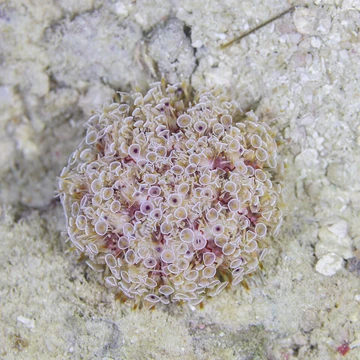
Diadematidae
Sea urchins with eyes and long, hollow spines.

The Diadematidae are a family of sea urchins. Their body shells can be either stiff or bendable, and they have long, hollow spines. Like other sea urchins, they can detect touch, light, and chemicals, but they also have eye spots, which sets them apart from other urchins. This allows them to track a threat and aim their spines at it.
Quick Facts
- Taxon
- Diadematidae
Facts from the source article.
Lore & Background
The Diadematidae family includes several genera, such as Astropyga, Centrostephanus, Chaetodiadema, Diadema, Echinodiadema, Echinothrix, Eodiadema, Eremopyga, Goniodiadema, Kamptosoma, Palaeodiadema, and Pedinothuria. The article lists numerous extant species, including Astropyga radiata, Diadema setosum, and Echinothrix calamaris, as well as fossil taxa like Centrostephanus fragile from the Santonian, Maastrichtian, and Danian periods, and Palaeodiadema from the same intervals. Eodiadema is noted from the Lower Jurassic, and Pedinothuria cidaroides from the Callovian and Oxfordian. The family is notable for having eyes (eye spots), a feature that distinguishes them from other sea urchins, allowing them to visually track threats and orient their spines accordingly.
Reader's Guide
The Diadematidae are significant among sea urchins for possessing eyes (eye spots), a sensory adaptation not found in other sea urchins. This allows them to follow a threat with their spines, indicating a more advanced visual capability than typical for the group. The family's tests are either rigid or flexible, and their spines are long and hollow, contributing to their defensive and locomotive abilities. The article documents a wide range of extant species across multiple genera, as well as fossil representatives from the Lower Jurassic, Santonian, Maastrichtian, and Danian periods, showing a long evolutionary history. The presence of fossil taxa like Centrostephanus fragile and Palaeodiadema in Cretaceous and Paleogene strata, and Pedinothuria cidaroides in the Jurassic, underscores the family's persistence through geological time. The listing of numerous extant species, such as those in Diadema and Echinothrix, highlights their modern diversity. The family's legacy lies in its unique sensory biology and its extensive fossil and living record, providing insight into echinoid evolution and adaptation.
Did You Know?
- Diadematids have eyes (eye spots), unlike other sea urchins.
- They can follow a threat with their spines.
More in Sea Urchins, Part 2 1-24
Spotted an error? Know more?
Reader corrections go straight into our review queue. Suggest an edit · How this site is sourced