Lion Monument
The most mournful and moving piece of stone in the world.
Last updated
Where it is
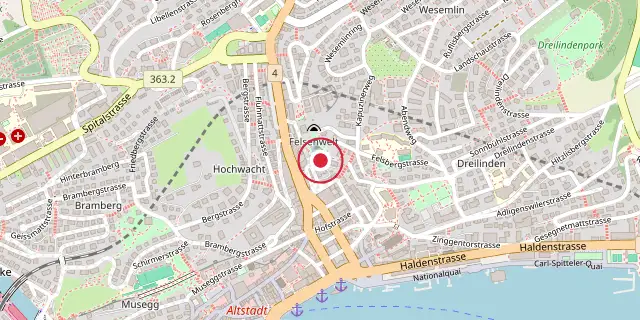
Coordinates: 47°03′29″N 8°18′40″E (47.0580, 8.3110) · Open in OpenStreetMap
Coordinates and connected clubs: the infobox of Wikipedia: Lion Monument (CC BY-SA 4.0). Map: drawn by Codexery from OpenStreetMap tiles.
The monument is visited by about 1.4 million tourists annually and was placed under Swiss monument protection in 2006.[1][2] Carved into a rock face in Lucerne, Switzerland, the Lion Monument was created by stonemason Lukas Ahorn between 1820 and 1821, based on a design by Danish artist Bertel Thorvaldsen.[1][2]
Key facts and history
From the early 17th century, a regiment of Swiss Guards served as part of the Royal Household of France.[3] Around 760 guards were killed during the fighting or massacred after surrender, though recent studies estimate only 300 died.[4][5] Karl Pfyffer von Altishofen, an officer on leave in Lucerne, later wrote a book about the regiment and organized a public subscription to fund a monument.[6][5] A spear pierces the dying lion, which rests on a shield decorated with the French monarchy's fleur-de-lis symbol.[7]
Beneath the sculpture, an inscription records the officers' names and states that 760 guards died while 350 survived.[7][5] The monument was finished and officially opened in 1821.[7][2][5]
What the cited sources add
The Lucerne Tourism account describes the monument as "nestled in a rocky grotto in a charming park setting"[2] The Swiss Info article notes that the monument remains a political flashpoint two centuries later.[5] It reports that liberals saw the monument as glorifying a conservative, counter-revolutionary Switzerland and tried to disrupt its inauguration.[5] The article adds that the monument became a rallying point for extreme right-wing movements in the 1940s.[5]
On August 1, 1989, activists from a group advocating for a Switzerland without an army hung a banner on the lion as an anti-war protest.[5]
References
- Wikipedia, "Lion Monument" (CC BY-SA 4.0), which cites: Lion Monument, "Lucerne Tourism", Lucerne Tourism; "Löwendenkmal", Sehenswürdigkeiten von Luzern, 8 June 2015 (we also read that source) en.wikipedia.org
- Lion Monument, "Lucerne Tourism", Lucerne Tourism. facts only, no text reused. luzern.com
- Wikipedia, "Lion Monument" (CC BY-SA 4.0), which cites: Philip Mansel, p. 131, Pillars of Monarchy (original not read by us) en.wikipedia.org
- Wikipedia, "Lion Monument" (CC BY-SA 4.0), which cites: "Under French Rule (1798-1815)", Discover Switzerland - Federal Department of Foreign Affairs; M.J. Sydenham, p. 111, The French Revolution, B.T. Batsford Ltd London 1965; Olivier Pauchard, "The Lucerne Lion: the controversial tourist attraction", Swiss Info/History, 7 August 2021; Christopher J. Tozzi, p. 80 "Nationalizing France's Army. Foreign, Black and Jewish Troops in the French Military, 1715-1831, (we also read that source) en.wikipedia.org
- Olivier Pauchard, "The Lucerne Lion: the controversial tourist attraction", Swiss Info/History, 7 August 2021. facts only, no text reused. swissinfo.ch
- Wikipedia, "Lion Monument" (CC BY-SA 4.0), which cites: "Under French Rule (1798-1815)", Discover Switzerland - Federal Department of Foreign Affairs (original not read by us) en.wikipedia.org
- Wikipedia, "Lion Monument" (CC BY-SA 4.0), which cites: "Lion Monument Inscriptions", Glacier Garden, Lucerne (original not read by us) en.wikipedia.org
Each numbered sentence above was checked against the source it cites before publication. Sentences citing Wikipedia adapt text from the English Wikipedia article Lion Monument (contributors), used under CC BY-SA 4.0; this entry is available under the same licence. Other sources were used for facts only; no text or images are copied from them.
More in Sculptures And Statues
Sources
Compiled from Wikipedia and the sources listed below. Text from Wikipedia is available under CC BY-SA 4.0; this entry is adapted from it.
- Wikipedia: Lion Monument (CC BY-SA 4.0).
Spotted an error? Know more?
Reader corrections go straight into our review queue. Suggest an edit · How this site is sourced