Sample-return mission
Spacecraft missions that collect and return extraterrestrial samples to Earth.
Last updated
A sample-return mission sends a spacecraft to an extraterrestrial body to gather material and bring it back to Earth for study. The collected material can range from individual atoms and molecules to larger items like rocks and loose soil. Collection methods include digging up soil and rock or using special arrays to trap particles from the solar wind or cometary debris. However, there is concern that bringing such samples to Earth could pose a risk to our planet.
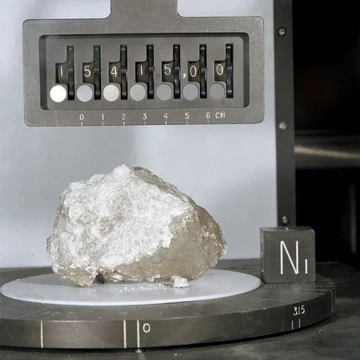
Lunar rock samples have been brought back by both robotic and crewed missions. Robotic spacecraft have also returned samples from comet Wild 2 and the asteroids 25143 Itokawa, 162173 Ryugu, and 101955 Bennu. The robotic Genesis mission returned samples of the solar wind. Additionally, samples from three non-terrestrial bodies have reached Earth through other means: lunar meteorites from the Moon, Martian meteorites from Mars, and HED meteorites from the asteroid Vesta.
Scientific use
Having samples on Earth allows scientists to use far more advanced and diverse laboratory tools than those that can be carried on a spacecraft. These tools can distinguish extraterrestrial material from terrestrial contamination and can be used to follow up on any findings, including with instruments developed after a mission launches. In contrast, a spacecraft carries only a limited set of analytic tools, chosen and built years before launch.
Samples analyzed on Earth can also be compared with remote sensing data to better understand the processes that formed the Solar System. For example, HED meteorites were matched with data from the Dawn spacecraft at Vesta, revealing that the meteorites came from the Rheasilvia impact crater and helping to deduce the composition of Vesta’s crust, mantle, and core. While imaging alone can reveal some differences in asteroid and comet compositions, future sample returns will provide a more precise inventory to match against telescope and spectroscopic data.
Another key focus is searching for the building blocks of life on comets, asteroids, Mars, and the moons of gas giants. Several sample-return missions to asteroids and comets are underway, aiming to determine whether life formed in space and was carried to Earth by meteorites. Other questions include whether extraterrestrial life formed on Mars or the moons of gas giants, and whether it might still exist there.
Background
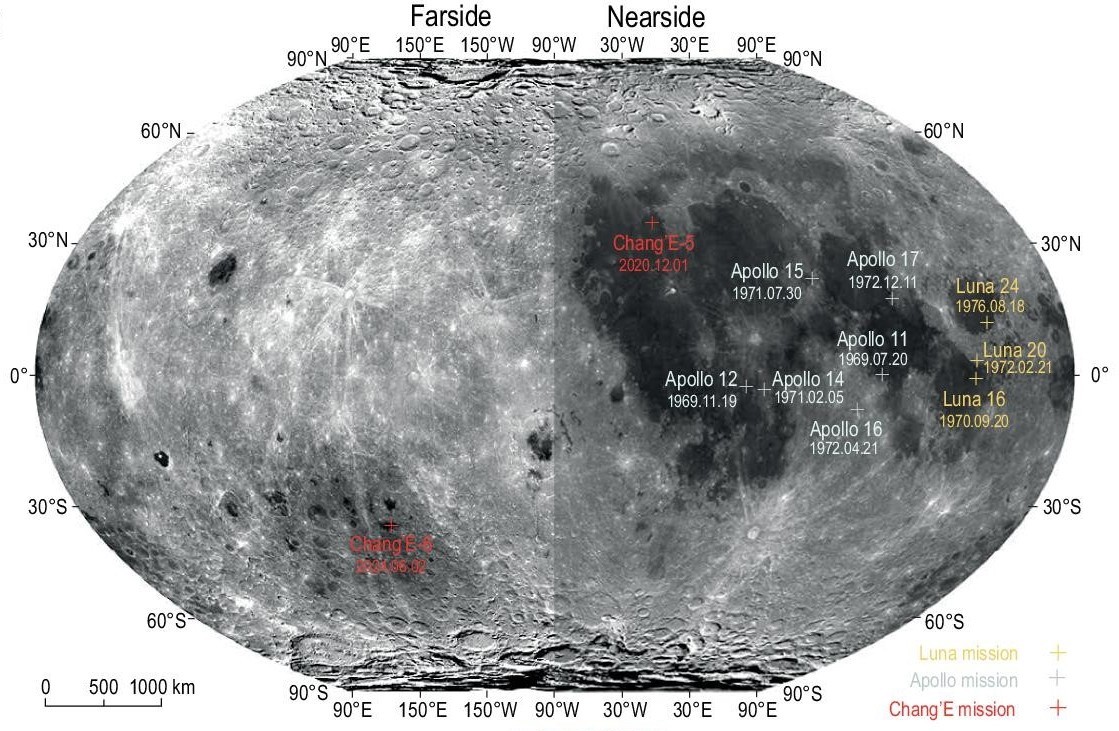
The first successful sample return from another Solar System body was achieved by Apollo 11 in July 1969, returning 22 kilograms of lunar surface material. This was followed by additional Apollo missions that collectively returned over 382 kg of lunar rocks and regolith. The robotic Soviet Luna program also returned lunar samples: Luna 16 returned 101 grams in 1970, Luna 20 returned 55 grams in 1972, and Luna 24 returned 170 grams in 1976. Several other Luna attempts failed due to launch or landing issues.
In the 2000s, the Genesis mission returned solar wind samples from beyond Earth orbit in 2004, though its capsule crash-landed in Utah. Scientists managed to save many samples.
Did You Know?
- The Apollo program returned over 382 kg of lunar rocks and regolith, with 75% stored at the Lunar Sample Laboratory Facility built in 1979.
- Stardust used a collector array made of low-density aerogel (99% space) to collect cometary particles without damaging them.
Frequently Asked Questions
What exactly is a sample-return mission?
It is a spacecraft voyage to a body outside Earth—such as the Moon, an asteroid, or a comet—whose goal is to collect physical material (ranging from single atoms to chunks of rock) and deliver it back to our planet for laboratory analysis. Collection techniques can involve scooping soil, drilling into rock, or deploying particle-trapping arrays for solar-wind and cometary debris.
Which mission was the first to successfully bring extraterrestrial samples home?
Apollo 11, in July 1969, holds that distinction as the first crewed flight to return lunar material to Earth. Across the entire Apollo program, astronauts brought back more than 382 kilograms of Moon rock and regolith.
What was the first robotic spacecraft to return lunar samples?
The Soviet Luna 16 probe, which landed on the Moon in 1970, was the first uncrewed vehicle to collect and return lunar soil to Earth. It demonstrated that automated sample-return was feasible without a human crew.
When did humanity first retrieve samples from beyond the Moon's orbit?
NASA's Genesis mission, which completed its sample return in 2004, collected solar-wind particles in interplanetary space, marking the first material gathered from outside lunar orbit. That milestone was followed by Stardust's 2006 return of comet dust and Hayabusa's 2010 delivery of asteroid regolith.
Why do scientists worry about bringing alien samples back to Earth?
There is a legitimate concern that extraterrestrial material could carry organisms or chemical agents unknown to terrestrial ecosystems, posing a potential biohazard. Because of this, returned samples are handled in dedicated containment facilities before any open-laboratory study begins.
More in Sample return missions
Sources
Compiled from Wikipedia and the sources listed below. Text from Wikipedia is available under CC BY-SA 4.0; this entry is adapted from it.
- Wikipedia: Sample-return mission (CC BY-SA 4.0).
Spotted an error? Know more?
Reader corrections go straight into our review queue. Suggest an edit · How this site is sourced