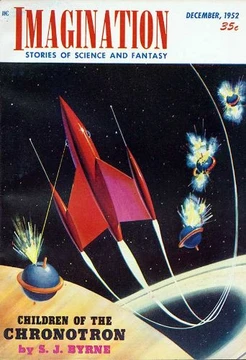
The Fatal Eggs
Satirical sci-fi novella critiquing Soviet leadership.

Mikhail Bulgakov · Public domain
The Fatal Eggs (Russian: Роковые яйца) is a satirical science fiction novella by Soviet novelist and playwright Mikhail Bulgakov. Written and first published in 1924, it became popular but was criticized by most Soviet critics as a mockery of the Russian Revolution of 1917 and the leadership of Soviet Russia. The story follows zoologist Vladimir Ipatyevich Persikov, who discovers a red light that dramatically accelerates reproduction and aggression in organisms, leading to a catastrophic invasion of giant reptiles.
Quick Facts
- Author
- Mikhail Bulgakov
- Country
- Russia
- Language
- Russian
- Genre
- Science fiction, satire
- Publisher
- Nedra Publishers
- Release Date
- 1924
- Media Type
- Print (Hardback & Paperback)
Facts from the source article.
Lore & Background
The Fatal Eggs was completed by Mikhail Bulgakov in early October 1924 and published that year by Nedra Publishers. It was included in the short-story collection Diaboliad in 1925. A shortened edition appeared in May–June 1925 in the journal Krasnaya Panorama under the title The Ray of Life. Bulgakov read the novel at several social gatherings, where it was received well. The plot is set in the then-future year of 1928, where Moscow has recovered from the Russian Civil War. Professor Persikov discovers a red light that causes organisms to reproduce at enormous speeds with increased aggression. After a chicken plague devastates Soviet Russia, a sovkhoz manager confiscates Persikov's equipment to restore poultry, but reptile eggs are mistakenly used, breeding aggressive snakes, ostriches, and crocodiles that attack people. Persikov is killed by a mob, and the invasion is halted only by subzero temperatures in August, described as a deus ex machina.
Reader's Guide
The Fatal Eggs is significant as a satirical science fiction work that critiques Soviet Russia and the leadership of the Russian Revolution. Critics noted parallels between Professor Persikov and Vladimir Ilyich Lenin, suggesting both unleashed destruction on Russia. The chicken plague and foreign sanitary cordons were seen as a parody of internationalism and Entente policy. Although Bulgakov was not repressed, from 1925 he was questioned by the GPU several times and never allowed to leave the Soviet Union, partly due to the negative image from this novella. The work draws on H. G. Wells's The Food of the Gods and How It Came to Earth, and its ending—snakes killed by cold despite resisting the military—echoes The War of the Worlds. The novella has been adapted for radio, film, and television, including a 1995 Russian-Czech film and a 2003 Russian animated film. Its legacy endures as a cautionary tale about unchecked scientific power and political satire.
Did You Know?
- The novella was written in 1924 and first published in 1924 by Nedra Publishers.
- A shortened edition was published in 1925 under the title The Ray of Life.
- The plot includes a deus ex machina ending where subzero temperatures in August stop a snake invasion.
- Bulgakov wrote in his diary that he feared being 'hauled off' for the story.
Plot & Narrative Architecture
The Fatal Eggs is a satirical science-fiction novella set in a prosperous Moscow of 1928, where the Zoological Institute has recovered from years of wartime decline. The protagonist, Vladimir Ipatyevich Persikov, is an aging amphibian specialist whose accidental discovery changes everything: after walking away from his microscope for several hours, he returns to find a stray red ray has triggered impossibly rapid binary fission in amoebae, accompanied by heightened aggression. Scaling up with large cameras, he demonstrates that frogs can complete an entire generational cycle in just two days. The invention quickly draws the attention of journalists, foreign intelligence, and the GPU. Complicating matters, a mysterious plague eliminates every domesticated chicken in Soviet Russia, halting precisely at the national border. A sovkhoz manager, Aleksandr Semenovich Rokk, is authorized to seize Persikov's equipment to restore the poultry population, but a logistical mix-up sends reptile eggs to the farmers and chicken eggs to the laboratory. The consequence is a catastrophic breeding of ferocious snakes, ostriches, and crocodiles that turn on the population. Persikov is murdered by a mob, his cameras shattered, and the Red Army proves powerless against the reptiles. Only an anomalous subzero snap in August—framed as a deus ex machina—ends the invasion. An earlier draft reportedly concluded with the total annihilation of Moscow by the snakes.
Literary Lineage & Intertextual Echoes
Bulgakov's novella is deeply indebted to H. G. Wells, particularly The Food of the Gods and How It Came to Earth (1904), in which researchers stumble upon a growth-accelerating agent that spawns a plague of enormous chickens and ultimately ignites a war between the enlarged and ordinary populations. That Wells novel is explicitly referenced within Bulgakov's text during a conversation between Persikov and his assistant. The resolution of The Fatal Eggs—snakes that have defeated the Red Army are finally killed by cold weather—mirrors the ending of The War of the Worlds, where alien invaders succumb to Earth's pathogenic bacteria rather than to human weaponry. Additional possible inspirations include circulating rumors of a giant reptile in the Crimea that allegedly required an entire regiment of Red Guards to subdue. Bulgakov's own earlier fiction also threads into this work: his short story Diaboliad, published before the novella, functioned in certain respects as a precursor to The Master and Margarita, and The Fatal Eggs was subsequently gathered into the 1925 short-story collection bearing that same Diaboliad title, binding the two works together in a single volume.
Political Satire & Authorial Peril
Bulgakov finished The Fatal Eggs in early October 1924, by which time he was already an established writer with The White Guard in progress and a body of short stories to his name. The novella was widely read as a pointed indictment of Soviet Russia. Critics have drawn a deliberate parallel between Professor Persikov and Vladimir Ilyich Lenin, noting the phonetic similarity of their names and the way both figures are portrayed as having unleashed catastrophic destruction upon the nation, alongside apparent resemblances in appearance and temperament. The chicken plague and the sanitary cordons erected by foreign governments have been interpreted as a parody of Soviet internationalism and the Entente policy. Although Bulgakov received warm responses when reading the story aloud at social gatherings, most Soviet critics condemned it as a mockery of the 1917 Revolution and the new leadership. The personal consequences were tangible: beginning in 1925, he was interrogated repeatedly by the GPU and was never granted permission to leave the country, a restriction possibly tied to the negative image the novel helped forge. Bulgakov himself sensed the danger, jotting in his diary after a late-1924 literary evening: "Is it a satire? Or a provocative gesture?... I'm afraid that I might be hauled off... for all these heroic feats."
Translations, Adaptations & Enduring Reach
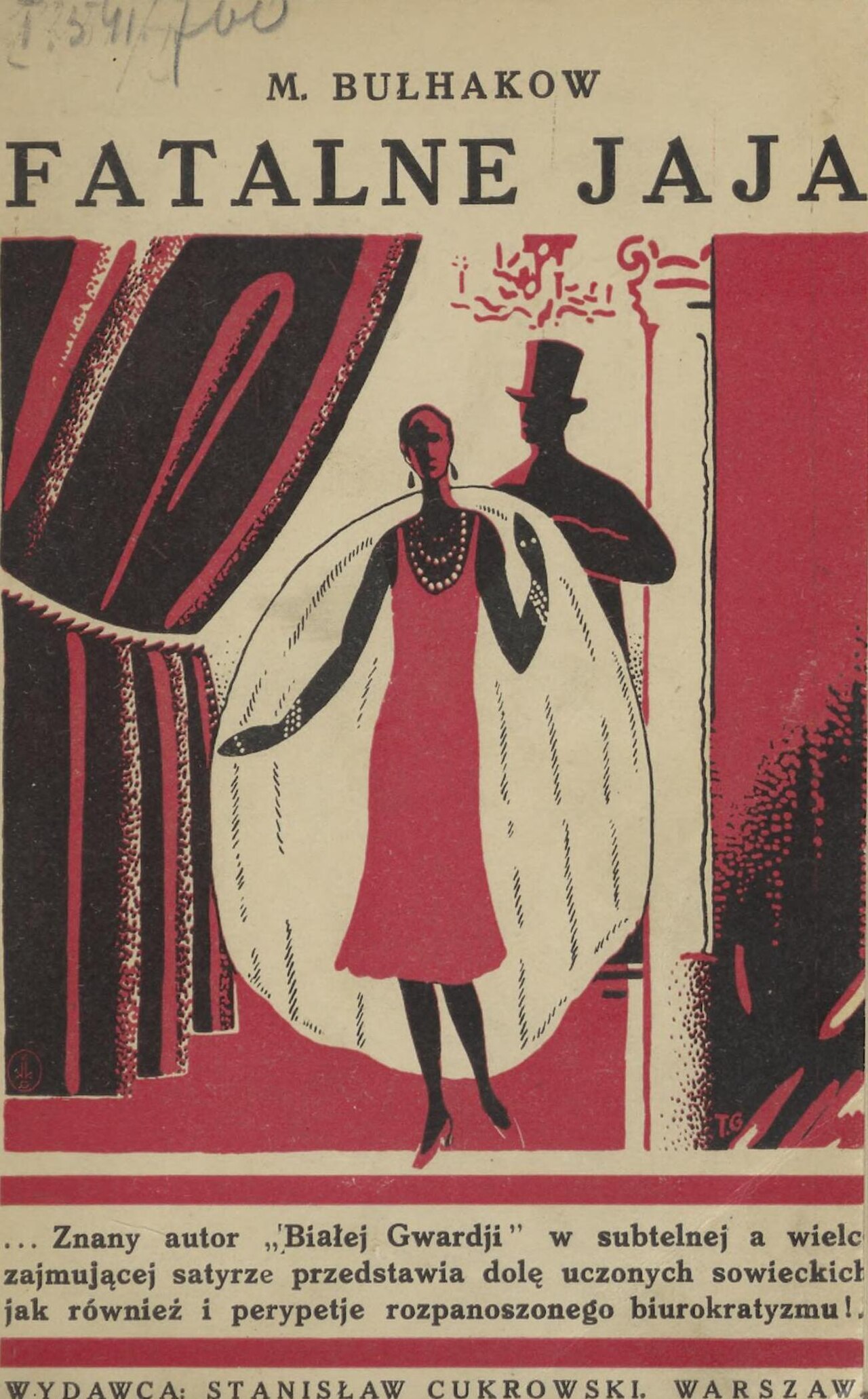
The Fatal Eggs has sustained a remarkable afterlife across languages and media. Mirra Ginsburg's 1968 translation for Grove Press was among the first to introduce the novella to English-language readers, followed by Carl Proffer's rendering in the 1972 Indiana University Press collection Diaboliad. Hugh Aplin produced a fresh translation for Hesperus Press in 2003, and Michael Karpelson offered another edition through Translit Publishing in 2010. In performance and screen media, the story has been adapted multiple times: a two-part Italian television production titled Uova fatali was broadcast by RAI in 1977; CBC Radio featured an episode called "The Fatal Eggs" in its Nightfall anthology series in 1981; a Russian-Czech film directed by Sergei Lomkin hit theaters in 1995; and a 2003 Russian animated feature, Well Forgotten Old Stuff, drew loose inspiration from the novella's premise. The original Russian text and various English translations remain available through digital literary archives, ensuring that Bulgakov's satirical vision continues to find new audiences more than a century after its 1924 debut with Nedra Publishers.
Gallery
Frequently Asked Questions
What is "The Fatal Eggs"?
It is a satirical science fiction novella authored by Mikhail Bulgakov, first published in 1924. The work uses speculative fiction as a vehicle to mock Soviet political leadership and the consequences of the 1917 Revolution.
Who is the protagonist of "The Fatal Eggs"?
The story centers on Vladimir Ipatyevich Persikov, a zoologist working in a laboratory setting. His accidental discovery of a strange red light becomes the catalyst for the entire catastrophe.
What is the central plot of "The Fatal Eggs"?
Persikov's red light supercharges both reproductive rates and aggression in organisms he exposes to it. Eggs hatch into massive, violent reptiles that then overrun the surrounding area in a full-blown invasion.
Why did Soviet critics dislike "The Fatal Eggs"?
The literary establishment read the novella as a thinly veiled satire aimed at Soviet leadership and the post-revolutionary order. Despite its wide readership, it was condemned by most official critics for this perceived political mockery.
How does the story of "The Fatal Eggs" conclude?
The novella ends on a dark, unresolved note as the giant reptile invasion reaches its full destructive force. Bulgakov leaves the catastrophe largely unchecked, reinforcing the satirical message about the dangers of unchecked power.
More in Russian science fiction novels 1-24
Spotted an error? Know more?
Reader corrections go straight into our review queue. Suggest an edit · How this site is sourced