The Alchemy of Stone
An automaton's quest amid revolution in a steampunk city.

Rubken at English Wikipedia · Public domain
The Alchemy of Stone, a fantasy novel by Russian author Ekaterina Sedia, blends urban fantasy and steampunk elements. The story follows an automaton caught up in a proletarian uprising within the fictional city of Ayona. The book earned a place on the 2008 James Tiptree, Jr. Award Honor List and the Locus Recommended Reading List.
Ayona is a city-state modeled after late Victorian London. Centuries earlier, gargoyles—magical beings able to shape stone but destined to turn into stone fixtures at the end of their lives—built the city’s foundations. The first human settlers became hereditary dukes who ruled, while the gargoyles withdrew. Over time, the dukes’ power waned, and they shared authority with a parliament representing two factions: the Alchemists and the Mechanics. The Alchemists once dominated, but by the novel’s present, the Mechanics lead, driving economic and industrial change. Outside the city lies a land of dark-skinned people across an eastern ocean; some have emigrated to Ayona, forming a semi-oppressed minority.
The protagonist, Mattie, is a clockwork automaton built with a corset, petticoat, and heels. She is one of few sentient automatons, emancipated by her creator, Loharri, a leading Mechanic, so she could study alchemy. Yet Loharri retains the key to her mechanical heart, needed to wind it; without it, she deactivates.
At the story’s start, the last gargoyles ask Mattie to develop a method for them to become mortal and avoid turning to stone. In her research, she meets Sebastian, an Easterner whose mother was a powerful stone alchemist. Sebastian became a Mechanic but left due to prejudice, joining a radical group aiming to overthrow the social order. Tensions rise as the Mechanics’ labor-saving technologies, including a steam-powered computer called the Calculator, strain society.
The radicals bomb the parliament building and assassinate the duke, sparking a revolution. Fired industrial workers, miners mutilated by the corrupt Stone Monks, and displaced peasants join disaffected Alchemists, Mechanics, and courtiers. Amid the chaos, Mattie completes her alchemy of stone, granting the gargoyles mortality. However, Loharri is killed, and her key may be lost or destroyed.
The novel ends ambiguously. The revolution succeeds, but hints suggest the upper classes will reclaim control.
Quick Facts
- Author
- Ekaterina Sedia
- Cover Artist
- David Defigueredo
- Country
- United States
- Language
- English
- Genre
- Urban fantasy, steampunk
- Publisher
- Prime Books
- Release Date
- August 26, 2008
- Media Type
- Paperback
- Pages
- 304
- Isbn
- 978-1-60701-215-3
Facts from the source article.
Lore & Background
The novel is set in Ayona, a city-state resembling late Victorian-era London, originally built by gargoyles who can manipulate stone but turn to stone at the ends of their lives. The first human settlers became hereditary dukes, but over time power was shared with a parliament representing Alchemists and Mechanics. By the time of the novel, the Mechanics have taken the lead, instituting economic and industrial innovations. Outside the city, there is a land of dark-skinned people across an ocean to the east, whose emigrants form a semi-oppressed minority in Ayona.
The main character is Mattie, a sentient clockwork automaton with a corset, petticoat, skirts, and heels built into her figure. She was emancipated by her master Loharri, a chief Mechanic, but he still holds the key to her mechanical heart. Mattie is contacted by the last gargoyles to develop a method for them to become mortal. During her research, she meets Sebastian, an Easterner whose mother was a stone alchemist; he left the Mechanics due to prejudice and joined a radical group. The group bombs the parliament building and assassinates the duke, sparking a revolution involving workers, miners mutilated by the Stone Monks, and disaffected peasants.
During the revolution, Mattie completes the alchemy of stone, granting the gargoyles mortality. Loharri is killed, and Mattie's key is potentially lost. The revolution succeeds, but with hints that the upper classes will retake control. Mattie winds down without her key, and the gargoyles promise to spend their mortal lives searching for it.
Reader's Guide
The Alchemy of Stone is significant for its integration of steampunk and urban fantasy with themes of labor, automation, and social upheaval. The novel explores the vulnerability and emotions of its mechanical protagonist, Mattie, who despite being an automaton is portrayed with depth and humanity. The story's depiction of a proletarian revolution driven by labor-saving technologies and economic inequality resonates with contemporary concerns about automation and class struggle. The ambiguous ending—where the revolution may be co-opted by elites and Mattie faces deactivation—underscores the uncertainty of social change and personal freedom. The novel's inclusion on the James Tiptree, Jr. Award Honor List and Locus Recommended Reading List highlights its recognition within speculative fiction. Some reviewers noted that scenes of the parliament bombing evoked memories of the September 11 attacks, adding a layer of real-world resonance. The work stands as a thoughtful examination of consciousness, autonomy, and the costs of progress.
Did You Know?
- The city of Ayona was originally constructed by gargoyles who turn to stone at the ends of their lives.
- The Mechanics developed a steam-powered computer called the Calculator to guide the city's development.
The Linguistic Journey of a Name
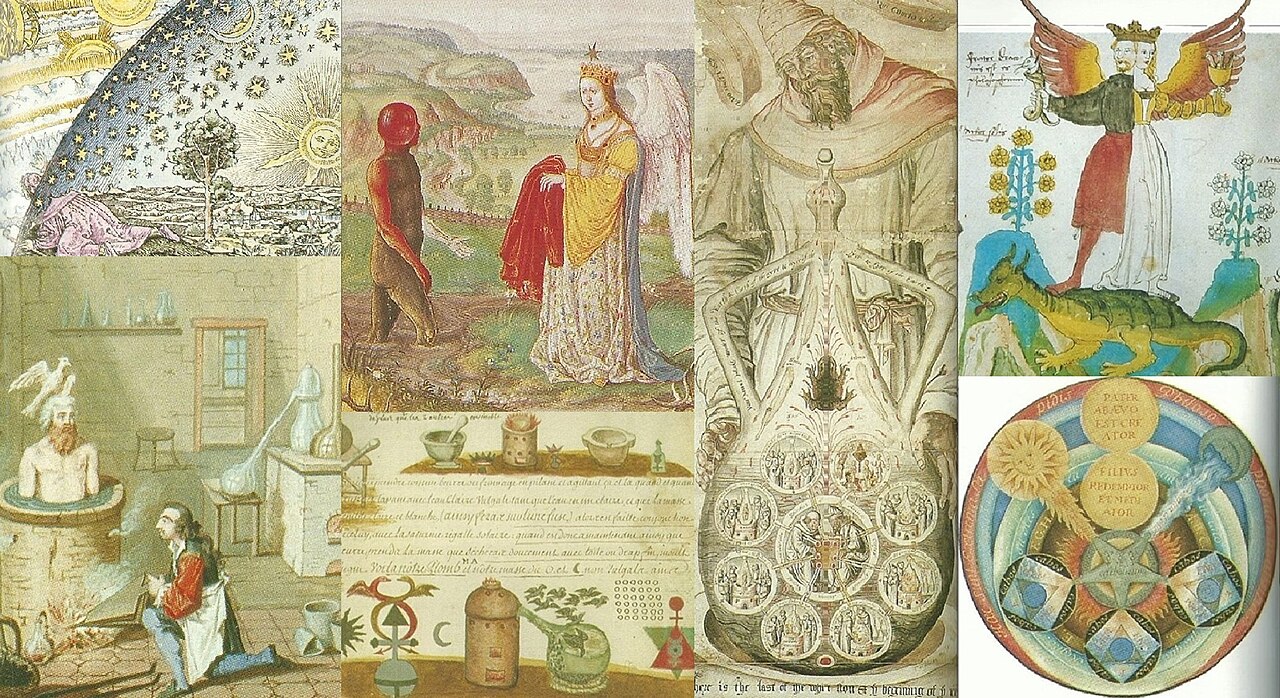
The term we now use for this ancient discipline traveled a remarkable path before settling into modern languages. It entered Old French as alkimie and Medieval Latin as alchymia, both drawing from the Arabic al-kīmiyā. That Arabic form absorbed a Late Greek word—khēmeía, sometimes rendered khumeia or khēmía—prefixed with the definite article al-. Read together, scholars have suggested the phrase describes a process of transmutation aimed at reuniting matter with its divine or original form.
Multiple etymological theories have been advanced over the centuries. Zosimos of Panopolis, writing in the third or fourth century, linked the name to a text called the Khemeu. In 1914, Hermann Diels proposed a different root, connecting it to the Greek χύμα, a term for metallic objects produced through casting. A third line of inquiry reaches back to ancient Egypt, where kēme signified "black earth"—the rich, gold-bearing soil of the Nile valley, set against the red sand of the surrounding desert. Egyptologist Wallis Budge argued the Arabic expression essentially means "the Egyptian [science]," tracing the chain through Coptic kēme, Demotic kmỉ, and ultimately the ancient Egyptian kmt, which named both the land and the colour black.
The Great Work and Its Aims
Practitioners of alchemy set themselves a suite of ambitious goals that blended material transformation with spiritual aspiration. The most celebrated of these was chrysopoeia—the transmutation of base metals such as lead into noble ones, especially gold. Alongside this, alchemists sought to brew an elixir granting immortality and to formulate panaceas capable of curing any disease. Underpinning all of these projects was the magnum opus, or "Great Work," understood to bring about the perfection of both the human body and the soul. The philosopher's stone, that legendary substance, was variously linked to each of these endeavours.
Greek-speaking practitioners rarely used a single fixed label for their craft. They called it "the Art" or "Knowledge," and frequently described it with adjectives such as mystic, sacred, or divine. This linguistic choice reveals how deeply the work was embedded in a worldview that saw material refinement and spiritual elevation as inseparable pursuits, a tradition first attested in pseudepigraphical texts produced in Greco-Roman Egypt during the opening centuries of the common era.
Three Strands, One Mystery
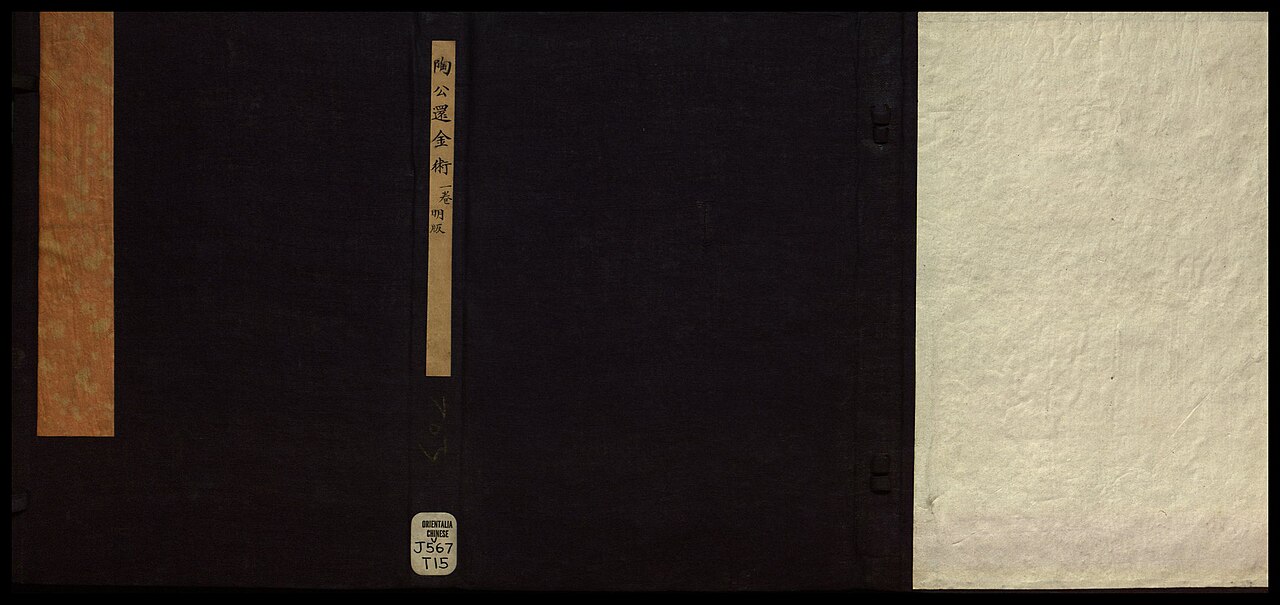
Alchemy is not a single tradition but a family of philosophical practices stretching across roughly four millennia and three continents. Scholars generally identify three major strands that appear to have developed independently, at least in their earliest phases. Chinese alchemy was rooted in Taoism; Indian alchemy, known as Rasayana, grew alongside the Dharmic faiths of the subcontinent; and Western alchemy unfolded around the Mediterranean Basin, its centre of gravity migrating over the centuries from Greco-Roman Egypt to the Muslim world and eventually to medieval Europe.
Whether these three lineages share a common origin or merely influenced one another remains an open question. What is clear is that Islamic and European alchemists together built a foundational toolkit of laboratory techniques, theoretical frameworks, and terminology, fragments of which persist in modern scientific vocabulary. They retained the Ancient Greek doctrine of four elements and guarded their findings behind layers of cipher and cryptic symbolism. In twelfth-century Europe, the translation of medieval Islamic scientific texts, combined with the rediscovery of Aristotelian philosophy, ignited a flourishing Latin alchemical tradition that would prove pivotal to the emergence of early modern chemistry and medicine.
Alchemy in the Modern Imagination
Today, alchemy occupies a contested space in academic and cultural discourse. Modern scholarship tends to divide the subject into two camps: the exoteric, practical dimension—examined by historians of the physical sciences as a precursor to chemistry, medicine, and even charlatanism within broader philosophical and religious contexts—and the esoteric, spiritual dimension, which draws the interest of historians of esotericism, psychologists, and certain philosophers and spiritualists. Scholars such as Eric J. Holmyard and Marie-Louise von Franz have pushed back against this binary, arguing that the two aspects are complementary rather than opposed.
Beyond the academy, alchemy has left a lasting imprint on literature and the arts, its imagery of transformation, hidden knowledge, and the pursuit of perfection continuing to resonate with creators and audiences alike. The discipline's legacy thus extends far beyond the laboratory, embedding itself in how cultures imagine the relationship between matter, spirit, and the search for ultimate truth.
Gallery

Frequently Asked Questions
Who wrote The Alchemy of Stone and what genre does it fall under?
Ekaterina Sedia, a Russian author, wrote this novel, which blends urban fantasy with steampunk worldbuilding. Fans often group it with mechanical-fantasy works that explore class and identity through industrial imagery.
Who is the protagonist of The Alchemy of Stone?
The story is told from the perspective of Mattie, a clockwork automaton rather than a flesh-and-blood human. Mattie's constructed nature shapes how the novel interrogates freedom, labor, and belonging within its society.
What is the city of Ayona like?
Ayona is a fictional city-state heavily inspired by late-Victorian London, complete with hereditary dukes descended from the first human settlers. Centuries before those settlers arrived, magical gargoyles—beings who could sculpt stone but were doomed to petrify at the end of their lives—laid the city's very foundations.
What is the central plot of The Alchemy of Stone?
Mattie becomes swept up in a proletarian uprising, forcing the automaton to navigate revolution, class conflict, and personal purpose simultaneously. The narrative uses the revolt as a lens to examine who gets to claim personhood in a stratified, industrial society.
What awards or honors has The Alchemy of Stone received?
The novel earned a spot on the 2008 James Tiptree, Jr. Award Honor List and was also included on the Locus Recommended Reading List. Those recognitions helped bring the book to a wider speculative-fiction audience beyond its initial readership.
More in Russian science fiction novels 1-24
Spotted an error? Know more?
Reader corrections go straight into our review queue. Suggest an edit · How this site is sourced