Heart of a Dog
A satirical novella about a dog transformed into a human.

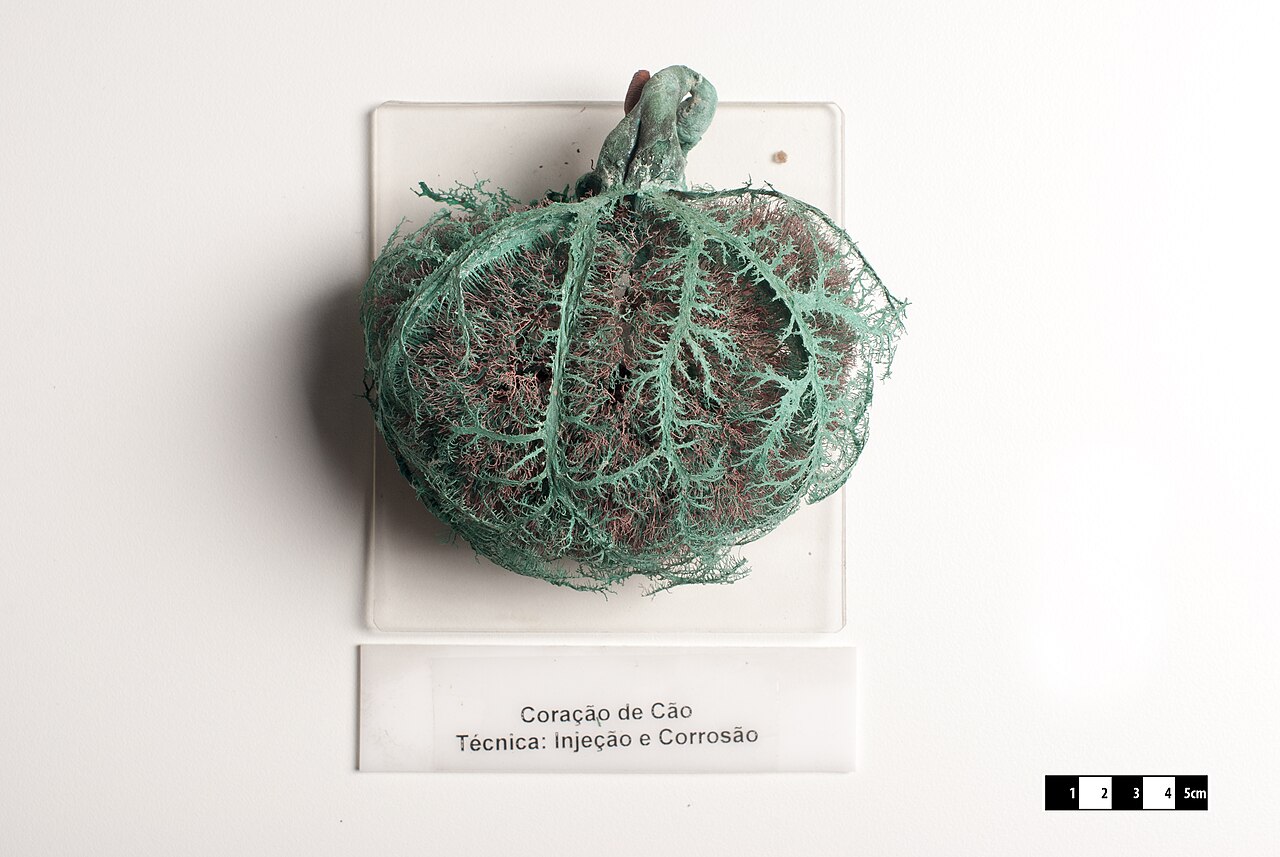
Museum of Veterinary Anatomy FMVZ USP / Wagner Souza e Silva · CC BY-SA 4.0
Mikhail Bulgakov’s novella *Heart of a Dog* (Собачье сердце) is a sharp satire of Bolshevism, completed in 1925 during the New Economic Policy—a time when Soviet communism seemed to be loosening its grip. The story is widely read as an allegory for the communist revolution and its flawed effort to fundamentally reshape humanity. Banned from publication in the USSR, the text survived through underground samizdat copies until it was finally released there in 1987. A television adaptation aired on Soviet Channel One in late 1988, earning widespread acclaim and driving many new readers to Bulgakov’s original. Since then, the novella has become a cultural touchstone in Russia, discussed by everyone from schoolchildren to politicians. It has been filmed in both Russian and Italian, and adapted into an English play and an opera.
The manuscript was rejected for publication in 1925, partly because of opposition from high-ranking Party official Lev Kamenev. Bulgakov wrote a stage version in 1926 for the Moscow Art Theater, but the play was shut down after the secret police (OGPU) confiscated the manuscript and its copies. Maxim Gorky later intervened to have the material returned. The story only saw official Soviet publication in 1987, over sixty years after it was written, though Russian readers knew it through samizdat. An English translation by Michael Glenny came out in 1968 from Harvill Press. One possible real-life model for Professor Preobrazhensky is the Russian surgeon Serge Voronoff, famous for implanting animal testicles and thyroid glands into humans; other scientists did similar work. Another candidate is Professor Vasily Preobrazhensky, who headed the St. Petersburg Institute of Obstetrics and Gynecology at the time and published early research on transplanting ovaries into males. Like his fictional counterpart, he was known for his conservative views, and moved to Arkhangelsk as a career move, where he continued his ovarian transplant research.
The plot begins in Moscow, winter 1924. A stray dog scavenging for trash is found by a cook and scalded with boiling water. Lying in a doorway, the dog wallows in self-pity, expecting to die. A successful surgeon, Filipp Filippovich Preobrazhensky, appears and offers the dog a piece of sausage.
Quick Facts
- Author
- Mikhail Bulgakov
- Country
- USSR
- Language
- Russian
- Genre
- Satire / science fiction
- Publisher
- Harcourt Brace (English)
- Release Date
- 1968
- Media Type
- Print (hardback and paperback)
- Dewey
- 812/.54 19
- Congress
- PS3556.E42 E4 1990
- Oclc
- 816041597
Facts from the source article.
Lore & Background
The book was rejected for publication in 1925, due in part to the influence of Lev Kamenev, then a leading Party official. Bulgakov subsequently wrote a play based on the story in 1926 for the Moscow Art Theater. However, the play was cancelled after the manuscript and copies were confiscated by the secret police, or OGPU. Eventually, Maxim Gorky intervened to get the manuscript returned. The story was published in the Soviet Union only in 1987, more than 60 years after its completion, but was made known to Russian readers via samizdat. In 1968, it was published in English by Harvill Press, translated by Michael Glenny.
One suggestion for the real life prototype for Professor Preobrazhensky is a Russian surgeon Serge Voronoff who was famous for transplanting animal testicles and thyroid glands into humans, with other scientists pursuing similar work. Another candidate is Professor Vasily Preobrazhensky, who headed the St. Petersburg Institute of Obstetrics and Gynecology and published early research on transplanting ovaries into males. Like his fictional counterpart, he held conservative views, and moved to Arkhangelsk as a career move, where he continued his ovarian transplant research.
Reader's Guide
Heart of a Dog is a central work in Russian literature, functioning as a biting satire of Bolshevism and an allegory of the communist revolution's attempt to radically transform mankind. Its suppression for over six decades, followed by its explosive re-emergence in 1987 and immediate adaptation into a widely praised television film, cemented its status as a cultural phenomenon in Russia, discussed by people from schoolchildren to politicians. The novella's exploration of eugenics, class conflict, and the dangers of hubristic social engineering remains resonant. Its multiple adaptations—into Russian and Italian films, an English play, and an English opera—demonstrate its enduring international appeal. The work's complex legacy includes its role as a symbol of intellectual resistance during the Soviet era, its contribution to debates about the ethics of scientific experimentation, and its continued relevance in discussions about identity, transformation, and the limits of social change.
Did You Know?
- The novella was written in 1925 at the height of the New Economic Policy, a period during which communism appeared to be relaxing in the Soviet Union.
- Its publication was initially prohibited in the Soviet Union, but it circulated in samizdat until it was officially released in the country in 1987.
- One suggested real-life prototype for Professor Preobrazhensky is Russian surgeon Serge Voronoff, famous for implanting humans with animal testicles and thyroid glands.
- The story was adapted into a movie that aired in late 1988 on First Channel of Soviet Television and was widely praised.
Historical Context and the Long Censorship
Written in 1925 at the peak of the New Economic Policy, a period when Soviet communism appeared to be easing its grip, Bulgakov's novella was a sharp satirical jab at Bolshevism. Its reception inside the Soviet Union was anything but smooth. Publication was blocked in 1925, reportedly with the backing of Lev Kamenev, a senior Party figure. Bulgakov then tried to bring the story to the stage, penning a play for the Moscow Art Theater in 1926. That effort was crushed when the OGPU, the secret police, seized the manuscript and all copies. It was only through the intervention of Maxim Gorky that the original text was eventually returned to the author. For over six decades the work survived in the Soviet Union through underground samizdat copies. It was not until 1987 that it appeared in official Soviet publication, more than sixty years after Bulgakov finished it. An English translation by Michael Glenny, published by Harvill Press in 1968, had already introduced the story to Western readers well before that.
The Central Allegory and Its Grotesque Engine
At its core the novella operates as a pointed allegory for the communist revolution and what critics have called its misguided drive to fundamentally reshape humanity. In Moscow in 1924, a scrawny stray dog named Sharik is taken in by the outspokenly anti-communist surgeon Filipp Filippovich Preobrazhensky. The professor, whose frequent treatment of RCP(b) leaders makes him politically untouchable, subjects the dog to a radical operation: a human pituitary gland and testicles, harvested from a dead, alcoholic, thieving hooligan named Chugunkin, are transplanted into Sharik's body. The result is Poligraf Poligrafovich Sharikov, a crude, foul-mouthed, politically ambitious creature who mocks etiquette as a relic of Tsarism and insists on behaving naturally. His alliance with the housing-committee bureaucrat Schwonder, his accidental flooding of the entire apartment, and his assault on the maid Zina all serve as Bulgakov's satirical indictment of a revolution that produces not a new human being but a degraded one.
Adaptations and Enduring Cultural Resonance
The 1987 official Soviet publication of the novella triggered an almost immediate wave of creative adaptation. A film version was produced and broadcast in late 1988 on the First Channel of Soviet Television, earning widespread critical praise and drawing a new generation of viewers back to Bulgakov's original text. The story's reach extended well beyond the screen and the page: it was filmed in both Russian and Italian language versions, staged as a play in English, and set to music as an opera. In the decades since, the novella has cemented itself as a genuine cultural phenomenon across Russia, a work recognized, debated, and referenced by everyone from schoolchildren to senior politicians. Its satirical bite and its vivid, almost grotesque imagery have made it a touchstone for discussions about revolution, identity, and the limits of political transformation, ensuring that Bulgakov's 1925 vision continues to resonate with each new generation of readers and audiences alike.
Real-Life Inspirations Behind the Professor
Bulgakov's fictional surgeon, Filipp Filippovich Preobrazhensky, appears to draw on more than one real-life figure. One frequently cited prototype is the Russian surgeon Serge Voronoff, who became notorious for his experiments implanting human patients with animal testicles and thyroid glands. Another candidate is the actual professor Vasily Preobrazhensky, who at the time Bulgakov was writing headed the St. Petersburg Institute of Obstetrics and Gynecology. His earliest published scientific work concerned the transplantation of ovaries into males, a detail that mirrors the novella's central operation with striking precision. Like his fictional counterpart, Vasily Preobrazhensky reportedly did not like the proletariat, a sentiment that may have contributed to his banishment to the northern city of Arkhangelsk, where he continued his transplant research. Local hearsay even suggested his work produced a brief rejuvenation effect, a detail that adds a layer of darkly comic plausibility to Bulgakov's fantastical premise.
Gallery

Frequently Asked Questions
What is Heart of a Dog?
Heart of a Dog is a satirical novella written by Mikhail Bulgakov in 1925, in which a stray dog is surgically transformed into a human being. It is widely read as a biting allegory for the Bolshevik revolution's attempt to remake society and its citizens.
What is the plot of Heart of a Dog?
Professor Preobrazhensky performs an experimental transplant operation on a stray mongrel named Sharik, producing a crude, aggressive man called Polyclitus. The experiment collapses when the new 'human' proves violent and ill-mannered, and the Professor ultimately reverses the procedure.
Why was Heart of a Dog banned in the Soviet Union?
The novella was considered too sharply critical of the new Soviet order, so it was never officially printed in the USSR during Bulgakov's lifetime. Surviving copies circulated underground as samizdat until the text was finally published in 1987.
How does Heart of a Dog end?
The story closes with Professor Preobrazhensky performing a second operation that turns Polyclitus back into a dog. The Professor is left alone in his apartment, relieved to be rid of the failed experiment.
Who is Sharik in Heart of a Dog?
Sharik is the stray mongrel who serves as the central subject of the Professor's surgical experiment and is the creature that becomes the human Polyclitus. He functions as a symbol for the 'raw material' that the revolution attempts to reshape into something new.
More in Russian science fiction novels 1-24
Spotted an error? Know more?
Reader corrections go straight into our review queue. Suggest an edit · How this site is sourced