Varenye
A whole-fruit preserve with thick, clear syrup and no gelling agent.
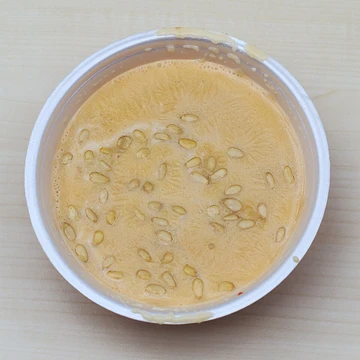
Varenye is a whole-fruit preserve popular in Eastern Europe and the Baltic region, made by cooking berries, fruits, or occasionally nuts, vegetables, or flowers in sugar syrup. Unlike jam, the fruits are not macerated and no gelling agent is added, resulting in a thick, transparent syrup that retains the natural color of the fruit. Some traditional recipes use honey or treacle instead of or in addition to sugar.
Quick Facts
- Region
- Eastern Europe, Baltic region
- Course
- Dessert
- Main ingredients
- berries or other fruits, sugar
Facts from the source article.
Did You Know?
- Varenye is used as a topping for pancakes (bliny, oladyi, syrniki), a filling for pies (pirogi, pirozhki) and dumplings (vareniki), and a sweetener for tea.
- It is also eaten on its own as a sweet.
- Due to its liquid consistency, varenye is not well suited as a spread on bread.
Etymology, translations, and cultural references
The word varenye is an old Slavic term used in East Slavic languages to refer broadly to any sweet fruit preserve, sharing etymological roots with verbs meaning cooking, boiling, brewing, or stewing. In literary translations into Russian, varenye often replaces less common loanwords such as jam, confiture, or marmalade, appearing in works like Alice's Adventures in Wonderland, Harry Potter, and The Adventures of Tom Sawyer. Conversely, when translating from Russian, the term is frequently rendered as jam; for instance, Constance Garnett's translation of Leo Tolstoy's Anna Karenina describes the making of raspberry varenye as jam-making. In Arkady Gaidar's A Tale About a War Secret, About the Boy Nipper-Pipper, and His Word of Honour, the phrase a barrel of varenye and a basket of biscuits became an idiomatic expression for betrayal, akin to thirty pieces of silver.
Preparation
Making varenye requires balancing cooking time to extract flavor and allow sugar to penetrate the fruit without causing the fruit to break down. Some fruits with tough skins need many hours of cooking, while others suit five-minute varenye, where dry sugar is layered over raw fruit and left for several hours before heating for about five minutes.
Related specialties
The broader usage of varenye in Eastern Europe includes raw varenye, which omits heating and involves grating raw berries or fruits mixed with sugar. Dry varenye, a pre-revolutionary Russian variety, refers to candied fruits obtained by removing fruits from varenye syrup and drying them; Kyiv was particularly known for this delicacy, which regained popularity in the city in 2016.
More in Russian Desserts
Spotted an error? Know more?
Reader corrections go straight into our review queue. Suggest an edit · How this site is sourced