Lake Albert (Africa)
Lake on the Uganda–DRC border, part of the upper Nile system.

Johnston, Alexander Keith, 1804-1871; Keane, A. H. (Augustus Henry), 1833-1912 · No restrictions
Lake Albert sits on the border between Uganda and the Democratic Republic of the Congo, ranking as the sixth-largest lake in Africa and the second largest among Uganda’s Great Lakes. The Banyoro originally called it Mwitanzige, the Alur knew it as Nam Ovoyo Bonyo, and for a time it was renamed Lake Mobutu Sese Seko.
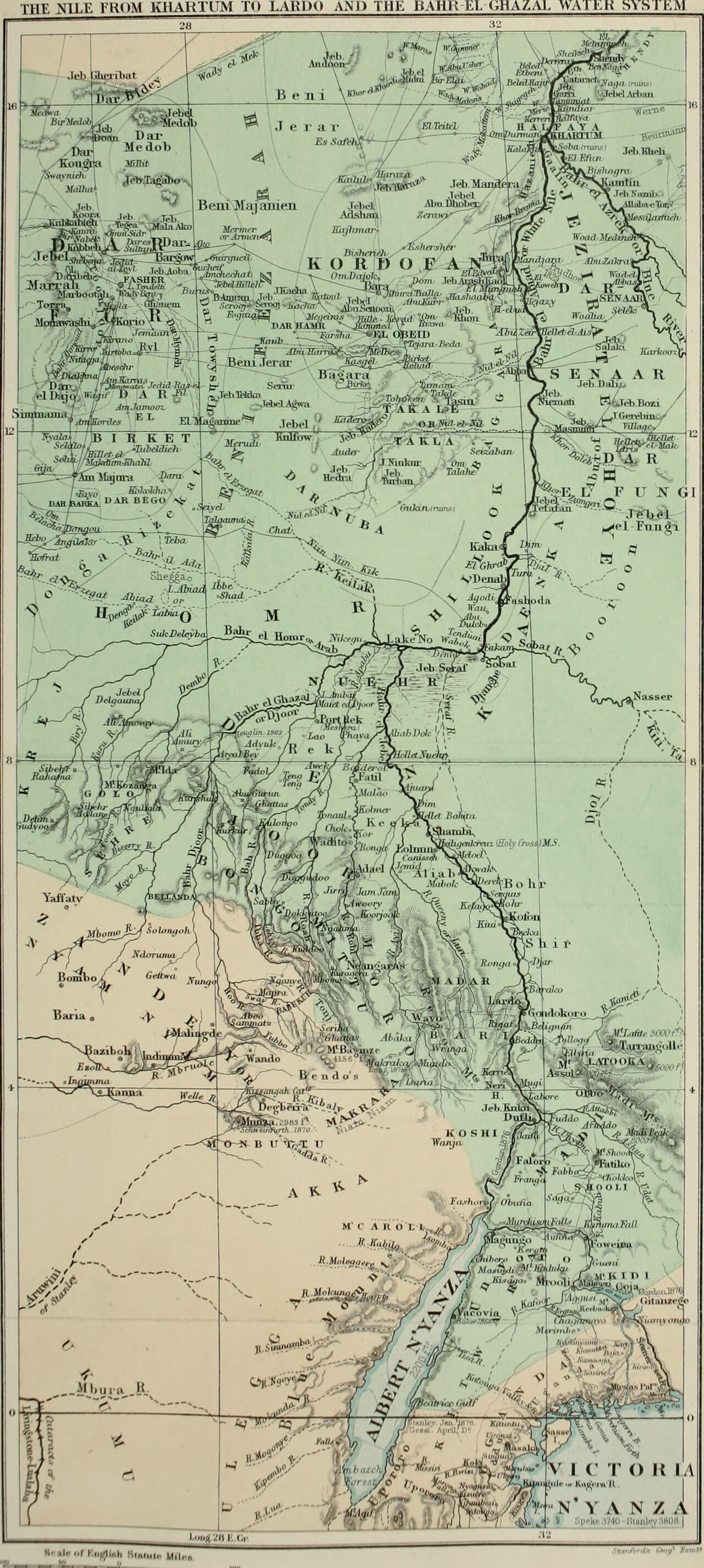
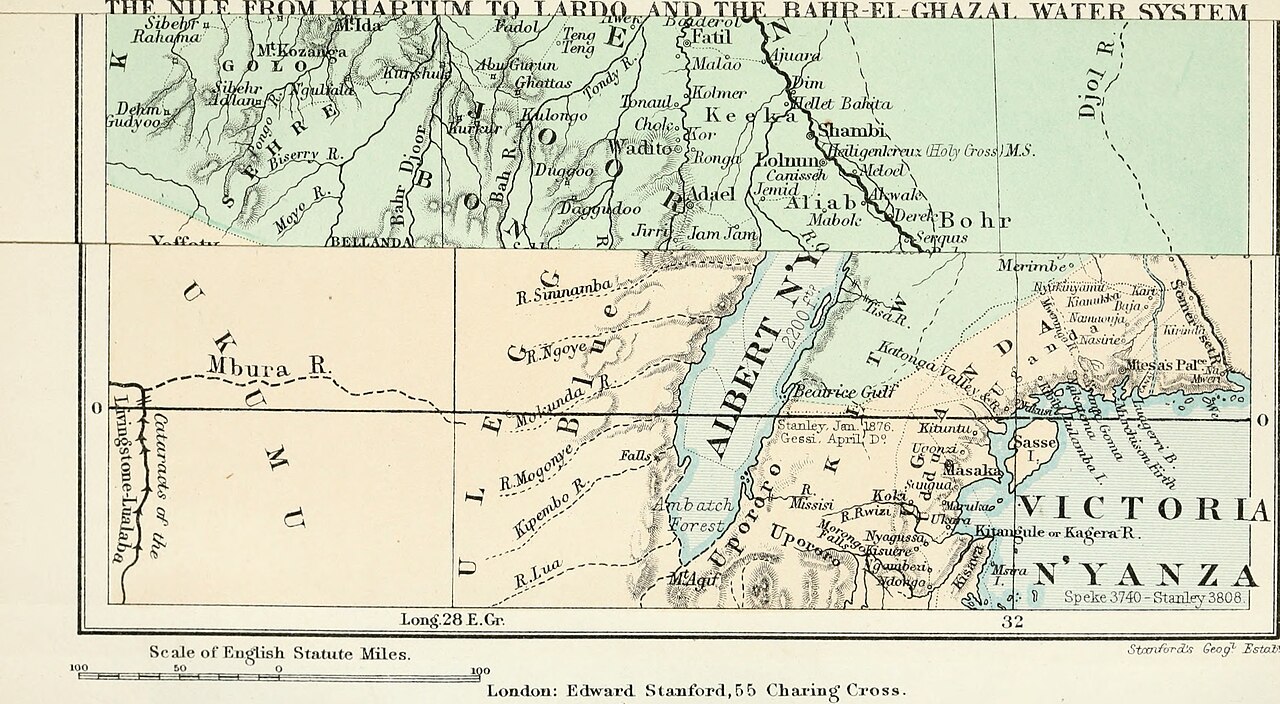
The lake is the northernmost in the chain of lakes along the Albertine Rift, which is the western branch of the East African Rift. It stretches about 160 kilometers long and 30 kilometers wide at its broadest point, with a maximum depth of 51 meters and a surface elevation of 619 meters above sea level. Lake Albert is part of the upper Nile system. Its main inflows are the White Nile—which comes from Lake Victoria to the southeast—and the Semliki River, which flows from Lake Edward to the southwest. The Victoria Nile’s water is much less salty than the lake’s. At its northern tip, the lake drains into the Albert Nile section of the White Nile, which later becomes the Mountain Nile as it enters South Sudan. Swamps lie at the southern end where the Semliki enters. The Rwenzori Mountains are south of the lake, and the Blue Mountains are to the northwest. Settlements along the shore include Butiaba and Pakwach.
Unlike very deep lakes such as Malawi, Tanganyika, and Kivu, Lake Albert’s water temperature stays fairly constant, typically between 27 and 29°C, and oxygen reaches even its deeper layers. The water has a pH around or just below 9 and an electric conductivity of about 720–780 μS/cm—both high for a freshwater lake, though lower than Lake Edward’s.
The lake supports many aquatic and semi-aquatic animals, including hippopotamuses, Uganda kob antelopes, Nile crocodiles, Nile monitors, African softshell turtles, Central African mud turtles, Williams’ mud turtles, various semi-aquatic snakes, and several frog species. Water birds are abundant, with pelicans, herons, and the rare shoebill among them.
There are 55 fish species in Lake Albert. Aside from Nile crocodiles, the largest predator is the Nile perch, which is native here (unlike in other Rift Valley lakes where it was introduced and is invasive). Other large predatory fish include the elongate tigerfish, African tigerfish, marbled lungfish, cornish jack, *Bagrus docmak*, African sharptooth catfish, and vundu catfish. Important fisheries target Nile tilapia, Niger barb, Albert lates, electric catfish, and giraffe catfish, caught by standard methods, while small *Brycinus nurse* and *Engraulicypris bredoi* are mainly caught by light fishing. About 30% of Uganda’s fish production comes from Lake Albert.
The lake has fewer endemic species than other African Great Lakes. Although the Albert Nile—the section leaving the lake—has rapids in the Nimule region, these haven’t effectively isolated the lake from the main Nile. In contrast, Lake Edward (and ultimately Lake George) is isolated from Lake Albert by rapids on the Semliki River, while Lake Kyoga (and ultimately Lake Victoria) is isolated by Murchison Falls on the Victoria Nile. As a result, most of Lake Albert’s fish are widespread riverine species also found in the main Nile. There are few haplochromine cichlids—a group very diverse in other Rift Valley lakes. Of the six haplochromines in Lake Albert, four are endemic (*Haplochromis albertianus*, *H. avium*, *H. bullatus*, and *H. mahagiensis*), and two are also found in the Nile (*H. loati* and *Pseudocrenilabrus multicolor*). By comparison, most of the more than 60 haplochromines in Lake Edward–George and most of the roughly 600 in Lake Victoria–Kyoga are endemic. The only other endemic fish in Lake Albert are the small cyprinid *Engraulicypris bredoi* and the endangered Albert lates.
The lake is still known as Mwitanzige by the Banyoro and Batooro, and Nam Ovoyo Bonyo by the Alur—names that predate the colonial era. Mwitanzige means “locust killer” in Runyoro, from *omwita* (killer) and *enzige* (locusts). Nam Ovoyo Bonyo translates to “the lake that has defeated the locusts” in Alur, from *Nam* (lake), *Ovoyo* (has defeated), and *Bonyo* (locusts). These names come from a legend: a plague of locusts destroyed crops on the eastern shore, but when the people tried to cross to the other side, they never arrived. In 1864, explorers Samuel Baker and Flóra von Sass reached the lake and renamed it after the recently deceased Prince Albert, consort of Queen Victoria. In the 20th century, Zairian President Mobutu Sese Seko temporarily gave the lake his own name.
European colonialists operated shipping on the lake. The British planned a network of railway, river steamer, and lake steamer services linking British interests in Egypt, east Africa, and southern Africa. The John I. Thornycroft & Company shipyard in Woolston, Hampshire built the cargo and passenger ship SS *Robert Coryndon* for this purpose in 1930, named after British Army officer Robert Thorne Corydon, who was governor of Uganda from 1918 to 1922. Winston Churchill called her “the best library afloat,” and Ernest Hemingway described her as “magnificence on water.” She was either scuttled in 1962 or sank in 1964. Still unsalvaged and partly submerged at Butyaba landing site, her remains can still be seen. Heritage Oil and Tullow Oil have announced major oil finds in the Lake Albert basin, with estimates that the multi-billion barrel field will prove to be the largest.
- surface_area
- Sixth-largest in Africa
- width
- About 30 km (19 mi) at widest
- location
- Border of Uganda and Democratic Republic of the Congo
- primary_outflow
- Albert Nile (White Nile)
Lore & Background
Lake Albert is the northernmost lake in the Albertine Rift, the western branch of the East African Rift. Its main sources are the White Nile from Lake Victoria and the Semliki River from Lake Edward. The lake's outlet at its northern tip becomes the Albert Nile, later the Mountain Nile in South Sudan. The water temperature is stable around 27–29 °C, and its pH is around 9, with high electric conductivity.
Reader's Guide
Lake Albert is significant as a major freshwater resource and part of the upper Nile system. It supports important fisheries, providing up to 30% of Uganda's fish production, with species including Nile perch, Nile tilapia, and the endangered Albert lates. The lake has fewer endemic fish than other African Great Lakes due to limited isolation from the main Nile. Historically, it was a node in British colonial transport networks, with the steamer SS Robert Coryndon serving the lake until its sinking in the 1960s. In recent decades, major oil finds have been announced in the Lake Albert basin.
Did You Know?
- Lake Albert is known as Mwitanzige by the Banyoro, meaning 'locust killer', and Nam Ovoyo Bonyo by the Alur, meaning 'the lake that has defeated the locusts'.
- The lake's water temperature is relatively stable throughout, typically around 27–29 °C.
- As much as 30% of the fish production in Uganda comes from Lake Albert.
Gallery
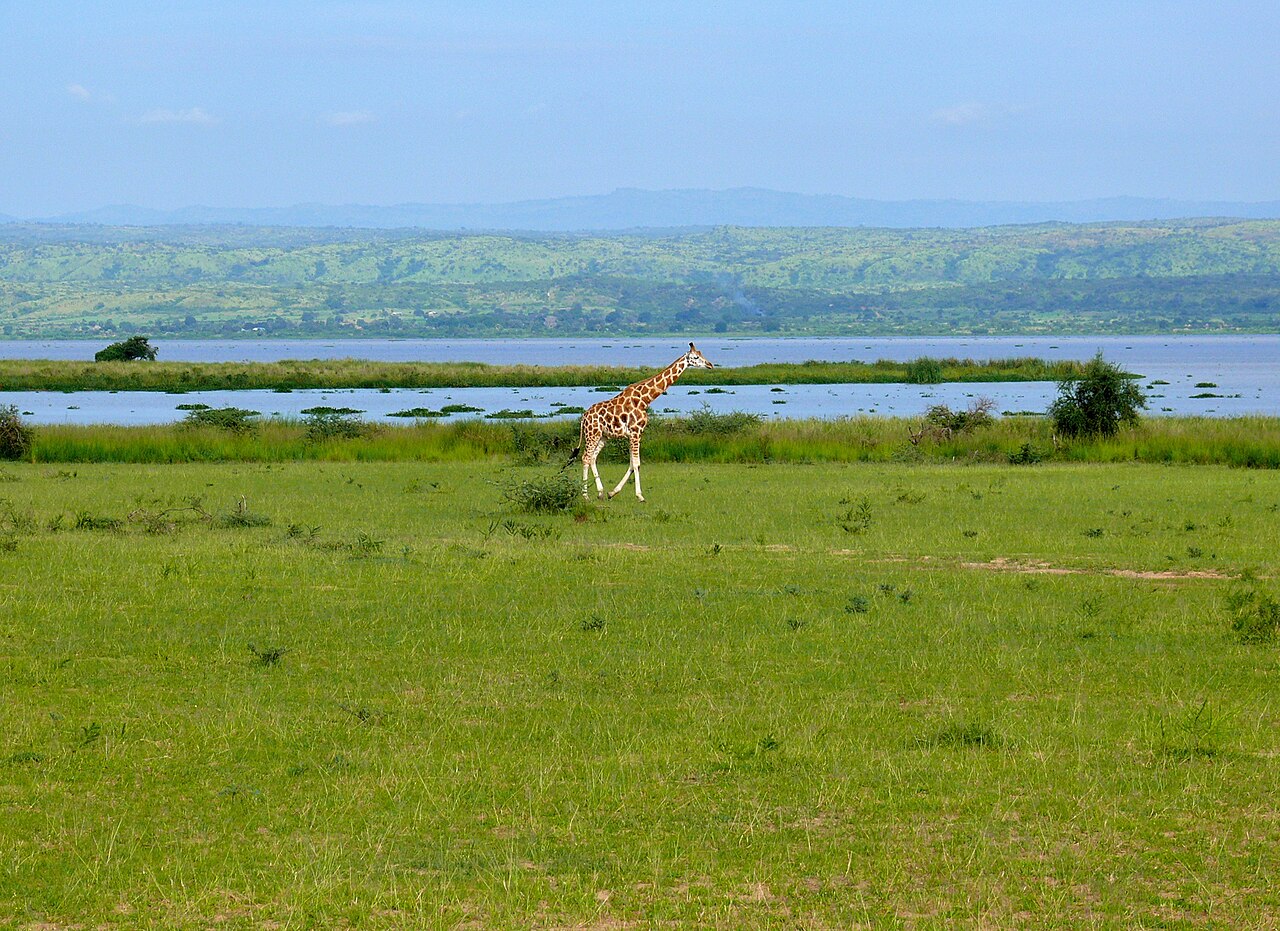
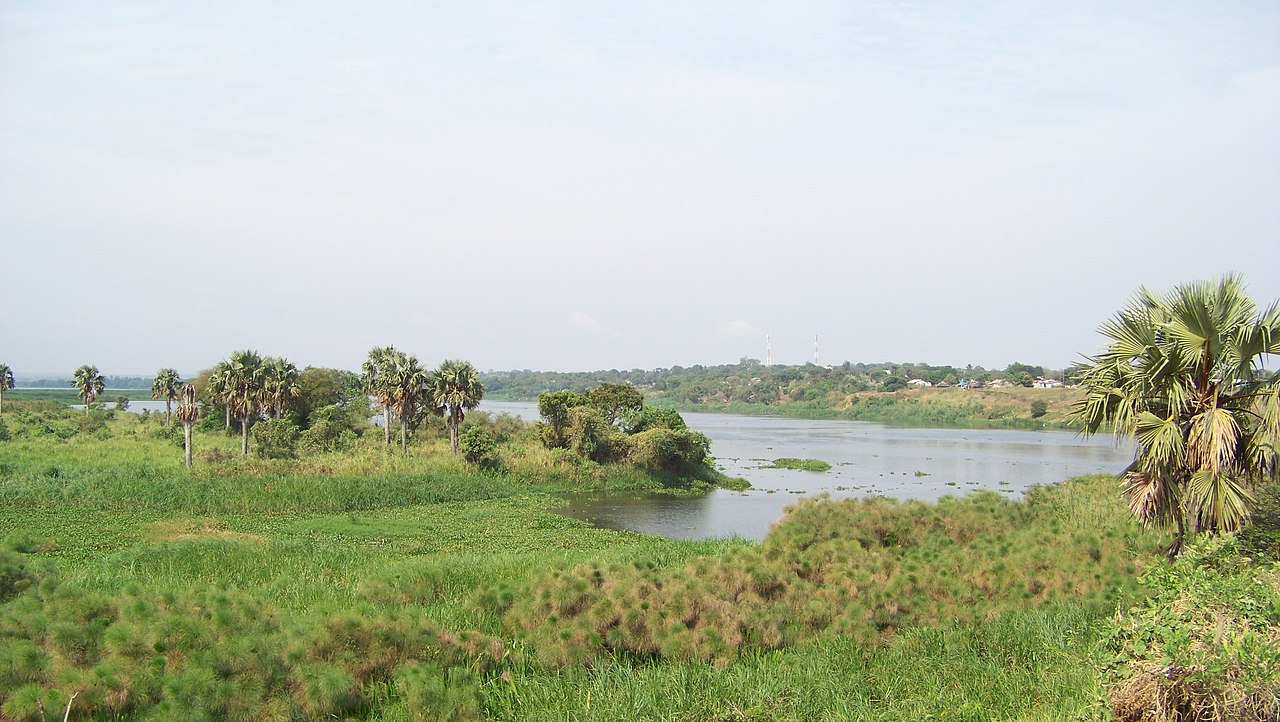
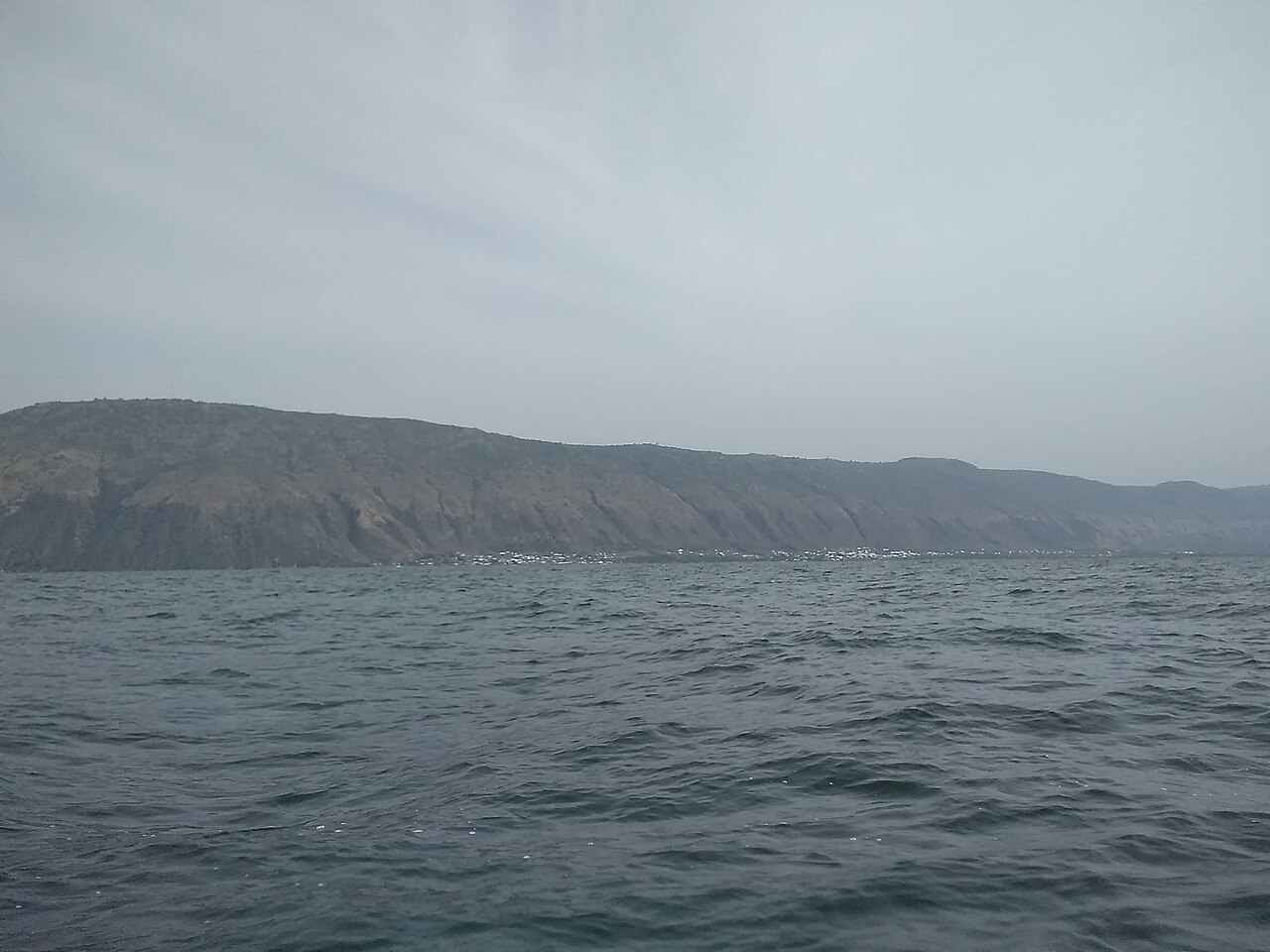
Frequently Asked Questions
What is Lake Albert (Africa)?
It is a large freshwater lake straddling the Uganda–DRC border, ranking as Africa's sixth-largest lake and the second-biggest among Uganda's Great Lakes.
What role does Lake Albert (Africa) play in the Nile system?
It sits within the upper Nile drainage basin, acting as a significant water reservoir that contributes to the broader Nile river network flowing northward.
Which countries does Lake Albert (Africa) border?
The lake forms a natural boundary between Uganda to the east and the Democratic Republic of the Congo to the west.
More in Rivers And Lakes 1-17
Spotted an error? Know more?
This is a living reference — every entry is fact-audited, and reader corrections feed straight into our audit queue. Suggest an edit · See this site's audit record