Ganges
Trans-boundary river of Asia, sacred to Hindus.

Picture Prefect ! · CC BY-SA 4.0
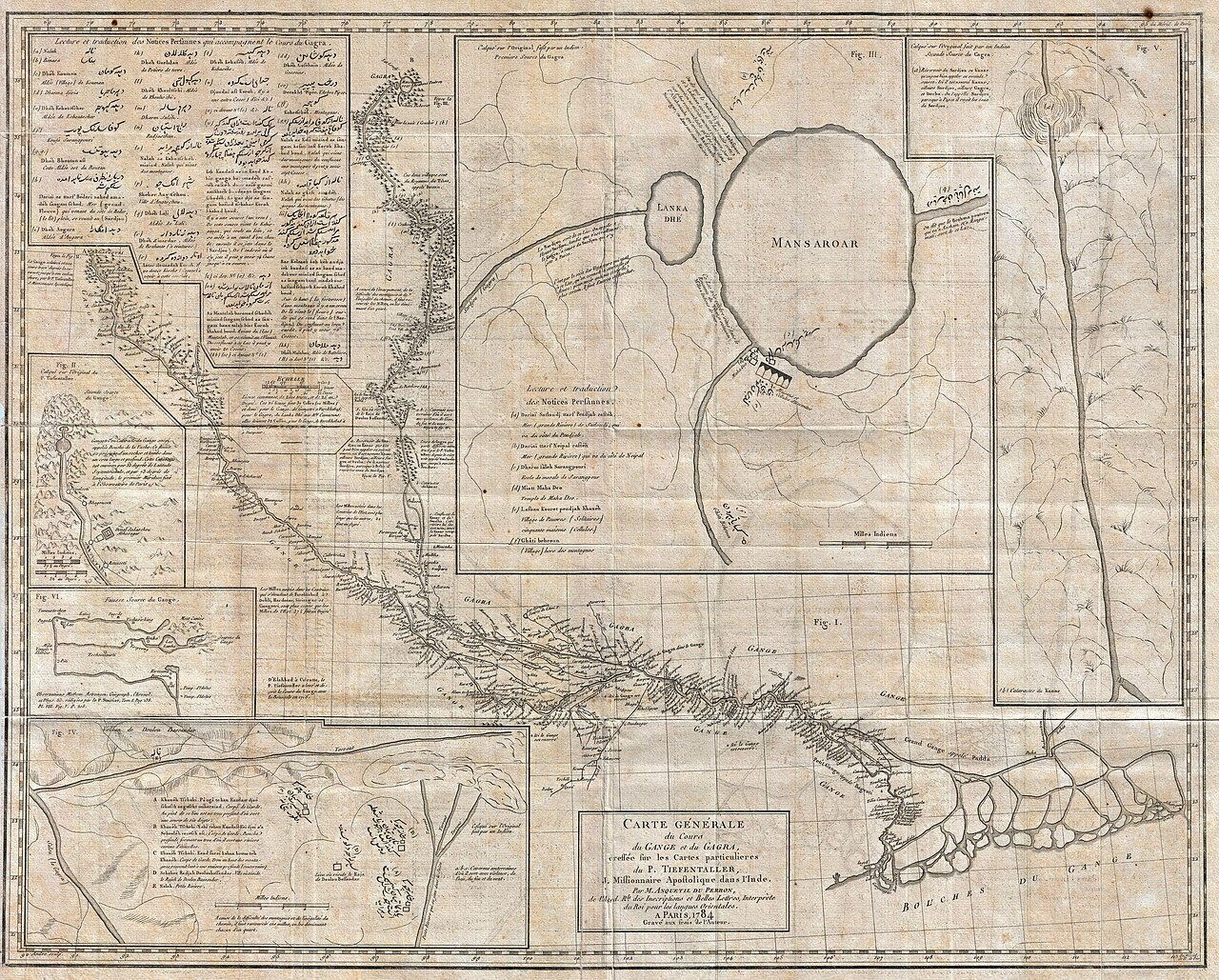
The Ganges (called the Ganga in India, pronounced GUNG-gah, and the Padma in Bangladesh, pronounced PUD-mə) is a river that crosses the borders of India and Bangladesh. It stretches about 2,525 kilometers (1,569 miles), starting in the western Himalayas in the Indian state of Uttarakhand. From there, it flows south and east across the Gangetic plain of northern India. Along the way, it picks up the Yamuna River—a right-bank tributary that also begins in the western Indian Himalayas—and several left-bank tributaries from Nepal, which provide most of its water volume. In West Bengal, a canal diverts about half of the Ganges’ flow southward, artificially linking it to the Hooghly River. The river then continues into Bangladesh, where it is known as the Padma. There, it meets the Jamuna (the lower course of the Brahmaputra) and later the Meghna, forming a large estuary in the Ganges Delta before emptying into the Bay of Bengal. The combined Ganges–Brahmaputra–Meghna system is the second-largest river in the world by water discharge.
The main stem of the Ganges officially begins at the town of Devprayag, where two rivers meet: the Alaknanda (which, being longer, is considered the hydrological source) and the Bhagirathi (which Hindu mythology regards as the source). The river’s upper course starts at this confluence in the Garhwal region of Uttarakhand. The Alaknanda’s headwaters come from snowmelt on peaks like Nanda Devi, Trisul, and Kamet, while the Bhagirathi originates at the foot of the Gangotri Glacier at Gomukh, 4,356 meters (14,291 feet) above sea level—mythologically said to rest in the matted hair of the god Shiva. Six main headstreams—the Alaknanda, Dhauliganga, Nandakini, Pindar, Mandakini, and Bhagirathi—are considered sacred, and their five confluences, called the Panch Prayag, occur along the Alaknanda. In order downstream, these are Vishnuprayag (where the Dhauliganga joins), Nandprayag (Nandakini), Karnaprayag (Pindar), Rudraprayag (Mandakini), and finally Devprayag (Bhagirathi).
After flowing about 256.9 kilometers (159.63 miles) through its narrow Himalayan valley, the Ganges leaves the mountains at Rishikesh and spreads onto the Gangetic Plain at the pilgrimage town of Haridwar. At Haridwar, a headworks diverts some water into the Ganges Canal, which irrigates the Doab region of Uttar Pradesh. The river, which had been heading roughly southwest, now turns southeast across the northern Indian plains. It follows a 900-kilometer (560-mile) arching path through cities such as Bijnor, Kannauj, Farukhabad, and Kanpur. Along the way, it is joined by the Ramganga, which adds an average of about 495 cubic meters per second (17,500 cubic feet per second) to the flow. At the Triveni Sangam in Prayagraj (formerly Allahabad), the Ganges meets the 1,444-kilometer (897-mile) Yamuna River—a confluence considered holy in Hinduism. At this point, the Yamuna is larger, contributing roughly 58.5% of the combined flow, with an average of 2,948 cubic meters per second (104,100 cubic feet per second).
Flowing eastward, the Ganges next receives the 400-kilometer (250-mile) Tamsa River (also called the Tons), which comes from the Kaimur Range and adds about 187 cubic meters per second (6,600 cubic feet per second). Then comes the 625-kilometer (388-mile) Gomti River from the Himalayas, contributing around 234 cubic meters per second (8,300 cubic feet per second). After that, the 1,156-kilometer (718-mile) Ghaghara River (also known as the Karnali), flowing from Tibet through Nepal, joins in. The Ghaghara is the Ganges’ largest tributary by discharge, with an average of about 2,991 cubic meters per second (105,600 cubic feet per second). Following this, the 784-kilometer (487-mile) Son River enters from the south, adding roughly 1,008 cubic meters per second (35,600 cubic feet per second). Finally, the 814-kilometer (506-mile) Gandaki River and the 729-kilometer (453-mile) Kosi River, both flowing from Nepal, join from the north, contributing about 1,654 and 2,166 cubic meters per second (58,400 and 76,500 cubic feet per second), respectively.
The Ganges is a lifeline for hundreds of millions of people living in its basin, who depend on it daily. Historically, many former provincial or imperial capitals—including Pataliputra, Kannauj, Sonargaon, Dhaka, Bikrampur, Kara, Munger, Kashi, Patna, Hajipur, Kanpur, Delhi, Bhagalpur, Murshidabad, Baharampur, Kampilya, and Kolkata—were built on its banks or those of its tributaries and connected waterways. The river supports about 140 species of fish, 90 species of amphibians, and various reptiles and mammals, including critically endangered species like the gharial and the South Asian river dolphin. To Hindus, the Ganges is the most sacred river, worshipped as the goddess Ganga.
However, the Ganges is severely threatened by pollution, which endangers both humans and animals. Near Varanasi, levels of fecal coliform bacteria from human waste are more than 100 times the Indian government’s official limit. The Ganga Action Plan, an environmental cleanup effort, is widely considered a failure, blamed on corruption, government neglect, poor technical skills, weak environmental planning, and a lack of support from religious authorities.
- discharge_rank
- Third-largest river system on earth by discharge (Ganges–Brahmaputra–Meghna system), after the Amazon and the Congo
Lore & Background
The main stem of the Ganges begins at Devprayag, at the confluence of the Alaknanda (the hydrologically longer source stream) and the Bhagirathi (the mythological source stream). Six headstreams—Alaknanda, Dhauliganga, Nandakini, Pindar, Mandakini, and Bhagirathi—and their five confluences (the Panch Prayag) are considered sacred.
Reader's Guide
The Ganges has been historically important, with many former provincial or imperial capitals—such as Pataliputra, Kannauj, Dhaka, Patna, Kanpur, Delhi, and Kolkata—located on its banks or those of its tributaries. The Ganges is threatened by severe pollution; near Varanasi, levels of fecal coliform bacteria from human waste exceed 100 times the Indian government's official limit. The Ganga Action Plan, an environmental initiative to clean the river, has been considered a failure, attributed to corruption, lack of government care, poor technical expertise, poor environmental planning, and lack of support from religious authorities.
Did You Know?
- The Ganges is known as the Padma in Bangladesh.
- The Yamuna River is the largest tributary of the Ganges by discharge.
- The Ganges is home to critically endangered species including the gharial and South Asian river dolphin.
Sacred Origins and the Panch Prayag
The story of the Ganges begins high in the western Himalayas, where two streams carry competing claims to the title of true source. The Alaknanda, fed by snowmelt from peaks including Nanda Devi, Trisul, and Kamet, is longer and therefore the hydrological source. Between their meeting at Devprayag, the Alaknanda gathers five other headstreams—Dhauliganga, Nandakini, Pindar, Mandakini, and the Bhagirathi itself—at five sacred confluences known as the Panch Prayag: Vishnuprayag, Nandprayag, Karnaprayag, Rudraprayag, and finally Devprayag.
The Great Hydrological Journey
From Haridwar the Ganges sweeps southeast across the Gangetic Plain in a broad 900-kilometre arc, threading through Bijnor, Kannauj, Farukhabad, and Kanpur before meeting the Yamuna at the Triveni Sangam in Prayagraj. At that holy confluence the Yamuna actually outflows the Ganges, contributing roughly 58.5 per cent of the combined discharge. East of Prayagraj the river collects an extraordinary cascade of tributaries: the Tamsa, the Gomti, and then the mighty Ghaghara (Karnali), which at nearly 3,000 cubic metres per second is the single largest feeder by volume. The Kosi, arriving from Nepal near Kursela in Bihar, ranks third. In West Bengal a feeder canal splits the river, channeling half its flow southward into the Hooghly. The remaining stream crosses into Bangladesh, where it is called the Padma, and merges with the Jamuna—the lower Brahmaputra—and ultimately the Meghna. Together these three rivers form the vast Ganges Delta and pour into the Bay of Bengal. The Ganges–Brahmaputra–Meghna system is the second-largest river on Earth by total discharge.
Civilizational Lifeline and Living Waters
For hundreds of millions of people across India and Bangladesh, the Ganges is not merely a waterway but the very axis of daily survival. Its basin has cradled an astonishing roll-call of former provincial and imperial capitals—Pataliputra, Kannauj, Sonargaon, Dhaka, Kashi, Patna, Kanpur, Delhi, Bhagalpur, Murshidabad, Baharampur, Kampilya, and Kolkata, among others—each built on its banks or those of its tributaries and connected waterways. Among the most vulnerable are the gharial and the South Asian river dolphin, both critically endangered. For Hindus the Ganges transcends the biological: it is the most sacred river in the faith, personified as the goddess Ganga and worshipped in rituals that stretch back millennia.
The Pollution Crisis and the Struggle to Clean
The Ganges faces a severe and growing pollution threat that endangers both human communities and the river's wildlife. Near the ancient city of Varanasi, concentrations of fecal coliform bacteria from human waste—urine and faeces—exceed the Indian government's own official safety limit by more than a hundredfold. In response, the state launched the Ganga Action Plan, a dedicated environmental initiative aimed at restoring the river's water quality. By most accounts the programme has been judged a failure. The reasons cited are numerous and interlocking: corruption in implementation, a persistent lack of genuine governmental commitment, insufficient technical expertise among those tasked with the work, poor environmental planning, and a notable absence of support from the very religious authorities whose followers depend on the river for worship. The result is a paradox at the heart of the Ganges' identity: the most sacred waterway in Hinduism is simultaneously one of the most contaminated, and the species it shelters—from the gharial to the river dolphin—face extinction in waters that should be their sanctuary.
Gallery
Frequently Asked Questions
Where does the Ganges start and where does it end?
It originates in the Indian state of Uttarakhand within the western Himalayas, then travels south and east across the Gangetic plain before emptying into the Bay of Bengal through the Ganges Delta.
Why is the Ganges considered sacred?
Hindus regard the Ganges as their most holy river and venerate it as the goddess Ganga. It serves as a spiritual lifeline for hundreds of millions of people living in its basin.
How does the Ganges rank among the world's rivers by discharge?
The Ganges–Brahmaputra–Meghna system is the third-largest river system on Earth by water discharge, trailing only the Amazon and the Congo.
What are the local names for the Ganges?
In India it is commonly called the Ganga, while in Bangladesh the same waterway is known as the Padma.
More in Rivers And Lakes 1-17
Spotted an error? Know more?
This is a living reference — every entry is fact-audited, and reader corrections feed straight into our audit queue. Suggest an edit · See this site's audit record