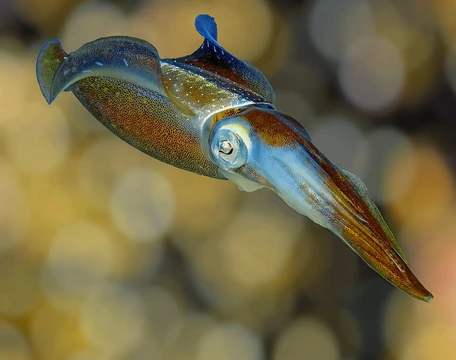
Common cuttlefish
One of the largest and best-known cuttlefish species.

The common cuttlefish (Sepia officinalis), also called the European common cuttlefish, ranks among the largest and most familiar cuttlefish species. It migrates, moving into shallow coastal waters during spring and summer to spawn, then retreating to depths between 100 and 200 metres for autumn and winter. Its native range includes at least the Mediterranean, North, and Baltic Seas, and it inhabits sandy or muddy seabeds, where it can handle brackish conditions.
Quick Facts
- Genus
- Sepia
- Parent
- Sepia (Sepia)
- Species
- officinalis
Facts from the source article.
Lore & Background
The type specimen of Sepia officinalis was collected from a location given simply as 'Oceano' and is deposited in the Linnean Society of London. A subspecies originally described as Sepia officinalis jurujubai is now considered a junior synonym of Sepioteuthis sepioidea. The common cuttlefish has two highly developed eyes, eight arms, two specialized feeding tentacles, and a beak housing a radula. It moves by undulating fins but jets away using a siphon when startled, often inking in the process. Its unmatched camouflaging abilities come from pigmented chromatophores, light-scattering leucophores, and structurally reflecting iridophores, and it can also change skin texture. These abilities are present before hatching, as embryos visibly manipulate chromatophores within the egg.
Reader's Guide
The common cuttlefish is commonly fished in the Mediterranean, including Greece and Spain, and though wild stocks in some regions are close to being over-exploited, population numbers are not declining and the species is listed as Least Concern. It has large commercial value: the mantle and head (including tentacles) are processed into food, with the cuttlebone and guts removed. Cuttlefish ink is believed to have anti-inflammatory, anti-oxidant, antimicrobial, anti-hypertensive, anti-retroviral, and potential anticancer properties; it is used as a food ingredient and pigment, with the color sepia named after the species. Cuttlebones are sold for pet parrots and some reptiles as a calcium source and enrichment. A 2008 study showed that embryos exposed visually to a certain prey species (e.g., crabs) will hunt primarily for that prey after hatching, overriding a usual preference for shrimp. During breeding, males display a black-and-white zebra pattern and females a uniform grey; females attach egg masses to seaweed or shells, and eggs are preyed upon by various marine invertebrates including murex sea snails, European lobster, rock crabs, sea urchins, Squilla mantis, and sea stars.
Did You Know?
- Cuttlefish embryos exposed to crabs before hatching will hunt crabs more often than shrimp after hatching.
- The common cuttlefish can change both its color and skin texture using specialized cells and muscles.
- Females carry between 150 and 4000 eggs, depending on body mass.
More in Reef Cephalopods, Part 2 1-24
Spotted an error? Know more?
Reader corrections go straight into our review queue. Suggest an edit · How this site is sourced