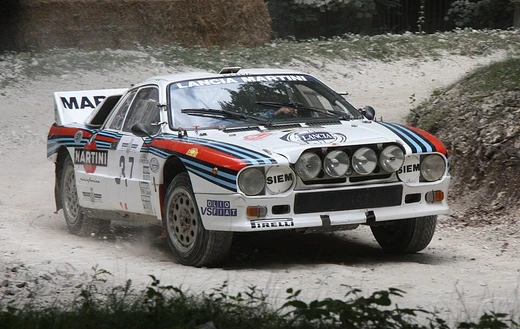
Toyota Celica Twin-Cam Turbo
King of Africa: three Safari and three Ivory Coast wins.

The Toyota Celica Twin-Cam Turbo was a Group B rally car introduced by Toyota in 1983 and campaigned until the category was disbanded at the end of 1986. It earned the nickname "King of Africa" by dominating endurance events on the continent, winning the Safari Rally and the Ivory Coast Rally three times each.
To meet Group B’s requirement of at least 200 road cars, Toyota based the racer on its top-of-the-line GT-T Celica. Unlike the all-wheel-drive Audi Quattro that dominated the era, the Celica—like the Lancia 037—used rear-wheel drive. It debuted at the 1983 1000 Lakes Rally, where Juha Kankkunen finished sixth. Although its lack of all-wheel drive made it uncompetitive on many stages, the car’s reliability and top-end speed brought victories in grueling, endurance-focused events such as the Ivory Coast Rally.
In 1984, Björn Waldegård won the Safari Rally, the first of three consecutive wins for Toyota in that event. After Group B ended, the Twin-Cam Turbo’s engine (designated TA64) was adapted for the all-wheel-drive Toyota Celica GT-Four, which debuted in 1987.
World Rally Championship wins: - 1983 Rallye Marlboro Côte d'Ivoire (Björn Waldegård / Hans Thorszelius) - 1984 Marlboro Safari Rally (Björn Waldegård / Hans Thorszelius) - 1985 Marlboro Safari Rally and Rallye Marlboro Côte d'Ivoire (both Juha Kankkunen / Fred Gallagher) - 1986 Marlboro Safari Rally and Rallye Marlboro Côte d'Ivoire (both Björn Waldegård / Fred Gallagher)
- Class
- Group B
- Production basis
- Toyota Celica GT-T
- Drivetrain
- Rear-wheel drive
- Engine
- Twin-Cam Turbo (TA64)
- First wrc event
- 1983 1000 Lakes Rally
- First wrc win
- 1983 Rallye Marlboro Côte d'Ivoire
- Total safari rally wins
- 3
Lore & Background
The Celica Twin-Cam Turbo was based on the top-of-the-line GT-T model Celica, as required by Group B rules to produce at least 200 road cars. Although all-wheel-drive cars like the Audi Quattro were dominating the sport, the Celica, in a similar vein to the Lancia 037 Rally, retained rear-wheel drive. The car debuted in the 1983 World Rally Championship at the 1000 Lakes Rally with driver Juha Kankkunen finishing sixth overall. It was not competitive in many events due to the lack of all-wheel drive, but its solid reliability and top-end speed saw it achieve victories in more endurance-focused events such as the Ivory Coast Rally.
In 1984, the Swedish driver Waldegård finished first overall at the Safari Rally, giving the first of three consecutive victories to the Toyota team. With the end of Group B, the Twin-Cam Turbo engine became the engine (TA64) of the future Toyota Celica GT-Four, proving perfect for all-wheel drive used since 1987.
Reader's Guide
The Toyota Celica Twin-Cam Turbo's significance lies in its dominance of African endurance rallies during the Group B era, earning the nickname King of Africa. Despite the prevailing trend toward all-wheel drive, the rear-wheel-drive Celica achieved three consecutive Safari Rally victories (1984–1986) and three Ivory Coast Rally wins (1983, 1985, 1986), driven by Björn Waldegård and Juha Kankkunen. Its success was built on exceptional reliability and top-end speed rather than the all-weather traction of its rivals. The car's legacy extended beyond Group B: after the category's abolition at the end of 1986, its Twin-Cam Turbo engine (designated TA64) was carried over into the Toyota Celica GT-Four, where it proved perfectly suited for all-wheel drive from 1987 onward. This technical lineage ensured that the Celica Twin-Cam Turbo's engineering DNA influenced Toyota's rally and performance cars for years after Group B ended.
Did You Know?
- The Celica Twin-Cam Turbo earned the nickname King of Africa for winning the Safari Rally and Ivory Coast Rally three times each.
- Björn Waldegård won the 1984 Safari Rally, the first of three consecutive victories for Toyota.
- After Group B ended, its TA64 engine became the basis for the all-wheel-drive Toyota Celica GT-Four.
More in Rally Cars, Part 4 1-24
Spotted an error? Know more?
Reader corrections go straight into our review queue. Suggest an edit · How this site is sourced