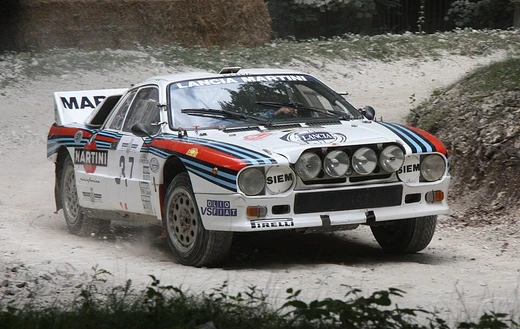
Group R
FIA production-derived rally regulations replacing Group A and Group N.

Group R is a set of regulations for production-derived rally cars, introduced from 2008 by the Fédération Internationale de l'Automobile as a replacement for Group A and Group N. It encompasses six classes—R1, R2, R3, R4, R5, and R-GT—each defined by weight, engine size, and powertrain, with provisions for supercharged engines and all-wheel drive.
- Introduced
- 2008
- Governing body
- Fédération Internationale de l'Automobile
- Classes
- R1, R2, R3, R4, R5, R-GT
- Replaced
- Group A and Group N
- R gt cup start
- 2015
- R5 class introduced
- 2013
- R4 kit supplier
- Oreca (selected January 2017)
Lore & Background
Group R regulations were gradually introduced from 2008, initially covering the R1, R2, and R3 classes for two-wheel-drive cars with atmospheric engines up to 2000cc. Supercharged engines were allowed only in the R3T (petrol) and R3D (diesel) sub-classes; from 2015, supercharged engines were permitted across R1, R2, and R3 with a 1.5 equivalency factor for displacement. Additional regulations in 2011 created the R4 and R-GT classes. R4 was conceived as an evolutionary step for previously-homologated Group N4 cars—turbocharged, all-wheel-drive production models—but no new models would be homologated under R4 regulations, with the FIA intending them to be replaced by bespoke kit cars. In January 2017, French racecar manufacturer Oreca was selected as supplier for R4 Kit cars, which have a standard engine, four-wheel-drive powertrain, and suspension. R-GT was introduced to allow Grand Touring cars from sports car racing to enter rallies. The R5 class, designed to replace Super 2000 cars, had its regulations introduced in 2013.
Reader's Guide
Group R's significance lies in its structured replacement of the Group A and Group N categories, providing a clear hierarchy for production-derived rally cars. The class system—from entry-level R1 to top-tier R5 and the specialized R-GT—allowed manufacturers to develop and homologate cars through VR extensions, which are kits of parts or complete cars. The World Rally Championship integrated these classes into support championships: R1, R2, and R3 contested WRC3 for two-wheel-drive cars from 2013 to 2018; specially-prepared R3T and later R2B cars were used in Junior WRC; R5 cars competed in WRC2 and later WRC3 in 2020 and 2021; and R-GT cars had their own FIA R-GT Cup from 2015 until it ceased at the end of 2022. The R4 class, though limited to existing Group N4 homologations, was intended to transition to Oreca-supplied kit cars. Cars homologated with national ASNs could compete at national level or, with FIA approval, in regional championships. Group R thus provided a comprehensive framework that balanced production origins with competitive evolution, influencing rallying globally.
Did You Know?
- The R-GT Cup for Grand Touring cars started in 2015 and ceased at the end of the 2022 competition.
- Supercharged engines were allowed in R1, R2, and R3 classes from 2015 with a 1.5 equivalency factor for displacement.
Origins & the Gradual Rollout
Group R emerged as the FIA's answer to the need for a modern production-derived rally category, phasing in from 2008 to eventually supplant the older Group A and Group N frameworks. Rather than a single overnight switch, the regulations arrived in deliberate waves. The initial 2008 package covered R1, R2, and R3, all restricted to two-wheel-drive cars with atmospheric engines capped at 2000 cc, while supercharged variants were confined to the R3T petrol and R3D diesel sub-classes. Three years later, in 2011, the FIA extended the structure with R4 and R-GT, the former serving as an evolutionary bridge for existing Group N4 turbocharged, all-wheel-drive machines. The final major addition, R5, arrived in 2013 with the explicit purpose of replacing the Super 2000 formula. This staggered introduction gave manufacturers, homologation authorities, and competitors time to adapt, while also allowing the FIA to refine rules between each successive wave.
Homologation Pathway & Technical Architecture
A defining feature of Group R is its layered homologation pathway. Before any car can compete under these rules, it must first be approved in Group A or, in certain cases, Group N. On top of that production base, the manufacturer then receives one or more VR extensions—packets of approved parts and modifications that can be sold as a kit or as a complete vehicle. This structure keeps the category tethered to road cars while permitting meaningful performance upgrades. The six classes, R1 through R5 plus R-GT, are further subdivided by weight, engine displacement, and powertrain type. A notable rule evolution came in 2015, when R1, R2, and R3 opened their doors to supercharged engines, provided the displacement is multiplied by a 1.5 equivalency factor. The R4 class, by contrast, was deliberately frozen: no new models could be homologated after 2013, as the FIA intended to phase it out in favor of the standardized R4 Kit cars.
Championship Integration Across the FIA Calendar
Group R was never designed as a standalone competition; its real purpose is to slot into the broader FIA rally championship architecture. Between 2013 and 2018, R1, R2, and R3 cars formed the backbone of the WRC3 Championship for two-wheel-drive machines, while specially prepared R3T and later R2B cars served in the Junior WRC. R5 cars, the direct successors to Super 2000, compete in WRC2 and also appeared in WRC3 during 2020 and 2021. Regional championships spanning Europe, Africa, Asia-Pacific, South America, and North America may field R5 alongside legacy Super 2000 and Group N production cars. The R-GT category, which had no dedicated championship before 2014, gained the FIA R-GT Cup in 2015, sharing events with the WRC and ERC calendars before the Cup concluded at the end of the 2022 season.
R4 Kit and R-GT: Two Specialized Paths
Two Group R classes follow distinctly different philosophies. R4 was conceived as a transitional home for turbocharged, all-wheel-drive production cars previously homologated under Group N4, but the FIA deliberately capped its future: no new models could be approved after 2013. Instead, the long-term solution was the R4 Kit project, a standardized package featuring a common engine, four-wheel-drive powertrain, and suspension. In January 2017, the French manufacturer Oreca was selected as the sole supplier of this kit, ensuring cost control and technical parity among competitors. R-GT, meanwhile, exists to bridge two worlds: it allows Grand Touring cars that normally compete in sports car racing to enter rally events. Before 2014, R-GT cars had no dedicated championship and could not score points outside the WRC. The creation of the R-GT Cup in 2015 gave these machines a proper competitive home, though the Cup ultimately ran through the 2022 season before ceasing operations.
Frequently Asked Questions
What is Group R?
Group R is a set of FIA regulations governing production-derived rally cars, introduced in 2008 to replace the older Group A and Group N categories. It defines six distinct classes based on factors like weight, engine displacement, and powertrain configuration.
What classes exist under Group R?
The classes range from R1 through R5, plus a dedicated R-GT category for grand touring vehicles. Each tier is distinguished by specific limits on engine size, vehicle weight, and whether supercharging or all-wheel drive is permitted.
When did Group R regulations come into effect?
The FIA introduced Group R starting in the 2008 season as the successor to Group A and Group N. The R5 class was added later, debuting in 2013, while the R-GT Cup series launched in 2015.
What did Group R replace and why?
Group R was designed by the FIA to succeed both Group A and Group N, consolidating production-based rally competition under a single regulatory framework. It gave manufacturers more flexibility with supercharged engines and all-wheel-drive layouts across its class structure.
Who governs Group R regulations?
The Fédération Internationale de l'Automobile (FIA) is the sole governing body responsible for establishing and updating Group R rules. These regulations apply to production-derived rally cars competing in FIA-sanctioned events worldwide.
More in Rally Cars, Part 4 1-24
Spotted an error? Know more?
Reader corrections go straight into our review queue. Suggest an edit · How this site is sourced