
Frequency allocation
Government designation of electromagnetic spectrum into regulated frequency bands.

Neøn · CC0
Frequency allocation, also known as spectrum allocation, is a key function of spectrum management. It involves governments, typically, designating and regulating portions of the electromagnetic spectrum into specific frequency bands. Because radio waves cross national borders, countries work to harmonize how these bands are assigned and standardized.
The International Telecommunication Union defines frequency allocation as the assignment of a given frequency band for use by one or more terrestrial or space radiocommunication services, or by the radio astronomy service, under specified conditions. This term is also used specifically in national frequency administration, alongside related terms.
Several organizations set standards for frequency allocation, including the International Telecommunication Union, the European Conference of Postal and Telecommunications Administrations, and the Inter-American Telecommunication Commission.
To improve spectrum harmonization, most service allocations are included in national Tables of Frequency Allocations and Utilisations, managed by each country’s administration. Allocations can be primary, secondary, or exclusive or shared, depending on national decisions. Military allocations follow the ITU Radio Regulations; in NATO countries, military mobile uses are governed by the NATO Joint Civil/Military Frequency Agreement.
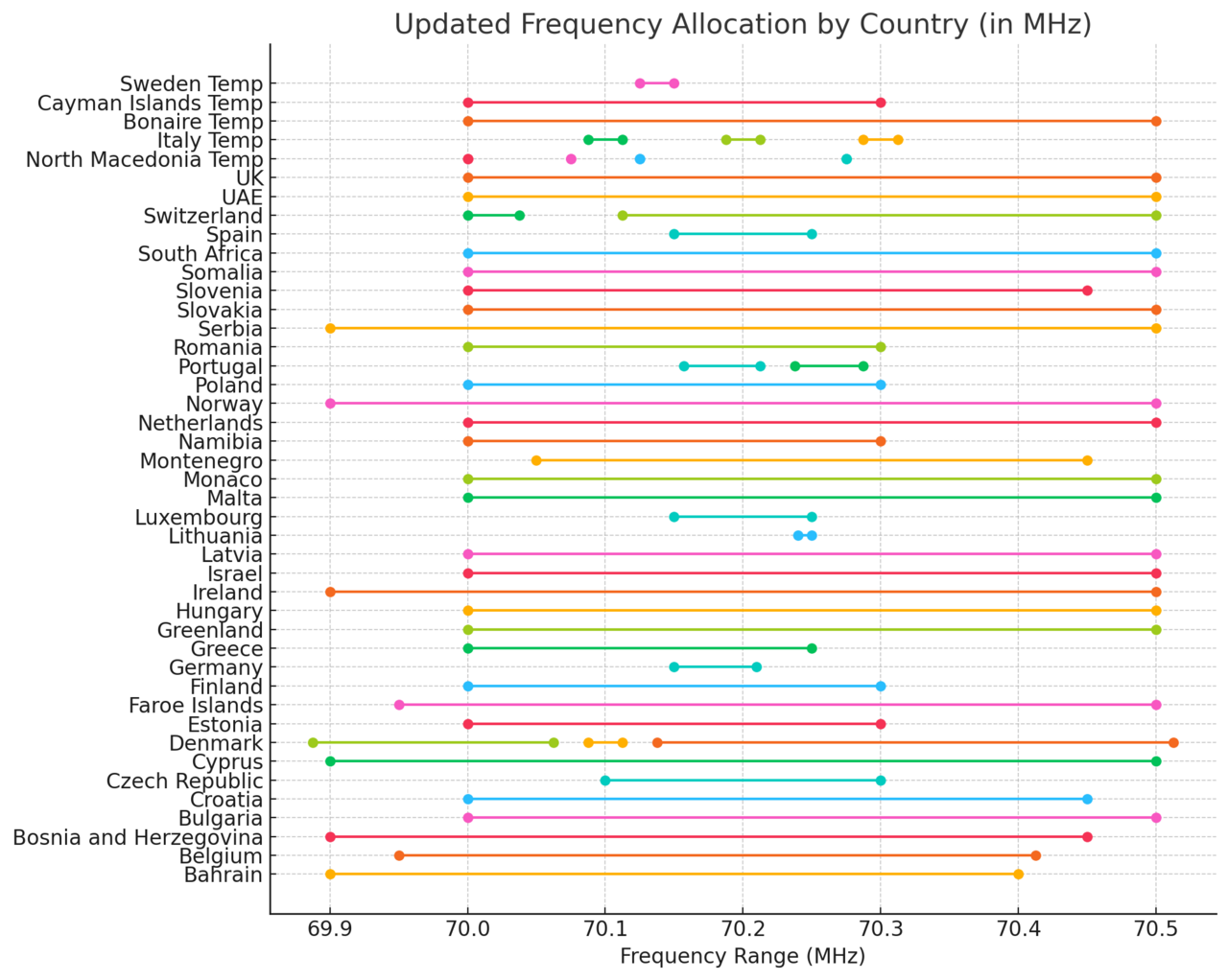
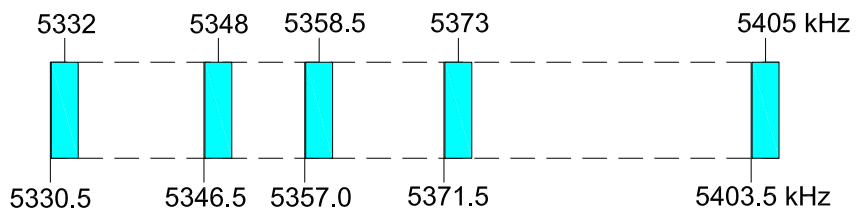
Some allocated bands, such as the amateur band from 1.8 to 29.7 MHz, contain gaps and are not continuous. The abbreviation BCB stands for broadcast band, used for commercial radio news and music broadcasts.
- Defining body
- International Telecommunication Union (ITU)
- Other standard-setting bodies
- European Conference of Postal and Telecommunications Administrations (CEPT), Inter-American Telecommunication Commission (CITEL)
- Allocation types
- primary, secondary, exclusive or shared utilization
- Military usage framework
- ITU Radio Regulations; in NATO countries, NATO Joint Civil/Military Frequency Agreement (NJFA)
Lore & Background
The International Telecommunication Union defines frequency allocation as being of 'a given frequency band for the purpose of its use by one or more terrestrial or space radiocommunication services or the radio astronomy service under specified conditions'. Frequency allocation is also a special term used in national frequency administration. Other related terms exist but are not detailed here.
To improve harmonisation in spectrum utilisation, most service allocations are incorporated in national Tables of Frequency Allocations and Utilisations within the responsibility of the appropriate national administration. Allocations are designated as primary, secondary, or exclusive or shared utilization, within the responsibility of national administrations.
Allocations of military usage are made in accordance with the ITU Radio Regulations. In NATO countries, military mobile utilizations are made in accordance with the NATO Joint Civil/Military Frequency Agreement (NJFA). Some bands listed (e.g., amateur 1.8–29.7 MHz) have gaps or are not continuous allocations. BCB is an abbreviation for broadcast band, for commercial radio news and music broadcasts.
Reader's Guide
Frequency allocation serves as a foundational element of spectrum management, ensuring that the finite electromagnetic spectrum is organized into designated bands for various radiocommunication services. The harmonization efforts led by bodies such as the International Telecommunication Union, the European Conference of Postal and Telecommunications Administrations, and the Inter-American Telecommunication Commission help reduce cross-border interference and promote efficient use of spectrum. National administrations implement these allocations through Tables of Frequency Allocations and Utilisations, which specify primary, secondary, exclusive, or shared usage rights. Military allocations follow the ITU Radio Regulations, with NATO countries additionally adhering to the NATO Joint Civil/Military Frequency Agreement. The existence of non-continuous allocations in bands such as the amateur 1.8–29.7 MHz range reflects the complex, negotiated nature of spectrum sharing. The designation of broadcast bands (BCB) for commercial radio news and music illustrates how allocation directly shapes public access to information and entertainment. Overall, frequency allocation provides the regulatory structure that enables diverse services—from radio astronomy to mobile communications—to coexist without destructive interference, while leaving room for national discretion in implementation.
Did You Know?
- In NATO countries, military mobile utilizations follow the NATO Joint Civil/Military Frequency Agreement (NJFA).
- Some bands, such as amateur 1.8–29.7 MHz, have gaps and are not continuous allocations.
Defining the Discipline
Frequency allocation, often called spectrum allocation, sits at the heart of spectrum management. It is the process by which the electromagnetic spectrum is divided into discrete frequency bands and those bands are formally designated for particular uses. In most countries, this task falls squarely within the purview of national governments, which act as the ultimate arbiters of who may transmit where and under what conditions. The International Telecommunication Union offers a precise legal definition: a frequency allocation is the assignment of a given band so that it may be used by one or more terrestrial or space radiocommunication services, or by the radio astronomy service, all operating under specified conditions. Beyond its role in international treaty language, the term also carries a narrower meaning in the day-to-day work of national frequency administrations, where it functions as a technical and regulatory category in its own right. In essence, frequency allocation transforms the invisible, continuous electromagnetic spectrum into an organized, rule-governed resource that societies can share without chaos.
Cross-Border Coordination and the Harmonization Imperative
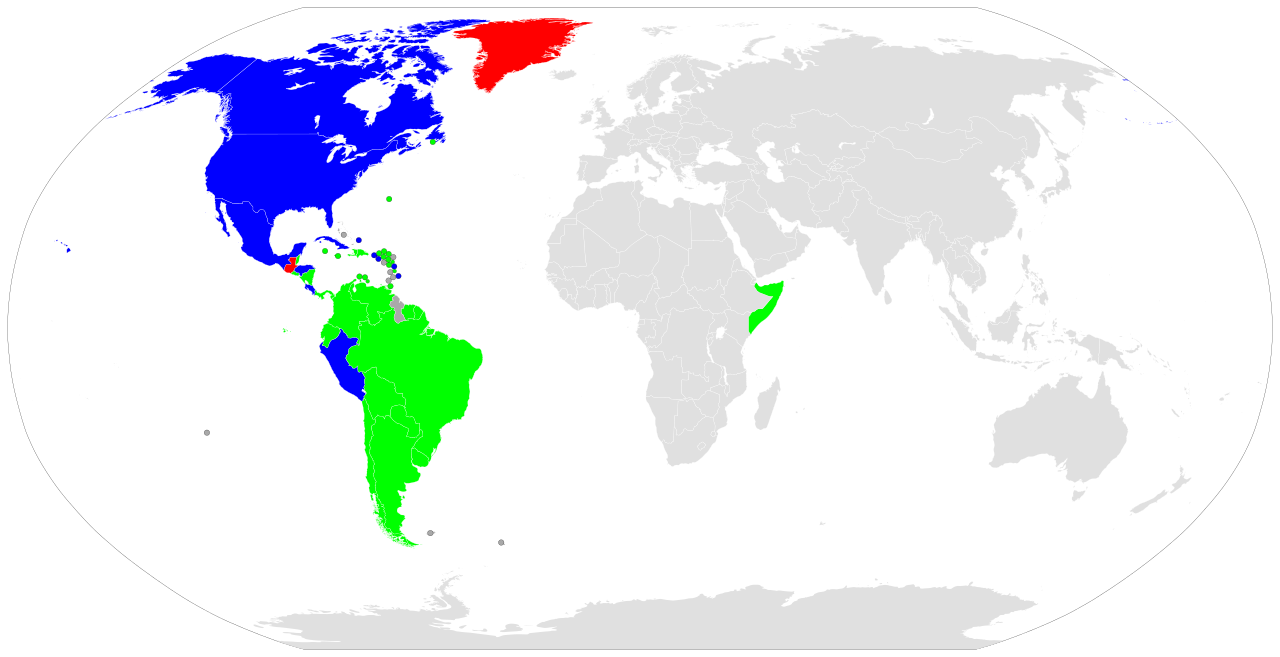
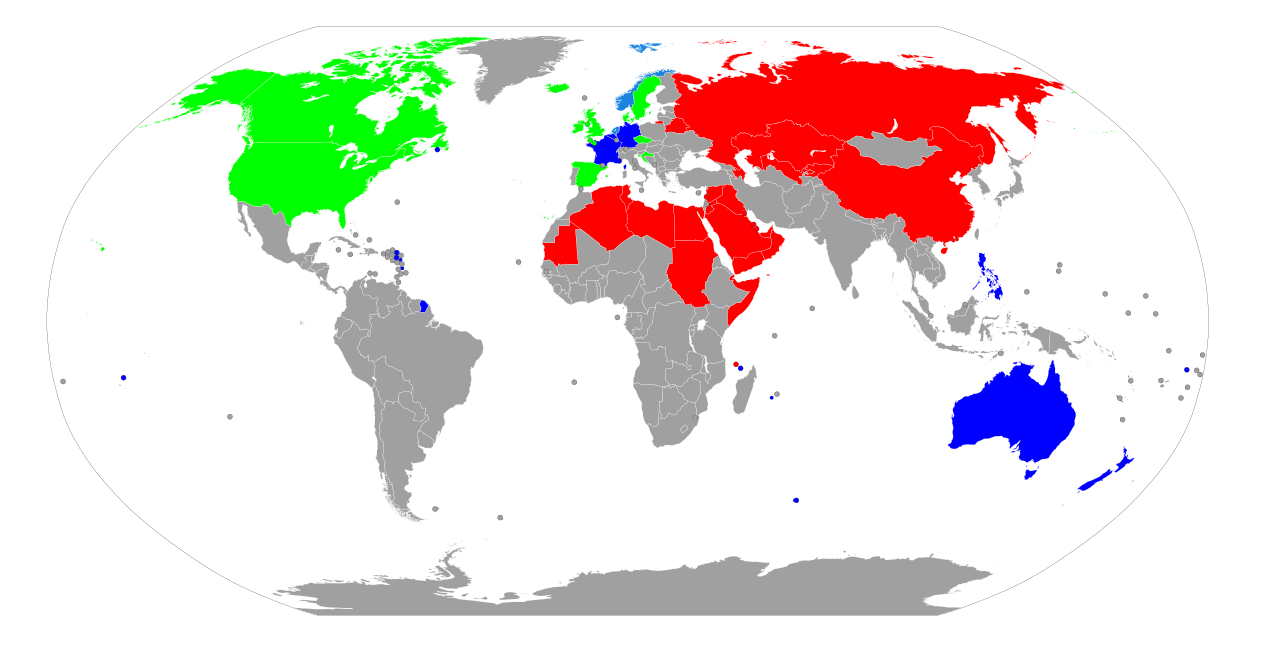
A fundamental challenge in spectrum management is that radio waves do not respect political borders. A signal transmitted in one country can easily bleed into a neighboring nation's airspace, creating interference that no single government can unilaterally prevent. Recognizing this reality, governments worldwide have pursued the harmonization of radio-frequency band allocations and the standardization of how those bands are used. Several international and regional bodies play a central role in this coordination effort. The International Telecommunication Union sets global benchmarks, while the European Conference of Postal and Telecommunications Administrations and the Inter-American Telecommunication Commission work to align practices within their respective regions. To make these international agreements actionable on the ground, most service allocations are written into national Tables of Frequency Allocations and Utilisations, maintained under the authority of the appropriate national administration. This layered system—global, regional, then national—ensures that a radio operator in one country can reasonably expect the same band to serve a similar purpose in another, reducing the risk of costly and disruptive interference across borders.
Primary, Secondary, and the Military Dimension
Not all frequency allocations carry equal weight. Within national Tables of Frequency Allocations and Utilisations, bands are classified according to their priority and sharing arrangements. A primary allocation grants a service first call on the band, while a secondary allocation permits use only when it does not cause harmful interference to primary users. Allocations may also be designated as exclusive, meaning a single service holds sole rights to the band, or shared, in which case multiple services must coexist under defined conditions. All of these designations remain the responsibility of national administrations. The military dimension adds another layer of complexity. In general, military spectrum usage must conform to the ITU Radio Regulations, the same framework that governs civilian services. However, among NATO member states, an additional agreement—the NATO Joint Civil/Military Frequency Agreement, or NJFA—specifically governs military mobile utilizations. This dual-track approach ensures that defense communications can operate reliably while still fitting within the broader international regulatory architecture that keeps the spectrum orderly for all users.
Band Structure, Gaps, and Everyday Services
The practical layout of the spectrum is far from a simple, unbroken sequence of assigned bands. Some allocations contain internal gaps and are not continuous. A well-known example is the amateur radio service, which occupies the 1.8 to 29.7 MHz range but does so in discrete chunks rather than one solid block, leaving spaces between sub-bands where other services may operate. At the other end of the spectrum, the abbreviation BCB designates the broadcast band, the portion of the electromagnetic spectrum reserved for commercial radio carrying news and music to the general public. These varied structures—continuous, gapped, exclusive, shared—are all catalogued in national Tables of Frequency Allocations and Utilisations, which in turn draw upon the international framework established in the ITU Radio Regulations, particularly the table of frequency allocations organized by ITU Region found in Volume 1, Article 5. The result is a patchwork of bands, each with its own rules, priorities, and permitted services, collectively forming the regulatory map that every radio operator, broadcaster, and government agency must navigate.
Gallery
Frequently Asked Questions
What is Frequency allocation?
Frequency allocation is the process by which governments carve the electromagnetic spectrum into designated bands and assign those bands to specific radiocommunication or radio-astronomy services. It is the foundational step in spectrum management that determines who gets to use which slice of the airwaves and under what conditions.
Who sets the rules for Frequency allocation?
The International Telecommunication Union (ITU) acts as the primary defining body for how bands are assigned globally. Regional standard-setting groups such as CEPT and CITEL layer on additional harmonization so that neighboring countries don't step on each other's frequencies.
What types of Frequency allocation exist?
Allocations can be designated as primary, secondary, exclusive, or shared, depending on how a band is opened up to services. A primary allocation grants a service priority access, while secondary or shared arrangements let multiple services coexist under specific operational conditions.
How does Frequency allocation handle military spectrum use?
Military usage of the spectrum is governed under the ITU Radio Regulations framework worldwide. In NATO member states, the Joint Civil/Military Frequency Agreement (NJFA) adds a further coordination layer so defense and civilian operators can share bands without clashing.
Why does Frequency allocation matter across national borders?
Radio waves ignore political boundaries, so if two adjacent countries assign the same band to incompatible services, their signals will interfere with one another. International harmonization of allocations is therefore essential to keep every service—broadcast, mobile, satellite, or scientific—functioning reliably.
More in Radio Spectrum 1-24
Spotted an error? Know more?
Reader corrections go straight into our review queue. Suggest an edit · How this site is sourced