
Extremely low frequency
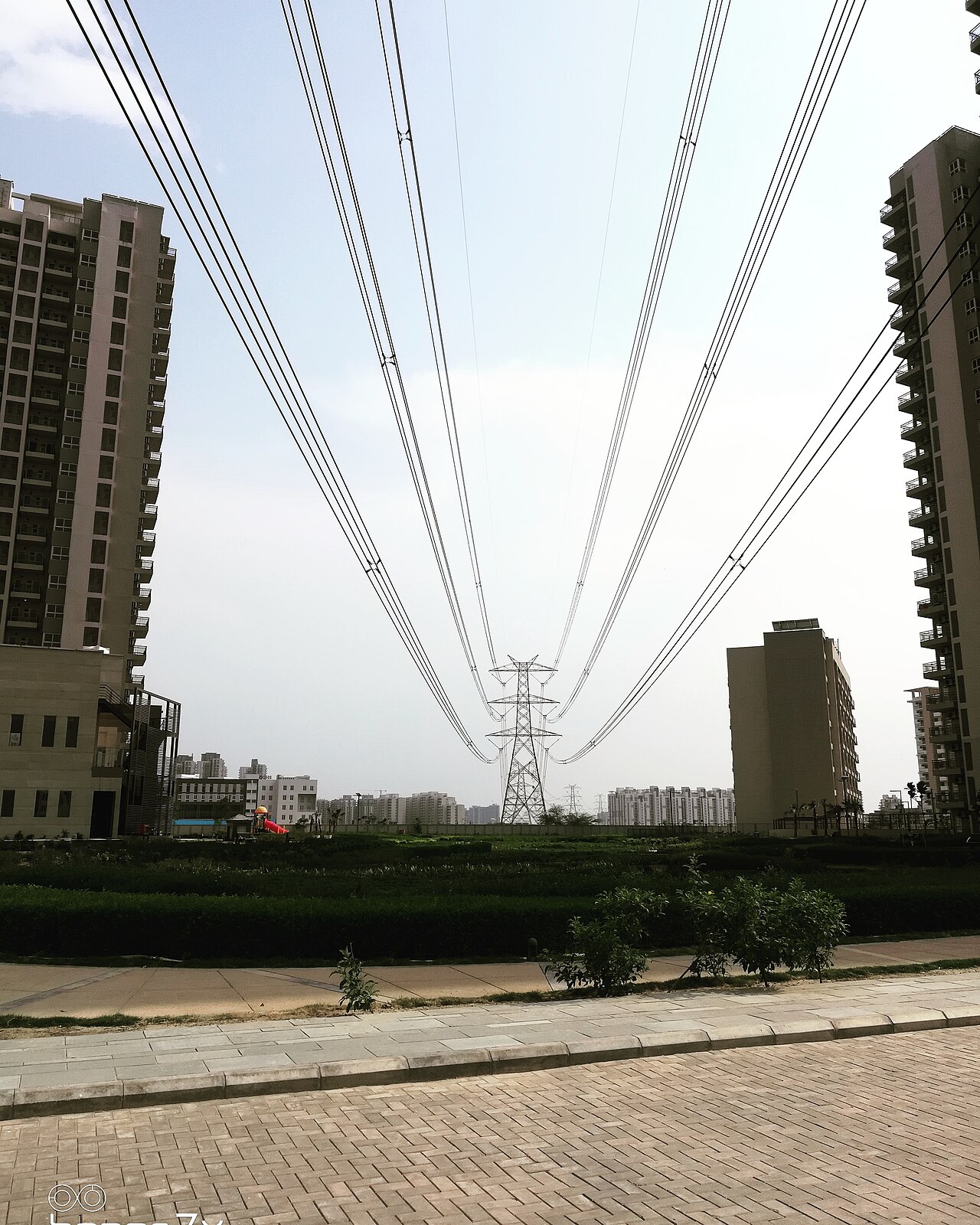
ELF waves penetrate seawater and travel worldwide for submarine communication.

Kiranbali125 · CC BY-SA 4.0
Extremely low frequency (ELF) is the International Telecommunication Union’s term for radio waves with frequencies between 3 and 30 Hz, which have wavelengths ranging from 100,000 to 10,000 kilometers. In atmospheric science, the definition is often broadened to cover 3 Hz to 3 kHz, while in magnetosphere science, oscillations below about 3 kHz are classified as ULF, a different band.
Natural sources of ELF waves include lightning and disturbances in Earth’s magnetic field, making them a focus for atmospheric researchers. Building antennas that can transmit such long waves is difficult, so only a few human-made communication systems use ELF. Because these waves can pass through seawater, they are useful for contacting submerged submarines. A handful of nations—the United States, Russia, India, and China—have built military ELF transmitters for this purpose. These transmitters use huge grounded wire antennas, 15 to 60 kilometers long, driven by megawatts of power. The U.S. facilities operated from 1985 to 2004 but are no longer in use.
Different fields have their own definitions. Some medical journals refer to ELF magnetic fields at 50 Hz or 50–80 Hz. NASA describes ELF as non-ionizing radiation from 0 to 300 Hz. The World Health Organization uses the term for extremely low frequency electric and magnetic fields.
ELF waves have extremely long wavelengths, so they can bend around large obstacles, travel over mountains and the horizon, and follow Earth’s curvature. They propagate long distances through a ground–ionosphere waveguide. The D layer, a layer of charged particles about 60 kilometers up at the bottom of the ionosphere, reflects ELF waves. The space between Earth’s conductive surface and this conductive layer acts like a parallel-plate waveguide, confining the waves and allowing them to travel far without escaping into space. Unlike VLF waves, the D layer’s height is much less than one ELF wavelength, so only the transverse electromagnetic mode (TEM) with vertical electric and horizontal magnetic fields can propagate. ELF waves lose only 1 to 2 dB per 1,000 kilometers, meaning a single transmitter could potentially reach anywhere on the planet. They also travel well through lossy materials like earth and seawater, which would block higher-frequency radio waves.
- Frequency range
- 3–30 Hz (ITU); 3 Hz–3 kHz (alternative atmospheric science definition)
- Wavelength range
- 100,000 to 10,000 kilometers
- Fundamental schumann resonance
- ~7.83 Hz
- Higher schumann resonances
- 14.1, 20.3, 26.4, 32.4 Hz
- Attenuation rate
- 1–2 dB per 1000 km
- Notable transmitter locations
- Clam Lake, Wisconsin; Republic, Michigan; Murmansk, Kola Peninsula; INS Kattabomman, India
Lore & Background
ELF radio waves are generated by lightning and by natural disturbances in Earth's magnetic field, making them a subject of research by atmospheric scientists. Because of the difficulty of building antennas that can radiate such long waves, ELF waves have been used in only very few human-made communication systems. ELF waves can penetrate seawater, which makes them useful in communication with submarines, and a few nations have built military ELF transmitters to transmit signals to their submerged submarines. Those transmitters consist of huge grounded wire antennas (ground dipoles) that are 15–60 km long, and are driven by megawatts of power. The United States, Russia, India, and China are the only countries that are known to have constructed these ELF communication facilities. The U.S. facilities were used between 1985 and 2004, but are now decommissioned.
Due to their extremely long wavelength, ELF waves can diffract around large obstacles, are not blocked by mountain ranges or the horizon, and can travel around the curvature of the world. ELF and VLF waves propagate long distances via a ground–ionosphere waveguide mechanism. Earth is surrounded by a layer of charged particles at an altitude of about 60 km called the D layer, which reflects ELF waves. The space between the conductive Earth's surface and the conductive D layer acts as a parallel-plate waveguide which confines ELF waves, allowing them to propagate long distances without escaping into space. ELF waves have extremely low attenuation of 1–2 dB per 1000 km, giving a single transmitter the potential to communicate worldwide.
The attenuation of ELF waves is so low that they can travel completely around the world several times before decaying to negligible amplitude, and thus waves that are radiated from sources in opposite directions circumnavigating the world on a great circle path interfere with each other. At certain frequencies, these oppositely directed waves are in phase and add, causing standing waves. The closed spherical ground–ionosphere cavity acts as a huge cavity resonator, enhancing ELF radiation at its resonant frequencies, called Schumann resonances. The fundamental Schumann resonance is at approximately 7.83 Hz, the frequency at which the wavelength equals the circumference of Earth, and higher harmonics occur at 14.1, 20.3, 26.4, and 32.4 Hz. Lightning strikes excite these resonances, causing the ground–ionosphere cavity to 'ring' like a bell, resulting in a peak in the noise spectrum at these frequencies.
Reader's Guide
ELF's significance lies in its unique ability to penetrate seawater to the operating depths of submarines, enabling one-way communication with submerged vessels when higher-frequency radio waves are blocked. This property has driven a few nations—the United States, Russia, India, and China—to construct massive ELF transmitters using ground dipole antennas 15–60 km long, powered by megawatts. The U.S. Navy's Clam Lake, Wisconsin, facility (with a second at Republic, Michigan) operated from 1985 to 2004 before decommissioning. Russia's ZEVS transmitter near Murmansk and India's facility at INS Kattabomman remain active; China reportedly built the world's largest ELF facility roughly the size of New York City. The legacy of ELF is constrained by its extremely low data rate—a few characters per minute—and the impracticality of installing a sufficiently large antenna on a submarine, limiting use to ordering a submarine to rise to shallow depth for other communication. In atmospheric science, ELF's natural generation by lightning and its role in Schumann resonances provide a tool for monitoring global thunderstorm activity and, as suggested by a 1993 correlation, possibly global warming. The alternative definitions used by medical journals, NASA, and the World Health Organization (referring to 50–80 Hz or 0–300 Hz fields) reflect the term's broader application to non-ionizing radiation and electromagnetic fields, distinct from the ITU radio band.
Did You Know?
- ELF waves can penetrate seawater deeply, allowing communication with submarines at operating depths.
- The fundamental Schumann resonance occurs at approximately 7.83 Hz, where the wavelength equals Earth's circumference.
- The U.S. Navy's ELF transmitters at Clam Lake, Wisconsin, and Republic, Michigan, were used between 1985 and 2004.
Defining the Band and Its Many Meanings
ELF is the ITU's label for radio waves between 3 and 30 Hz, with wavelengths stretching from 100,000 down to 10,000 kilometers. However, this single acronym carries different meanings across scientific disciplines. Atmospheric scientists often extend the range up to 3 kHz, while magnetosphere researchers classify oscillations below roughly 3 kHz as ULF pulsations, creating yet another distinct band. In medical literature, peer-reviewed articles use the phrase "ELF magnetic fields" to describe 50 Hz or 50-to-80-Hz exposures. U.S. government bodies such as NASA frame ELF as non-ionizing radiation spanning 0 to 300 Hz, and the World Health Organization applies the term to both electric and magnetic field contexts. This multiplicity of definitions means that any discussion of ELF must first clarify which framework is in play, since the same three letters can refer to ranges differing by orders of magnitude depending on the audience and the discipline doing the talking.
A Global Waveguide and the Ringing Earth
Because ELF wavelengths are so vast, these waves diffract around mountains, the horizon, and even the curvature of the planet. They propagate through a natural waveguide formed between Earth's conductive surface and the D layer of the ionosphere, a charged-particle sheet sitting roughly 60 kilometers overhead. This parallel-plate structure traps the waves and keeps them from escaping into space. Since the D-layer height is far smaller than one ELF wavelength, only a single transverse electromagnetic mode in vertical polarization can propagate. Attenuation is remarkably low—just 1 to 2 dB per 1,000 kilometers—meaning a single transmitter could, in principle, reach every corner of the globe. This minimal loss has a striking consequence: waves sent in opposite directions can circle the planet multiple times before fading, and where they meet in phase they reinforce into standing waves. These are the Schumann resonances, predicted by Winfried Otto Schumann in 1952 and detected in the 1950s. The fundamental resonance sits near 7.83 Hz, with harmonics at 14.1, 20.3, 26.4, and 32.4 Hz. Lightning excites these modes, making the ground-ionosphere cavity ring like a bell and providing a natural monitor of global thunderstorm activity.
Talking to Submarines Beneath the Waves
Seawater's electrical conductivity blocks most higher-frequency radio signals, leaving submerged submarines effectively deaf and mute. ELF waves, however, penetrate deep enough to reach operating depths, making them the only practical radio link for vessels hidden underwater. Only four nations—United States, Russia, India, and China—are known to have built the enormous infrastructure this requires. The antennas are grounded wire dipoles stretching 15 to 60 kilometers, driven by megawatts of power. The U.S. Navy commissioned its first such facility in 1982, pairing transmitters at Clam Lake, Wisconsin, and Republic, Michigan; the system operated until 2004 and is now decommissioned. Russia's ZEVS transmitter sits at Murmansk on the Kola Peninsula, while India maintains a facility at INS Kattabomman to serve its Arihant-class and Akula-class submarines. In 2018, reports emerged that China had completed the world's largest ELF installation, roughly the size of New York City, to maintain contact with its submarine fleet without forcing them to surface. The trade-off is severe: data rates are limited to a few characters, making ELF a slow but indispensable lifeline for undersea warfare.
Born from Lightning and Magnetic Storms
ELF radiation is not merely a human invention; it is a natural phenomenon generated by lightning discharges and by disturbances in Earth's magnetic field. This makes the band a primary subject of atmospheric research. Because the ground-ionosphere cavity sustains these waves with very little loss, the resulting Schumann resonance peaks in the noise spectrum serve as a real-time gauge of global thunderstorm activity. The fundamental resonance at approximately 7.83 Hz corresponds to a wavelength equal to Earth's circumference, and higher harmonics follow at 14.1, 20.3, 26.4, and 32.4 Hz. Schumann's 1952 theoretical prediction, based on a simplified model of perfectly conducting walls, yielded the formula f_n = 7.49 times the square root of n(n+1) in hertz, though actual frequencies shift slightly because the real ionosphere is not a perfect conductor. Beyond weather monitoring, the 1993 work of E. R. Williams demonstrated a correlation between the resonance frequency and tropical air temperatures, suggesting the resonances could double as a proxy for tracking global warming. A band too slow for conventional radio has thus become a sensitive instrument for reading the planet's electrical and climatic state.
Gallery

Frequently Asked Questions
What frequency range does ELF actually cover?
The ITU defines ELF as radio waves between 3 and 30 Hz, corresponding to wavelengths from 100,000 km down to 10,000 km. Some atmospheric scientists broaden the band up to 3 kHz, while magnetosphere researchers label oscillations below roughly 3 kHz as ULF instead.
What are the Schumann resonances and why do they matter in ELF?
The fundamental Schumann resonance sits near 7.83 Hz, with higher harmonics at 14.1, 20.3, 26.4, and 32.4 Hz. They are natural standing waves trapped between Earth's surface and the ionosphere, making them the signature phenomenon of the ELF band.
How does ELF let submarines communicate while submerged?
ELF waves penetrate seawater and can propagate around the globe, so a surface station can deliver a slow, low-bandwidth message to a vessel far below the surface. Attenuation is modest—roughly 1–2 dB per 1,000 km—which is what makes the trick possible despite the enormous wavelengths.
Where are the most famous ELF transmitter installations?
Notable sites include Clam Lake in Wisconsin and Republic in Michigan (both US Navy), Murmansk on the Kola Peninsula (Soviet/Russian), and INS Kattabomman in India. These are among the very few places where infrastructure large enough for 3–30 Hz signals was ever constructed.
Why is it so hard to build an ELF antenna?
At 3 Hz the free-space wavelength stretches to about 100,000 km, so a conventional antenna would need to be a sizable fraction of that length. Engineers sidestep the problem by using the Earth itself as part of the radiating structure, which is why the few working sites are spread across continents and coastlines.
More in Radio Spectrum 1-24
Spotted an error? Know more?
Reader corrections go straight into our review queue. Suggest an edit · How this site is sourced