
800 MHz frequency band
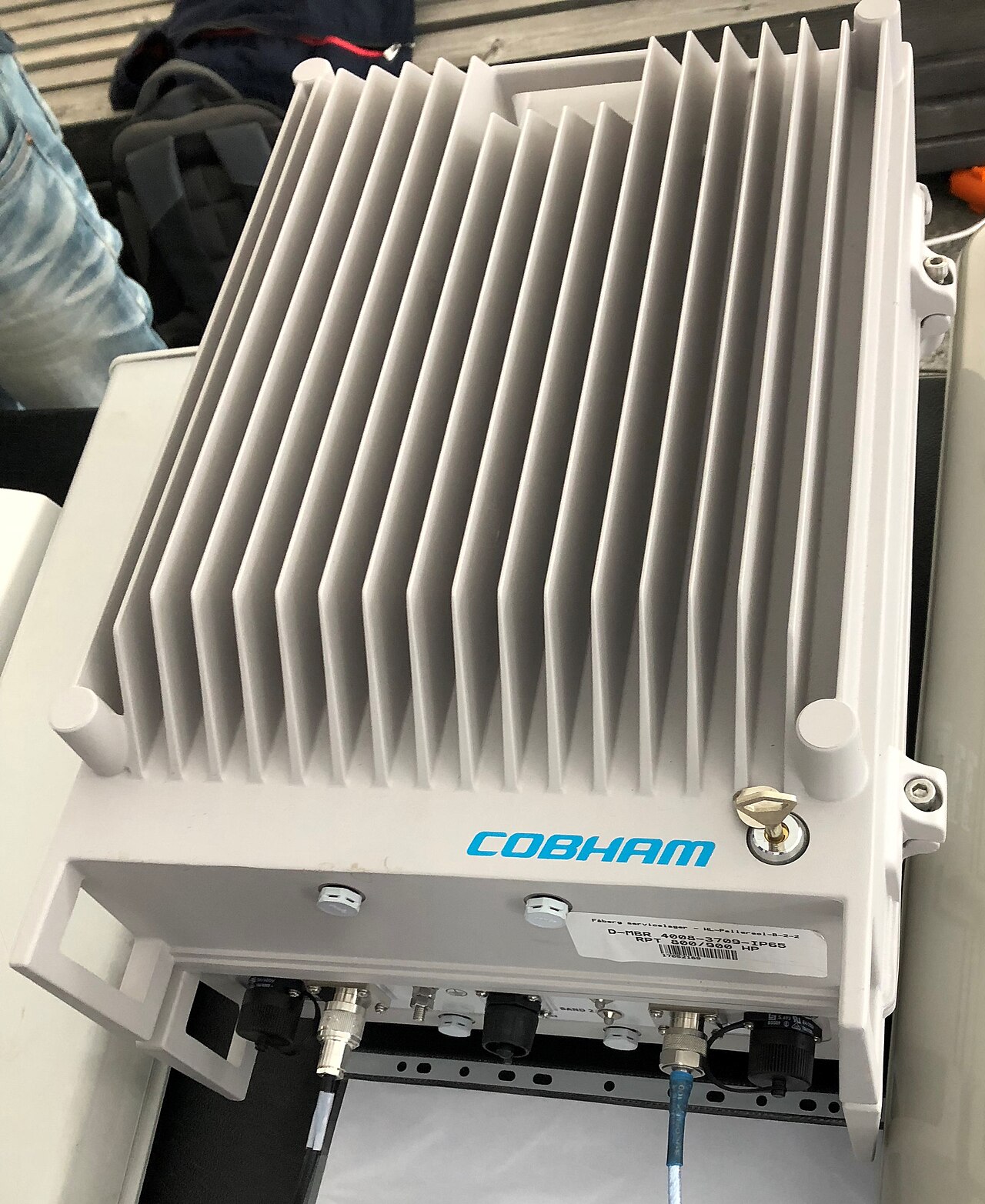
Former TV band reallocated for mobile broadband in Europe.

Bjoertvedt · CC BY-SA 4.0
The 800 MHz frequency band is a portion of the electromagnetic spectrum encompassing 790–862 MHz. It is part of UHF Bands IV and V (470–862 MHz) and was originally allocated by the ITU to Broadcasting as the primary user in Region 1, used for analogue television before many countries transitioned to digital terrestrial television. This band is also referred to as the 'digital dividend' spectrum.
- Frequency range
- 790–862 MHz
- Part of
- UHF Bands IV and V (470–862 MHz)
- Itu primary allocation
- Broadcasting in Region 1
- Corresponding uhf channels
- 61–69
- European approval for reallocation
- May 2010
- Japanese approval for reallocation
- 2012
- Availability for wireless broadband in e
- from 2013
Lore & Background
The 800 MHz band was historically used for analogue television broadcasting and later for digital terrestrial television (DTT). In many territories, it also supported Services Ancillary to Broadcasting (SAB) or Services Ancillary to Programme Making (SAP), now often referred to as PMSE (Programme Making and Special Events), including professional wireless microphones, radio talkback systems, and wireless monitor systems. The European Parliament approved a change of use in May 2010, and Japan followed in 2012, making the band available for purposes other than broadcasting, such as mobile broadband. From 2013, the band could be used to deliver wireless broadband services in Europe.
Interference problems have been reported. Some claim that insufficient interference studies were conducted in the EU. The RF chain in TV equipment was designed to receive 470–862 MHz (EU channels 21–69) and was not built to expect non-TV signals in that range. Due to limited guard bands, LTE 800 base station signals may cause interference to DTT, particularly on EU channels 59 and 60. Strong LTE base station signals can cause overdrive in antenna amplifiers and DTT tuners, leading to pixelation, sound drop-outs, or complete loss of picture and sound. Overload in the RF chain affects all signals passing through the device while overloaded.
Interference sources include both LTE base stations and mobile terminals (handsets, tablets, dongles) that may be close to TV equipment. Base stations may be far away but can be in the beam of a TV antenna or adjacent to it, especially in communal antenna systems in apartments, hotels, schools, and offices. In the UK, the organisation Digital Mobile Spectrum Limited (DMSL), known as 'at800', was set up to mitigate interference from LTE 800 services to TV reception.
Reader's Guide
The 800 MHz band's significance lies in its transition from a broadcasting-only allocation to a shared resource for mobile broadband, a shift that began in Europe in 2010 and expanded globally. This reallocation, part of the 'digital dividend', freed valuable spectrum for wireless services while creating technical challenges for existing TV reception. The band's proximity to frequencies used by low-power radio devices (862–870 MHz, sometimes called 'Channel 70') and the 868 MHz band (868–870 MHz) means that LTE 800 transmissions can interfere with cordless audio devices, assistive listening devices, wireless microphones, thermostats, fire systems, burglar systems, and DIN-transceivers. The interference issues highlight the difficulties of repurposing spectrum without adequate guard bands and the need for mitigation measures, such as those undertaken by at800 in the UK. The band's legacy includes both enabling mobile broadband expansion and prompting ongoing technical and regulatory efforts to manage coexistence with legacy services.
Did You Know?
- The 800 MHz band corresponds to UHF channels 61–69 in Europe.
- The European Parliament approved the change of use of the 800 MHz band in May 2010.
- Strong LTE 800 base station signals can cause overdrive in TV antenna amplifiers and tuners, leading to pixelation or complete loss of picture and sound.
- The frequency band 862–870 MHz, sometimes called 'Channel 70', is used by low-power radio devices such as cordless headphones and wireless microphones.
The Architecture of Amateur Spectrum Governance
Amateur radio frequency allocation operates under a layered regulatory system. At the global level, the International Telecommunication Union oversees how much spectrum is reserved for amateur transmissions, while individual national telecommunication authorities handle the specifics of how those bands are used within their borders. This creates a two-tier structure: international agreements establish the broad frequency ranges available to amateurs, and national regulations determine the finer details of access and operation. Within any given frequency range, there is a meaningful distinction between a band allocation and a bandplan. The allocation defines the frequency boundaries and is typically set through international treaties or national law. The bandplan, by contrast, describes which transmission modes—voice, Morse code, radioteletype, or digital data—are appropriate at specific points within the band. While bandplans can be mandated by regulation, they are most often the product of informal consensus among operators themselves. Because allocations differ between ITU regions and from country to country, an amateur in one nation may find certain frequencies entirely unavailable or subject to usage restrictions that would not apply to a licensee elsewhere. This geographic variability means that the same nominal band can carry very different practical implications depending on where the operator is located.
The 160-Metre Top Band as a Propagation Challenge
The 160-metre band, spanning 1800 to 2000 kHz, occupies a peculiar position in amateur radio. Although it is often grouped with the shortwave bands, it actually sits near the top of the medium frequency range, just above the commercial AM broadcast band. For many years it held the distinction of being the longest-wavelength band available to amateurs, earning the enduring nickname the top band. This band is widely regarded as a technical challenge for operators. Long-distance propagation is notably more difficult here than on higher-frequency bands because of increased absorption by the D layer of the ionosphere. As a result, meaningful DX contacts tend to occur only during nighttime hours, and even then the band can be plagued by significant atmospheric noise, particularly during summer months when thunderstorm activity peaks. Historically, the 160-metre allocation was shared with the Loran-A radionavigation system, which has since become largely defunct. Allocations in this band vary widely from country to country, reflecting the complex interplay of legacy services and modern amateur needs. For operators willing to accept the propagation limitations, 160 metres offers a unique and demanding operating experience that rewards patience and technical skill.
The 60-Metre Band: A Modern Addition with Channel Discipline
The 60-metre band, centered around 5 MHz, represents one of the more recent additions to the amateur radio spectrum. Initially available in only a handful of countries—including the United States, United Kingdom, Ireland, Norway, Denmark, and Iceland—it has been gradually expanding to more nations. In most jurisdictions, the allocation is divided into discrete channels rather than being a continuous block, and operators may need to file a special licensing request to gain access. In the United States, five channels, each 2.8 kHz wide, are centered on 5.332, 5.348, 5.368, 5.373, and 5.405 MHz. Voice operation is generally conducted in upper sideband mode, which is mandatory in the U.S., and both the U.S. and Canada permit 100 watts of output in the currently available channels. A notable quirk: because most SSB radios display the suppressed carrier frequency, operators in USB mode must set their dials 1.5 kHz lower than the listed center frequencies. The 2015 ITU World Radiocommunication Conference approved a new worldwide allocation of 5.351.5 to 5.366.5 MHz on a secondary basis, capping amateur stations at 15 watts EIRP, though some locations permit up to 25 watts. This international expansion underscores the band's growing importance in the amateur community.
WARC Bands and the Strategic 30-Metre Allocation
The 30-metre band, a mere 50 kHz slice between 10.100 and 10.150 MHz, is one of several so-called WARC bands. The name traces back to the 1979 World Administrative Radio Conference, which carved these newer allocations out of the shortwave spectrum specifically for amateur use. Because the band is shared with non-amateur services, strict mode restrictions apply: in the United States, only data, RTTY, and Morse code are permitted, with a maximum of 200 watts PEP, and voice transmission is outright prohibited. In a small number of countries, the band is not released for amateur use at all. Despite its narrowness, 30 metres occupies a strategically valuable position in the center of the shortwave spectrum, offering significant long-distance communication opportunities across all phases of the solar cycle. This makes it particularly attractive for operators seeking reliable DX regardless of solar conditions. The 17-metre and 15-metre bands share similar WARC heritage, with the 17-metre band spanning 18.068 to 18.168 MHz and exhibiting propagation characteristics comparable to 20 metres but with greater sensitivity to solar activity. Notably, amateur radio contests are not conducted on any of the WARC bands, setting them apart from the more traditional shortwave allocations in terms of organized competitive activity.
Gallery
Frequently Asked Questions
Who is 800 MHz frequency band?
The 800 MHz band is a slice of the UHF spectrum covering 790 to 862 MHz, nested inside the larger UHF Bands IV and V (470–862 MHz). The ITU originally designated it as a primary allocation for Broadcasting in Region 1, and it maps to UHF channels 61 through 69.
What are 800 MHz frequency band's powers/role?
Its standout trait is strong propagation and deep building penetration, which made it a workhorse for analogue TV and later digital terrestrial television. The ITU's original primary assignment to Broadcasting in Region 1 cemented its role as a backbone of over-the-air TV delivery for decades.
Why is 800 MHz frequency band important?
Because of its low UHF frequency, it delivers far better range and indoor coverage than higher mobile bands, making it a highly sought-after asset for 4G and 5G networks. Its shift from television to mobile broadband is widely regarded as one of the most consequential spectrum repurposings in telecom history.
What 'family' does 800 MHz frequency band belong to?
It sits at the upper end of UHF Bands IV and V (470–862 MHz), specifically occupying channels 61–69. Historically it was grouped with other UHF broadcasting allocations before being carved out and reassigned to mobile services across Europe and Japan.
More in Radio Spectrum 1-24
Spotted an error? Know more?
Reader corrections go straight into our review queue. Suggest an edit · How this site is sourced