Tyco Toys
From model trains to rugged RC cars.

Tyco Toys started out as a small model boat and motor company in New Jersey in the 1920s, founded by John Tyler and Jim Thomas. During World War II, the company paused its train production to make precision equipment for the military, earning an award for excellence. After the war, it returned to model trains and eventually shifted its focus to toys for younger children, selling through discount stores and toy shops. The Tyco name first appeared in 1957 on a line of ready-to-run trains.
In 1970, the company was sold to Consolidated Foods, and manufacturing moved to Hong Kong. By the 1970s, interest in model trains was fading, so Tyco diversified into other toys. It introduced electric truck sets and, in 1984, a brick-building system called Super Blocks that was compatible with Lego. Lego sued, but Tyco won the case in 1987, though with restrictions on marketing.
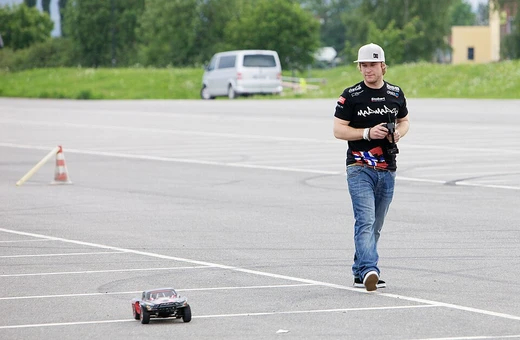
Tyco went public in 1986. That same year, it partnered with the Japanese firm Taiyo to launch a new line of radio-controlled cars with powerful motors and rugged suspensions. The RC line quickly grew to dominate the company’s catalog. Tyco also bought the View-Master Ideal Group in 1989, adding View-Master viewers, Magna Doodle, and Ideal dolls to its lineup. In the early 1990s, the company’s stock suffered due to self-serving investments by its chairman, Benson Seltzer, leading to a shareholder lawsuit. Seltzer and his sons left the company in 1991, and the stock price jumped 11% on the news.
Mattel acquired Tyco in 1997, turning it into one of its brands.
- Founded
- 1926 as Mantua Metal Products
- Founders
- John Tyler and Jim Thomas
- Headquarters
- Mount Laurel, New Jersey (by the mid-1990s)
- Acquisition by mattel
- 1997
- 1986 rc revenue
- $87.7 million
- 1992 sales
- $769 million
- 1995 revenue
- $709.1 million
Lore & Background
Tyco Toys originated as Mantua Metal Products in 1926, producing model boats and electric motors in Mantua, New Jersey. The company moved to Woodbury Heights, New Jersey in 1933 and began selling its own HO scale model trains by 1937. During World War II, it manufactured precision measuring and mapping equipment for the U.S. Army and Navy, receiving the Army-Navy 'E' Award in 1945. After the war, it returned to model railroading. In 1953, Tyler Manufacturing Company was formed to focus on ready-to-run trains for younger children, and by 1957 the Tyco nameplate was used for its train line. In 1967, Mantua and Tyler Manufacturing merged to create Tyco Industries.
In the 1970s, the company was sold to Consolidated Foods, moved manufacturing to Hong Kong, and later relocated to Mount Laurel, New Jersey. As interest in model trains waned, Tyco diversified into other toys, including the US-1 Trucking line, Super Blocks (which faced a lawsuit from Lego), and Dino-Riders action figures. In 1986, Tyco became a publicly traded company and revamped its RC brand by teaming with Taiyo to produce radio-controlled cars with more powerful motors and dynamic suspensions, starting with five models including the Turbo Hopper. By 1988, 22 pages of the company's catalog were devoted to Tyco R/C toys.
Tyco acquired the View-Master Ideal Group in 1989, the Matchbox brand in 1992, and Illco Toy Company in 1992, gaining a line of Sesame Street toys. The company's hit toy Tickle Me Elmo became the most sought-after toy of the 1996 Christmas season. After three years of losses totaling $135.5 million, Mattel announced its acquisition of Tyco in November 1996, completed in 1997.
Reader's Guide
Tyco Toys' significance lies in its transformation from a model train manufacturer to a major player in the radio-controlled car market. The company's 1986 partnership with Taiyo introduced RC cars with more powerful motors and dynamic suspensions capable of rugged conditions, filling 22 pages of its catalog by 1988. This shift helped Tyco compete in the growing electronic toy market. The company's legacy also includes its Super Blocks line, which successfully challenged Lego's patent in court, and its acquisition of iconic brands like Matchbox and View-Master. Tyco's purchase by Mattel in 1997 ended its independence, but its RC car innovations and aggressive licensing strategy (including Sesame Street and Looney Tunes) left a lasting mark on the toy industry. The company's international expansion in the early 1990s and its ability to adapt from trains to electronic toys demonstrate its resilience, though it ultimately remained a distant third behind Mattel and Hasbro.
Did You Know?
- Tyco was founded in 1926 as Mantua Metal Products, producing model boats and electric motors.
- The company received the Army-Navy 'E' Award in 1945 for excellence in wartime production.
- Tyco's 1986 RC car line, developed with Taiyo, included the Turbo Hopper and featured powerful motors and dynamic suspensions.
- Tickle Me Elmo, released in July 1996, became the most sought-after toy of that Christmas season, with production ramped up to 1 million units.
More in Radio-Controlled Cars 1-24
Spotted an error? Know more?
Reader corrections go straight into our review queue. Suggest an edit · How this site is sourced