ZipZaps
Miniature customizable R/C cars that were a holiday hit in 2002.

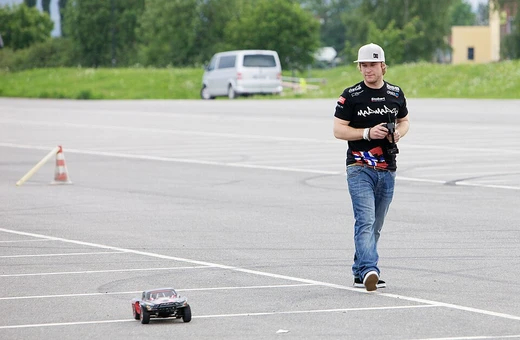
ZipZaps are miniature radio-controlled cars sold by RadioShack, later marketed under the brand name XMODS Micro RC. First introduced in September 2002, they were an instant success and one of the most popular gifts of the holiday season in North America, with stores often selling out of starter kits. They were commonly compared to Tomy's Bit Char-G and Takara's Digi-Q micro R/C lines.
- Introduced
- September 2002
- Scale
- 1:64
- Motor speeds
- 10,000 rpm to 34,000 rpm
- Gear ratios
- 12:1, 9.86:1, 8.25:1
- Charge time
- 40 to 60 seconds
- Run time
- about five minutes
- Frequencies
- 27 MHz and 49 MHz (original); selectable 27 MHz (SE series)
Lore & Background
ZipZaps were referred to as 'micro R/C' due to their diminutive size, at around 1:64 scale, only slightly larger than Hot Wheels and Matchbox cars. They were unique among toy-style micro R/C vehicles in that they could be customized like larger R/C models. Each partially assembled kit included a pre-assembled chassis with built-in nickel metal hydride rechargeable batteries, and gears, tires, and hubcaps could be changed for better appearance and performance. Six motors and three gear ratios were offered, ranging from a 10,000 rpm 'precision control motor' to a high-speed 34,000 rpm 'NX' motor. Tracking was adjusted via a wheel alignment lever underneath the vehicle. The on-board battery was charged by snapping the car onto the top of the transmitter, with full charge in about 40 to 60 seconds and run times averaging five minutes. Neither steering nor throttle was proportional in the original line; the SE series added semi-proportional two-speed throttle and fully proportional rack-and-pinion steering with steering trim adjustable at the transmitter.
Reader's Guide
ZipZaps were notable for their customization options, which included a variety of body shells snapping onto the chassis, depicting cars such as the Chevrolet Corvette, Toyota AE86, Audi TT, Ford GT, Ford Mustang, Hummer H1, and Mercedes-Benz SL. Two-packs of body shells depicted early and late versions of sports cars and muscle cars, and movie tie-ins included the Ford Gran Torino from Starsky & Hutch, tuned imports from 2 Fast 2 Furious, and a replica of Herbie from Herbie: Fully Loaded. In 2007, RadioShack released a set for the Transformers film featuring Optimus Prime (the only six-wheel chassis), Barricade, and Bumblebee. Monster trucks on a larger chassis with four-wheel drive were also available. The original ZipZaps operated on 27 MHz or 49 MHz, limiting racing to two people; the SE series and monster trucks had selectable frequencies within 27 MHz for up to six racers, plus working headlights and taillights. Accessories included lap counters, autocross pylons, and carrying cases. Popularity waned in 2004 with the introduction of XMODS, which were larger at 1:28 scale. In October 2008, RadioShack relaunched the line as XMODS Micro RC, with all parts backwards and forwards-compatible except the light features of the SE line.
Did You Know?
- ZipZaps were first introduced in September 2002 and were one of the most popular gifts of the holiday season in North America.
- The on-board battery charged in about 40 to 60 seconds by snapping the car onto the transmitter.
- The SE series added fully proportional rack-and-pinion steering and selectable frequencies for up to six racers.
- The Optimus Prime model from the Transformers film was the only ZipZap to feature a six-wheel chassis.
Origins & Market Impact
When RadioShack first put ZipZaps on shelves in September 2002, the miniature radio-controlled cars immediately captured the attention of toy buyers across North America. Marketed at roughly a 1:64 scale, these tiny vehicles sat just a step above the familiar die-cast toys like Hot Wheels and Matchbox, yet they offered something those static models never could: actual motion controlled by a handheld transmitter. The line was positioned squarely against other micro RC products of the era, most notably Tomy's Bit Char-G (known in American stores as MicroSizers) and Takara's Digi-Q series, but ZipZaps carved out their own identity through a combination of mass-market retail availability and a customization depth that set them apart. The holiday season following the launch proved to be a phenomenon; RadioShack locations frequently ran out of starter kits, and the cars became one of the most sought-after gifts of the year. The term "micro R/C" stuck as a shorthand for the entire category, and ZipZaps were central to defining what that category could be.
Engineering & Customization Philosophy
What distinguished ZipZaps from other toy-grade micro RC products was a design philosophy borrowed from the full-scale hobby world. Each kit arrived partially assembled, with a pre-built chassis housing nickel-metal-hydride rechargeable batteries, but the drivetrain components—gears, tires, and hubcaps—were all swappable. RadioShack offered six distinct motors spanning a 10,000 rpm "precision control" unit up to a 34,000 rpm "NX" motor (a nod to nitrous oxide culture), paired with three gear ratios: 12:1 for stock handling, 9.86:1 for performance, and 8.25:1 for turbo speed. A small wheel-alignment lever tucked under the chassis let owners fine-tune tracking. Charging was as simple as snapping the car onto the transmitter for 40 to 60 seconds, yielding roughly five minutes of run time. The original line used binary on/off controls for both steering and throttle, but the later SE series introduced semi-proportional two-speed throttle, fully proportional rack-and-pinion steering with transmitter-adjustable trim, and a pistol-grip remote—features that mirrored full-sized RC setups.
Body Shells & Pop Culture Crossovers
One of ZipZaps' most enduring appeals was the sheer variety of snap-on body shells that let owners transform the same chassis into wildly different vehicles. The catalog included recognizable names like the Chevrolet Corvette, Toyota AE86, Audi TT, Ford GT, Ford Mustang, Hummer H1, and Mercedes-Benz SL, with "past and present" two-packs pairing early and late iterations of sports and muscle cars. The line also embraced pop culture aggressively. For the 2002 holiday season, RadioShack sold an Initial D two-pack featuring the AE86 Trueno and AE85 Levin, bundled with bonus performance gears and motors. Movie tie-ins followed: a Ford Gran Torino inspired by Starsky & Hutch, tuned imports from 2 Fast 2 Furious, and a Herbie replica timed to Walt Disney Studios' 2005 release of Herbie: Fully Loaded. In 2007, the Transformers live-action film prompted a three-car set—Optimus Prime (the sole model on a six-wheel chassis), Barricade, and Bumblebee. A separate monster-truck line, built on a larger chassis with bigger tires, more powerful motors, and four-wheel drive, rounded out the lineup.
Legacy, Limitations & Rebranding
The original ZipZaps operated on just two fixed frequencies—27 MHz and 49 MHz—meaning at most two drivers could race reliably at the same time. The SE series and monster trucks improved on this by offering selectable channels within the 27 MHz band, supporting up to six simultaneous racers, and adding functional headlights and taillights. Despite these upgrades, the SE line's proportional controls and pistol-grip transmitter represented a meaningful step up from the binary original. Motors, tires, and hubs remained cross-compatible between the two lines, and body shells could be swapped freely, though SE-specific lighting naturally had no function on the older chassis. Accessories like lap counters, autocross pylons, and carrying cases extended the play experience. By 2004, however, RadioShack's own XMODS line—larger at 1:28 scale with similar customization options—began siphoning attention away from ZipZaps. In October 2008, the brand was revived under the XMODS Micro RC name. Crucially, only the label changed: every part remained fully compatible in both directions with the original ZipZaps hardware, using the same chassis and controller as the standard (non-SE) line.
Frequently Asked Questions
What are ZipZaps?
ZipZaps are tiny 1:64-scale radio-controlled cars originally sold by RadioShack and later rebranded as XMODS Micro RC. They were designed as customizable miniature vehicles driven with a small handheld transmitter.
When did ZipZaps first hit the market?
The line debuted in September 2002 and immediately became one of the most sought-after holiday gifts in North America that year. Starter kits frequently sold out in stores during the 2002 Christmas season.
How fast can ZipZaps go and what gear options are there?
Their motors spin anywhere from 10,000 to 34,000 rpm, and owners can swap between three gear ratios—12:1, 9.86:1, and 8.25:1—to tune speed versus torque. This put them in the same class as Tomy's Bit Char-G and Takara's Digi-Q micro R/C lines.
How long do ZipZaps last on a single charge?
A full recharge takes roughly 40 to 60 seconds, after which the car delivers about five minutes of driving time. That quick turnaround made them easy to use repeatedly in short play sessions.
Why were ZipZaps considered a big deal in the hobby?
They brought customizable micro-scale R/C racing to a mass-market audience at a price point that made them an instant holiday sensation. Their 2002 popularity put them in direct competition with established Japanese micro R/C lines and helped popularize the category across North America.
More in Radio-Controlled Cars 1-24
Spotted an error? Know more?
Reader corrections go straight into our review queue. Suggest an edit · How this site is sourced