
John Carmack
Co-founder of id Software and lead programmer of Quake.

via Wikipedia: John Carmack · see source
John D. Carmack II (born August 21, 1970) is an American computer programmer and video game developer. He co-founded the video game company id Software and was the lead programmer of its 1990s games Commander Keen, Wolfenstein 3D, Doom, Quake, and their sequels. Carmack made innovations in 3D computer graphics, such as his Carmack's Reverse algorithm for shadow volumes.
Quick Facts
- Birthplace
- Shawnee Mission, Kansas, U.S.
- Years active
- 1989–present
- Political party
- Libertarian
- Occupation
- Computer programmer
- video game developer
- engineer
- Employer
- Keen Technologies (2023–present); Oculus VR (2013–2022)
- Known for
- Co-founding id Software; Commander Keen
- Wolfenstein 3D
- Doom
- Quake
- Partner
- Trista DeLeon (2022–present)
- Children
- 2
Lore & Background
Carmack was born in Shawnee Mission, Kansas, the son of local television news reporter Stan Carmack. He grew up in the Kansas City metropolitan area, where he became interested in computers at an early age. He attended Shawnee Mission East High School in Prairie Village, Kansas and Raytown South High School in nearby Raytown, Missouri. He attended the University of Missouri–Kansas City for two semesters before withdrawing to work as a freelance programmer.
He co-founded id Software and was the lead programmer of Commander Keen, Wolfenstein 3D, Doom, Quake, and their sequels. He pioneered or popularized many techniques in computer graphics, including adaptive tile refresh for Commander Keen, ray casting for Hovertank 3D, Catacomb 3-D, and Wolfenstein 3D, binary space partitioning which Doom became the first game to use, surface caching which he invented for Quake, Carmack's Reverse for Doom 3, and MegaTexture technology first used in Enemy Territory: Quake Wars.
Quake 3 popularized the fast inverse square root algorithm. In 2013, he resigned from id Software to work full-time at Oculus VR as their CTO. In 2019, he reduced his role to Consulting CTO to allocate more time toward artificial general intelligence (AGI). In 2022, he left Oculus to work on his AGI startup, Keen Technologies.
Reader's Guide
Carmack is known for maintaining a sixty-hour work week, working a 10-hour day, six days a week, throughout his career. He has spoken about the importance of long hours of uninterrupted focus. He also takes week-long programming retreats involving solitary, uninterrupted periods away from his normal routine. He subscribes to the philosophy that small, incremental steps are the fastest route to meaningful innovation.
He funded Armadillo Aerospace out of his own pocket, which won first place in the Level 1 competition of NASA's Lunar Lander Challenge in October 2008 and completed Level 2 in September 2009. The company went into hibernation mode in 2013. Carmack is an advocate of open-source software and has opposed software patents. He released the source code for Wolfenstein 3D in 1995 and the Doom source code in 1997, later under the GNU General Public License in 1999. The source code to Quake was leaked in 1997; id Software later publicly released it in 1999.
Gallery
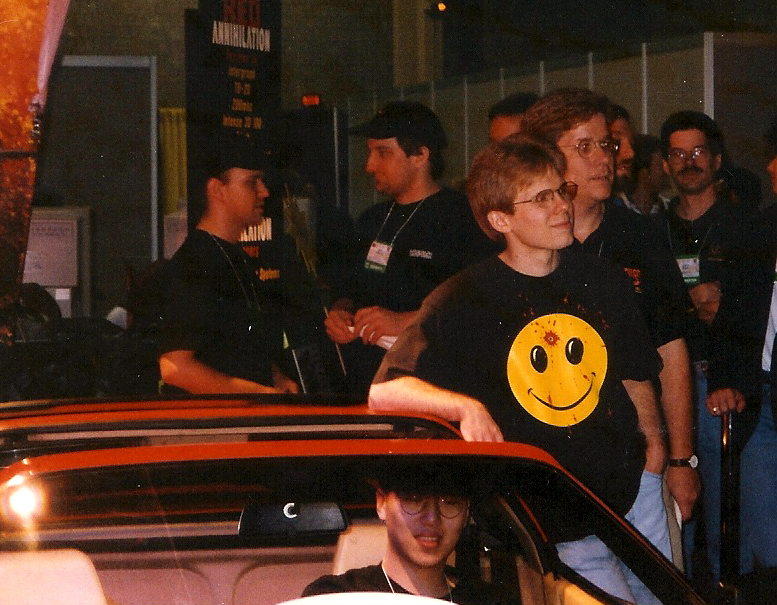
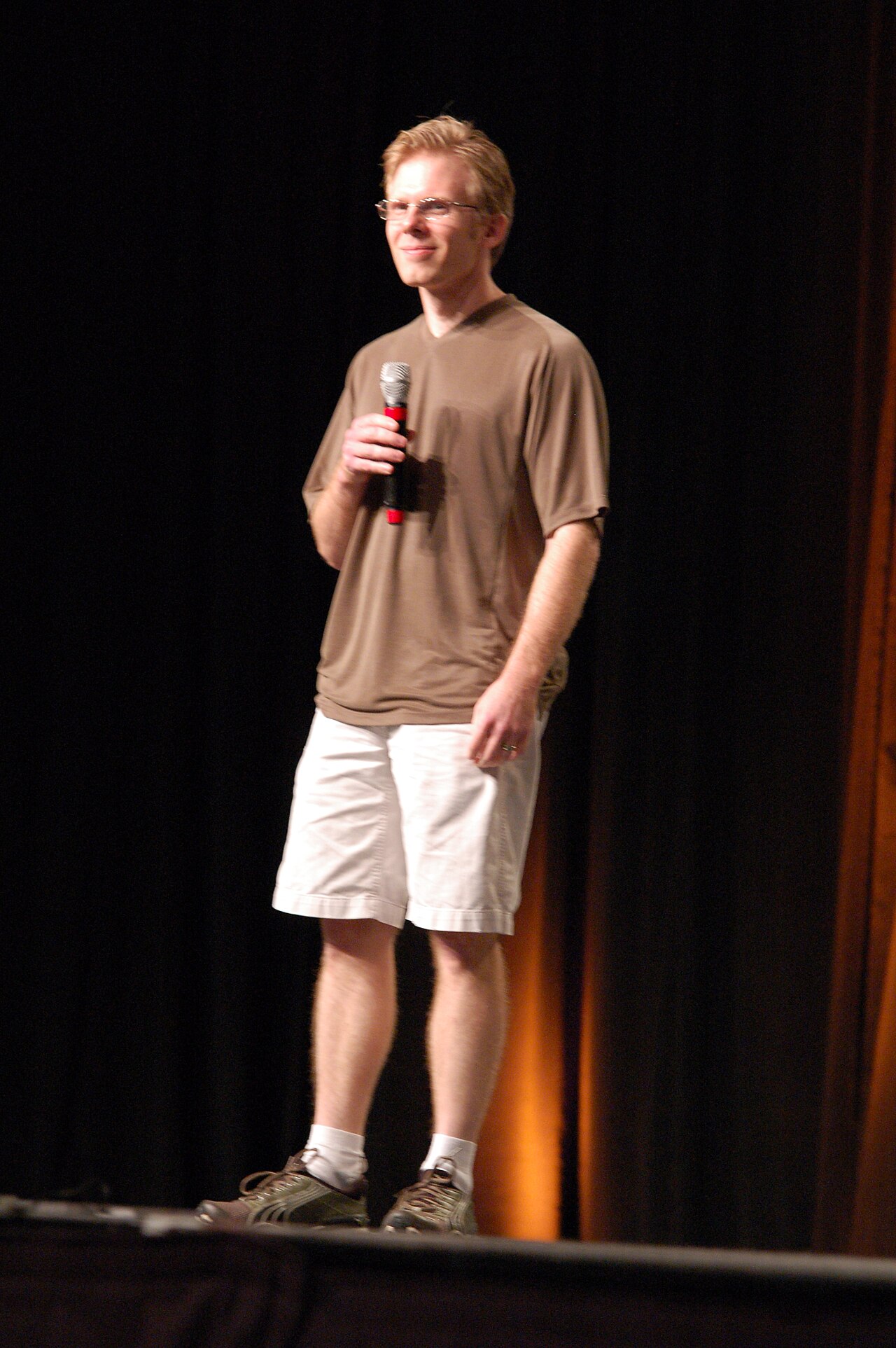
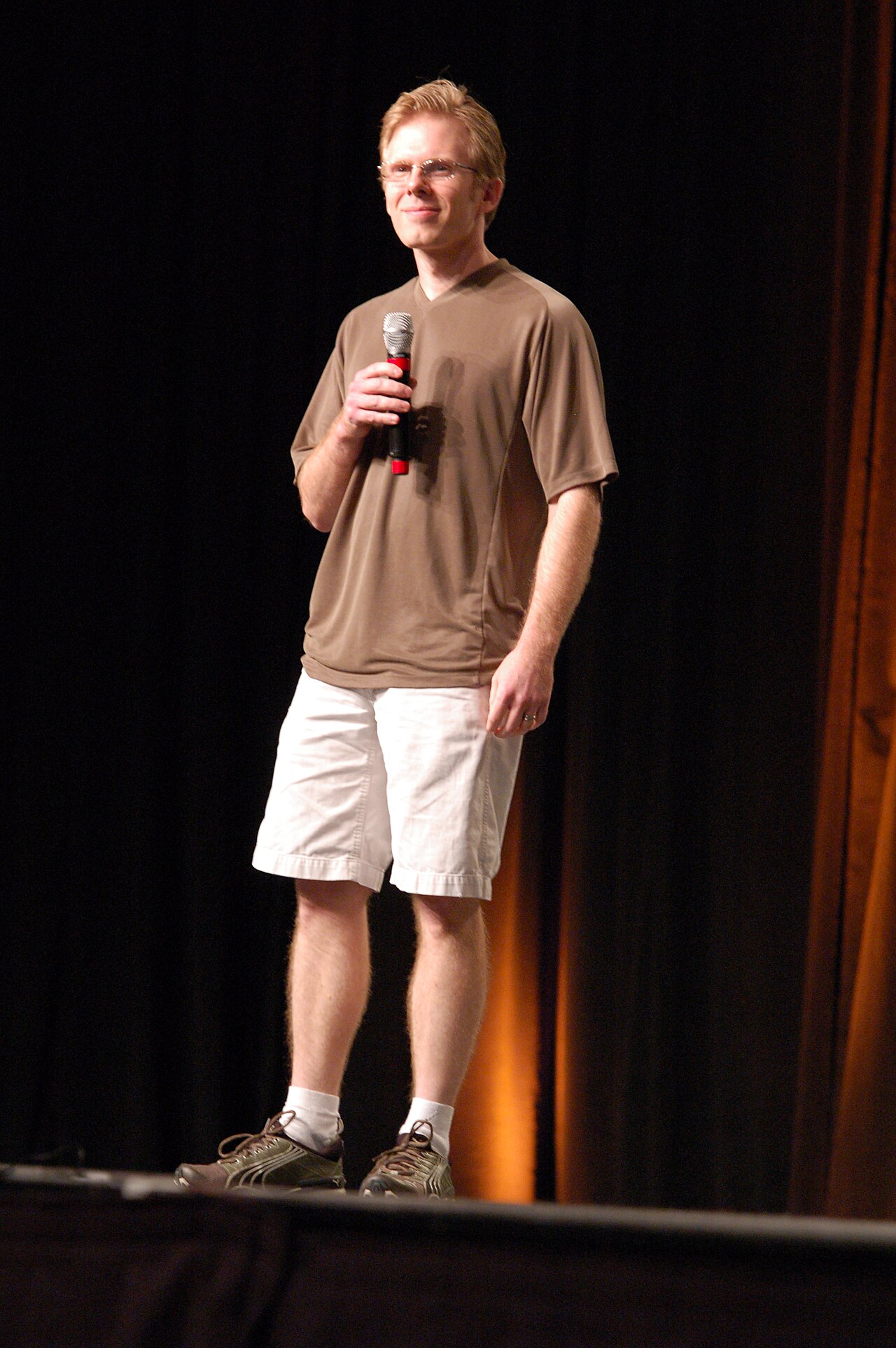
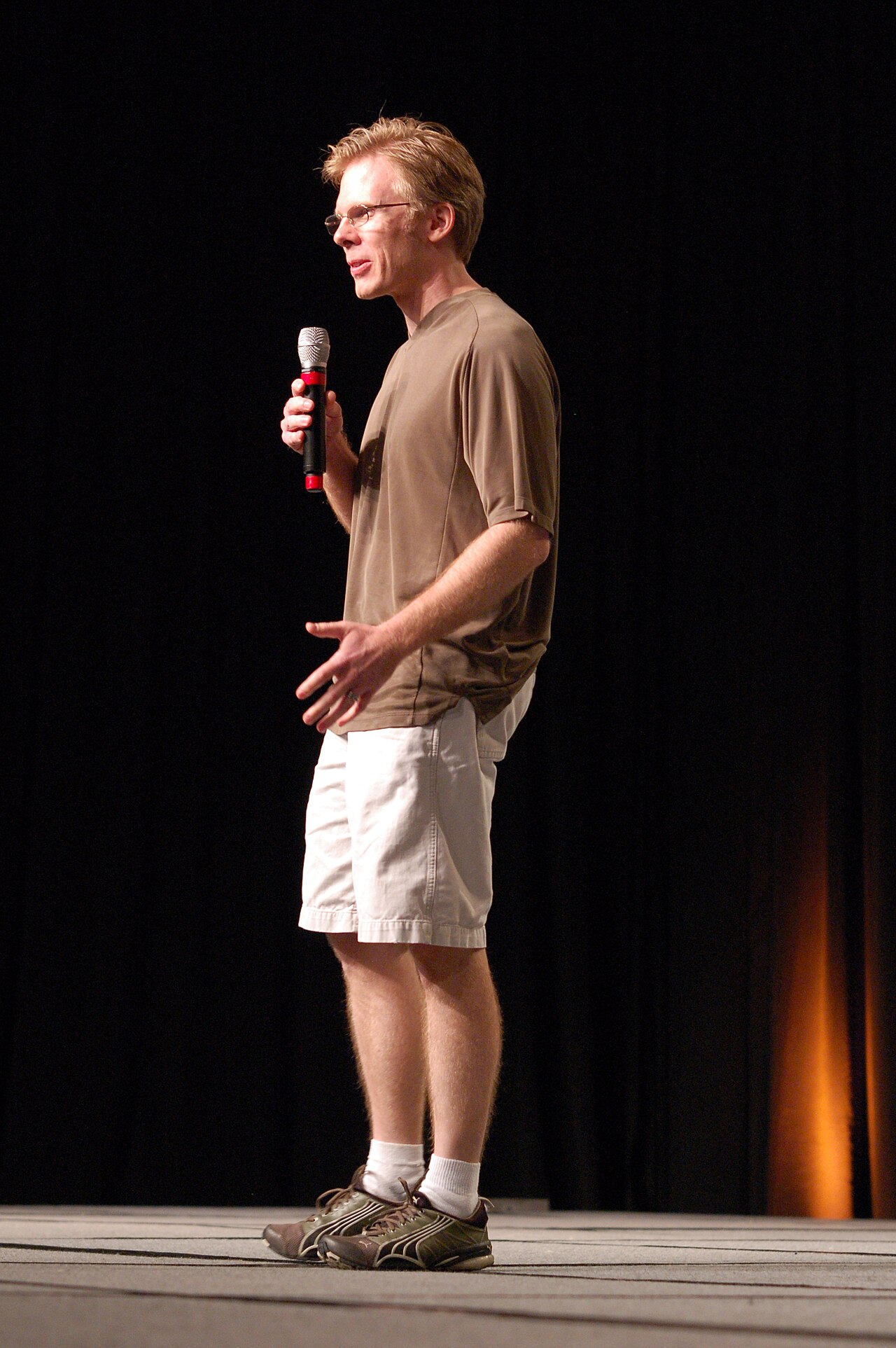

Frequently Asked Questions
What was John Carmack's specific role at id Software?
As the lead programmer and later Chief Technology Officer, Carmack focused exclusively on developing the core game engines rather than story or art. His engineering work optimized performance to enable complex 3D environments and client-server networking for titles like Quake and Doom.
What is John Carmack's current status in the tech world?
Although he stepped away from day-to-day game development years ago, Carmack remains active as a technologist focused on aerospace engineering and augmented reality. He continues to share his expertise through public speaking and open-source coding projects.
More in History & Community
Elsewhere in Quake
Spotted an error? Know more?
Reader corrections go straight into our review queue. Suggest an edit · How this site is sourced