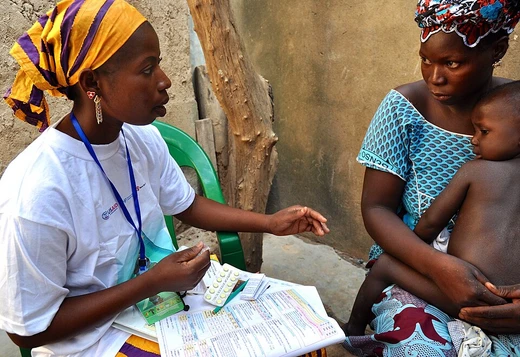
Preventive healthcare
Preventive healthcare uses anticipatory actions—primal, primary, secondary, and tertiary—to prevent disease and promote well-being.
Last updated
Preventive healthcare, also known as prophylaxis, involves taking medical steps to stop diseases before they start. Illness and disability stem from a mix of environmental factors, genetics, disease agents, and lifestyle choices, and these processes often begin long before a person notices any symptoms. To prevent disease, people rely on anticipatory actions, which are grouped into four levels: primal, primary, secondary, and tertiary prevention.
Preventive care includes a range of services. Screening tests check for diseases early. Vaccines, dental cleanings, and education or counseling help people make informed health decisions.
Each year, millions of people die from causes that could have been prevented. A 2004 study found that roughly half of all deaths in the United States in 2000 were linked to preventable behaviors and exposures. The leading causes included cardiovascular disease, chronic respiratory disease, unintentional injuries, diabetes, and certain infectious diseases.
The same study estimated that 400,000 Americans die annually due to poor diet and a sedentary lifestyle. Worldwide, the World Health Organization estimated that about 55 million people died in 2011, with two-thirds of those deaths from non-communicable diseases like cancer, diabetes, and chronic cardiovascular and lung conditions. This marked an increase from 2000, when 60% of global deaths were attributed to these diseases.
Given the rising global prevalence of chronic diseases and related deaths, preventive healthcare is especially important. One method of prevention is providing information to discourage teenage smoking. It is recommended that adults and children see their doctor for regular check-ups, even when feeling healthy, to undergo disease screening, identify risk factors, discuss healthy lifestyle tips, stay current on immunizations and boosters, and build a strong relationship with a healthcare provider. In pediatrics, examples of primary prevention include advising parents to lower their home water heater temperature to prevent scalding, encouraging children to wear bicycle helmets, and suggesting people check the air quality index before outdoor sports.
Sexually transmitted infections
Common disease screenings include checks for hypertension, hyperglycemia, hypercholesterolemia, colon cancer, depression, HIV, and other sexually transmitted infections like chlamydia, syphilis, and gonorrhea. Other screenings involve mammography for breast cancer, colorectal cancer screening, Pap tests for cervical cancer, and osteoporosis screening. Genetic testing can also identify mutations that cause genetic disorders or predispose someone to conditions like breast or ovarian cancer. However, these measures are not affordable for everyone, and the cost-effectiveness of preventive healthcare remains debated.
Overview
Preventive healthcare strategies are described at the primal, primary, secondary, and tertiary levels. Although preventive medicine was advocated in the early twentieth century by Sara Josephine Baker, the term "primary prevention" was coined in the 1940s by Hugh R. Leavell and E. Gurney Clark, who worked at Harvard and Columbia University Schools of Public Health.
They later added secondary and tertiary prevention. Goldston noted in 1987 that these levels might be better described as "prevention, treatment, and rehabilitation," though the original terms remain in use. The concept of primal prevention emerged more recently, driven by advances in molecular biology over the last fifty years, especially epigenetics, which highlights how environmental conditions—both physical and emotional—during fetal and newborn life (the primal period) profoundly shape adult health.
Primal and primordial preventions
Primal prevention is essentially health promotion at its most fundamental level. New knowledge in molecular biology, particularly epigenetics, shows that the affective and physical environment during fetal and newborn life can determine adult health. This approach involves providing future parents with unbiased information on primal health and supporting them through the child's primal period—defined by the Primal Health Research Centre in London as "from conception to first anniversary." Support includes adequate parental leave for both parents, kin caregiving, and financial help when needed.
Primordial prevention refers to measures that prevent risk factors from developing in the first place, early in life, even before conception. As Ruth A. Etzel described it, this involves "all population-level actions and measures that inhibit the emergence and establishment of adverse environmental, economic, and social conditions." Examples include reducing air pollution or banning endocrine-disrupting chemicals in food-handling equipment and food contact materials.
Primary prevention
Primary prevention consists of traditional health promotion and "specific protection" aimed at stopping a disease from developing in people who do not yet have it. Health promotion activities include strategies like health education and lifestyle medicine—non-clinical, everyday choices such as eating nutritious meals and exercising regularly—that prevent lifestyle-related medical conditions and improve overall health.
Frequently Asked Questions
Who is Preventive healthcare?
Preventive healthcare is a foundational concept in public health and medicine dedicated to stopping illness before it ever takes hold in a person's body. Rather than waiting for symptoms to appear and then treating them, it works upstream to reduce the chance of disease occurring in the first place.
What is Preventive healthcare known for?
Its main toolkit is organized into three tiers—primary, secondary, and tertiary prevention—that together span everything from vaccination and health education to early screening tests and limiting damage after a condition is already present. This layered approach is what makes it the structural backbone of modern public health strategy.
What is Preventive healthcare's secret weapon?
Its most cutting-edge layer is called primal prevention, which draws on epigenetics to address the biological and environmental factors that predispose populations to disease before genetic expression even begins. It essentially rewrites the origin story of risk at the molecular level.
More in Public Health And Epidemiology
Sources
Compiled from Wikipedia and the sources listed below. Text from Wikipedia is available under CC BY-SA 4.0; this entry is adapted from it.
- Wikipedia: Preventive healthcare (CC BY-SA 4.0).
Spotted an error? Know more?
Reader corrections go straight into our review queue. Suggest an edit · How this site is sourced