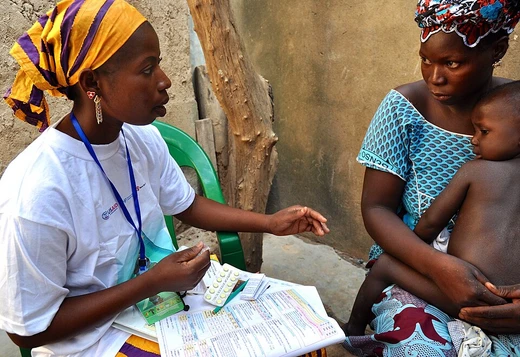
Vaccination
Vaccination is the most effective method of preventing infectious diseases.
Last updated
Vaccination introduces a vaccine into the body to train the immune system to recognize and fight a disease. These vaccines use a weakened or killed form of a germ, or just pieces of it like proteins or toxins. By triggering the body's adaptive immunity, vaccination prevents illness from infectious diseases. When enough people in a community are vaccinated, herd immunity develops, which shields those with weakened immune systems who cannot safely receive vaccines themselves.
Extensive research has confirmed that vaccination is the most powerful tool for stopping infectious diseases. Widespread immunization has wiped out smallpox globally and eliminated polio and tetanus from many regions.
Usage
The World Health Organization estimates that vaccination saves between 3.5 and 5 million lives each year. A study funded by the WHO and published in The Lancet found that from 1974 to 2024, vaccination prevented 154 million deaths, 146 million of them in children under five. However, some diseases are making a comeback in areas where vaccination rates have dropped, often due to vaccine hesitancy.
Vaccination versus inoculation
The earliest attempts to prevent disease through inoculation targeted smallpox, with recorded variolation in 16th-century China. Smallpox also became the first disease for which a true vaccine was created. English physician Edward Jenner is credited with inventing the smallpox vaccine in 1796, though at least six others had used similar principles earlier. Jenner was the first to publish proof of its effectiveness and instructions for making it.
Louis Pasteur later expanded on these ideas through his microbiology work. The term "vaccination" comes from the Latin word for cow, because the vaccine used a virus from cows. Smallpox was a highly contagious and lethal disease, killing 20–60% of infected adults and over 80% of infected children. By the time it was declared eradicated in 1979, it had killed an estimated 300–500 million people in the 20th century alone.
In everyday language, "vaccination" and "immunization" are used interchangeably, but they differ from "inoculation," which involves using live, unweakened pathogens. Vaccination has faced resistance based on scientific, ethical, political, medical, and religious concerns, though no major religion forbids it, and some view it as a moral duty to save lives.
Monitoring
In the United States, a compensation program exists for people who claim injury from vaccines. Early successes led to widespread acceptance, and mass vaccination campaigns have dramatically reduced many diseases across the globe. The US Centers for Disease Control and Prevention considers vaccination one of the ten greatest public health achievements of the 20th century in America.
Vaccines work by artificially stimulating the immune system to protect against infection. This is done by introducing an immunogen that primes the body. Most vaccines are given before a person catches a disease, but some are used after exposure.
Mechanism of function
For example, the smallpox vaccine can still offer some protection or reduce severity if given after exposure. Louis Pasteur gave the first rabies vaccine to a child bitten by a rabid dog, and the rabies vaccine, given over 14 days along with immune globulin and wound care, has proven effective. Experimental vaccines for AIDS, cancer, and Alzheimer’s disease aim to trigger a faster, safer immune response than natural infection.
Most vaccines are injected because they are not absorbed well through the intestines. However, live attenuated polio, rotavirus, and some typhoid and cholera vaccines are taken orally to build immunity in the gut. Vaccination provides long-lasting protection, but it usually takes weeks to develop, unlike passive immunity from antibodies transferred through breastfeeding, which works immediately.
A vaccine failure happens when a vaccinated person still gets the disease. Primary failure occurs when the immune system does not produce antibodies after the first dose. Sometimes, multiple doses fail to generate a response. "Vaccine failure" does not mean the vaccine is defective; most cases are due to individual differences in immune response.
The terms "vaccination" and "inoculation" are often used as synonyms, but they are not the same. Vaccination uses a weakened or harmless version of a pathogen. Inoculation, also called variolation for smallpox, involves using live, unweakened variola virus taken from a smallpox patient’s pustule or scab and scratched into the skin, usually on the upper arm. Variolation was often done directly from person to person or, less effectively, from scabs.
Frequently Asked Questions
Who is Vaccination?
Vaccination is the deliberate introduction of a vaccine into a person's body so that their immune system can build lasting defense against a particular disease. It essentially trains the adaptive immune response by exposing it to a harmless form of the pathogen or its components, without causing the illness itself.
What is Vaccination known for?
Its core ability is priming the body's adaptive immunity to recognize and neutralize an infectious agent before that agent can make the person sick. Depending on the formulation, the vaccine may carry a weakened or inactivated microorganism, viral proteins, or inactivated toxins that trigger this protective training.
What's in Vaccination's 'arsenal'?
The specific contents vary by product but typically include a live-attenuated or killed pathogen, isolated surface proteins, or inactivated toxins derived from the target organism. Each ingredient is chosen to provoke a robust immune memory without reproducing the original disease.
More in Public Health And Epidemiology
Sources
Compiled from Wikipedia and the sources listed below. Text from Wikipedia is available under CC BY-SA 4.0; this entry is adapted from it.
- Wikipedia: Vaccination (CC BY-SA 4.0).
- Word definitions: the , each quoted from its Wikipedia article.
Spotted an error? Know more?
Reader corrections go straight into our review queue. Suggest an edit · How this site is sourced