
John Fiske (philosopher)
American philosopher and historian influenced by Herbert Spencer.

Boston Public Library · CC BY 2.0
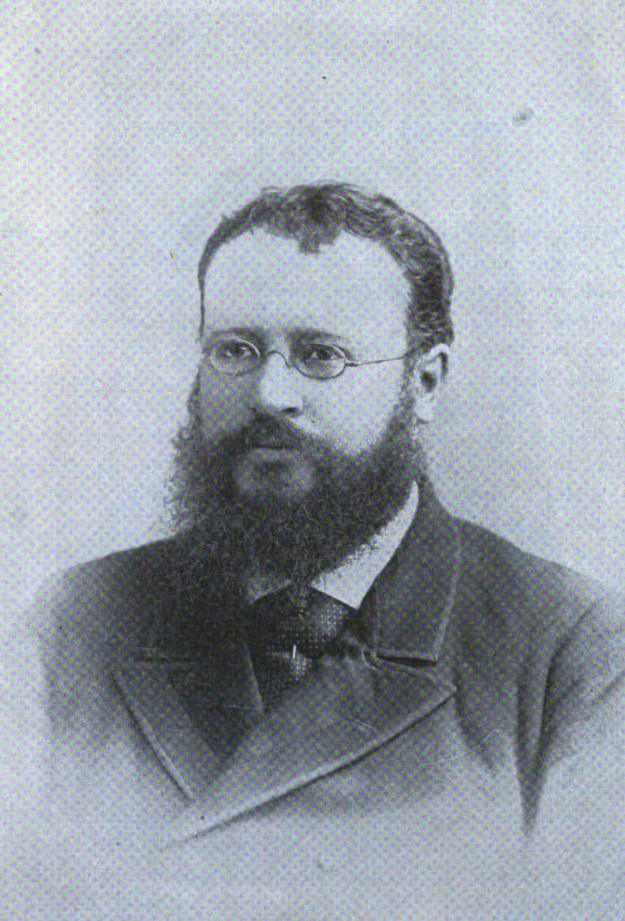
John Fiske was an American philosopher and historian whose work was deeply shaped by the evolutionary theories of Herbert Spencer, which he applied across linguistics, philosophy, religion, and history. Born in Hartford, Connecticut, as Edmund Fiske Green, he was the only child of a newspaper editor who died when Fiske was ten. After his mother remarried, he adopted the name of his maternal great-grandfather, John Fiske. A precocious child, he read widely in English literature and history, excelled in Greek and Latin, and studied several modern languages before entering Harvard, where he graduated in 1863 and later from Harvard Law School in 1865. Though admitted to the bar, he practiced law only briefly. His writing career began in 1861 with an article critiquing Buckle’s fallacies, and he soon supported himself through freelance contributions to American and British periodicals. He served as a university lecturer on philosophy at Harvard from 1869 to 1871, an instructor in history in 1870, and assistant librarian from 1872 to 1879. After resigning, he was elected to the board of overseers and later re-elected. From 1881, he lectured annually on American history at Washington University in St. Louis, becoming a professor there in 1884, though he remained based in Cambridge, Massachusetts. He also lectured at University College London and the Royal Institution of Great Britain, delivering hundreds of talks on American history across the United States and Britain. Fiske’s early fame came from popularizing Spencer’s work and interpreting Darwin’s ideas philosophically. Darwin himself praised Fiske as a lucid expositor. Fiske believed in the racial superiority of the Anglo-Saxon race, a view common in his era, yet he remained committed to abolitionism, declaring the North’s victory complete decades after the Civil War. In works like *The Destiny of Man*, he argued that natural selection on humans had diminished through social conditions and that intellectual force surpassed bodily strength, leading to moral and potentially immortal aspects of the mind. He also contended that no real conflict existed between religion and science, viewing Christianity as deeply his own religion. Later in life, he turned to historical writing, producing works such as *The Discovery of America* and co-editing a major biographical cyclopedia. He died in Gloucester, Massachusetts, in
- field
- Philosophy, history
- nationality
- American
- known_for
- Applying Herbert Spencer's evolutionary concepts to his writings; popularizing evolution; historical works on America
Lore & Background
He exhibited remarkable precocity as a child, reading widely in English literature and history, excelling in Greek and Latin, and studying several modern languages before entering Harvard. Buckle's Fallacies,' and he later contributed freelance articles to periodicals. Fiske's philosophy was influenced by Herbert Spencer's views on evolution, and he applied himself to the philosophical interpretation of Darwin's work. He believed in the racial superiority of the 'Anglo-Saxon race,' a view shaped by nineteenth-century enthusiasm for brain size as a measure of human performance, but he remained committed to abolitionist causes. He also aimed to show that no conflict existed between religion and science, regarding Christianity as 'in the deepest sense, our own religion.'
Reader's Guide
John Fiske's significance lies in his role as a popularizer of Herbert Spencer's evolutionary ideas and as a historian who applied evolutionary concepts to American history. Fiske's legacy is complex: while his evolutionary views contributed to public understanding of Darwinism, his belief in Anglo-Saxon racial superiority reflected the biases of his era. His commitment to abolitionism and his assertion that the North's victory in the Civil War was complete despite 'the feeble wails' of bigots show a contradictory stance. Charles Darwin praised Fiske as a lucid expositor. Fiske's work influenced both philosophical and historical discourse in the late nineteenth century, though his racial ideas are now seen as scientifically unsound.
Did You Know?
- John Fiske was born Edmund Fiske Green and changed his name after his mother remarried.
- Fiske believed that natural selection on humans had diminished through the operation of social conditions.
Gallery
Frequently Asked Questions
What is John Fiske (philosopher) best known for?
He is most recognized for applying Spencer's evolutionary framework across linguistics, religion, philosophy, and history. His role as a popularizer of Spencerian thought made him a prominent figure in late-nineteenth-century American intellectual circles.
What philosophical tradition shaped John Fiske (philosopher)'s work?
Fiske's thinking was deeply rooted in Herbert Spencer's evolutionary philosophy, which served as the backbone for much of his own writing. Rather than building a wholly original system, Fiske acted as a key interpreter and advocate of Spencer's ideas within the United States.
What fields did John Fiske (philosopher) work in?
His output spanned philosophy, linguistics, religion, and American history. Over the course of his career he shifted from popularizing evolutionary theory to producing historical works centered on the American experience.
More in Political Theorists And Social Scientists 1-24
Spotted an error? Know more?
This is a living reference — every entry is fact-audited, and reader corrections feed straight into our audit queue. Suggest an edit · See this site's audit record