
Archilochus
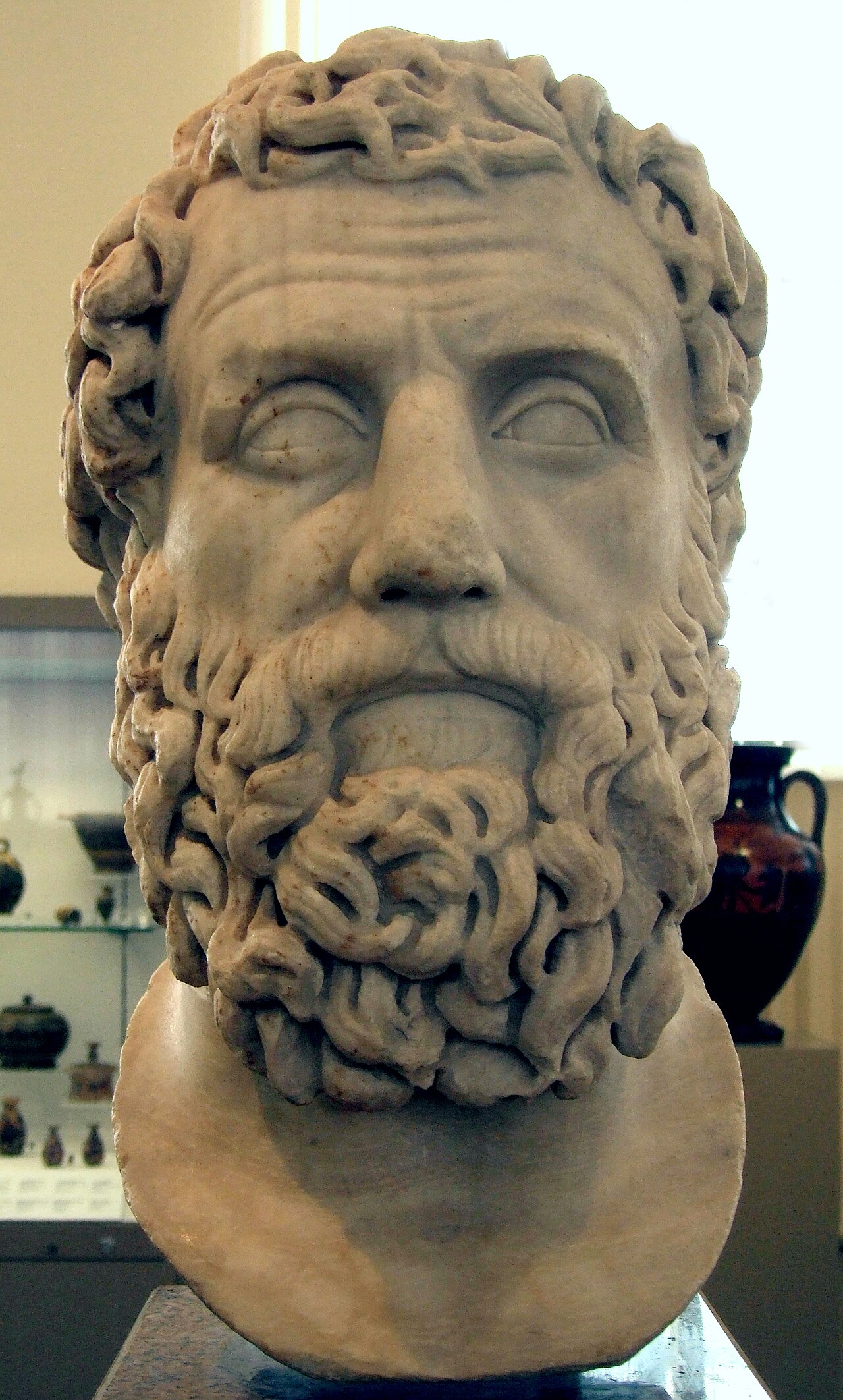
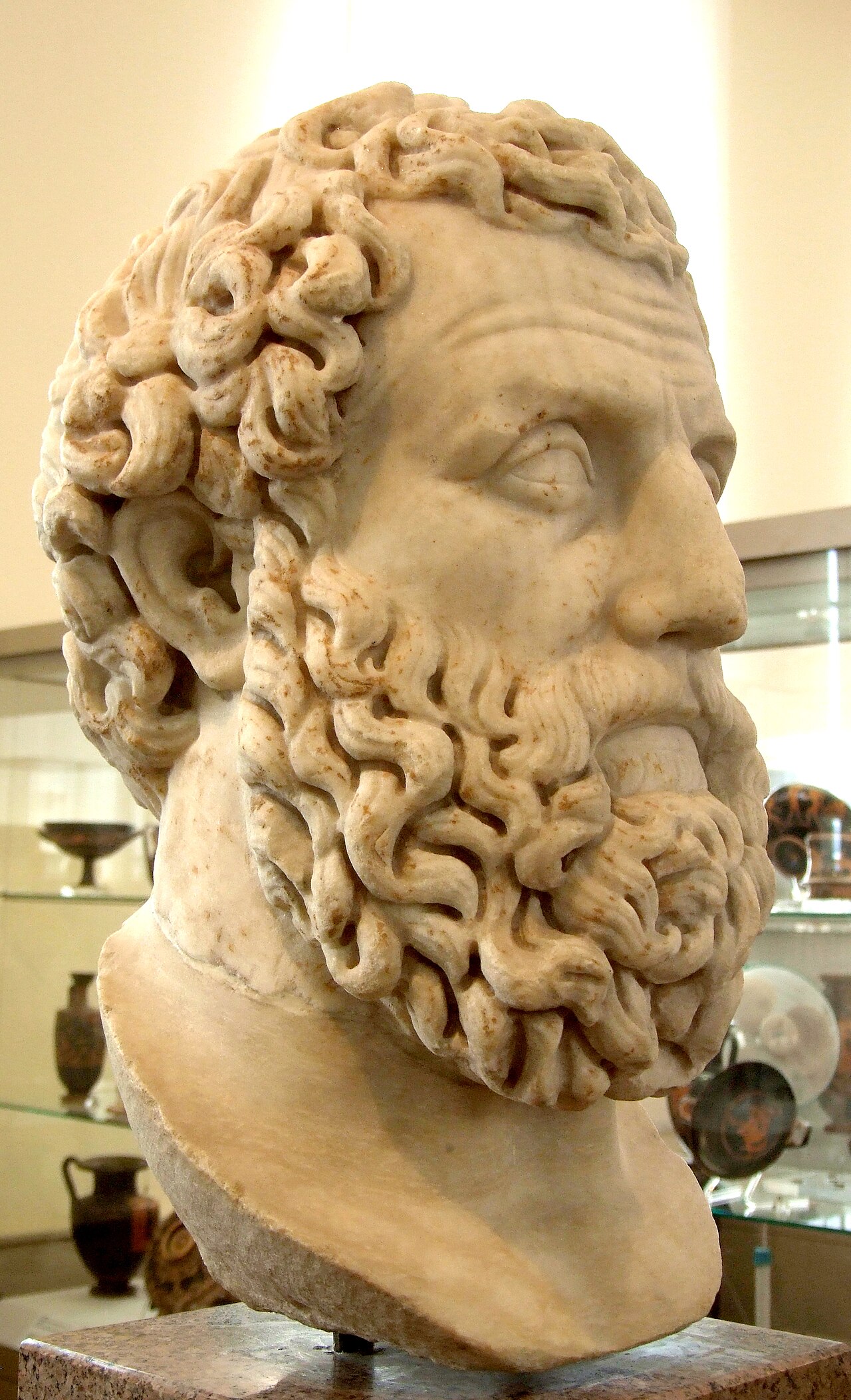
Archaic iambic poet from Paros, known for personal themes.

shakko · CC BY-SA 3.0
Archilochus (c. 680 – c. 645 BC) was an early Greek poet from the island of Paros, active during the Archaic period. He wrote in iambic meter and is known for his inventive use of poetic forms. He is the earliest Greek author we know of whose work focuses almost entirely on his own personal feelings and experiences.
Most of what we know about his life comes from his surviving poems, comments by later writers, and stone inscriptions, but this information is not always reliable. The biographical tradition is shaky, and the poems survive only in fragments, making it hard to draw firm conclusions about his personal history. The poems often feel autobiographical, with vivid, intimate details, but Aristotle noted that Archilochus sometimes spoke in other people's voices. He gave two examples: one where an unnamed father comments on a solar eclipse, and another where a carpenter named Charon says he does not care about the wealth of King Gyges of Lydia. We only know these are role-playing because Aristotle tells us so; the poems themselves give no hint. Some modern scholars think imaginary characters and situations may have been a standard feature of the poetic tradition called iambus.
The two poems Aristotle quoted help date Archilochus, assuming the characters refer to real events. Gyges ruled from 687 to 652 BC, and the eclipse mentioned likely occurred on either 6 April 648 BC or 27 June 660 BC (a third date, 14 March 711 BC, is usually considered too early). These dates match other evidence, like a cenotaph found on Thasos from around the end of the seventh century BC, dedicated to a friend named Glaucus, son of Leptines, who appears in several fragments. The chronology is complicated, but modern scholars generally place Archilochus around 680 to 640 BC.
The Greeks revered talented authors regardless of their personal virtue. A sanctuary to Archilochus, called the Archilocheion, was built on Paros in the third century BC. There, admirers made sacrifices to him and to gods like Apollo, Dionysus, and the Muses. Inscriptions on stone slabs from the sanctuary include quoted verses and historical records. One tells a story: his father Telesicles sent him to fetch a cow from the fields, but he met a group of women who took the cow and gave him a lyre instead—they were the Muses, marking him as their chosen one. The same inscription says the oracle at Delphi later confirmed this omen. Other inscriptions are less fanciful, recording local history in chronological order under the names of archons, though these are very fragmentary.
Bits of biography come from many ancient authors, including Tatian, Proclus, Clement of Alexandria, Cicero, Aelian, Plutarch, Galen, Dio Chrysostom, Aelius Aristides, and several anonymous writers in the Palatine Anthology. Tradition says Archilochus was born into a notable family on Paros. His grandfather or great-grandfather, Tellis, helped establish the cult of Demeter on Thasos near the end of the eighth century BC. This mission was famously shown in a painting at Delphi by the Thasian artist Polygnotus, later described by Pausanias, which depicted Tellis in Hades sharing Charon's boat with a priestess of Demeter. The poet's father, Telesicles, also played a role in Thasian history as the founder of a Parian colony there. The names Tellis and Telesicles have religious meanings, leading some modern scholars to think Archilochus came from a priestly family devoted to Demeter. Inscriptions at the Archilocheion also identify him as important in the Parian cult of Dionysus. There is no evidence for claims that his mother was a slave named Enipo, that he left Paros because of poverty, or that he worked as a mercenary soldier. The slave story likely comes from a misreading of his poems. Archaeology shows Paros was quite prosperous—he himself associated it with "figs and seafaring"—and while he often writes about the rough life of a soldier, warfare in the archaic period was an aristocratic duty, not a paid job.
Conflict marked his life. Ancient tradition says a Parian named Lycambes and his daughters were the main targets of his anger. Lycambes supposedly promised his daughter Neobule to Archilochus in marriage but broke the agreement. The poet responded with such harsh abuse that Lycambes, Neobule, and one or both of his other daughters killed themselves. This story later became a popular theme for Alexandrian poets, who treated it with sympathy at Archilochus's expense. Some modern scholars think Lycambes and his daughters were not real people but fictional characters in a traditional form of entertainment. Another view holds that Lycambes, as an oath-breaker, was a threat to society, and the poet's attack was not just personal revenge but a social duty, in line with the practice of iambos. Inscriptions at the Archilocheion also suggest the poet played a controversial role in bringing the cult of Dionysus to Paros.
- born
- c. 680 BC
- died
- c. 645 BC
- field
- Poetry
- nationality
- Greek (Parian)
- known_for
- Innovative use of poetic meters; earliest known Greek author to focus on personal emotions and experiences
Lore & Background
Archilochus's life is known through his surviving work, other authors, and inscriptions, though the biographical tradition is generally unreliable. He was born to a notable family on Paros; his father Telesicles founded a Parian colony on Thasos, and his grandfather (or great-grandfather) Tellis helped establish the cult of Demeter on Thasos. The poet himself joined the Parian colony on Thasos and battled indigenous Thracians, later returning to Paros to fight against Naxos. He was killed by a Naxian warrior named Calondas, who was later rebuked by the oracle at Delphi for killing 'the servant of the Muses.'
Reader's Guide
Archilochus is significant as a pioneering figure in Greek poetry, breaking from the Homeric tradition by making his own emotions and experiences the central subject of his work. His use of iambic meter and role-playing—sometimes speaking in another's voice, as noted by Aristotle—challenged conventional poetic boundaries. His combative spirit, expressed in both personal invective (notably against Lycambes and his daughters) and warfare, earned him both admiration and condemnation. His legacy includes influencing later poets and demonstrating the power of poetry as a vehicle for personal and social commentary.
Did You Know?
- Archilochus is the earliest known Greek author to compose almost entirely on the theme of his own emotions and experiences.
- According to Aristotle, Archilochus sometimes role-played, speaking in the voice of other characters such as a carpenter named Charon.
- A sanctuary to Archilochus (the Archilocheion) was established on Paros in the third century BC, where admirers offered him sacrifices.
- The Spartans banished the works of Archilochus from their state for the sake of their children, lest it harm their morals.
The Birth of the Personal Voice in Greek Poetry
Archilochus stands as a watershed figure in Greek literary history, recognized as the earliest known author to build an entire body of work around his own feelings and lived experience. His iambic verse broke from the conventions of his Archaic-period predecessors by centering the poet's subjective emotional world—love, rage, grief, and self-reflection—rather than purely mythological or ceremonial subject matter. His command of poetic meters was noted by ancient commentators as both versatile and inventive, giving his lines a rhythmic flexibility that matched the shifting moods of his content. This personal, emotionally direct mode of expression would become foundational to later Greek and Roman poetry. His impact was so profound that centuries after his death, Parians erected a sanctuary, the Archilocheion, on his home island in the third century BC, where worshippers offered him sacrifices alongside Apollo, Dionysus, and the Muses. His hero cult endured on Paros for more than eight hundred years, a testament to how deeply his voice resonated with his community.
The Elusive Life Behind the Verses
Reconstructing Archilochus's biography is an exercise in cautious speculation. His surviving poems are fragmentary, and the vivid, intimate details they contain—though they often read as autobiography—cannot be taken at face value. Aristotle, writing centuries later, identified at least two fragments in which the poet was speaking in another person's voice: an unnamed father remarking on a solar eclipse, and a carpenter named Charon expressing indifference to the wealth of the Lydian king Gyges. Nothing in those fragments themselves signals role-play; the context comes entirely from Aristotle's testimony. This raises the unsettling possibility that many other verses, too, may involve imagined speakers or situations, a feature some modern scholars link to the broader iambic tradition known to the ancients. Dating the poet is equally tricky. The Gyges reference, the eclipse, and a cenotaph discovered at Thasos dedicated to a friend named Glaucus, son of Leptines, help bracket his life. Modern scholars generally settle on a span of roughly 680 to 640 BC.
A Priestly Lineage and a Prosperous Island
Archilochus was born into a family of considerable standing on Paros, an island he poetically associated with figs and seafaring. His grandfather or great-grandfather, Tellis, is credited with establishing the cult of Demeter on the nearby island of Thasos near the close of the eighth century BC—a mission later immortalized in a painting by the Thasian artist Polygnotus, described by Pausanias, which depicted Tellis in the underworld sharing Charon's boat with the priestess of Demeter. His father, Telesicles, founded a Parian colony on Thasos. The religious connotations of both names lead some modern scholars to infer that the poet came from a priestly family devoted to the Demeter cult. An inscription from the Archilocheion also casts Archilochus as a central figure in the Parian worship of Dionysus. According to a fanciful legend recorded on the sanctuary's orthostats, young Archilochus was sent by his father to fetch a cow from the fields, only to encounter a group of women who vanished with the animal and left him a lyre in its place—these were the Muses, marking him as their chosen protégé, an omen later confirmed by the oracle at Delphi.
Iambic Fury and the Controversy of Lycambes
The most famous episode associated with Archilochus involves a Parian named Lycambes, who, according to ancient tradition, betrothed his daughter Neobule to the poet and then reneged on the arrangement. Archilochus's retaliatory verse was so devastating that Lycambes, Neobule, and one or both of her sisters are said to have taken their own lives. The story became a popular subject for later Alexandrian poets, who exploited its emotional weight while mocking the original. Yet the historical reality is murkier. Some modern scholars argue that Lycambes and his daughters were never real individuals but rather stock characters in a traditional iambic entertainment. Others contend that an oath-breaking Lycambes represented a genuine social threat, and that Archilochus's invective served not merely as personal vengeance but as a civic duty embedded in the practice of iambos. The poet's combative temperament extended to warfare as well, though there is no evidence he served as a paid mercenary; in the archaic world, fighting was a function of the aristocracy, and Archilochus's references to military life likely reflect his social station rather than a career in arms.
Gallery
Frequently Asked Questions
Who is Archilochus?
Archilochus was a Greek iambic poet from the island of Paros who lived during the Archaic period, roughly between 680 and 645 BC. He is best remembered for turning poetry toward raw personal feeling and for pushing rhythmic boundaries in ways that were unusual for his era.
What made Archilochus's poetry stand out from other Archaic verse?
He was remarkably inventive with poetic meters, blending and adapting rhythmic patterns in ways that felt fresh to his contemporaries. His work also set itself apart by centering almost entirely on his own emotions and lived experiences rather than on myth or epic narrative.
Where was Archilochus from?
He was a Parian, hailing from the Aegean island of Paros. His Greek identity and Parian origins are well established in the surviving fragments and in ancient references to him.
Why is Archilochus considered important in the history of poetry?
He is recognized as the earliest known Greek writer to build a body of work around his own inner emotional life rather than around public or mythological subjects. His experimentation with meter also set a precedent that later poets would build upon for centuries.
What kind of themes did Archilochus explore in his verse?
His surviving fragments reveal a deep preoccupation with personal joy, anger, love, and self-reflection. Rather than retelling the deeds of heroes, he turned the poetic lens inward onto his own moods and daily experiences.
More in Poets Of The Ancient World 1-17
Spotted an error? Know more?
This is a living reference — every entry is fact-audited, and reader corrections feed straight into our audit queue. Suggest an edit · See this site's audit record