
Antarah ibn Shaddad
Pre-Islamic Arab poet and knight of the Banu Abs.

Abodi009 · CC BY-SA 3.0
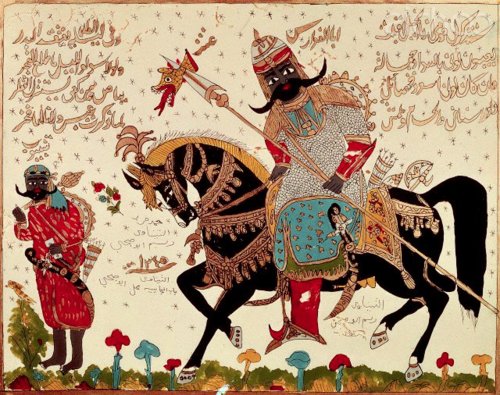
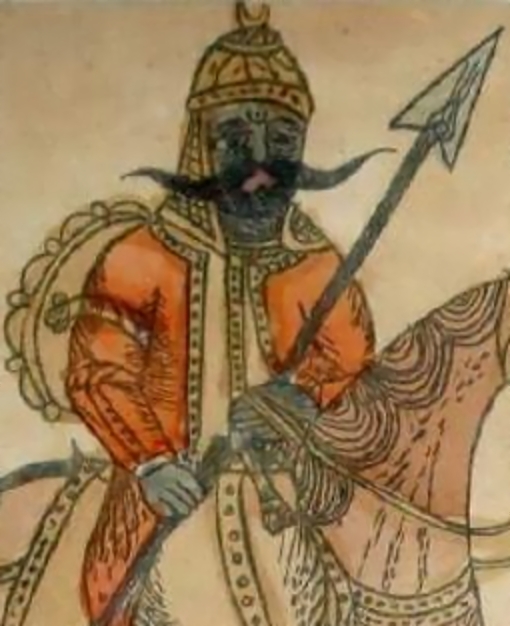
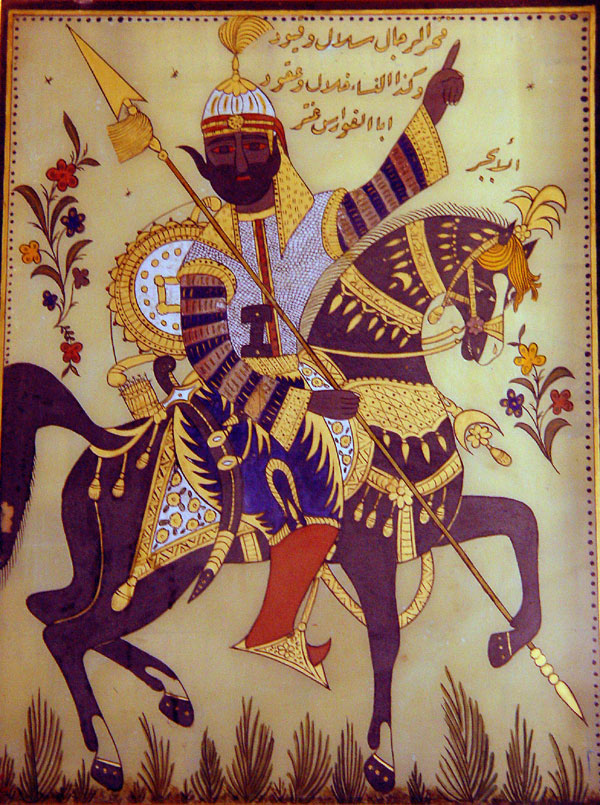
Antarah ibn Shaddad al-Absi (525–608 AD), often called Antar, was a pre-Islamic Arab poet and warrior from the Banu Abs tribe. He is remembered for his poetry and eventful life. His most famous poem belongs to the Mu'allaqat, a set of seven "hanging odes" that legend says were once displayed in the Kaaba at Mecca. The story of his life later grew into a long, elaborate romance.
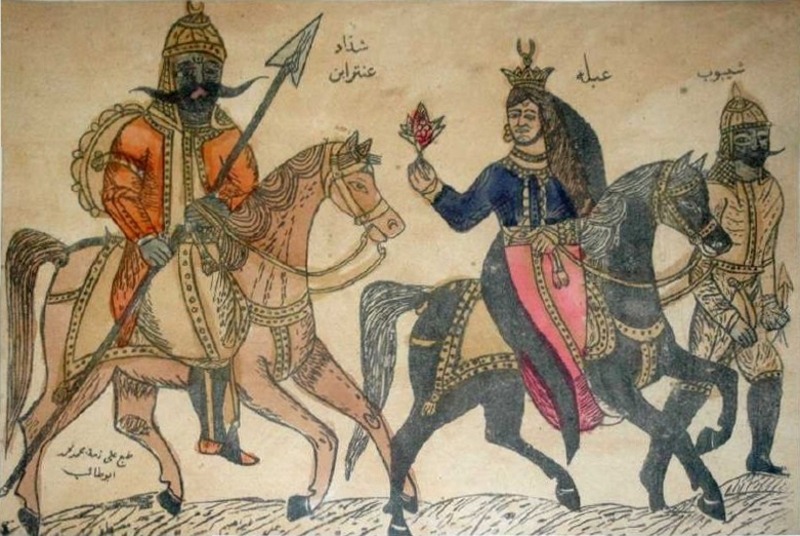
Born in Najd, Antarah was the son of Shaddad al-Absi, a respected fighter of the Banu Abs under chief Zuhayr, and an Ethiopian woman named Zabibah. He was one of the "three Arab crows"—famous dark-skinned Arabs—and grew up as a slave. He loved his cousin Abla but could not marry her because of his low status. He also faced hostility from his father's wife, Sumayya. Through his courage in battle and skill as a poet, he earned respect and attention.
His freedom came when the Tayy tribe attacked the Banu Abs at the start of the Dahis and al-Ghabra war. His father told him, "Antarah, fight with the warriors," but he replied that a slave only knows how to milk goats and serve masters. His father then said, "Defend your tribe, O Antar, and you are free." Antarah fought, and the tribe defeated the attackers.
After the victory, he sought permission to marry Abla, for whom he wrote many love poems. To gain that permission, he had to complete a challenge: obtaining a special camel from the Lakhmid kingdom in northern Arabia, then ruled by al-Nu'man III ibn al-Mundhir.
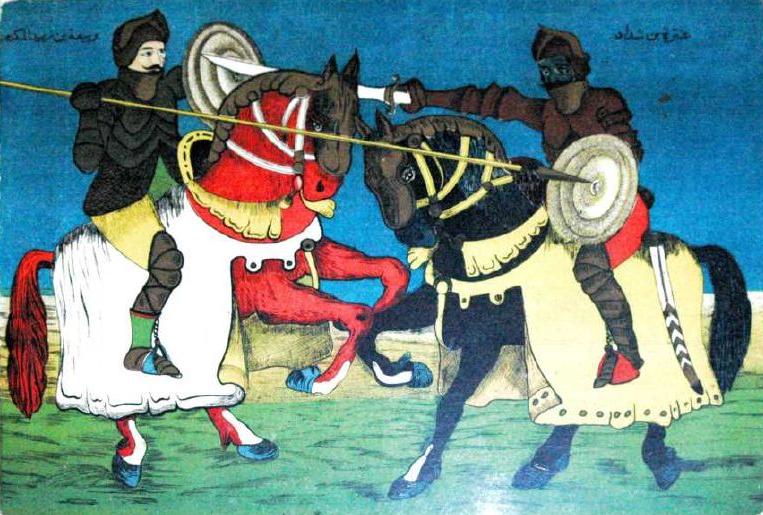
Antarah's poetry survives well and often celebrates chivalry, bravery in battle, and his love for Abla. It became immortal when one of his poems was included in the Mu'allaqat. His work is valued for its detailed descriptions of battles, armor, weapons, horses, the desert, and other aspects of his era.
His poems were published in Wilhelm Ahlwardt's *The Divans of the six ancient Arabic poets* (London, 1870) and separately in Beirut (1888). The *Romance of Antar* (*Sirat Antar ibn Shaddad*) was long passed down by oral tradition, eventually growing to enormous size. It was published in 32 volumes in Cairo (1889) and 10 volumes in Beirut (1871). Terrick Hamilton partly translated it as *Antar, a Bedoueen Romance* (4 volumes, London, 1820). A Turkish translation, *Qıssa-i Antar*, was made by order of Sultan Mehmed II in 1477; the translator is unknown, and manuscript copies are held in the Topkapı Palace Museum Library.
The time and manner of Antarah's death are disputed. Ibn Duraid says he was killed by Wasr ibn Jabir or in battle against the Tayy, while Abu Obeida claims he died naturally of old age.
The story of Antar and Abla was later expanded into a poetic saga traditionally credited to al-Asma'i, a poet in the court of Harun al-Rashid. It is still recited by storytellers in Arab coffee houses and has been compared to Arthurian romances in English literature. His house and stable became legendary. One of the seven clans of Bethlehem, the Anatreh, is named after Antarah and once guarded the Church of the Nativity.
In the folk epic *Sīrat ʿAntar*, Antarah anachronistically battles Crusaders and helps the Byzantine Emperor fight them. This reflects the epic's formation during the Crusades, when people in the Levant and Egypt hoped for a hero to drive out the "infidel Franks."
Russian composer Nikolai Rimsky-Korsakov wrote his Symphony No. 2 based on the Antar legend. In 1898, French painter Étienne Dinet published a translation of a 13th-century Arab epic poem *Antar*, introducing Antar ibn Shaddad to European audiences. Later works, such as Diana Richmond's *Antar and Abla*, further spread the legends. *Antar* is also the title of the first Palestinian opera, composed by Mustapha al-Kurd in 1988.
Lebanese painter Rafic Charaf created a series of paintings from the 1960s depicting the epics of Antar and Abla, reflecting his interest in regional folklore and considered a cornerstone of his work.
In the late 1940s, the British lorry manufacturer Thornycroft began designing an oilfield tractor for the Anglo-Persian Oil Company. The tractor, one of the largest in the world at the time, was named the Thornycroft Mighty Antar, referencing the legendary warrior's strength.
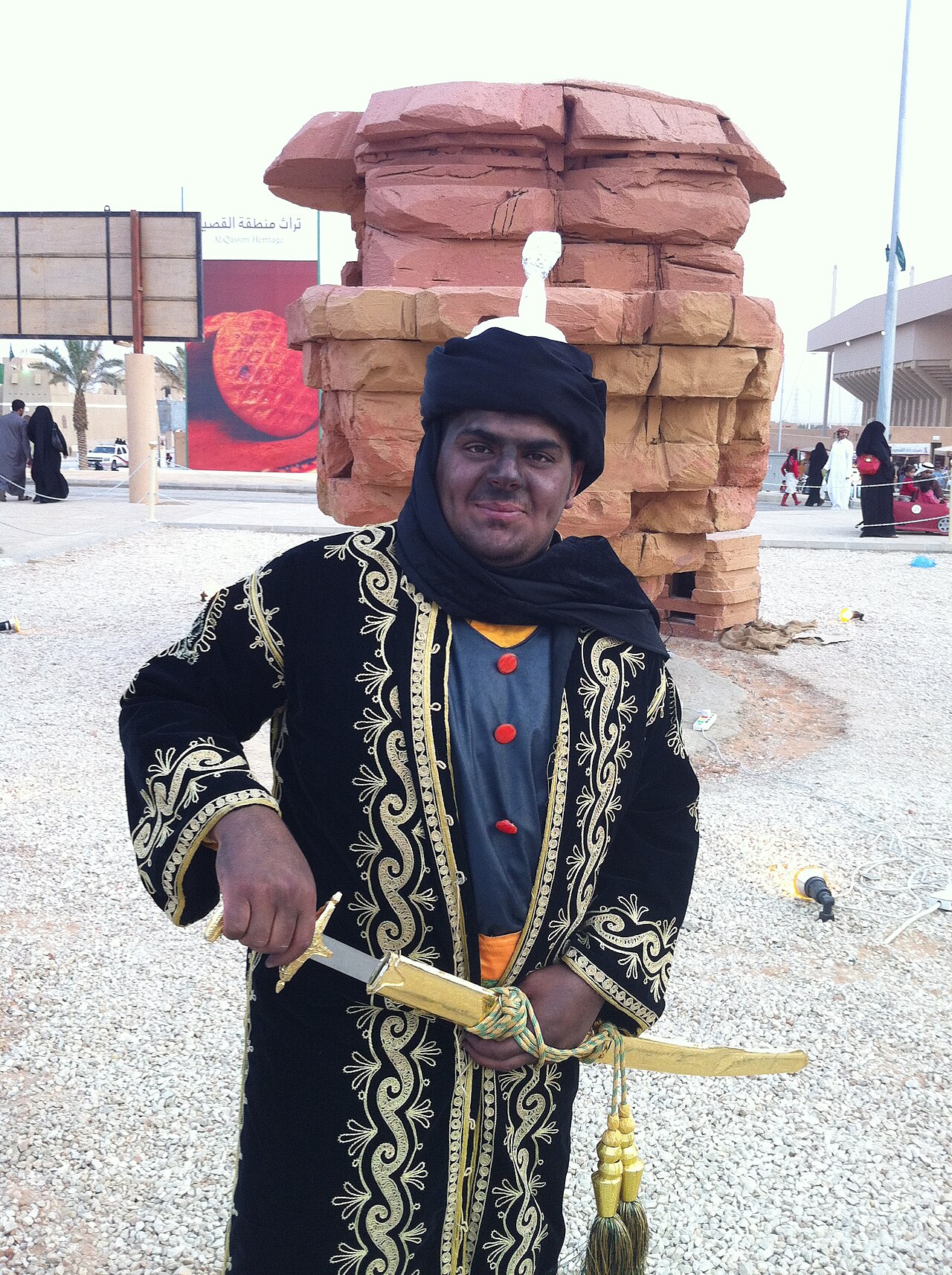
Antarah's character has appeared in TV and film, such as the 1961 movie *Antar Ben Shaddad* starring Farid Shawqi. Many of these portrayals, especially older ones, have been criticized for not casting actors with partially African ancestry or darker skin.
- born
- 525 AD, Najd, Arabian Peninsula
- field
- Poetry, knighthood
- nationality
- Pre-Islamic Arab (Banu Abs tribe)
- known_for
- His poetry in the Mu'allaqat; his love for Abla; his adventurous life and romanc
Verified Timeline
Lore & Background
Antarah was born in Najd in the Arabian Peninsula. His father was an Arab, Shaddad al-Absi, a respected warrior of the Banu Abs under their chief Zuhayr. His mother was an Ethiopian woman named Zabibah. Described as one of three 'Arab crows' (Aghribah al-'Arab)—famous Arabs with a dark complexion—Antarah grew up a slave. He fell in love with his cousin Abla, but could not hope to marry her owing to his position. He also gained the enmity of his father's wife Sumayya. He gained attention and respect for himself by his personal qualities and courage in battle, excelling as an accomplished poet and a mighty warrior. He earned his freedom after the Tayy tribe invaded the lands of the Banu Abs at the start of the Dahis and al-Ghabra war. When his father said to him, 'Antarah, fight with the warriors', he replied 'the slave doesn't know how to invade or how to defend, but is only good for milking goats and serving his masters'. His father answered him: 'Defend your tribe, O Antar, and you are free.' So he fought with his tribe and they were able to defeat the attackers. After defeating the invaders, he sought to gain permission to marry Abla, his cousin for whom he wrote many love poems. To secure permission to marry, Antarah had to face challenges including getting a special kind of camel from the Northern Arab Lakhmid Kingdom, then under al-Nu'man III ibn al-Mundhir. The time and manner of his death are a matter of dispute. Ibn Duraid has him slain by Wasr ibn Jabir or in battle against the Tayy, while according to Abu Obeida, he died naturally of old age.
Reader's Guide
Antarah's poetry is well-preserved and often talks of chivalrous values, courage, and heroism in battle as well as his love for Abla. It was immortalized when one of his poems was included in the Mu'allaqat, the collection of poems legendarily said to have been suspended in the Kaaba. His poetry's historical and cultural importance stems from its detailed descriptions of battles, armour, weapons, horses, desert, and other themes from his time. Antara's poems are published in Wilhelm Ahlwardt's The Divans of the six ancient Arabic poets (London, 1870); they have also been published separately at Beirut (1888). The Romance of Antar (Sirat Antar ibn Shaddad) is a work which was long handed down by oral tradition only; it has grown to immense proportions and has been published in 32 volumes at Cairo (1889), and in 10 volumes at Beirut, 1871. It was partly translated by Terrick Hamilton under the title Antar, a Bedoueen Romance (4 volumes, London, 1820). In addition, Sirat Antar was translated into Turkish by the order of Sultan Mehmed II in 1477. The story of Antar and Abla was embroidered into a poetic saga traditionally credited to al-Asma'i, a poet in the court of Harun al-Rashid. It is still recited by traditional storytellers in Arab coffee houses. Its importance has been compared with English literature's Arthurian romances. One of the seven clans of Bethlehem is called the Anatreh, named after Antarah. It formerly acted as the guardians of the Church of the Nativity. In the Folk Epic Sīrat ʿAntar, Antar regularly battles the Crusaders and even helps the Byzantine Emperor fight them off. The Russian composer Nikolai Rimsky-Korsakov wrote his Symphony No. 2 based on the legend of Antar. In 1898 the French painter Étienne Dinet published his translation of a 13th-century epic Arab poem Antar. Antar is the title of the first Palestinian opera, composed by the Palestinian musician Mustapha al-Kurd in 1988. In the late 1940s the British Lorry Manufacturer Thornycroft began the design of an oilfield tractor; the chosen name for the new Thornycroft tractor was the Thornycroft Mighty Antar, with the Antar moniker chosen with reference to the mighty Warrior Antar.
Did You Know?
- Antarah was one of three 'Arab crows' (Aghribah al-'Arab)—famous Arabs with a dark complexion.
- He earned his freedom when his father said 'Defend your tribe, O Antar, and you are free' during the Dahis and al-Ghabra war.
- The Romance of Antar (Sirat Antar ibn Shaddad) was published in 32 volumes at Cairo in 1889.
- Sirat Antar was translated into Turkish by order of Sultan Mehmed II in 1477.
- One of the seven clans of Bethlehem, the Anatreh, is named after Antarah and formerly acted as guardians of the Church of the Nativity.
Origins and the Weight of Inheritance
Antarah ibn Shaddad al-Absi (Arabic: عنترة بن شدّاد العبسيّ, romanized: ʿantara ibn šaddād al-ʿabsiyy; 525–608 AD) was born in Najd in the Arabian Peninsula. His father was an Arab, Shaddad al-Absi, a respected warrior of the Banu Abs under their chief Zuhayr. His mother was an Ethiopian woman named Zabibah. He was described as one of three 'Arab crows' (Aghribah al-'Arab)—famous Arabs with a dark complexion. Antarah grew up a slave. He fell in love with his cousin Abla, but could not hope to marry her owing to his position. He also gained the enmity of his father's wife Sumayya. He gained attention and respect for himself by his personal qualities and courage in battle, excelling as an accomplished poet and a mighty warrior.
The Battle That Broke His Chains
He earned his freedom after the Tayy tribe invaded the lands of the Banu Abs at the start of the Dahis and al-Ghabra war. When his father said to him, 'Antarah, fight with the warriors', he replied 'the slave doesn't know how to invade or how to defend, but is only good for milking goats and serving his masters'. His father answered him: 'Defend your tribe, O Antar, and you are free.' So he fought with his tribe and they were able to defeat the attackers. After defeating the invaders, he sought to gain permission to marry Abla, his cousin for whom he wrote many love poems. To secure permission to marry, Antarah had to face challenges including getting a special kind of camel from the Northern Arab Lakhmid Kingdom, then under al-Nu'man III ibn al-Mundhir.
Verses Hung in the Sacred House
Antarah's poetry is well-preserved and often talks of chivalrous values, courage, and heroism in battle as well as his love for Abla. It was immortalized when one of his poems was included in the Mu'allaqat, the collection of poems legendarily said to have been suspended in the Kaaba. His poetry's historical and cultural importance stems from its detailed descriptions of battles, armour, weapons, horses, desert, and other themes from his time. Antara's poems are published in Wilhelm Ahlwardt's The Divans of the six ancient Arabic poets (London, 1870); they have also been published separately at Beirut (1888). The Romance of Antar (Sirat Antar ibn Shaddad) is a work which was long handed down by oral tradition only; it has grown to immense proportions and has been published in 32 volumes at Cairo (1889), and in 10 volumes at Beirut, 1871. It was partly translated by Terrick Hamilton under the title Antar, a Bedoueen Romance (4 volumes, London, 1820). In addition, Sirat Antar was translated into Turkish by the order of Sultan Mehmed II in 1477.
A Legend That Outlived the Ages
The story of Antar and Abla was embroidered into a poetic saga traditionally credited to al-Asma'i, a poet in the court of Harun al-Rashid. It is still recited by traditional storytellers in Arab coffee houses. Its importance has been compared with English literature's Arthurian romances. One of the seven clans of Bethlehem is called the Anatreh, named after Antarah. It formerly acted as the guardians of the Church of the Nativity. In the Folk Epic Sīrat ʿAntar, Antar regularly battles the Crusaders and even helps the Byzantine Emperor fight them off. This anachronism stems from the fact that the Epic took shape during the era of the Crusades. The Russian composer Nikolai Rimsky-Korsakov wrote his Symphony No. 2 based on the legend of Antar. In 1898 the French painter Étienne Dinet published his translation of a 13th-century epic Arab poem Antar. Antar is the title of the first Palestinian opera, composed by the Palestinian musician Mustapha al-Kurd in 1988. In the late 1940s the British Lorry Manufacturer Thornycroft began the design of an oilfield tractor; the chosen name for the new Thornycroft tractor was the Thornycroft Mighty Antar, with the Antar moniker chosen with reference to the mighty Warrior Antar.
Gallery
Frequently Asked Questions
Who is Antarah ibn Shaddad?
He was a pre-Islamic Arab poet and warrior from the Banu Abs tribe, born around 525 AD in Najd on the Arabian Peninsula. He is celebrated for pairing literary brilliance with a life of bold adventure and knighthood.
What is the Mu'allaqat and how does Antarah fit into it?
The Mu'allaqat is a legendary set of seven 'hanging odes' traditionally said to have been displayed on the Kaaba in Mecca. Antarah's chief poem holds one of those seven slots, marking him as one of the most honored voices in pre-Islamic Arabic verse.
Who is Abla and what is her connection to Antarah?
Abla was the woman Antarah loved deeply, and their bond forms the emotional heart of his famous extended romance. Their story of courtship and devotion became one of the most celebrated love narratives in Arabic literary tradition.
Why is Antarah ibn Shaddad important in the history of Arabic poetry?
His place in the Mu'allaqat cements his status among the most revered pre-Islamic poets. Beyond his verse, his dual identity as a skilled knight and a gifted poet made him a lasting cultural icon of the Banu Abs tribe.
More in Poets Of The Ancient World 1-17
Spotted an error? Know more?
This is a living reference — every entry is fact-audited, and reader corrections feed straight into our audit queue. Suggest an edit · See this site's audit record