
Aśvaghoṣa
Buddhist philosopher, dramatist, and poet from ancient India.

NASA/Johns Hopkins University Applied Physics Laboratory/Carnegie Institution of · Public domain
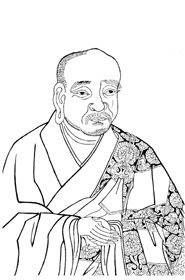
Aśvaghoṣa (c. 80 – c. 150 CE) was an Indian Buddhist philosopher, dramatist, poet, musician, and orator. He is thought to be the first Sanskrit dramatist and is regarded as the finest Indian poet before Kālidāsa. He was the leading figure among a circle of Buddhist court writers whose epic works matched the contemporary Ramayana in stature.
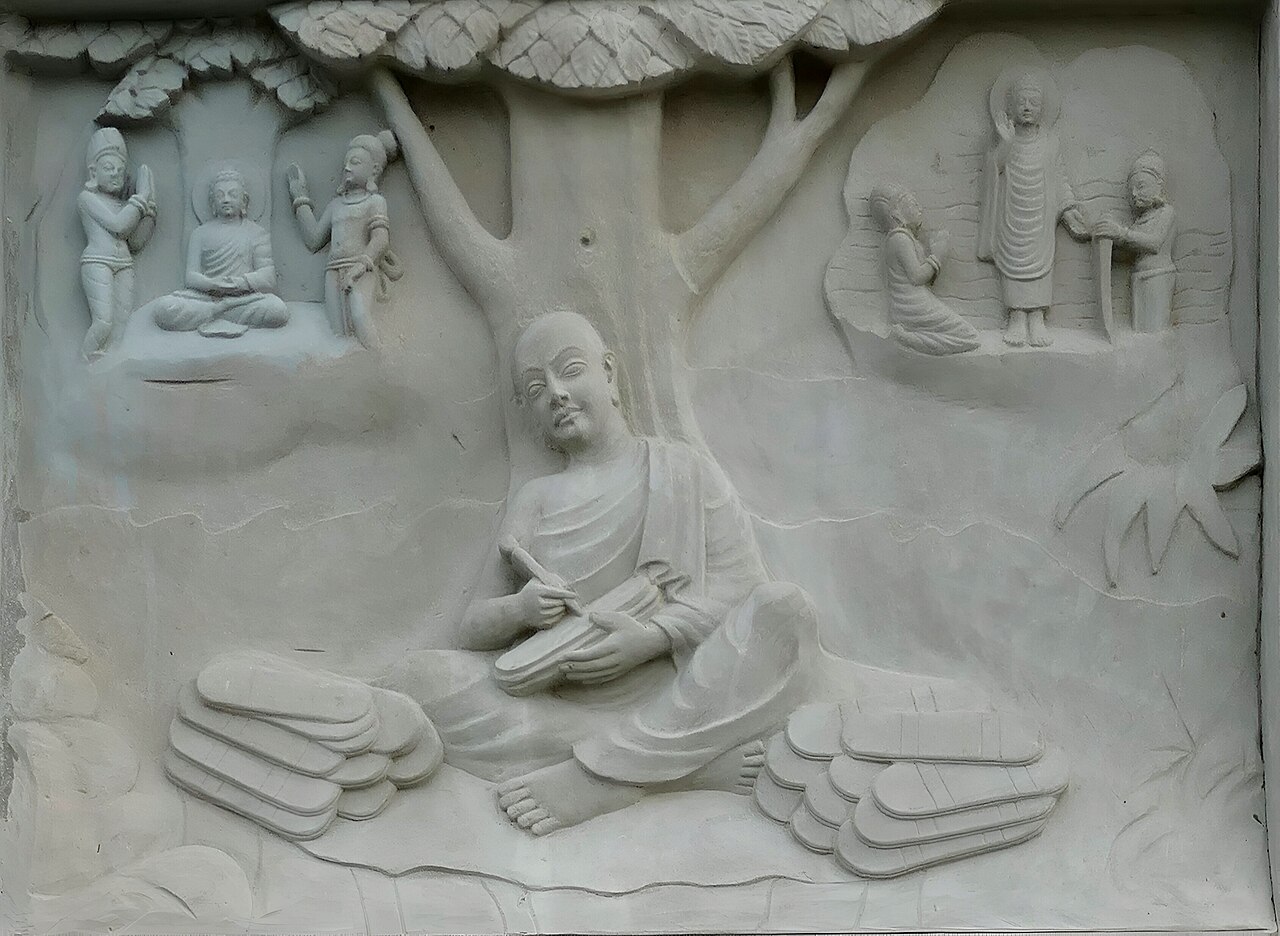
Born in Saketa, now known as Ayodhya, his original lay name is unknown; "Aśvaghoṣa" was a later nickname. A traditional biography, translated into Chinese by Kumārajīva, recounts that he was initially a wandering ascetic who defeated all challengers in debate. He challenged Buddhist monks to a debate, threatening that if none could meet him, they should stop beating the wood-block that signaled people to bring offerings. When no one responded, they stopped. The elder bhikṣu Pārśva then traveled from northern India and sounded the block. The ascetic accepted the challenge, and after seven days, a debate was held before the king, ministers, and many ascetics and brahmans. The loser agreed to become the other’s disciple. Pārśva spoke first, saying the world should be peaceful, with a long-lived king, plentiful harvests, and joy. The ascetic had no reply and became Pārśva’s disciple, receiving full ordination. He remained unconvinced until Pārśva demonstrated mastery of the Bases of Spiritual Power (r̥ddhipādāḥ), after which he gained faith. Pārśva then taught him the Five Faculties, Five Powers, Seven Factors, and Eightfold Noble Path, and he mastered the teaching.
Later, the central kingdom was besieged by a Kuṣāna king demanding 300,000 gold pieces in tribute. The king could only offer 100,000. The Kuṣāna king instead demanded the Buddha’s begging bowl, the converted monk, and the 100,000 gold pieces. The monk persuaded the central king to let him go, saying it would help spread the Dharma across the four continents. The Kuṣāna king’s ministers doubted the monk’s worth, so the king starved seven horses for six days. At an assembly, the monk preached the Dharma; even the horses, with their favorite food before them, listened with tears. Convinced, the people named him Aśvaghoṣa, meaning "Horse-Cry." Other sources say horses cried at his birth. He traveled throughout northern India, guiding others through his wisdom, and was revered by the four-fold assembly as "The Sun of Merit and Virtue."
It is now believed Aśvaghoṣa was not from the Mahayanist period and may have been ordained into a subsect of the Mahasanghikas. Recent analysis of his kavya poems suggests he may have used the Yogacarabhumi as a textual reference, especially for the *Saundarananda*, indicating possible affiliation with the Yogacara or Sautrantika schools.
Aśvaghoṣa wrote the epic *Buddhacharita* (Acts of the Buddha) in classical Sanskrit. The monk Yijing noted it was widely read across India and the South Sea islands, delighting readers with its concise expression of noble doctrine. He also wrote *Saundarananda*, a kāvya poem about the conversion of Nanda, the Buddha’s half-brother, with the first half describing Nanda’s life and the second half detailing Buddhist doctrines and ascetic practices. He wrote drama as well; a fragment of his *Śāriputraprakaraṇa* survives in Sanskrit. Several other works, such as the *Tridaṇḍamālā* (preserved in a single Sanskrit manuscript), are attributed to him but of questionable authorship.
- born
- Saketa (today known as Ayodhya), India
- died
- c. 150 CE
- field
- Buddhist philosophy, drama, poetry, music, oratory
- nationality
- Indian
- known_for
- First Sanskrit dramatist; author of Buddhacharita and Saundarananda; spiritual adviser of Kanishka
Lore & Background
Aśvaghoṣa was born in Saketa, now Ayodhya. His original lay name is unknown; Aśvaghoṣa is a later nickname. According to a traditional biography translated into Chinese by Kumārajīva, he was originally a wandering ascetic who defeated all-comers in debate. He challenged Buddhist monks to debate, and when none could meet him, they stopped beating the wood-block that signaled offerings. The elder bhikṣu Pārśva traveled from northern India, sounded the block, and after a seven-day debate before the King, Ministers, and many ascetics and brahmans, Aśvaghoṣa was bound to become Pārśva's disciple. He was ordained as a bhikṣu and later mastered the teaching after Pārśva demonstrated the Bases of Spiritual Power.
Reader's Guide
Aśvaghoṣa's significance lies in his pioneering role as the first Sanskrit dramatist and his influence on Indian poetry before Kālidāsa. He wrote in Classical Sanskrit, whereas much earlier Buddhist literature was in Pāli and Prakrit. His epic Buddhacharita, a life of the Buddha, was extensively read across India and the South Sea countries, as noted by the monk I-tsing. He also wrote Saundarananda, a kāvya poem on the conversion of Nanda, and a drama fragment, Śāriputraprakaraṇa, survives. Works attributed to him include Tridaṇḍamālā, Sutralankara, and Vajrasuchi, though authorship is disputed. The influential text The Awakening of Faith in the Mahayana was previously ascribed to him but is now considered Chinese in origin. He may have been associated with the Sarvāstivāda or Mahasanghika schools, and recent research suggests possible affiliation with Yogacara or Sautrantika. His legacy endures as a key figure in Buddhist literature and philosophy.
Did You Know?
- Aśvaghoṣa's name means 'Horse-Cry' in Sanskrit, derived from a story where horses wept while listening to his preaching.
- He was believed to be the contemporary and spiritual adviser of Kanishka in the first century CE.
- His original lay name is unknown; Aśvaghoṣa is a later nickname.
- The text The Awakening of Faith in the Mahayana was once attributed to him but is now thought to have been composed in China.
Gallery

Frequently Asked Questions
Who is Aśvaghoṣa?
Aśvaghoṣa was an Indian Buddhist thinker and artist who lived roughly between 80 and 150 CE. He worked across philosophy, drama, poetry, music, and public speaking, and is widely regarded as the first person to write drama in Sanskrit.
What are Aśvaghoṣa's most famous works?
His two major epics are Buddhacharita, a narrative of the Buddha's life, and Saundarananda, a story of spiritual awakening. These long narrative poems were so celebrated in their era that they were said to rival the Ramayana.
What role did Aśvaghoṣa play in Buddhism?
He served as both a Buddhist philosopher and a court spiritual adviser under the Kushan emperor Kanishka. His poetry functioned as a vehicle for spreading Buddhist teachings through vivid narrative and drama rather than dry doctrinal treatises.
Why is Aśvaghoṣa considered important in Indian literary history?
He is credited as the pioneer of Sanskrit dramatic writing, making him a foundational figure for all later Indian theater. He is also frequently cited as the greatest Indian poet before Kālidāsa, placing him at the very top of the pre-Kālidāsa literary canon.
Where was Aśvaghoṣa born and when did he die?
He was born in Saketa, the city now known as Ayodhya in northern India. He is believed to have died around 150 CE, leaving behind a body of work that shaped Indian literature and Buddhist thought for centuries.
More in Poets Of The Ancient World 1-17
Spotted an error? Know more?
This is a living reference — every entry is fact-audited, and reader corrections feed straight into our audit queue. Suggest an edit · See this site's audit record