L'après-midi d'un faune (poem)
A dreamlike monologue of a faun's sensual encounters.

Stéphane Mallarmé’s poem “L’après-midi d’un faune” follows a faun who wakes from an afternoon nap and, in a hazy monologue, recalls his morning encounters with several nymphs. It is Mallarmé’s most famous work and a key piece of French Symbolist literature. Paul Valéry called it the greatest poem in the French language.
Mallarmé first mentioned the poem, then called *Le Faune, intermède héroique*, in a June 1865 letter to Henri Cazalis, and worked on it until 1867. That year he submitted the initial version to the Théâtre-Français, which rejected it. A decade later, under the title *Improvisation d’un Faune*, it was turned down again, this time by publisher Alphonse Lemerre, who had previously included Mallarmé in *Parnasse contemporain*. Mallarmé then turned to Alphonse Derenne, a medical-book publisher hoping to broaden his catalog. The final text appeared in 1876 under the current title, published by Derenne. For this edition, Mallarmé’s friend Édouard Manet created four wood-engraved illustrations, printed in black and hand-tinted in pink by Manet himself to cut costs.
The poem inspired numerous musical works, most famously Claude Debussy’s *Prélude à l’après-midi d’un faune*. Other composers who drew on Mallarmé’s poem include Maurice Ravel (*Trois poèmes de Mallarmé*, 1913), Darius Milhaud (*Chansons bas de Stéphane Mallarmé*, 1917), and Pierre Boulez (*Pli selon pli*, 1957–62). It also served as the basis for ballets by Vaslav Nijinsky (1912), Jerome Robbins (1953), and Tim Rushton (2006). Debussy’s orchestral piece and Nijinsky’s ballet became important works in the development of modernism in the arts.
- author
- Stéphane Mallarmé
- field
- Poetry
- nationality
- French
- known_for
- Landmark of Symbolism in French literature
Lore & Background
The poem, Mallarmé’s most famous work and a cornerstone of French Symbolism, presents a faun’s dreamlike monologue after his afternoon nap, recounting his sensual encounters with nymphs from the morning. Its defining characteristic is this hazy, erotic reverie, blending reality and fantasy. The poem’s appearance in its final 1876 edition was enhanced by four wood-engraved embellishments created by Édouard Manet, a long-time friend of the poet. These illustrations were printed in black and then hand-tinted in pink by Manet himself to reduce costs. The work’s range of influence extends far beyond literature, inspiring major musical compositions, most notably Claude Debussy’s *Prélude à l’après-midi d’un faune*, as well as works by Maurice Ravel, Darius Milhaud, and Pierre Boulez. It also served as the basis for ballets by Vaslav Nijinsky, Jerome Robbins, and Tim Rushton, with Debussy’s orchestral piece and Nijinsky’s ballet becoming pivotal in the development of modernism in the arts. Paul Valéry famously deemed it the greatest poem in French literature.
Reader's Guide
Mallarmé’s poem, his most famous work, is a dreamlike monologue in which a faun, awakening from an afternoon nap, recounts his sensual encounters with nymphs earlier that morning. It stands as a landmark of French Symbolism. The work underwent a long evolution: initial versions, first mentioned in a letter from 1865, were written over the following two years. An early submission to the Théâtre-Français was rejected in 1867, and a later version was turned down by the publisher Alphonse Lemerre. Mallarmé then found Alphonse Derenne, a medical-book publisher seeking to diversify, who issued the final text in 1876. For that edition, Édouard Manet, a longtime friend of the poet, contributed four wood-engraved embellishments, printed in black and hand-tinted in pink by Manet himself to reduce costs. Beyond its literary significance, the poem inspired numerous musical works, most famously Claude Debussy’s *Prélude à l’après-midi d’un faune*. Other composers drawing from Mallarmé’s poetry include Maurice Ravel, Darius Milhaud, and Pierre Boulez. The poem also served as the basis for ballets by Vaslav Nijinsky, Jerome Robbins, and Tim Rushton. Debussy’s orchestral piece and Nijinsky’s ballet were highly influential in the development of modernism across the arts. Paul Valéry regarded the poem as the greatest in French literature.
Did You Know?
- The poem was originally titled Le Faune, intermède héroique.
- Claude Debussy's Prélude à l'après-midi d'un faune is the most prominent musical work inspired by the poem.
- Paul Valéry considered it to be the greatest poem in French literature.
The Poem as Artistic Making
At its root, the word 'poetry' descends from the Greek poiesis, a term that simply means 'making' — and a poem like L'après-midi d'un faune stands as one concrete instance of that creative act. Poetry, in the broadest sense, is a literary art that deploys the aesthetic and rhythmic qualities of language to summon meanings that sit alongside, or even replace, the literal surface of the words. It is not merely a vehicle for information; it embodies the internal creative impulse that drives human beings, made tangible through the act of composition. Shaped by the culture in which it is born, it also helps to reshape that very culture over time. Within the Western European academic tradition, poetry occupies the category of fine art — a discipline pursued primarily for its aesthetic value rather than any practical utility. The adjective 'fine' here signals the perceived purity of the discipline according to long-standing canons, not a judgment on the quality of any individual work. As a form of literature, a poem is a composition, either written or oral, and it belongs to the same family as books, stories, and other literary works, yet it distinguishes itself through the particular way it bends language toward resonance and suggestion.
Architectures of Sound and Form
A poem does not exist in a vacuum of pure meaning; it is built from a toolkit of poetic devices that poets select and arrange to produce musical or other artistic effects. These tools include assonance, alliteration, consonance, euphony, cacophony, onomatopoeia, rhythmic metre, rhyme schemes that govern the placement of phoneme groups, and sound symbolism. Poets then organize these devices into structures that may be strict or loose, conventional or entirely invented by the individual writer. Poetic structures vary dramatically depending on the language and the cultural conventions at play, but they frequently depend on rhythmic metre — patterns of syllable stress or syllable weight. Beyond the purely sonic, structures can also be semantic in nature, as in the volta required by a Petrarchan sonnet, where a turn of meaning reorganizes the poem's architecture. The broader landscape of poetic forms is vast: from the lengthy narrative sweep of the epic to the nineteen-line villanelle with its two refrains and repeating rhymes, from the seventeen-syllable haiku to the open, speech-rhythm-driven free verse that forgoes consistent meter and rhyme altogether. Each of these forms offers a different scaffold within which a poem can take shape.
The Grammar of Rhythm
Beneath the surface of any poem lies a precise mechanical grammar of rhythm, built from elements such as accents, caesura, couplets, elision, the metrical foot, intonation, meter, mora, prosody, scansion, stanza, and syllable. The fundamental building blocks of rhythm are the metrical feet: the spondee (two stressed syllables), the iamb (unstressed then stressed), the trochee (stressed then unstressed), the dactyl (one stressed followed by two unstressed), and the anapest (two unstressed followed by one stressed). The number of feet in a line is described in Greek-derived terminology, ranging from dimeter (two feet) up through trimeter, tetrameter, pentameter, hexameter, heptameter, and octameter. Certain patterns have become canonical across literary traditions: iambic pentameter, as found in Milton's Paradise Lost; dactylic hexameter, the backbone of Homer's Iliad and Ovid's Metamorphoses; iambic tetrameter in Marvell and Pushkin; trochaic octameter in Poe's The Raven; anapestic tetrameter in Carroll and Byron; and the alexandrine, or iambic hexameter, exemplified by Racine's Phèdre. These patterns provide the skeletal framework that gives a poem its pulse and its sense of measured progression.
A Lineage Stretching Back to Song
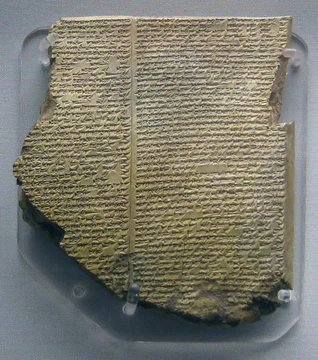
The history of poetry stretches back to the earliest human expressions, where verse was almost certainly recited or sung rather than silently read. Among the oldest surviving examples are hymns, such as the work of the Sumerian priestess Enheduanna, and poetry served as a practical means of preserving oral history, genealogy, and law. Many poems that survive from the ancient world are recorded prayers or narratives about religious subject matter, yet the corpus also includes historical accounts, instructions for everyday activities, love songs, and fiction. Over the centuries, poetry has passed through an extraordinary succession of periods, styles, and movements: from Augustan poetry in the age of Virgil, Horace, and Ovid, through Medieval, Romantic, and Modernist phases, to twentieth-century currents such as Surrealist automatic poetry, the Black Mountain school, Imagism, Objectivism, and the San Francisco Renaissance. There are also traditions rooted in specific cultures — Classical Chinese poetry, the Japanese tanka and haiku, the Arabic ghazal, the Italian sonnet credited to Giacomo da Lentini, and the constrained-tone jintishi of the Tang dynasty. A poem written in any era inherits, whether consciously or not, the weight of this long and diverse lineage.
More in Poetry Collections And Epic Poems 1-22
Spotted an error? Know more?
This is a living reference — every entry is fact-audited, and reader corrections feed straight into our audit queue. Suggest an edit · See this site's audit record