Henry IV, Part 1
Shakespeare's history play of rebellion, honor, and Prince Hal's coming-of-age.
Last updated

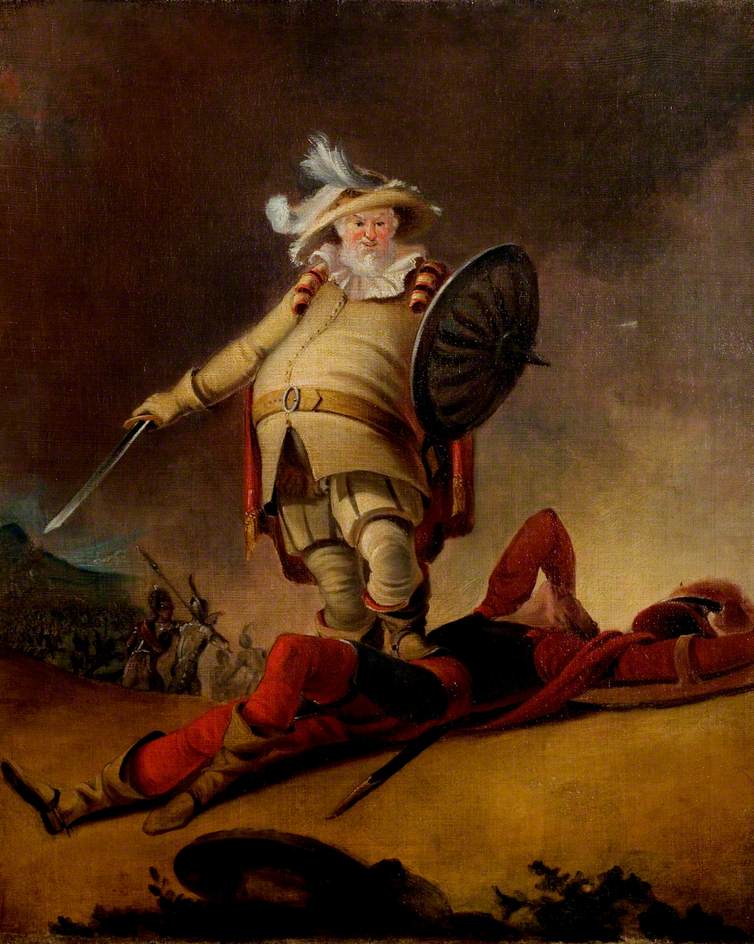
James Neagle / After Robert Smirke / John & Josiah Boydell · CC0
It combines political conflict with comic scenes featuring the charismatic knight Sir John Falstaff.[1][2]
Quick Facts
- Type
- Play
- Author
- William Shakespeare
- Composition period
- Mid-1590s
- Setting
- England, early 1400s
- Genre
- History play
- Notable character
- Sir John Falstaff
Facts from the source article.
Key facts and history
The political action begins when King Henry and Hotspur disagree over hostage treatment after the Battle of Homildon Hill.[3] Falstaff uses his recruitment commission to take bribes and withholds wages from the poor soldiers he enlists.[4] At the Battle of Shrewsbury, Hal fights Hotspur while Falstaff feigns death to avoid combat.[5][6] After Hal leaves Hotspur's body, Falstaff stabs the corpse and claims the kill, which Hal allows.[6]
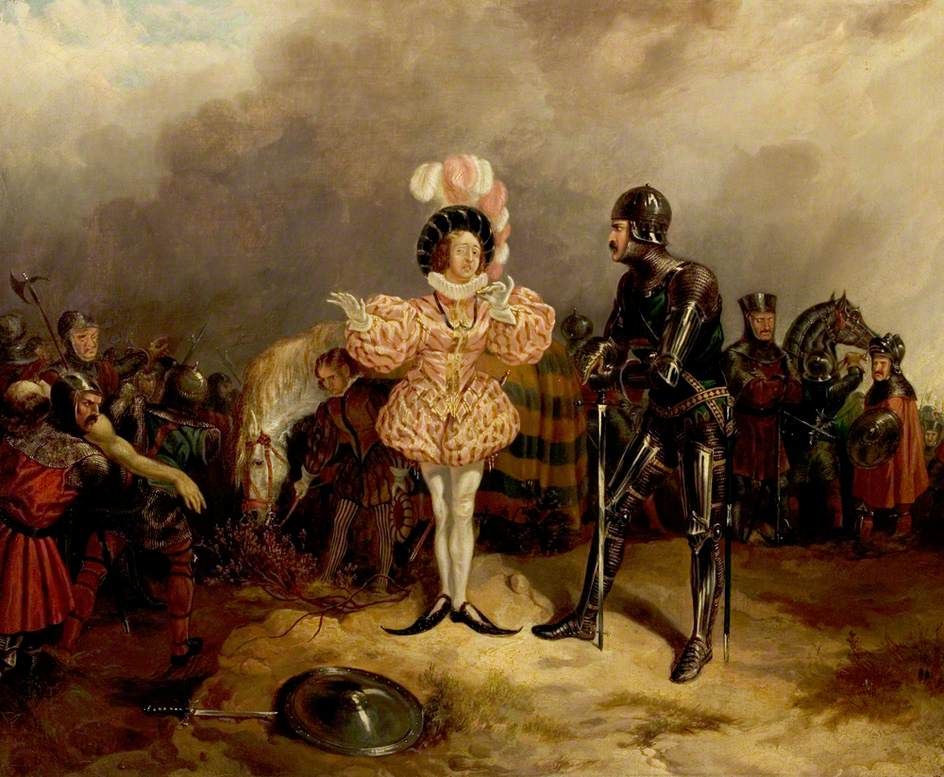
The play ends with King Henry pleased by the rebel defeat and Hal releasing the prisoner Douglas without ransom.[7][8] The prince reconciles with his father, is put in charge of an army, and swears to kill Hotspur.[4] The Earl of Northumberland and the Archbishop of York take over leadership of the ongoing rebellion.[8]
What the cited sources add
King Henry laments that he can "See riot and dishonour stain the brow of young Harry" because of Hal's lowborn companions.[2] The rebels resolve to depose "this ingrate and cankered Bolingbroke" after the king's harsh treatment.[3] Falstaff later states he wants to "live cleanly as a nobleman should do" after Hal's generous gesture.[9] Multiple early editions and the popularity of the character John Falstaff demonstrate that the play was one of Shakespeare's most popular during his lifetime.[1]
References
- Wikipedia, "Henry IV, Part 1" (CC BY-SA 4.0), which cites: Weil and Weil, p 1. (original not read by us) en.wikipedia.org
- Wikipedia, "Henry IV, Part 1" (CC BY-SA 4.0), which cites: Henry IV, Part 1, 1.1.14-15, in Bevington (1997) (original not read by us) en.wikipedia.org
- Wikipedia, "Henry IV, Part 1" (CC BY-SA 4.0), which cites: Henry IV, Part 1, 1.3.137, in Bevington (1997). (original not read by us) en.wikipedia.org
- Wikipedia, "Henry IV, Part 1" (CC BY-SA 4.0), which cites: Henry IV, Part 1, 4.2.12, in Bevington (1997) (original not read by us) en.wikipedia.org
- Wikipedia, "Henry IV, Part 1" (CC BY-SA 4.0), which cites: Henry IV, Part 1, 4.3.30, 4.4.19, in Bevington (1997). (original not read by us) en.wikipedia.org
- Wikipedia, "Henry IV, Part 1" (CC BY-SA 4.0), which cites: Henry IV, Part 1, 5.4.110ff., in Norton (2008). (original not read by us) en.wikipedia.org
- Wikipedia, "Henry IV, Part 1" (CC BY-SA 4.0), which cites: Henry IV, Part 1, 55.19, in Bevington (1997). (original not read by us) en.wikipedia.org
- Wikipedia, "Henry IV, Part 1" (CC BY-SA 4.0), which cites: Henry IV, Part 1, 5.5.28ff., in Norton (2008). (original not read by us) en.wikipedia.org
- Wikipedia, "Henry IV, Part 1" (CC BY-SA 4.0), which cites: Henry IV, Part 1, 5.4.138ff., in Norton (2008). (original not read by us) en.wikipedia.org
Each numbered sentence above was checked against the source it cites before publication. Sentences citing Wikipedia adapt text from the English Wikipedia article Henry IV, Part 1 (contributors), used under CC BY-SA 4.0; this entry is available under the same licence. Other sources were used for facts only; no text or images are copied from them.
More in Plays & Drama
Sources
Compiled from Wikipedia and the sources listed below. Text from Wikipedia is available under CC BY-SA 4.0; this entry is adapted from it.
- Wikipedia: Henry IV, Part 1 (CC BY-SA 4.0).
Spotted an error? Know more?
Reader corrections go straight into our review queue. Suggest an edit · How this site is sourced