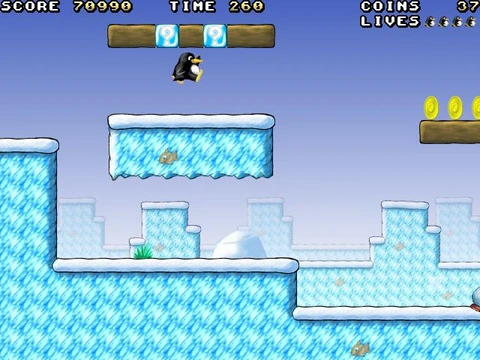
Adventure Island (video game)
Adaptation of Wonder Boy starring Master Higgins.

Ryan Cash of Snowman · CC BY-SA 3.0
Adventure Island, known in Japan as Takahashi Meijin no Bōken Jima, is a platform game produced by Hudson Soft. It was released for the Famicom in Japan on September 12, 1986, and for the MSX in 1987, later for the Nintendo Entertainment System in North America in 1988 and in the PAL region in 1992. The game is an adaptation of the arcade game Wonder Boy, developed by Escape for Sega, and spawned a series of sequels with no connection to the Wonder Boy series.
Quick Facts
- Title
- Adventure Island
- Developer
- Hudson Soft
- Artist
- Susumu Matsushita
- Composer
- Jun Chikuma
- Platforms
- NES, MSX, Game Boy Advance, GameCube, PlayStation 2
- Released
- NES JP · September 12, 1986 · NA · September 1988 · PAL · 1992 MSX JP · September 12, 1986
- Genre
- Platform
- Modes
- Single-player
Facts from the source article.
Lore & Background
The player controls Master Higgins, a young man who ventures to Adventure Island in the South Pacific after hearing that the Evil Witch Doctor kidnapped Princess Tina. To rescue her, Higgins must survive 32 stages divided into eight worlds, each with four rounds and four checkpoints. The game ends when the player saves the girl after defeating the eighth and final form of the Evil Witch Doctor. Higgins loses a life upon touching enemies, attacks, fire roasts, pitfalls, or water, and has a health gauge that depletes over time (but not when tripping on rocks, which only causes a brief stun). Health can be replenished with fruit or milk bottles, and extra lives are awarded at score milestones.
Reader's Guide
Adventure Island began development as a direct port of the Sega arcade game Wonder Boy, partial rights to which Hudson Soft obtained from developer Escape. However, because Escape had signed away the Wonder Boy name and characters to Sega, Hudson created a new protagonist modeled after its spokesman Takahashi Meijin, renamed Master Higgins in western versions. The game is widely regarded as one of the most difficult NES games, with GameSpot calling it a 'fast-paced, challenging platformer' and GamesRadar+ ranking it the 23rd best NES game ever made, praising its quality level design. The rights to the series are currently owned by Konami, which absorbed Hudson Soft in 2012. The game has been re-released on multiple platforms, including the Game Boy Advance as a Famicom Mini title, the Wii and Wii U Virtual Console, and a Japan-exclusive remake for PlayStation 2 and GameCube.
Did You Know?
- The protagonist is named after Hudson Soft's spokesman Takahashi Meijin in Japan, and Master Higgins in western versions.
- The Evil Witch Doctor can change his head into up to eight different types, requiring increasing hits to defeat.
- A hidden cloud can warp the player to a bonus stage, uncovered by standing still for a short period.
From Wonder Boy to Master Higgins: A Franchise's Birth
Adventure Island did not arrive fully formed. Its origins trace back to a direct port of Wonder Boy, the Sega arcade title created by developer Escape (later rebranded as Westone Bit Entertainment). Hudson Soft secured partial rights to the game, but a critical complication arose: Escape had already transferred ownership of the Wonder Boy name and its characters to Sega. Forced to reinvent the identity, Hudson built a new hero modeled on their own corporate spokesman, Takahashi Meijin, and the Japanese title reflected this directly. For Western audiences, the character was further renamed Master Higgins, with the UK version calling him Master Wigins and Mexico's version using the name Capulinita. This early divergence set the tone for the entire franchise. While the Wonder Boy series pivoted toward action RPG mechanics starting with Wonder Boy in Monster Land, the Adventure Island sequels largely preserved the original platforming formula. Hudson even ported several Wonder Boy sequels to the TurboGrafx-16 under altered titles and character designs, and in 2004 adapted Wonder Boy in Monster Land for mobile phones as Super Adventure Island. Today, Konami holds the Adventure Island rights following its 2012 absorption of Hudson Soft.
A South Pacific Odyssey: Structure and Story
Set in the South Pacific, Adventure Island casts the player as a young man who has traveled to a mysterious island after learning that an Evil Witch Doctor has abducted Princess Tina. The rescue mission unfolds across 32 distinct stages organized into a clear hierarchical structure: eight areas, each containing four rounds, with every round further broken into four checkpoints. This layered architecture gives the game a satisfying rhythm of incremental progress. At the conclusion of each area's fourth round, the player must face a boss encounter before advancing. The narrative arc reaches its climax when the player defeats the eighth and final form of the Evil Witch Doctor, freeing the kidnapped girl. The game's release timeline spanned several years and regions: it debuted in Japan on September 12, 1986, for both the Famicom and MSX platforms, reached North American NES owners in 1988, and finally arrived in the PAL region in 1992. This staggered rollout meant the title found new audiences across a full six-year window, cementing its place in the library of multiple gaming generations.
Survival, Weapons, and Hidden Treasures
Master Higgins enters each life unarmed, able to strike enemies only after collecting a stone axe hidden at specific points within a stage. That axe can be traded for magical fireballs, which offer greater range and the unique ability to shatter rocks and rolling stones that the axe cannot break. Survival pressure comes from multiple sources: touching an enemy or their attack, leaping into fire, falling into pits or water, and even tripping on rocks all drain the player. A health gauge beginning at 11 points (capped at 16) slowly depletes over time, and can be restored by picking up fruit or a milk bottle. Extra lives appear at score thresholds of 50,000, 100,000, and 200,000 points. The game rewards exploration with a bee-like fairy called Honey Girl, granting roughly ten seconds of invincibility, and a special pot that doubles the end-of-stage bonus. Eggs scattered throughout stages—some visible, some hidden behind spots where a thrown weapon vanishes—contain bonus items or the punishing eggplant, which drains the life meter. Standing still in certain cloud-marked areas triggers bonus stages where Higgins collects fruit worth 500 points each until he falls, returning safely to the next checkpoint.
The Eight-Headed War and a Franchise's Long Tail
The Evil Witch Doctor serves as Adventure Island's recurring antagonist, and his design escalates with each area. He possesses the ability to change his head into up to eight distinct types, and the player must strike that head a specific number of times to defeat him. The first form demands eight hits, and every subsequent form requires two more, culminating in the eighth and final form that takes 22 hits to destroy. Despite the changing appearance, his attack pattern remains consistent across all forms; only his durability, movement speed, and fireball velocity increase. Upon defeat, he simply swaps his head and retreats to the next area. When his final form is broken, he tumbles into a pit and Princess Tina is freed. The franchise's afterlife extended well beyond the original: two NES sequels (Adventure Island II and 3) and a Japan-only Famicom fourth entry followed. A PlayStation 2 and GameCube remake shipped exclusively in Japan on December 18, 2003, while the NES version was reissued as a GBA Famicom Mini in 2004 and later on Virtual Console for Wii (2008) and Wii U (2014).
Gallery



Frequently Asked Questions
What is Adventure Island?
Adventure Island is a side-scrolling platformer created by Hudson Soft, first shipped for the Famicom in Japan on September 12, 1986. It presents 32 stages of level-based running, jumping, and enemy-dodging that became the template for the entire franchise.
Who do you play as in Adventure Island?
The player takes on the role of Master Higgins, called Takahashi Meijin in the Japanese release, a clumsy but determined adventurer. He is the same character archetype as the hero of Sega's Wonder Boy, rebranded and re-illustrated for Hudson's version.
How does Adventure Island relate to the Wonder Boy series?
Adventure Island is a direct adaptation of Escape's Sega arcade title Wonder Boy, reworked with new sprites, music, and a different protagonist name. After this single crossover, the two lineages diverged completely and have no further shared continuity.
Which platforms can you play Adventure Island on?
The game appeared on the Famicom (1986), MSX (1987), the North American NES (1988), and the PAL-region NES (1992). No other first-party ports were produced by Hudson Soft for the original title.
Why is Adventure Island considered important to the platformer genre?
It launched a long-running Hudson Soft franchise that defined a generation of lighthearted, accessible platforming on 8-bit and 16-bit consoles. Its formula of short, punchy stages with a forgiving difficulty curve influenced countless later titles in the genre.
More in Platformers 1-24
Spotted an error? Know more?
Reader corrections go straight into our review queue. Suggest an edit · How this site is sourced