Brassicaceae
The mustards, crucifers, or cabbage family: a medium-sized and economically important family of flowering plants.
Last updated
The Brassicaceae family, also known by the older name Cruciferae, is a moderately sized group of flowering plants that holds significant economic value. Commonly referred to as mustards, crucifers, or the cabbage family, its members are mostly herbaceous, though a few grow as shrubs. Their leaves are simple—sometimes deeply cut—lack stipules, and are arranged alternately on the stem or in a basal rosette. Flower clusters, or inflorescences, appear at the stem tips and have no bracts.
Each flower consists of four separate sepals, four separate petals arranged alternately with the sepals, two shorter stamens, and four longer stamens, all free from one another. The fruit contains seeds arranged in rows, separated by a thin internal wall called a septum. This family is split into two subfamilies, Brassicoideae and Aethionemoideae, and includes more than 350 accepted genera.
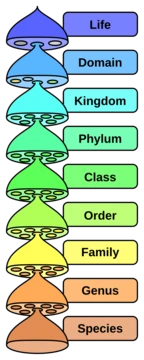
Scientific classification
- CladeTracheophytes
- CladeAngiosperms
- CladeEudicots
- CladeRosids
- OrderBrassicales
- FamilyBrassicaceae
Named by Burnett
Sources: Wikipedia taxobox: Brassicaceae (CC BY-SA 4.0)
Lore & Background
Carl Linnaeus in 1753 regarded the Brassicaceae as a natural group, naming them 'Klass' Tetradynamia. Alfred Barton Rendle placed the family in the order Rhoeadales, while George Bentham and Joseph Dalton Hooker in their system published from 1862 to 1883, assigned it to their cohort Parietales (now the class Violales). Following Bentham and Hooker, John Hutchinson in 1948 and again in 1964 thought the Brassicaceae to stem from near the Papaveraceae. In 1994, a group of scientists including Walter Stephen Judd suggested to include the Capparaceae in the Brassicaceae.
Early DNA-analysis showed that the Capparaceae—as defined at that moment—were paraphyletic, and it was suggested to assign the genera closest to the Brassicaceae to the Cleomaceae. The Cleomaceae and Brassicaceae diverged approximately 41 million years ago. All three families have consistently been placed in one order (variably called Capparales or Brassicales). The APG II system merged Cleomaceae and Brassicaceae.
Reader's Guide
Species belonging to the Brassicaceae are mostly annual, biennial, or perennial herbaceous plants, some are dwarf shrubs or shrubs, and very few vines. Although generally terrestrial, a few species such as water awlwort live submerged in fresh water. They may have a taproot or a sometimes woody caudex that may have few or many branches, some have thin or tuberous rhizomes, or rarely develop runners. Few species have multi-cellular glands.
Hairs consist of one cell and occur in many forms: from simple to forked, star-, tree- or T-shaped, rarely taking the form of a shield or scale. They are never topped by a gland. The stems may be upright, rise up towards the tip, or lie flat, are mostly herbaceous but sometimes woody. Stems carry leaves or the stems may be leafless (in Caulanthus), and some species lack stems altogether.
The leaves do not have stipules, but there may be a pair of glands at base of leaf stalks and flower stalks. The leaf may be seated or have a leafstalk. The leaf blade is usually simple, entire or dissected, rarely trifoliolate or pinnately compound. A leaf rosette at the base may be present or absent.
The leaves along the stem are almost always alternately arranged, rarely apparently opposite. The stomata are of the anisocytic type. The genome size of Brassicaceae compared to that of other Angiosperm families is very small to small (less than 3.425 million base pairs per cell), varying from 150 Mbp in Arabidopsis thaliana and Sphaerocardamum spp., to 2375 Mbp Bunias orientalis. The number of homologous chromosome sets varies from four (n=4) in some Physaria and Stenopetalum species, five (n=5) in other Physaria and Stenopetalum species, Arabidopsis thaliana and a Mathiola species, to seventeen (n=17).
About 35% of the species in which chromosomes have been counted have eight sets (n=8). Due to polyploidy, some species may have up to 256 individual chromosomes, with some very high counts in the North American species of Cardamine, such as C. diphylla. Hybridisation is not unusual in Brassicaceae, especially in Arabis, Rorippa, Cardamine and Boechera. Hybridisation between species originating in Africa and California, and subsequent polyploidisation is surmised for Lepidium species native to Australia and New Zealand.
Did You Know?
- Pieris rapae and other butterflies of the family Pieridae are some of the best-known pests of Brassicaceae species planted as commercial crops.
- Trichoplusia ni (cabbage looper) moth is also becoming increasingly problematic for crucifers due to its resistance to commonly used pest control methods.
- Some rarer Pieris butterflies, such as P. virginiensis, depend upon native mustards for their survival in their native habitats.
- Some non-native mustards such as Alliaria petiolata (garlic mustard), an extremely invasive species in the United States, can be toxic to their larvae.
Frequently Asked Questions
What is Brassicaceae known for?
The family is best known for producing a huge lineup of edible cruciferous vegetables and for housing Arabidopsis thaliana, the go-to model organism in plant genetics research. It also plays a major role in spice production through its mustard members.
What are Brassicaceae's weaknesses or dark side?
Several members of the family are notorious agricultural pests or invasive weeds that outcompete native vegetation and damage crops. This dual nature—nourishing staple crops while also producing problematic species—gives the family a complicated reputation in the plant world.
More in Plant Families
Sources
Compiled from Wikipedia and the sources listed below. Text from Wikipedia is available under CC BY-SA 4.0; this entry is adapted from it.
- Wikipedia: Brassicaceae (CC BY-SA 4.0).
- Word definitions: the Codexery glossary, each quoted from its Wikipedia article.
Spotted an error? Know more?
Reader corrections go straight into our review queue. Suggest an edit · How this site is sourced