Poaceae
True grasses, the most economically important plant family.

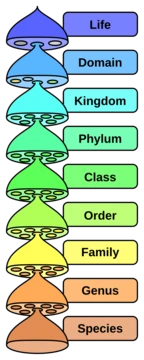
Poaceae (pronounced poh-AY-see-eye or grə-MIN-ee-eye), also called Gramineae, is a family of flowering plants that includes what people usually mean when they say "grass." This group covers cereal crops, bamboos, wild grassland species, and the grasses planted in lawns and pastures. With roughly 780 genera and about 12,000 species, Poaceae ranks as the fifth-largest plant family, behind Asteraceae, Orchidaceae, Fabaceae, and Rubiaceae.
Economically, no other plant family matters more. Staple foods from domesticated cereals—maize, wheat, rice, oats, barley, and millet—feed people directly and also provide feed for meat-producing animals. Rice alone supplies 20% of the world's dietary energy, wheat 19%, and maize 5%. Beyond food, some grasses serve as building materials (bamboo, thatch, straw), and others, especially maize, are turned into biofuel (ethanol).
Grass stems, called culms, are usually hollow except at the nodes, where leaves attach. Leaves grow in two alternating rows along the stem, with parallel veins. The lower part of each leaf wraps around the stem as a sheath, while the blade extends outward. Grasses grow from the base of the blade, an adaptation that lets them survive frequent grazing or mowing. Many grass blades contain silica phytoliths that make them tough and discourage herbivores; some, like sword grass, can cut human skin. A small structure called the ligule sits where the sheath meets the blade, blocking water and insects.
Grass flowers are arranged in spikelets, each spikelet holding one or more florets. Spikelets cluster into panicles or spikes. At the base of a spikelet are two bracts called glumes; above them, each floret has an outer bract (lemma) and an inner one (palea). Most grass flowers are hermaphroditic (maize is a notable exception) and are wind-pollinated, though insects sometimes help. The perianth is reduced to two tiny scales, lodicules, which swell to open the lemma and palea. The fruit is a caryopsis, where the seed coat fuses with the fruit wall. A tiller is a leafy shoot that grows from the seed after the first shoot.
Grasslands—savannahs, prairies, and similar ecosystems—cover about 40.5% of Earth's land area, excluding Greenland and Antarctica. Grasses also thrive in wetlands, forests, and tundra. Despite the common name "grass," seagrasses, rushes, and sedges are not true grasses. Rushes and sedges belong to the same order (Poales) as Poaceae, but seagrasses are in the order Alismatales. All, however, are monocots.
Grasses can be annual or perennial. Their stems are cylindrical (rarely flattened, never three-angled) and hollow, plugged at the nodes. Leaves are alternate, distichous (arranged in one plane), and have parallel veins. Each leaf has a lower sheath and a blade with smooth edges. The ligule, a membrane or fringe of hairs, sits at the junction.
Grasses grow from the base of the blade, not from the stem tip—an adaptation to grazing. There are three growth habits: bunch-type (caespitose), stoloniferous, and rhizomatous. Grasses use two photosynthetic pathways: C3 (cool-season) and C4 (warm-season). C4 grasses have specialized Kranz leaf anatomy that improves water efficiency, making them better suited to hot, dry climates. Examples of annual cool-season grasses include wheat, rye, annual bluegrass, and oat; perennial cool-season types include orchardgrass, fescue, Kentucky bluegrass, and perennial ryegrass. Annual warm-season grasses include maize, sudangrass, and pearl millet; perennial warm-season ones include big bluestem, Indiangrass, Bermudagrass, and switchgrass. All C4 grasses belong to the PACMAD clade, but C4 photosynthesis evolved independently at least twenty times across different subfamilies and genera. For instance, in the genus *Aristida*, one species (*A. longifolia*) is C3, while the other roughly 300 are C4. The entire tribe Andropogoneae—which includes maize, sorghum, sugar cane, Job's tears, and bluestem grasses—is C4. About 46% of grass species are C4.
The name Poaceae was coined by John Hendley Barnhart in 1895, based on the tribe Poeae (named by Robert Brown in 1814) and the type genus *Poa* (described by Carl Linnaeus in 1753). It comes from the Ancient Greek *póa*, meaning "fodder." Grasses became widespread toward the end of the Cretaceous period, and fossilized dinosaur dung contains evidence of them.
- family_name
- Poaceae (Gramineae)
- family_rank
- fifth-largest plant family
- economic_importance
- most economically important plant family
- photosynthetic_types
- C3 and C4 grasses
- global_grassland_coverage
- 40.5% of land area (excluding Greenland and Antarctica)
Lore & Background
The term is derived from the Ancient Greek πόα (póa, 'fodder'). Grasses include some of the most versatile plant life-forms. They became widespread toward the end of the Cretaceous period, and fossilized dinosaur dung (coprolites) belonging to the sauropod titanosaurs (though this provenance has been questioned) have been found containing phytoliths of a variety that include grasses related to modern rice and bamboo.
Reader's Guide
Poaceae are the most economically important plant family, providing staple foods from domesticated cereal crops such as maize, wheat, rice, oats, barley, and millet for people and as feed for meat-producing animals. Through direct human consumption, they supply a substantial portion of dietary energy: rice provides 20%, wheat 19%, and maize 5%. Some members are used as building materials (bamboo, thatch, and straw); others provide biofuel, primarily via conversion of maize to ethanol. Grasses dominate grasslands such as savannah and prairie, which constitute 40.5% of Earth's land area (excluding Greenland and Antarctica). Their success lies in morphology—hollow stems, basal leaf growth adapted to grazing—and physiological diversity, including both C3 and C4 photosynthetic pathways. The C4 grasses, linked to specialized Kranz leaf anatomy, are better adapted to hot, arid environments. Around 46 percent of grass species are C4 plants. Grasses have adapted to rain forests, deserts, cold mountains, and intertidal habitats, and are currently the most widespread plant type.
Did You Know?
- Poaceae is the fifth-largest plant family, following Asteraceae, Orchidaceae, Fabaceae, and Rubiaceae.
- Around 46 percent of grass species are C4 plants, which have increased water use efficiency.
- Grass blades grow at the base, an adaptation that allows frequent grazing or mowing without severe damage.
Economic & Dietary Significance
Poaceae stands as the single most economically consequential plant family on Earth. The domesticated cereal crops within it—maize, wheat, rice, oats, barley, and millet—form the backbone of human nutrition and animal husbandry alike. When measured by direct caloric contribution to the global diet, rice accounts for roughly 20 percent of all dietary energy, wheat supplies about 19 percent, and maize adds another 5 percent. Beyond human plates, these same grasses feed the livestock that produce meat for billions of people. The family's utility extends well beyond the kitchen. Bamboo, thatch, and straw drawn from various Poaceae members serve as traditional and modern building materials across many cultures. In the energy sector, maize is converted into ethanol, positioning grasses as a viable biofuel source. No other plant family touches so many pillars of human civilization simultaneously—food, feed, construction, and fuel—making Poaceae indispensable to the global economy.
Morphology & Growth Adaptations
The physical architecture of a grass plant is a masterclass in evolutionary problem-solving. The stem, or culm, is typically cylindrical and hollow, plugged only at the nodes where leaves attach. Each leaf differentiates into a lower sheath wrapping the stem and an upper blade with smooth margins. Many blades are reinforced with silica phytoliths, tough enough to deter grazers; in sword grass, edges are sharp enough to slice skin. A small membranous fringe called the ligule sits at the sheath-blade junction, blocking water and insects from seeping inward. Crucially, blades grow from their base rather than an elongated tip, letting the plant survive repeated grazing or mowing without fatal damage. Growth habits fall into three broad types: bunch-type, stoloniferous, and rhizomatous. Photosynthetically, grasses split into C3 cool-season and C4 warm-season groups, with C4 species leveraging Kranz leaf anatomy for superior water-use efficiency in hot, arid climates. Roughly 46 percent of all grass species are C4, and this pathway has independently evolved at least twenty times across the family.
Ecological Dominance & Evolutionary History
Grasses are arguably the most geographically pervasive plant group on the planet. Grassland ecosystems—savannahs, prairies, and their relatives—where Poaceae dominate the vegetation, cover an estimated 40.5 percent of Earth's land area, excluding Greenland and Antarctica. Yet grasses do not stop at open plains; they are integral components of wetlands, forests, and even the cold tundra. Their evolutionary reach is equally impressive. Grasses became widespread toward the close of the Cretaceous period, and fossilized dung from sauropod titanosaurs has been found containing phytoliths of grass varieties related to modern rice and bamboo, though the exact provenance of those coprolites has been questioned. Today, Poaceae members thrive in lush tropical rain forests, scorching deserts, frigid mountain slopes, and intertidal zones, making them the most widespread plant type in existence. For wildlife of every kind, grass remains a critical source of both food and energy, anchoring food webs across virtually every terrestrial biome.
Taxonomy & Classification
The root traces back to the Ancient Greek word póa, meaning fodder. The family is also known by the older synonym Gramineae. A common source of confusion involves plants colloquially called grasses that actually belong elsewhere: seagrasses, rushes, and sedges all fall outside Poaceae. Rushes and sedges are close relatives in the order Poales, while seagrasses sit in the order Alismatales; all three groups, however, share the broader monocot lineage. Within the family itself, flowers are organized into spikelets containing one or more florets, each floret wrapped in a lemma and palea. The fruit is a caryopsis, a structure in which the seed coat fuses directly to the fruit wall.
Frequently Asked Questions
Who is Poaceae?
Poaceae, sometimes called Gramineae, is the monocot family that contains every true grass on Earth. Its members include cereal crops, bamboos, wild grassland species, and the turf grasses we mow in lawns.
What are Poaceae's powers?
Grasses in this family can run either C3 or C4 photosynthetic machinery, letting them thrive in wildly different temperature and moisture regimes. That metabolic flexibility is a major reason they colonize so many distinct habitats.
Why is Poaceae so important?
It is widely regarded as the single most economically important plant family, supplying staple cereal grains, forage for livestock, and raw materials like bamboo. Virtually no major food or agriculture system exists without a Poaceae species at its core.
How does Poaceae's story end?
It doesn't, in any narrative sense—Poaceae is not a one-arc character but a continuously expanding, globally distributed lineage. New species are still being described, and the family's ecological and agricultural roles show no sign of winding down.
More in Plant Families 1-15
Spotted an error? Know more?
This is a living reference — every entry is fact-audited, and reader corrections feed straight into our audit queue. Suggest an edit · See this site's audit record