Apiaceae
A family of aromatic flowering plants including celery, carrot, and parsley.

Apiaceae, also known as Umbelliferae, is a family of flowering plants that are mostly aromatic. Named after the type genus *Apium*, it is commonly referred to as the celery, carrot, or parsley family, or simply as umbellifers. With over 3,800 species across about 446 genera, it ranks as the 16th-largest family of flowering plants. It includes many well-known and economically important plants such as ajwain, angelica, anise, asafoetida, caraway, carrot, celery, chervil, coriander, cumin, dill, fennel, lovage, cow parsley, parsley, parsnip, and sea holly, as well as silphium—a plant whose exact identity is uncertain and which may already be extinct. The family also contains a significant number of phototoxic species, including giant hogweed and parsnip, along with a smaller number of deadly toxic paralytic species like poison hemlock, water hemlock, spotted cowbane, fool's parsley, and various water dropwort species.
Most Apiaceae are annual, biennial, or perennial herbs, with leaves often clustered near the base. A few are woody shrubs or small trees, such as *Bupleurum fruticosum*. Their leaves vary in size and are arranged alternately, with upper leaves sometimes becoming nearly opposite. Leaves may be petiolate or sessile; they lack stipules, but the petioles are frequently sheathing, and leaves can be perfoliate. The leaf blade is usually dissected, ternate, or pinnatifid, though in some genera like *Bupleurum* it is simple and entire. When crushed, the leaves commonly emit a strong smell, ranging from aromatic to fetid, though some species lack any noticeable odor.
The family’s defining feature is its inflorescence: flowers are nearly always gathered in terminal umbels, which may be simple or, more often, compound, and sometimes take the form of umbelliform cymes. Flowers are usually perfect (hermaphroditic) and actinomorphic, but zygomorphic flowers can appear at the edge of the umbel, as in carrot and coriander, where the outer petals are larger than the inner ones. Some species are andromonoecious, polygamomonoecious, or even dioecious (as in *Acronema*). They have a distinct calyx and corolla, though the calyx is often highly reduced—undetectable in many species—while the corolla can be white, yellow, pink, or purple. Flowers are nearly perfectly pentamerous, with five petals and five stamens. Within a single inflorescence, stamens may vary in functionality: some flowers are functionally staminate (with a pistil present but no fertilizable ovules), while others are functionally pistillate (with stamens present but anthers lacking viable pollen). Geitonogamy—pollination of one flower by pollen from another flower on the same plant—is common. The gynoecium consists of two fused carpels forming a single, bicarpellate pistil with an inferior ovary. Stylopodia support two styles and secrete nectar, attracting pollinators such as flies, mosquitoes, gnats, beetles, moths, and bees. The fruit is a schizocarp of two fused carpels that separate at maturity into two mericarps, each containing one seed. Many species have wind-dispersed fruits, but others, like those of *Daucus* spp., are covered in bristles; in sanicle (*Sanicula europaea*), these bristles are hooked, allowing the fruits to catch in animal fur. The seeds have an oily endosperm and often contain essential oils with aromatic compounds responsible for the flavors of commercially important umbelliferous seeds like anise, cumin, and coriander. The shape and ornamentation of ripe fruits are key for identifying species.
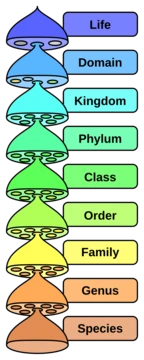
Taxonomically, Apiaceae was first described by John Lindley in 1836. The name comes from the type genus *Apium*, used by Pliny the Elder around 50 AD for a celery-like plant. The alternative name Umbelliferae refers to the inflorescence, typically a compound umbel. The family was among the first recognized as a distinct group, appearing in Jacques Daleschamps' 1586 *Historia generalis plantarum*, and with Robert Morison's 1672 *Plantarum umbelliferarum distributio nova* it became the first plant group to receive a systematic study. In the APG III system, the family is firmly placed within the order Apiales. It is closely related to Araliaceae, and the boundaries between these families remain unclear. Traditionally, groups within Apiaceae were delimited largely by fruit morphology, but these results have not matched more recent molecular phylogenetic analyses. The subfamilial and tribal classification is currently in flux, with many groups found to be grossly paraphyletic or polyphyletic.
Before molecular phylogenetic studies, the family was subdivided mainly by fruit characteristics. Molecular analyses from the mid-1990s onward showed that fruit traits evolved in parallel many times, making such classifications non-monophyletic. In 2004, a proposal divided Apiaceae into four subfamilies: Apioideae, Azorelloideae, Mackinlayoideae, and Saniculoideae. Apioideae is by far the largest, containing about 90% of the genera. Most subsequent studies have supported this division, though some genera remain unplaced. A 2021 study suggested a cladogram showing relationships, with the Platysace clade and the genera *Klotzschia* and *Hermas* falling outside the four subfamilies; it was suggested they might be placed in their own subfamilies. *Phlyctidocarpa* was formerly in Apioideae but, if kept there, makes that subfamily paraphyletic; it could be placed in an enlarged Saniculoideae or restored to Apioideae.
- Number of species
- More than 3,800
- Type genus
- Apium
- Alternative name
- Umbelliferae
- First described by
- Recognized as a distinct group by Antoine Laurent de Jussieu in 1789 (as Umbelliferae), with earlier herbal references dating to the 16th century
- Earliest fossils
- Late Cretaceous (Maastrichtian), with additional Eocene pollen fossils
- Estimated origin
- Late Cretaceous, likely in the Northern Hemisphere (e.g., temperate Eurasia or western North America)
Lore & Background
The name Apiaceae derives from the type genus Apium, originally used by Pliny the Elder circa 50 AD for a celery-like plant. The alternative name Umbelliferae refers to the characteristic compound umbel inflorescence.
Reader's Guide
Apiaceae is significant as a large and economically important family of flowering plants, providing many staple food crops and culinary herbs such as carrot, celery, parsley, coriander, cumin, dill, fennel, and anise. Its defining characteristic is the inflorescence, nearly always aggregated in terminal umbels, which may be simple or compound. The family also includes a significant number of phototoxic species, such as giant hogweed and parsnip, alongside deadly toxic paralytic species like poison hemlock and water hemlock. The fruits of many species are dispersed by wind, while others have hooked bristles that catch in animal fur. The family is solidly placed within the Apiales order and is closely related to Araliaceae, though boundaries between these families remain unclear. Molecular phylogenetic studies have led to a proposed division into four subfamilies: Apioideae, Azorelloideae, Mackinlayoideae, and Saniculoideae, with Apioideae containing about 90% of genera. The earliest fossils date to the Eocene epoch, though the family is estimated to have originated during the Late Cretaceous, likely in Australasia.
Did You Know?
- The family includes phototoxic species such as giant hogweed and parsnip.
- The fruit is a schizocarp consisting of two fused carpels that separate into two mericarps, each containing a single seed.
- The black swallowtail butterfly, Papilio polyxenes, uses the family Apiaceae for food and host plants for oviposition.
- The family includes silphium, a plant whose exact identity remains unclear.
Frequently Asked Questions
What are Apiaceae's powers or role?
Members of this family are celebrated for producing potent aromatic compounds, which is why so many of them double as culinary herbs and spices such as dill, fennel, cumin, and coriander. Their blossoms characteristically form flat-topped clusters called umbels, a trait that inspired the family's older common name.
How does Apiaceae's story end?
Apiaceae is far from finished; it currently ranks as the 12th- or 13th-largest family of flowering plants depending on the classification system in use. Its deep roots reach back to the Late Cretaceous Maastrichtian stage, with additional fossil traces in the form of Eocene-era pollen grains.
Why is Apiaceae important?
The family underpins a huge slice of human agriculture and medicine, contributing everyday staples like carrot, celery, and parsnip alongside pharmaceuticals derived from asafoetida and angelica. It also includes the legendary silphium, an ancient plant so prized that overharvesting drove it to extinction.
Who created Apiaceae?
The family was formally recognized as a distinct botanical group by Antoine Laurent de Jussieu in 1789 under the name Umbelliferae, although 16th-century herbalists had already been cataloguing its members. The modern name Apiaceae honors the type genus Apium, the celery genus.
More in Plant Families 1-15
Spotted an error? Know more?
This is a living reference — every entry is fact-audited, and reader corrections feed straight into our audit queue. Suggest an edit · See this site's audit record