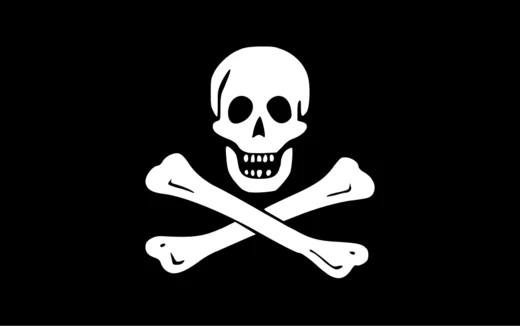
The Whydah Gally
The only fully authenticated Golden Age pirate shipwreck ever discovered.

The Whydah Gally, often called the Whydah, was a full-rigged ship that started out carrying passengers, cargo, and enslaved people. During the return leg of its first voyage in the triangular trade, the pirate captain Samuel Bellamy seized it, giving it a second life during the Golden Age of Piracy. Bellamy sailed the Whydah up the coast of colonial America, grabbing other ships along the way. On April 26, 1717, a violent storm wrecked the Whydah off Cape Cod, Massachusetts. Only two of its crew survived, along with seven others from a sloop Bellamy had captured earlier that day. Of those nine survivors, six were hanged, two who had been forced into piracy were set free, and one Indigenous crewman was sold into slavery. The Whydah and its treasure of captured pirate gold stayed hidden for over 260 years until 1984, when the wreck was found off Cape Cod, buried under 10 to 50 feet of sand in water 16 to 30 feet deep, spread across four miles parallel to the cape’s easternmost coast. With the discovery of the ship’s bell in 1985 and a small brass placard in 2013—both engraved with the ship’s name and the date of its first voyage—the Whydah Gally is the only fully authenticated pirate shipwreck from the Golden Age ever found.
The Whydah Gally was commissioned in 1715 in London by Sir Humphrey Morice, a member of Parliament known as the leading London slave merchant of his time. It was a square-rigged, three-masted galley ship, 110 feet long, with a tonnage of 300 tuns burthen, and could reach speeds up to 13 knots. Named after the West African slave-trading Kingdom of Whydah, it was built as a heavily armed trading and transport vessel, including for the Atlantic slave trade. It set out on its first voyage in early 1716, carrying goods from various businesses to exchange for trade items and slaves in West Africa. After traveling down the West African coast through what is now Gambia, Senegal, Nigeria, and Benin—where its namesake port was located—it left Africa with an estimated 500 enslaved people, gold (including Akan jewelry), and ivory. It then sailed to the Caribbean, where it traded and sold the cargo and enslaved people for precious metals, sugar, indigo, rum, logwood, pimento, ginger, and medicinal ingredients, which were meant to be taken back to England. The ship was fitted with a standard set of 18 six-pound cannons, which could be increased to 28 in wartime.
In late February 1717, the Whydah Gally, commanded by Captain Lawrence Prince (not the buccaneer who served under Sir Henry Morgan), was navigating the Windward Passage between Cuba and Hispaniola when pirates led by Samuel Bellamy attacked. At the time, Bellamy had two vessels: the 26-gun galleon Sultana and the converted 10-gun sloop Marianne, captained by Bellamy’s friend and investor Paulsgrave Williams. After a three-day chase, Prince surrendered near the Bahamas with only a brief exchange of cannon fire. Bellamy took the Whydah as his new flagship, and several of its crew stayed on and joined the pirates. Pirate recruitment drew heavily from the unemployed, escaped bondsmen, and transported criminals, since the high seas erased class distinctions. The crew included freed African slaves, displaced English seamen, Native Americans, and various social outcasts from Europe and elsewhere. As a goodwill gesture to Captain Prince, who had surrendered without a fight—and who may have been known favorably by reputation—Bellamy gave him the Sultana along with £20 in silver and gold.
Bellamy then fitted the Whydah with 10 extra cannons and assigned 150 crew members to man it. They razeed the ship by clearing the top deck of the pilot’s cabin, removing the slave barricade, and getting rid of other features that made it top-heavy. Bellamy and his crew sailed to the Carolinas and then north along the eastern coastline of the American colonies, aiming for the central coast of Maine, looting or capturing more vessels along the way. A storm heavily damaged the Whydah, breaking one of its masts. They made patch-up repairs until reaching waters near Nantucket Sound, where more substantial repairs were done, possibly at Block Island or Rhode Island. At some point, Bellamy added over 30 more cannons below decks, likely as ballast. Two cannons recovered by underwater explorer Barry Clifford in August 2009 weighed 800 and 1,500 pounds.
Accounts differ on the Whydah’s destination in its final days, with some blaming navigator error. On April 26, 1717, near Chatham, Massachusetts, the Whydah approached a thick, gray fog bank that signaled bad weather. That same day, the pirates captured the ship Mary Anne, which was full of Madeira wine. The Mary Anne’s captain refused Bellamy’s request to pilot them up the coast, so Bellamy arrested the captain and five of his crew, bringing them aboard the Whydah and leaving three of the original crew on the Mary Anne. Bellamy then sent seven of his own men onto the Mary Anne—including the carpenter Thomas South, who had been forced to make repairs. South did not want to join the pirates, and Bellamy had offered to release him after the work was done, but the surviving pirates later testified in court that they overruled Bellamy and forced South to stay.
- tonnage
- 300 tuns burthen
- field
- Maritime history, piracy, slave trade
- nationality
- English
Lore & Background
Christened after the West African slave-trading Kingdom of Whydah, she was configured as a heavily armed trading and transport ship. She traded these in the Caribbean for precious metals, sugar, indigo, rum, and other goods intended for England. She was fitted with a standard complement of 18 six-pound cannons, which could be increased to 28 in time of war. After a three-day chase, Prince surrendered. Bellamy took Whydah Gally as his flagship, giving Prince the Sultana and £20 in silver and gold. Bellamy fitted the ship with 10 additional cannons, razeed the top deck, and added over 30 more cannons below decks as ballast. Only two of her crew survived, along with seven others from a captured sloop. Six of the nine survivors were hanged, two forced pirates were freed, and one Indian crewman was sold into slavery.
Reader's Guide
The Whydah Gally holds singular significance as the only fully authenticated pirate shipwreck from the Golden Age of Piracy ever discovered. The discovery provided unprecedented archaeological evidence of pirate life, including artifacts from the slave trade and the diverse crew—freed African slaves, displaced English seamen, Native Americans, and European outcasts. The ship's dual history as a slave vessel and pirate flagship illustrates the interconnected economies of the triangle trade and piracy. The Whydah Gally remains a key source for understanding the material culture of early 18th-century piracy and the Atlantic world.
Did You Know?
- Whydah Gally was originally built as a slave ship and named after the West African slave-trading Kingdom of Whydah.
- Only two of Whydah Gally's crew survived the shipwreck; six of the nine total survivors were later hanged.
Common Misconceptions (Editorial)
Some people believe the Whydah Gally was always a pirate ship, but it was originally built and used as a passenger, cargo, and slave ship before being captured by Captain Samuel Bellamy. Another common error is that most of the crew survived the wreck; in fact, only two of the Whydah’s own crew survived, and six of the nine total survivors were later hanged.
Why It Matters (Editorial)
The Whydah Gally endures as a rare, fully authenticated window into the Golden Age of Piracy, offering tangible proof of a world often shrouded in myth. Its dual legacy—as both a slave ship and a pirate flagship—forces a reckoning with the brutal economies that funded piracy and the fleeting, violent lives of those who tried to escape them.
Frequently Asked Questions
What was The Whydah Gally originally built for?
She was constructed as a passenger, cargo, and slave ship operating within the triangular trade route. Her capture by Bellamy during the return leg of her very first trade voyage repurposed her as a pirate vessel.
More in Pirates 1-21
Spotted an error? Know more?
This is a living reference — every entry is fact-audited, and reader corrections feed straight into our audit queue. Suggest an edit · See this site's audit record