
Allergy
An exaggerated immune response to harmless substances.

Ar945 · CC0
An allergy occurs when the immune system overreacts to a normally harmless substance, treating it as a danger. This overreaction can lead to conditions like hay fever, allergic conjunctivitis, allergic asthma, atopic dermatitis, food allergies, and anaphylaxis. Symptoms vary depending on the allergen and can include red eyes, an itchy rash, sneezing, coughing, a runny nose, shortness of breath, or swelling. Common triggers include pollen, certain foods, metals, insect stings, medications, and materials like latex. Both genetic and environmental factors play a role in developing allergies.
The immune response involves immunoglobulin E (IgE) antibodies binding to the allergen, then attaching to receptors on mast cells or basophils. This triggers the release of inflammatory chemicals, such as histamine. Diagnosis usually starts with a person’s medical history; skin or blood tests may help in some cases, though a positive test does not always mean a significant allergy exists. Early exposure to potential allergens in childhood might offer some protection. Treatment focuses on avoiding known triggers and using medications like steroids or antihistamines. For severe reactions, injectable adrenaline (epinephrine) is recommended. Allergen immunotherapy, which involves gradually increasing exposure to an allergen, can help with certain allergies, such as hay fever and reactions to insect bites, but its effectiveness for food allergies is uncertain.
Allergies are widespread. In developed countries, around 20% of people have allergic rhinitis, food allergy affects 10% of adults and 8% of children, and about 20% have or have had atopic dermatitis at some point. Asthma rates vary by country, affecting 1–18% of people, while anaphylaxis occurs in 0.05–2% of the population. Rates of many allergic diseases appear to be rising. The term “allergy” was first introduced by Clemens von Pirquet in 1906.
Signs and symptoms depend on how the allergen enters the body. Airborne allergens like dust or pollen typically affect the eyes, nose, and lungs. Allergic rhinitis, or hay fever, causes sneezing, itching, and redness of the eyes, along with nasal irritation. Inhaled allergens can also increase mucus in the lungs, leading to shortness of breath, coughing, and wheezing. Allergic rhinitis often occurs alongside asthma. Food allergies can cause abdominal pain, bloating, vomiting, diarrhea, itchy skin, and hives, but rarely lead to respiratory symptoms. Insect stings, certain foods, antibiotics like penicillin, and medications such as aspirin can trigger a systemic reaction called anaphylaxis, which may affect the digestive, respiratory, and circulatory systems. Anaphylaxis can include skin reactions, bronchoconstriction, swelling, low blood pressure, coma, and death. It can start suddenly or be delayed, and symptoms may seem to fade but can return.
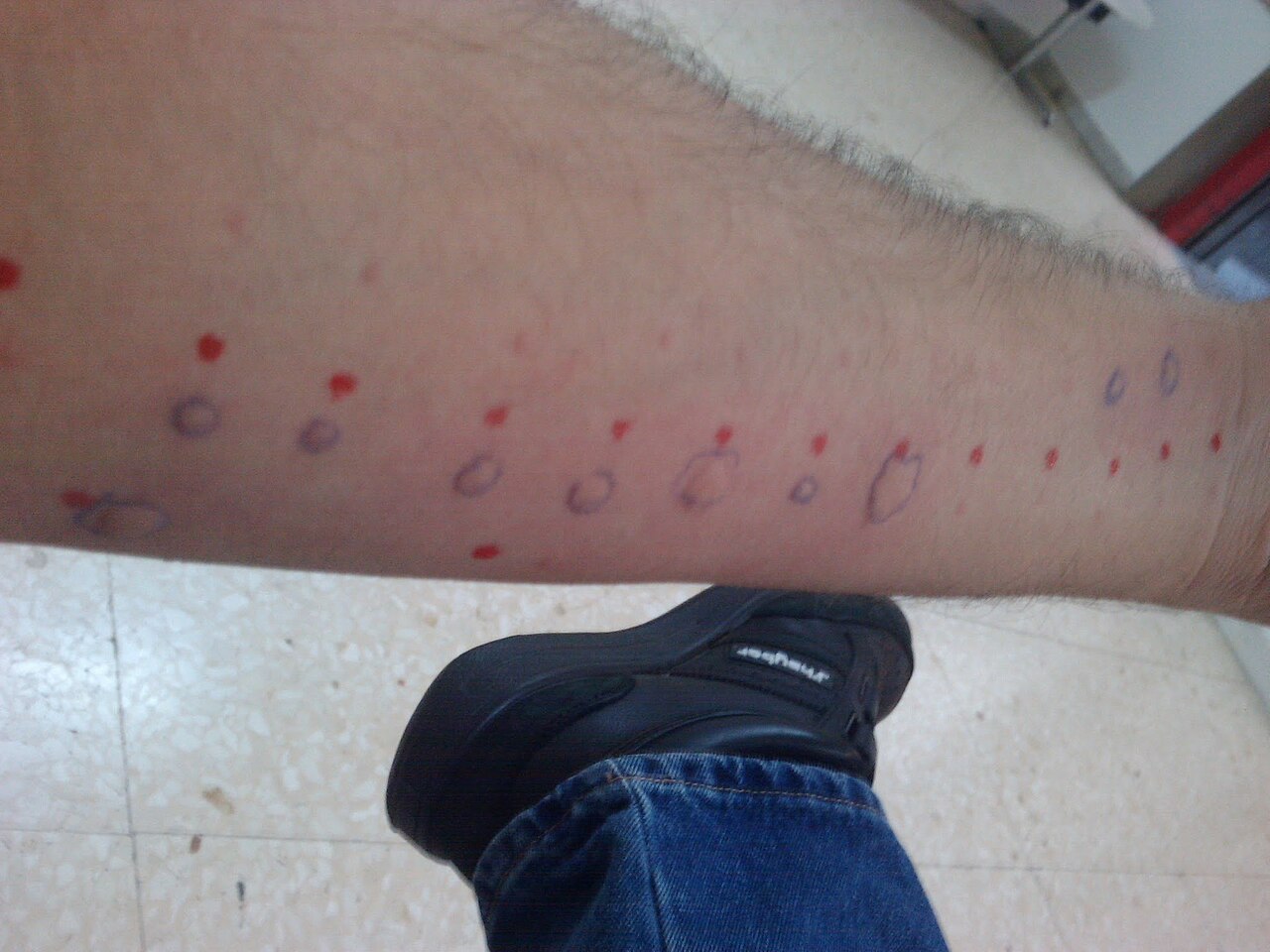
Skin contact with allergens like latex often leads to contact dermatitis or eczema, causing rashes, swelling, and inflammation. This can produce a “wheal and flare” reaction typical of hives and angioedema. Insect stings may cause a large local reaction—redness over 10 cm that lasts one to two days—which can also occur after immunotherapy. The skin normally blocks most allergens, but a sting can inject allergen into the skin, triggering a localized response. Mast cells in the skin activate, increasing blood vessel permeability and causing fluid leakage and swelling. This also stimulates the wheal-and-flare reaction, and nerve signals widen surrounding blood vessels, leading to redness. About eight hours after contact, a secondary, more widespread skin swelling may occur in some individuals. When an allergen is eaten, it can enter the bloodstream and reach the skin, causing a dispersed form of hives called urticaria. This skin reactivity allows allergists to test for allergies by injecting a tiny amount of allergen into the skin, which causes a local reaction—though even these small injections carry a risk of systemic anaphylaxis.
Airway contact with allergens can trigger reactions in the nose, sinuses, throat, and lungs. Allergic rhinitis, one of the most common airway allergies, is marked by sneezing, nasal congestion, runny nose, and itching of the nose and eyes. Common airborne triggers include pollen, house dust mites, animal dander, and mold spores. Reactions in the lower airways can contribute to allergic asthma, where exposure to allergens leads to breathing difficulties.
- Common allergens
- Pollen, certain foods, metals, insect stings, medications, latex
- Affected population (allergic rhinitis)
- About 20% in developed world
- Affected population (food allergy)
- 10% of adults, 8% of children
- Affected population (atopic dermatitis)
- About 20% have or have had
- Affected population (asthma)
- About 1–18% depending on country
- Affected population (anaphylaxis)
- 0.05–2%
Lore & Background
The development of allergies is due to genetic and environmental factors. The mechanism of allergic reactions involves immunoglobulin E antibodies (IgE) binding to an allergen and then to a receptor on mast cells or basophils, where they trigger the release of inflammatory chemicals such as histamine. Diagnosis is typically based on a person's medical history, with further testing of the skin or blood possibly useful in certain cases, though positive tests may not necessarily mean there is a significant allergy.
Reader's Guide
Allergies are significant because they affect a large portion of the population and can range from mild symptoms like sneezing and itchy skin to life-threatening anaphylaxis. Treatments include avoidance of known allergens, medications such as steroids and antihistamines, and injectable adrenaline (epinephrine) for severe reactions. Allergen immunotherapy, which gradually exposes people to larger amounts of allergen, is useful for some types such as hay fever and reactions to insect bites, though its use in food allergies is unclear. Early exposure of children to potential allergens may be protective. The intestinal microbiome is increasingly recognized as an important factor in allergy development, with early-life alterations in microbiota composition associated with increased risk of food allergy and atopic disease.
Did You Know?
- Anaphylaxis occurs in between 0.05–2% of people, depending on the country.
- Early exposure of children to potential allergens may be protective against allergies.
- Allergen immunotherapy is useful for hay fever and reactions to insect bites, but its use in food allergies is unclear.
Gallery




Frequently Asked Questions
What is Allergy?
Allergy is the body's immune system mounting an outsized defensive attack against a substance that is actually harmless, such as pollen, a food protein, or a medication. Instead of ignoring the trigger, the immune machinery flags it as a dangerous invader and launches a reaction far beyond what the situation warrants.
What are Allergy's known manifestations?
Depending on which organ system is targeted, Allergy can present as hay fever, allergic conjunctivitis, allergic asthma, atopic dermatitis, food allergy reactions, or the life-threatening systemic episode known as anaphylaxis. Each manifestation reflects the same underlying overreaction but expressed through different tissues and symptoms.
How widespread is Allergy's influence?
Roughly one in five people in developed nations experience allergic rhinitis, while food allergies affect about 10% of adults and 8% of children. Asthma prevalence ranges from 1% to 18% depending on the country, and anaphylaxis is reported in somewhere between 0.05% and 2% of the population.
What are the most common triggers Allergy reacts to?
The most frequently encountered allergens include airborne pollen, specific foods, metals, insect stings, certain medications, and latex. The immune system misreads any of these ordinarily benign substances as a threat and orchestrates the exaggerated response.
Why is Allergy considered significant in modern medicine?
Allergic diseases are among the most prevalent chronic conditions in the developed world, and their incidence appears to be climbing year over year. Because they range from mildly irritating to immediately fatal, they carry a substantial burden on public health systems and on individual quality of life.
More in Physiology & Medicine 1-19
Spotted an error? Know more?
This is a living reference — every entry is fact-audited, and reader corrections feed straight into our audit queue. Suggest an edit · See this site's audit record